

From the towering peaks of majestic mountains to the deepest layers of the Earth’s crust, rocks are the fundamental building blocks of our planet. Far from being inert, these geological formations tell an incredible story of Earth’s dynamic past and present. They hold clues about ancient volcanic eruptions, immense pressures, and intense heat that have sculpted our world over billions of years. Understanding these processes is key to grasping the very essence of Earth’s Unseen Forces: The Hidden Dynamics of Our Planet.
💡 Key Takeaways
- Igneous rocks originate from cooled magma or lava, forming the primary foundation of Earth’s crust.
- Metamorphic rocks are transformed by intense heat, pressure, or chemical alteration without melting.
- Both rock types are integral to the rock cycle, illustrating Earth’s continuous and dynamic geological processes.
- Studying these rocks provides crucial insights into our planet’s ancient climate, tectonic activity, and the distribution of valuable resources.
“Igneous and metamorphic rocks are more than just stones; they are the planet’s archived history, holding crucial clues to past tectonic shifts, volcanic activity, and even ancient climate patterns, all vital for understanding our Earth’s dynamic future.”
— Marcus Sterling, Geophysical Explorer & Climate Dynamics Analyst
In this comprehensive guide, we’ll delve into two of the most fascinating categories: igneous rock types and metamorphic rock types. We’ll explore their origins, classifications, and the unique characteristics that define them, providing you with the ultimate resource to identify and appreciate these foundational geological structures.
In This Article
- — 💡 Key Takeaways
- → The Rock Cycle: Earth’s Grand Recycling System
- — ⚙️ How Rocks Transform
- → Igneous Rocks: Born from Fire
- — Intrusive vs. Extrusive Igneous Rocks
- — CommonIgneous Rock Typesand Their Characteristics
- → Metamorphic Rocks: Transformed by Pressure and Heat
- — Regional vs. Contact Metamorphism
- — Foliated vs. Non-Foliated Metamorphic Rocks
- — CommonMetamorphic Rock Typesand Their Characteristics
- → Identifying Igneous and Metamorphic Rocks: Key Clues
- — Visual Cues for Igneous Rocks
- — Visual Cues for Metamorphic Rocks
- → The Significance of Igneous and Metamorphic Rocks
- — Economic Importance
- — Geological Significance
- → Conclusion: Unearthing Earth’s Enduring Story
The Rock Cycle: Earth’s Grand Recycling System
Before we dive deep into specific rock types, it’s essential to understand the grand process that connects them all: the rock cycle. This continuous cycle illustrates how rocks are formed, broken down, and reformed through geological processes, driven by Earth’s internal heat and external forces like weathering and erosion. It’s a testament to our planet’s ongoing, active transformation.
⚙️ How Rocks Transform
The rock cycle involves three main types of rocks—igneous, sedimentary, and metamorphic—and shows how one type can be transformed into another:
- ✅ Igneous Rocks: Formed from the cooling and solidification of molten rock (magma or lava).
- ✅ Sedimentary Rocks: Formed from the accumulation and compaction of sediments (fragments of other rocks, minerals, or organic matter).
- ✅ Metamorphic Rocks: Formed when existing rocks are subjected to intense heat, pressure, or chemical alteration without melting.
This cycle ensures that Earth’s crust is constantly being renewed and recycled, making it a truly dynamic system.
Igneous Rocks: Born from Fire
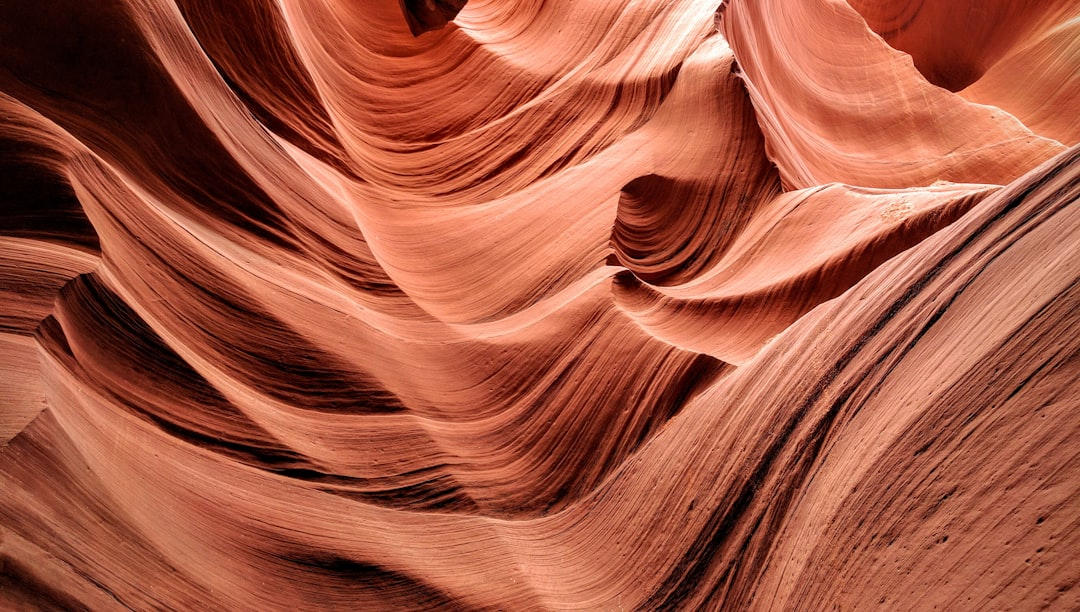
Igneous rocks, whose name comes from the Latin word “ignis” meaning fire, are formed directly from the cooling and solidification of molten rock. This molten rock originates deep within the Earth as magma, or it erupts onto the surface as lava. The rate at which this molten material cools determines the rock’s texture, specifically the size of its crystals. For a more detailed look, consider our article on Igneous Rocks: A Guide to Volcanic Formations and Types.
Intrusive vs. Extrusive Igneous Rocks
Different types of igneous rock are broadly classified based on where the molten rock cools:
- ➡️ Intrusive (Plutonic) Igneous Rocks:
- Form when magma cools slowly beneath Earth’s surface.
- Slow cooling allows large crystals to form, resulting in a coarse-grained texture.
- Examples include granite, gabbro, and diorite.
- ➡️ Extrusive (Volcanic) Igneous Rocks:
- Form when lava cools quickly on or near Earth’s surface.
- Rapid cooling leads to very small crystals or a glassy texture.
- Examples include basalt, rhyolite, and obsidian.
Common Igneous Rock Types and Their Characteristics
Here are some of the most recognized igneous rock types:
- 💡 Granite: A common intrusive igneous rock, typically light-colored with visible crystals of quartz, feldspar, and mica. It’s often used in countertops and building facades.
- 💡 Basalt: The most common extrusive igneous rock, dark-colored and fine-grained. It forms the vast majority of the oceanic crust.
- 💡 Obsidian: A natural volcanic glass formed from very rapid cooling of lava, resulting in a smooth, glassy texture. It’s often black.
- 💡 Pumice: A light-colored, highly vesicular (full of holes) extrusive rock, so light it can float on water. It forms from rapidly cooled frothy lava.
- 💡 Gabbro: An intrusive igneous rock, dark-colored, and coarse-grained, compositionally similar to basalt but with larger crystals.
Understanding these fundamental igneous rock types is crucial for anyone studying Earth’s crustal composition, as highlighted by resources like the U.S. National Park Service on global building blocks (Geology Lesson 2. Global building blocks).
Metamorphic Rocks: Transformed by Pressure and Heat
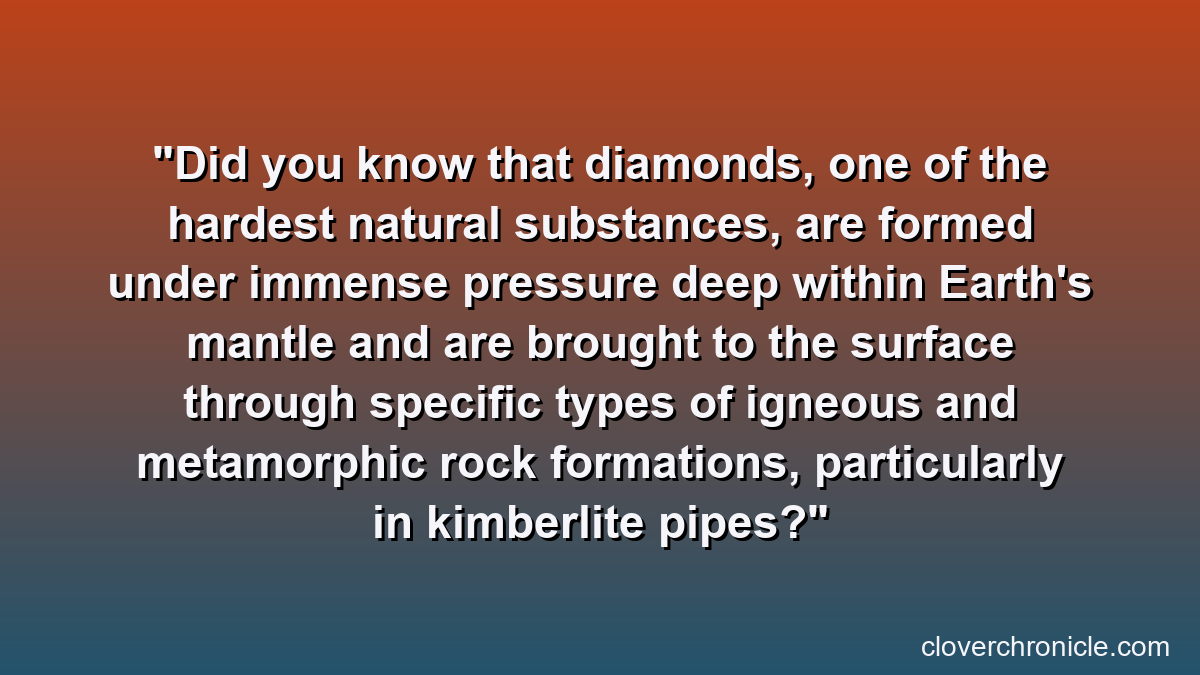
Metamorphic rocks are the result of pre-existing rocks (igneous, sedimentary, or even other metamorphic rocks) undergoing a profound transformation. This change occurs due to intense heat, extreme pressure, or the introduction of chemically active fluids, all without melting the rock. This process often takes place deep within Earth’s crust, particularly near Tectonic Plates: Exploring Earth’s Geological Divisions and fault lines.
Regional vs. Contact Metamorphism
There are two primary types of metamorphism based on the conditions under which they occur:
- ➡️ Regional Metamorphism:
- Occurs over large areas, typically associated with mountain building events and plate tectonics.
- Involves both high temperature and high directed pressure.
- Results in foliated metamorphic rocks.
- ➡️ Contact Metamorphism:
- Occurs when rocks are heated by contact with an intruding body of magma.
- Primarily involves high temperature with less emphasis on directed pressure.
- Often results in non-foliated metamorphic rocks, and can create features like Contact Metamorphic Aureoles: Unveiling Transformation Zones.
Foliated vs. Non-Foliated Metamorphic Rocks
Metamorphic rocks are also classified by their texture:
- ✅ Foliated Metamorphic Rocks:
- Exhibit a layered or banded appearance due to the alignment of minerals under directed pressure.
- Examples: Slate, phyllite, schist, gneiss.
- ✅ Non-Foliated Metamorphic Rocks:
- Do not have a layered or banded texture.
- Typically form under uniform pressure or where minerals are not easily aligned.
- Examples: Marble, quartzite, hornfels.
Common Metamorphic Rock Types and Their Characteristics
Let’s explore some of the different types of metamorphic rock:
- 💡 Slate: A fine-grained, foliated metamorphic rock formed from the metamorphism of shale. It splits easily into thin, flat sheets, making it useful for roofing tiles.
- 💡 Schist: A medium-to-coarse-grained, foliated metamorphic rock with prominent mineral layering (schistosity). It often contains shiny mica minerals.
- 💡 Gneiss: A coarse-grained, strongly foliated metamorphic rock with distinctive banding of light and dark minerals. Formed under high-grade metamorphism.
- 💡 Marble: A non-foliated metamorphic rock formed from the metamorphism of limestone or dolostone. Composed primarily of calcite and known for its varied colors and patterns.
- 💡 Quartzite: A non-foliated metamorphic rock formed from the metamorphism of sandstone. It is extremely hard and resistant to weathering, composed almost entirely of quartz.
For more specific examples of dark, transformed rocks, our guide on Black Metamorphic Rock: A Comprehensive Guide might be helpful.
The variety and transformation capabilities of these rocks are immense, showcasing the dynamic nature of Earth’s crust as described by geological primers (The Geology Primer: Earth’s Building Blocks).
Identifying Igneous and Metamorphic Rocks: Key Clues
Distinguishing between different rock types is a fundamental skill in geology. While expert analysis often requires specialized tools, many rocks can be identified based on their visual and textural properties.
Visual Cues for Igneous Rocks
- ✅ Crystal Size: Coarse-grained (phaneritic) textures suggest slow cooling (intrusive), while fine-grained (aphanitic) or glassy textures suggest rapid cooling (extrusive).
- ✅ Color: Generally, lighter colors (felsic) indicate higher silica content (e.g., granite), and darker colors (mafic) indicate lower silica and higher iron/magnesium (e.g., basalt).
- ✅ Presence of Vesicles: Holes or pores (vesicles) indicate gases escaping during rapid cooling of lava (e.g., pumice, scoria).
Visual Cues for Metamorphic Rocks
- ✅ Foliation: The most distinctive feature. Look for parallel alignment of mineral grains, banding, or cleavage (the tendency to break along flat surfaces).
- ✅ Texture: Can range from fine-grained (slate) to coarse-grained (gneiss). Recrystallization of minerals is common.
- ✅ Mineralogy: Presence of certain “index minerals” (e.g., garnet, staurolite) can indicate specific temperature and pressure conditions during metamorphism.
The Significance of Igneous and Metamorphic Rocks
These rock types are not just academic curiosities; they play vital roles in human civilization and planetary processes.
Economic Importance
Many igneous and metamorphic rocks are invaluable resources:
- ➡️ Construction Materials: Granite, marble, and slate are widely used in buildings, monuments, and infrastructure due to their durability and aesthetic appeal.
- ➡️ Ore Deposits: Many valuable minerals and metals (e.g., gold, silver, copper, iron) are found in association with igneous intrusions or within metamorphic rock formations.
- ➡️ Gemstones: Gemstones like diamonds (formed under extreme pressure in the mantle), rubies, and sapphires are often found in metamorphic or igneous settings.
Geological Significance
From a scientific perspective, igneous and metamorphic rocks are crucial for understanding Earth:
- 💡 Plate Tectonics: Their formation is directly linked to plate boundaries, providing evidence for the movement and interaction of Lithospheric Plates: Building Blocks of Earth’s Crust.
- 💡 Earth’s History: They record conditions deep within the crust and mantle, offering insights into ancient geological events, temperature regimes, and pressure conditions.
- 💡 Crustal Evolution: The study of these rocks helps scientists understand how continents have grown and evolved over geological time.
Recommended Video
Conclusion: Unearthing Earth’s Enduring Story
Igneous and metamorphic rocks are truly the unsung heroes of our planet’s geological narrative. From the fiery birth of new crust to the slow, relentless transformation under immense pressure and heat, they embody the dynamic forces that shape Earth. Their diversity, beauty, and practical utility make them subjects of endless fascination for geologists, engineers, and anyone with a curiosity about the solid ground beneath their feet. By understanding these fundamental building blocks, we gain a deeper appreciation for the complexity and continuous evolution of our world.
Frequently Asked Questions
What are igneous rocks?
Igneous rocks are formed from the cooling and solidification of molten rock (magma or lava). Magma cools underground, forming intrusive igneous rocks, while lava cools on the surface, forming extrusive igneous rocks.
How do metamorphic rocks form?
Metamorphic rocks form when existing rocks are subjected to intense heat, pressure, or chemically active fluids, causing fundamental changes to their mineral composition, texture, and structure without fully melting.
What’s the main difference between igneous and metamorphic rocks?
The main difference lies in their origin: igneous rocks form directly from cooled molten material, whereas metamorphic rocks form from the transformation of pre-existing rocks (igneous, sedimentary, or other metamorphic rocks) due to extreme conditions.
Why are igneous and metamorphic rocks important?
These rocks constitute the vast majority of Earth’s crust, providing critical insights into the planet’s geological history, tectonic movements, and past environmental conditions. They are also sources of valuable minerals and ores.