

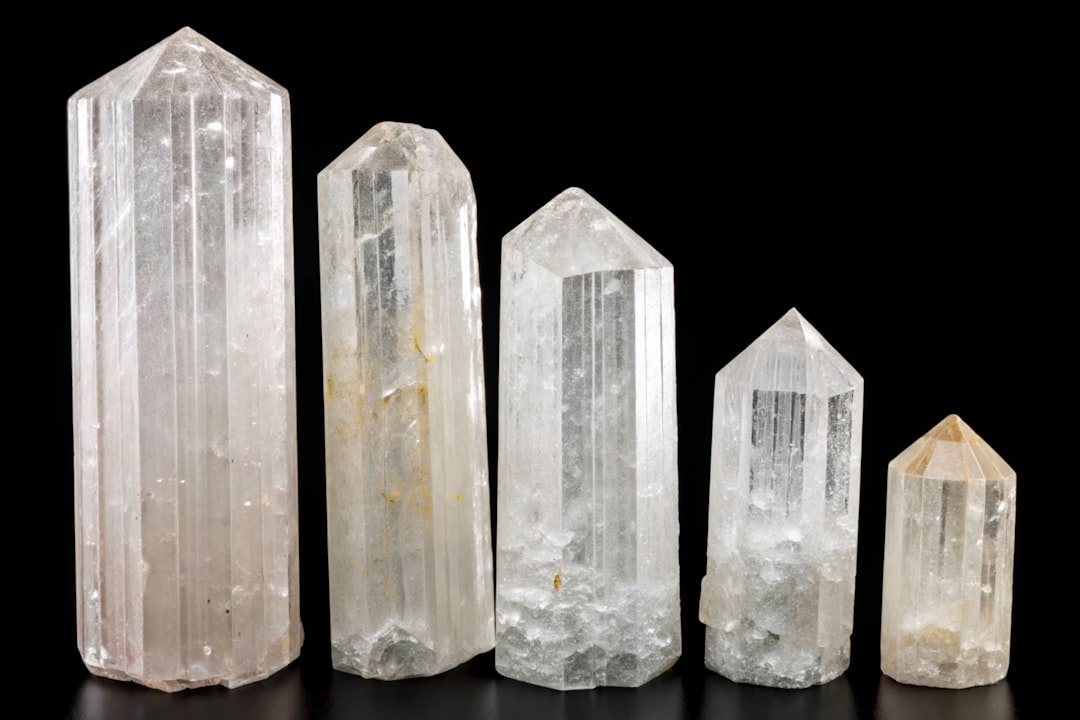
Polymorphism in Geology: How Minerals Change Form
In the grand tapestry of our planet, minerals often seem like static, unchanging components. Yet, beneath this perceived stability lies a dynamic world where identical chemical formulas can yield drastically different physical realities. This fascinating phenomenon, known as polymorph geology, is a cornerstone of understanding Earth’s deep processes and the very nature of matter.
💡 Key Takeaways
- Polymorphism describes minerals that share the same chemical composition but possess different crystal structures.
- Classic examples include diamond and graphite, both carbon-based but vastly different due to atomic arrangement.
- Environmental factors like temperature and pressure are key drivers of polymorphic transformations in minerals.
- Understanding polymorphism is crucial for comprehending Earth’s geological processes and for materials science applications.
“Polymorphism is a beautiful testament to how subtle shifts in atomic arrangement can lead to profound differences in material properties, offering a window into the dynamic forces shaping our planet’s crust.”
— Dr. Elara Vance, Professor of Mineral Physics, Institute of Geosciences
As experts in Earth’s Unseen Forces: The Hidden Dynamics of Our Planet, we recognize that polymorphism is more than just a geological curiosity; it’s a fundamental principle that dictates mineral behavior, reveals Earth’s past conditions, and provides critical insights into the pressures and temperatures shaping our world. Join us as we delve into how minerals, despite having the same chemical recipe, can astonishingly transform their form.
In This Article
- → Polymorphism in Geology: How Minerals Change Form
- — 💡 Key Takeaways
- → What is Polymorphism in Geology?
- — ⚛️ The Fundamental Principle: Same Chemistry, Different Structure
- — 🔍 Why Structure Matters
- → Key Factors Inducing Polymorphism
- — 🌡️ Temperature: The Thermal Driver
- — 압력: The Compaction Catalyst
- — ⏳ Time and Kinetics
- → Common Examples of Polymorphic Minerals
- — 💎 Carbon’s Marvels: Graphite and Diamond
- — ✨ Silica’s Versatility: Quartz, Tridymite, and Cristobalite
- — 🐚 Calcium Carbonate: Calcite and Aragonite
- — 🧲 Iron Sulfide: Pyrite, Marcasite, and Pyrrhotite
- → Distinguishing Polymorphism from Related Concepts
- — 🔄 Polymorphism vs. Isomorphism
- — 👻 Polymorphism vs. Pseudomorphism
- — 🧪 Polymorphism vs. Allotropy
- → The Geological Significance of Polymorphism
- — 🗺️ Mineral Identification and Classification
- — 📈 Paleothermometers and Geobarometers
- — 🌍 Understanding Earth’s Interior
- → Conclusion
What is Polymorphism in Geology?
At its heart, polymorphism describes the ability of a specific chemical compound to crystallize in more than one distinct crystal structure. Imagine having the same set of LEGO bricks, but being able to assemble them into completely different models – each with unique properties, even though the fundamental building blocks are identical. This is precisely what happens with polymorphic minerals.
⚛️ The Fundamental Principle: Same Chemistry, Different Structure
The key to understanding polymorphism lies in the arrangement of atoms. While the chemical formula (e.g., FeS2 for iron sulfide) remains constant, the way these atoms are bonded and packed together in a crystal lattice can vary significantly. These different arrangements lead to different crystal systems, symmetries, and overall geometries.

- ✅ Identical Chemical Composition: The type and ratio of elements are the same.
- ✅ Different Crystal Structure: The internal atomic arrangement and external crystal form differ.
- ✅ Distinct Physical Properties: Each polymorphic form (or “polymorph”) will exhibit unique characteristics like hardness, density, color, and optical properties.
🔍 Why Structure Matters
The slight variations in atomic packing have profound implications for a mineral’s observable properties. For instance, one polymorph might be incredibly hard, while another is soft; one might be metallic, while its twin is insulating. These differences are invaluable to geologists, helping them to identify minerals and interpret their formation environments. For more on how these properties are observed, consider learning about Mineral Luster: How Light Reflects on Rocks and Gems.
Key Factors Inducing Polymorphism
Mineral transformations are not random events. They are typically triggered by changes in environmental conditions, primarily temperature and pressure. These external forces provide the energy or compulsion for atoms to rearrange themselves into more stable configurations.
🌡️ Temperature: The Thermal Driver
Temperature plays a crucial role in enabling polymorphic transformations. As temperature increases, atoms within a mineral gain more kinetic energy, allowing them to vibrate more vigorously and break existing bonds, only to reform into a different, often more open or less dense, structure. Conversely, cooling can lead to denser or more ordered structures.
- ➡️ Increased Atomic Mobility: Higher temperatures provide the energy needed for atoms to migrate and rearrange.
- ➡️ Phase Transformations: Specific temperature thresholds mark the point where one polymorph becomes unstable and transforms into another.
압력: The Compaction Catalyst
Pressure, particularly lithostatic pressure from overlying rock, is another powerful driver of polymorphic change. Under immense pressure, atoms are forced into closer, more compact arrangements. This often results in polymorphs that are denser than their low-pressure counterparts.

- ➡️ Denser Packing: High pressure favors crystal structures where atoms occupy less space.
- ➡️ Deep Earth Processes: Polymorphic transformations due to pressure are common in Earth’s mantle, where pressures are extreme.
⏳ Time and Kinetics
While temperature and pressure are the primary catalysts, the rate at which these transformations occur (kinetics) also varies. Some transformations are rapid, while others are incredibly slow, sometimes taking millions of years. This means that a mineral formed under specific conditions might persist metastably for long periods if the conditions for transformation are not met or if the kinetic barriers are too high. For an in-depth look at how minerals accumulate over time, check out our guide on Geological Deposits: How Sediments and Minerals Accumulate.
Common Examples of Polymorphic Minerals
Polymorphism is not an obscure concept; it’s prevalent throughout the mineral kingdom. Here are some of the most classic and significant examples:
💎 Carbon’s Marvels: Graphite and Diamond
Perhaps the most famous example of polymorphism is carbon, which forms both graphite and diamond. Both are composed solely of carbon atoms, but their radically different crystal structures lead to vastly different properties:
- ✅ Graphite: Soft, black, opaque, good electrical conductor. Carbon atoms are arranged in hexagonal sheets that are weakly bonded together (allowing them to slide, making it a lubricant). Forms under lower pressure and moderate temperature.
- ✅ Diamond: Extremely hard, transparent, insulating. Carbon atoms are tetrahedrally bonded in a rigid, three-dimensional lattice. Forms under incredibly high pressure and temperature, typically deep within the Earth’s mantle.
✨ Silica’s Versatility: Quartz, Tridymite, and Cristobalite
Silicon dioxide (SiO2) is another excellent example, forming multiple polymorphs under varying temperature and pressure conditions. While Quartz Geology: Earth’s Ubiquitous Mineral is the most common and stable form at Earth’s surface, two other notable high-temperature polymorphs exist:

- ✅ Quartz: Stable at lower temperatures and pressures.
- ✅ Tridymite: Forms at intermediate high temperatures (870-1470°C) and low pressure.
- ✅ Cristobalite: Forms at even higher temperatures (above 1470°C) and low pressure.
These silica polymorphs are crucial for understanding volcanic and metamorphic rock formation.
🐚 Calcium Carbonate: Calcite and Aragonite
Calcium carbonate (CaCO3) forms two primary polymorphs, which are vital components of sedimentary rocks, shells, and corals:
- ✅ Calcite: Crystallizes in the trigonal system. It’s the most common form, found in limestone, marble, and many biological shells.
- ✅ Aragonite: Crystallizes in the orthorhombic system. It’s less stable than calcite at surface conditions and transforms into calcite over geological time. Many modern marine organisms initially secrete aragonite.
The transformation from aragonite to calcite is an example of how one polymorph can revert to a more stable form over time. Research on CaCO3 polymorphism explores these transformations in detail.
🧲 Iron Sulfide: Pyrite, Marcasite, and Pyrrhotite
Iron sulfide (FeS2) can also occur in multiple forms:
Polymorphism in Minerals: Geological Significance and Challenges
Pros
- ✔Indicates Formation Conditions: Helps determine the specific temperature and pressure at which minerals formed, providing insights into Earth’s history.
- ✔Explains Material Diversity: Accounts for the wide range of physical properties found in minerals with the same chemical composition (e.g., diamond vs. graphite).
- ✔Crucial for Deep Earth Studies: Essential for understanding phase transitions and mineral behavior within the Earth’s mantle and core.
Cons
- ✖Complicates Mineral Identification: Makes it challenging to distinguish between polymorphs without detailed analytical techniques.
- ✖Challenges Classification: Can add complexity to the systematic classification and naming of minerals.
- ✖Affects Material Stability: Polymorphic transitions can impact the stability and performance of materials in natural and industrial contexts.
- ✅ Pyrite: “Fool’s Gold,” crystallizes in the cubic system. Forms under diverse conditions.
- ✅ Marcasite: Has the same chemical formula (FeS2) but crystallizes in the orthorhombic system. It’s less stable than pyrite and often forms under acidic, low-temperature conditions.
- ✅ Pyrrhotite: Iron sulfide with a slightly variable stoichiometry (Fe1-xS) that also exhibits polymorphism.
Distinguishing Polymorphism from Related Concepts
While polymorphism is specific, geology features several related concepts that can sometimes cause confusion. It’s essential to understand the distinctions.
🔄 Polymorphism vs. Isomorphism
These two terms are often contrasted:
- ✅ Polymorphism: Same chemical composition, different crystal structure. (e.g., Diamond and Graphite)
- ✅ Isomorphism: Different chemical compositions, but similar crystal structures and external forms. Minerals in isomorphic series often have elements that can substitute for each other (e.g., the plagioclase feldspar series, where Na and Ca can substitute, leading to different minerals with similar structures).
👻 Polymorphism vs. Pseudomorphism
Pseudomorphism describes a mineral that has the external form of another mineral, but its internal composition and structure have changed. It’s a “false form.”
- ✅ Polymorphism: The mineral transforms, but it’s still itself, just in a different crystal arrangement.
- ✅ Pseudomorphism: One mineral replaces another, taking on the original’s shape. For instance, pyrite cubes can alter to limonite, retaining the cubic shape but no longer being pyrite. As Tulane University explains, pseudomorphism involves a chemical change, unlike polymorphism.
🧪 Polymorphism vs. Allotropy
Allotropy is essentially polymorphism but applies specifically to chemical elements, not compounds.

- ✅ Polymorphism: Refers to compounds (e.g., CaCO3 forming calcite or aragonite).
- ✅ Allotropy: Refers to elements (e.g., Carbon forming diamond or graphite, or oxygen forming O2 and O3 (ozone)). In geological contexts, allotropy is often discussed in terms of elements.
The Geological Significance of Polymorphism
Polymorphism is far more than a laboratory curiosity. It provides powerful tools for geoscientists to understand Earth’s history, its internal dynamics, and the conditions under which rocks and minerals form.
🗺️ Mineral Identification and Classification
Understanding polymorphism is critical for accurately identifying and classifying minerals. Geologists must recognize that minerals with the same chemical formula can look and behave differently, depending on their polymorphic form. This knowledge aids in precise mineralogical analysis, which is fundamental to geological mapping and resource exploration.
📈 Paleothermometers and Geobarometers
Since polymorphic transformations are highly dependent on specific temperature and pressure conditions, the presence of certain polymorphs in a rock can act as a natural “thermometer” or “barometer.”
- ✅ Temperature Indicators: Minerals like the silica polymorphs (quartz, tridymite, cristobalite) indicate the maximum temperatures reached during rock formation or metamorphism.
- ✅ Pressure Indicators: The presence of high-pressure polymorphs (like diamond or coesite) provides direct evidence of extreme pressures, often associated with deep crustal processes or meteorite impacts.
By studying these mineral assemblages, geologists can reconstruct the pressure-temperature paths that rocks experienced deep within the Earth.
🌍 Understanding Earth’s Interior
Polymorphic transformations are particularly significant in Earth’s mantle. As minerals like olivine (a common mantle mineral) descend into the deep Earth, they undergo phase transformations to denser polymorphic forms (like wadsleyite and ringwoodite) due to increasing pressure. These transformations are critical for:
- ✅ Seismic Discontinuities: They contribute to the seismic discontinuities observed within the mantle, where seismic waves suddenly change speed.
- ✅ Mantle Dynamics: These density changes influence convection currents in the mantle, which drive plate tectonics and ultimately shape Earth’s surface. Understanding these profound changes helps us grasp the immense power of Earth’s Unseen Forces: The Hidden Dynamics of Our Planet.
Recommended Video
What is polymorphism in geology?
In geology, polymorphism refers to the ability of a mineral to exist in more than one crystal structure, despite having the exact same chemical composition. These different structures are called polymorphs.
Can you give examples of polymorphic minerals?
The most famous examples are diamond and graphite, both pure carbon. Other common pairs include calcite and aragonite (both CaCO3), and pyrite and marcasite (both FeS2).
What causes minerals to be polymorphic?
Polymorphism is primarily driven by changes in environmental conditions, specifically temperature and pressure, which influence how atoms bond and arrange themselves into different crystal lattices.
Why is studying polymorphism important?
Understanding polymorphism helps geologists interpret the pressure and temperature conditions under which rocks and minerals formed. It’s also vital in materials science for designing materials with specific properties.

