

Have you ever paused to consider how the world around us, with all its complexities and innovations, truly came to be? It wasn’t a gradual, linear progression, but rather a series of explosive, unpredictable moments – “tipping points” – that fundamentally altered the course of human history and our collective future.
This definitive guide delves into these pivotal junctures, from the breathtaking leaps in space exploration to the digital revolutions of gaming, and the profound societal shifts that have redefined our collective reality. By understanding these catalysts, you’ll gain an unparalleled perspective on how transformative change truly unfolds, equipping you to better navigate and even influence the future.
💡 Key Takeaways
- Discover how single technological breakthroughs, like those in space exploration, can create ripple effects across entire civilizations.
- Understand the profound impact of digital innovation, exemplified by the gaming industry, on culture, economy, and human interaction.
- Learn to identify the subtle precursors and accelerating factors behind major societal and cultural transformations.
- Gain a framework for recognizing and appreciating the powerful, often unforeseen, forces that shape our present and future.
In This Article
- — 💡 Key Takeaways
- → 🚀 Space Exploration & Milestones
- — 🛰️ The Sputnik Shock
- — 👨🚀 Humanity’s Leap: The Apollo Program
- — 🔭 Opening New Eyes: Hubble & Beyond
- — 🚀 The Rise of Commercial Space
- — 🌌 Looking to the Future: Artemis & Beyond
- → 🎮 Gaming & Digital Transformation
- — 🚀 Beyond Entertainment: A Tech Proving Ground
- — 💸 The Metaverse & Virtual Economies
- — 🎓 New Skills & Emerging Career Paths
- — 🎯 Unlocking Untapped Potential: Actionable Insights
- → 🌍 Major Societal & Cultural Shifts
- — 🌐 Digital Connectivity & The Global Village
- — 🧑💻 The Evolution of Work & The Gig Economy
- — 📺 Media Consumption & Information Overload
- — 🌱 Shifting Values & Social Consciousness
🚀 Space Exploration & Milestones

Space exploration isn’t just a series of launches; it’s a tapestry woven with audacious dreams, scientific breakthroughs, and geopolitical rivalries, all punctuated by definitive tipping points. These are the moments when humanity’s reach beyond Earth irrevocably changed, opening new frontiers and reshaping our understanding of the universe and ourselves. Each milestone didn’t just mark progress; it fundamentally altered the trajectory of future endeavors, spurring innovation at an exponential rate.
🛰️ The Sputnik Shock
On October 4, 1957, a small, polished sphere named Sputnik 1 orbited Earth, emitting simple radio beeps. This wasn’t just a technical achievement; it was a profound geopolitical tipping point. The Soviet Union’s success sent shockwaves across the United States, igniting the Space Race and fundamentally redefining national security and technological prestige.
- ✅ Immediate Impact: The “Sputnik crisis” directly led to the creation of NASA in 1958 and a massive increase in funding for science and engineering education in the U.S.
- ➡️ Non-Obvious Insight: Sputnik demonstrated that space was not just a scientific curiosity but a new battlefield for ideological supremacy. It forced a paradigm shift from incremental research to an urgent, national imperative, setting the stage for human spaceflight.
👨🚀 Humanity’s Leap: The Apollo Program
Just twelve years after Sputnik, on July 20, 1969, Neil Armstrong uttered those iconic words from the lunar surface. The Apollo 11 moon landing represented the pinnacle of human ingenuity and cooperation—a monumental tipping point that proved humanity’s ability to achieve seemingly impossible feats when united by a common goal.
- 💡 Pro Tip: The Apollo program wasn’t just about reaching the Moon; it was a catalyst for countless technological advancements we now take for granted, from integrated circuits to freeze-dried food. The interdisciplinary coordination required was unprecedented.
- ✅ Legacy: It solidified the idea that grand, national endeavors could inspire generations and drive economic growth through technological spin-offs, influencing subsequent major projects like the International Space Station (ISS).
🔭 Opening New Eyes: Hubble & Beyond
The launch of the Hubble Space Telescope (HST) in 1990, despite its initial optical flaw, became a powerful tipping point for astrophysics and public engagement with space. Its subsequent repair in 1993 transformed it into humanity’s most significant eye on the cosmos, delivering breathtaking images and revolutionary scientific data.
- ➡️ Unforeseen Benefit: The drama of its initial failure and the subsequent heroic repair mission captured the public imagination in a way few purely scientific instruments ever have. It showcased human problem-solving on a grand scale, turning a potential disaster into an even greater triumph of will and engineering.
- ✅ Transformative Science: Hubble provided undeniable evidence for dark energy, confirmed the age of the universe, and gave us unparalleled views of distant galaxies, fundamentally reshaping cosmology.
🚀 The Rise of Commercial Space
Perhaps the most significant recent tipping point is the emergence of private space companies, led by innovators like SpaceX. Their pioneering work in reusable rocket technology, particularly with the Falcon 9, has drastically reduced launch costs and democratized access to space, marking a new era of space exploration driven by commercial enterprise rather than solely government agencies.
- 💡 Key Innovation: The ability to land and reuse orbital-class rockets has been a game-changer. It shifts the economic model from disposable, custom-built hardware to scalable, repeatable operations, much like how other industries leverage efficiency for growth. This strategic evolution in business models, even across vastly different sectors like professional sports, is crucial for long-term viability, as demonstrated by insights into the operational and strategic advancements of organizations like LALIGA, highlighted in a Harvard Business School publication on their business model, which can be found here: https://www.hbs.edu/ris/Publication%20Files/24-009_2c6ecf1b-a325-4101-8a04-a186b6dbdeca.pdf.
- ✅ New Horizons: Companies like SpaceX with Starlink, Blue Origin, and Rocket Lab are not just launching satellites; they’re developing ambitious plans for lunar landers, Mars colonization, and space tourism, effectively extending humanity’s reach further and faster than previously thought possible by traditional means. This shift accelerates innovation through competition and market demand.
🌌 Looking to the Future: Artemis & Beyond
The current trajectory points towards the next series of tipping points: the establishment of a sustainable human presence on the Moon through programs like NASA’s Artemis program, and ultimately, human missions to Mars. These endeavors are less about a single “first” and more about building long-term infrastructure and capabilities.
- ➡️ Strategic Shift: Future tipping points will likely revolve around technologies that enable sustained presence, such as in-situ resource utilization (ISRU) – using lunar or Martian resources for fuel and materials – and advanced life support systems.
- 💡 Visionary Goal: The ultimate tipping point in this era will be the moment humanity truly becomes a multi-planetary species, a paradigm shift that promises to secure our long-term survival and unlock unimaginable scientific and economic opportunities beyond Earth.
- First Space Shuttle: Columbia’s Historic Maiden Voyage and its Impact
- First Space Shuttle Flight: A New Era of Orbital Travel
- Space Shuttle 1981: Remembering Columbia’s Historic First Flight
- Gemini Program: Paving the Way for Apollo Missions
🎮 Gaming & Digital Transformation
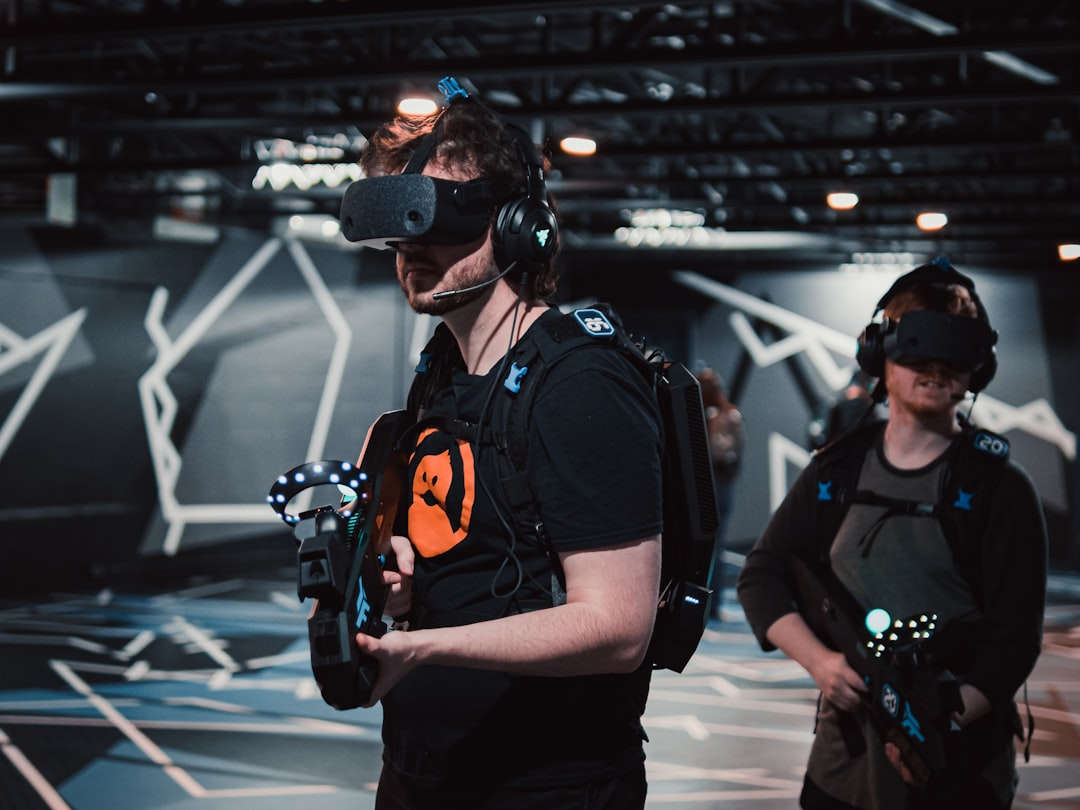
Once considered a niche pastime, gaming has exploded into a global phenomenon, becoming one of the most powerful engines of digital transformation. It’s no longer just about entertainment; gaming has fundamentally reshaped how we interact with technology, build communities, and even conduct business. From driving advancements in hardware and software to pioneering new economic models and skill sets, the gaming industry is a dynamic crucible where the future is forged. Understanding its impact is crucial for anyone navigating the modern digital landscape.
🚀 Beyond Entertainment: A Tech Proving Ground
The gaming industry has consistently pushed the boundaries of technological innovation, often years ahead of other sectors. The insatiable demand for more realistic graphics, immersive experiences, and seamless online interactions has directly fueled advancements in processing power, graphics cards, and network infrastructure. Companies like NVIDIA and AMD continually innovate their GPUs largely due to the demands of high-fidelity gaming. But it’s not just hardware:
- 💡 Engine Development: Game engines like Unity and Unreal Engine (from Epic Games) are no longer confined to games. Their sophisticated rendering, physics, and animation tools are now indispensable in film production, architectural visualization, automotive design, and even medical training. This cross-pollination of technology is a significant, yet often overlooked, facet of gaming’s influence.
- ⚙️ Artificial Intelligence & Machine Learning: Gaming environments serve as excellent testbeds for AI, from enemy pathfinding to procedural content generation. The lessons learned here are directly applicable to AI development in diverse fields.
- 🌐 Cloud Computing & Streaming: Services like Microsoft Game Pass and NVIDIA GeForce NOW showcase the power and potential of cloud gaming, pushing the limits of data streaming and low-latency interaction – critical for broader cloud adoption in enterprises.
💸 The Metaverse & Virtual Economies
Before “the metaverse” became a buzzword, games were building persistent virtual worlds with their own economies, social structures, and user-generated content. Titles like Roblox and Minecraft pioneered these concepts, allowing millions of users to create, share, and even monetize their digital assets and experiences. This isn’t just child’s play; it’s a blueprint for future digital interactions:
- 💰 In-Game Economies: Virtual currencies, digital items, and robust marketplaces (e.g., Steam Community Market) have demonstrated the viability of digital ownership and value exchange.
- 🛍️ Digital Collectibles & NFTs: While controversial, the rise of NFTs found early parallels and inspiration within gaming’s existing digital ownership models, pushing conversations around scarcity, provenance, and decentralized marketplaces.
- 🤝 Community & Identity: Games often provide the first truly global social spaces for individuals, fostering online communities that transcend geographical boundaries and laying the groundwork for digital identity formation.
🎓 New Skills & Emerging Career Paths
Perhaps one of the most transformative, yet underestimated, impacts of gaming is its role in cultivating new skills and opening up diverse career opportunities. Beyond just playing, the ecosystem surrounding gaming demands a vast array of specialized talents:
- 🎮 Game Design & Development: Roles in programming, art, sound design, narrative writing, and quality assurance are in high demand.
- 📊 Esports & Content Creation: Professional players, streamers (on platforms like Twitch and YouTube Gaming), shoutcasters, team managers, and event organizers have forged legitimate, high-paying careers.
- 🤝 Community Management & Marketing: Understanding how to build, nurture, and engage large online communities, often through digital channels, is a critical skill honed within the gaming world and transferable to any brand or organization.
- 🧠 Analytical & Problem-Solving Skills: Gamers often develop exceptional problem-solving, strategic thinking, and rapid decision-making abilities – skills highly valued in any professional environment.
Indeed, academic institutions are recognizing this shift. As the 2024-25 Academic Bulletin from Tiffin University highlights, educational programs now often incorporate digital media, game design, and related fields, reflecting the growing demand for talent equipped to navigate and innovate within these digitally transformed spaces. This formal recognition underscores the long-term career viability born from the gaming ecosystem.
🎯 Unlocking Untapped Potential: Actionable Insights
For businesses and individuals looking to harness the power of digital transformation, the gaming world offers invaluable lessons:
- 📈 Gamification for Engagement: Apply game mechanics (points, badges, leaderboards, progression) to non-game contexts like employee training, customer loyalty programs, or educational platforms. This significantly boosts engagement and motivation.
- 🛠️ Embrace Iteration & Feedback: Game development thrives on rapid prototyping, testing, and incorporating player feedback. Businesses can adopt this agile methodology to continuously improve products and services.
- ⚡ Focus on User Experience (UX): Gaming excels at creating intuitive, engaging, and rewarding user experiences. Prioritizing seamless UX in all digital products and services is a direct takeaway from gaming’s success.
- 🤝 Cultivate Communities: Understand that modern digital success often hinges on building strong, engaged communities around a product or brand. Learn from how gaming fosters loyalty and empowers user-generated content.
The digital transformation driven by gaming is not just about new technologies; it’s about new ways of thinking, interacting, and creating value. Ignoring its profound influence means missing out on crucial insights for the future.
- Pokémon GO (2016): The AR Phenomenon That Changed Gaming
- Google Ingress: Pioneering AR Gaming Before Pokémon GO
🌍 Major Societal & Cultural Shifts

The tapestry of human society is perpetually being rewoven, but occasionally, a single thread, pulled taut at just the right moment, unravels an entire section, forcing a radical re-patterning. These are the societal and cultural tipping points – moments when slow, simmering changes suddenly boil over, reshaping our collective lives in profound ways. Understanding these catalysts is crucial for navigating our present and anticipating our future.
🌐 Digital Connectivity & The Global Village
For decades, the internet simmered, slowly connecting academics and government agencies. Then came the tipping point: the advent of accessible web browsers and, critically, social media platforms like Facebook and later Twitter and TikTok. What began as niche online communities rapidly scaled, collapsing geographical boundaries and fundamentally altering how we communicate, organize, and perceive the world.
- ✅ Instantaneous Information Flow: News, ideas, and events from across the globe became instantly accessible, often breaking through traditional media gatekeepers. Think of the Arab Spring movements, heavily amplified by social media’s reach.
- 💡 Democratized Voice: Suddenly, anyone could be a publisher, broadcaster, or influencer. This gave rise to new forms of community but also created echo chambers and amplified misinformation. The sheer velocity of viral content, from challenges to political campaigns, dramatically illustrates this shift.
- ➡️ New Social Norms: Concepts like “friends lists,” “followers,” and “likes” didn’t exist in our daily lexicon until platforms normalized them, fundamentally altering our perception of social validation and connection.
A non-obvious insight here is the asymmetry of influence. While platforms democratized expression, they also inadvertently created new power structures, where a single viral post or influencer could sway public opinion or even market trends with unprecedented speed.
🧑💻 The Evolution of Work & The Gig Economy
The notion of a “job for life” had been eroding for decades, but the COVID-19 pandemic served as the ultimate tipping point for remote work and the gig economy. While platforms like Upwork and Fiverr had been building momentum for years, the global health crisis forced businesses worldwide to embrace distributed workforces overnight. This wasn’t a gradual adoption; it was a sudden, universal pivot.
- ✅ Remote Work as the Default: Tools like Zoom and Microsoft Teams became indispensable, proving that productivity wasn’t tied to a physical office. This led to fundamental re-evaluations of corporate real estate and urban planning.
- 💡 Explosion of the Gig Economy: With traditional employment models disrupted, more individuals turned to freelance and contract work, leveraging their skills across multiple clients and projects. This increased flexibility but also highlighted challenges around worker benefits and stability.
- ➡️ Skillset Shift: The demand for digital literacy, adaptability, and self-management soared. Companies began to prioritize outcomes over presenteeism, fundamentally changing performance metrics.
A common mistake before this tipping point was viewing remote work as a “perk” rather than a viable, often more efficient, operational model. The pandemic proved it could be the backbone of global commerce, leading many companies, even post-pandemic, to retain hybrid or fully remote structures.
📺 Media Consumption & Information Overload
For much of the 20th century, media consumption was largely dictated by broadcast schedules – tuning in at a specific time for your favorite show or news bulletin. The tipping point came with the widespread adoption of broadband internet and the emergence of streaming services like Netflix and Spotify. This wasn’t just about convenience; it was about shifting power from broadcasters to consumers.
- ✅ On-Demand Everything: Viewers and listeners gained unprecedented control, able to consume content anytime, anywhere, and on any device. This “binge-watching” culture became the norm, fundamentally altering storytelling formats and audience expectations.
- 💡 Personalization & Algorithmic Curatio n: From YouTube’s recommendations to Spotify’s curated playlists, algorithms began to shape our media diets, offering hyper-personalized experiences but also potentially leading to “filter bubbles” and echo chambers.
- ➡️ The Attention Economy: In a world of infinite content, the most valuable commodity became audience attention. This sparked intense competition, driving innovation but also leading to the proliferation of sensationalism and “clickbait.”
A non-obvious insight is how this shift has blurred the lines between content creators and consumers. Platforms like Twitch and YouTube allow ordinary individuals to amass audiences larger than traditional media outlets, completely decentralizing production and distribution.
🌱 Shifting Values & Social Consciousness
While social and environmental concerns have always existed, a notable tipping point in recent years has been the accelerated integration of these values into mainstream business and consumer behavior, moving beyond niche activism to widespread demand for corporate accountability. This shift has been driven by increased digital transparency, generational changes, and the undeniable impacts of global challenges like climate change.
- ✅ ESG (Environmental, Social, Governance) Focus: Investors and consumers increasingly demand that companies not only turn a profit but also demonstrate ethical practices, environmental responsibility, and diverse leadership. Brands like Patagonia have long exemplified this, but now it’s a widespread expectation.
- 💡 Conscious Consumerism: Buyers are actively seeking out products and services from companies that align with their values, prioritizing sustainability, fair labor practices, and social justice. This puts immense pressure on supply chains and marketing strategies.
- ➡️ Brand Activism: Companies are increasingly expected to take public stances on social issues, becoming active participants in societal debates rather than remaining neutral. This carries both opportunities for deeper connection and risks of backlash.
The non-obvious insight here is the speed at which social missteps can translate into significant brand damage. In the age of instant digital dissemination, a single misstep can erode years of brand building overnight, forcing corporations to be hyper-aware and genuinely committed to their stated values. The demand for business acumen capable of navigating these rapidly shifting landscapes is higher than ever, as curricula, like those outlined in the Olin Business School bulletin, increasingly emphasize adaptability and data-driven decision-making in a world shaped by these profound societal and cultural shifts.
- Societal Shifts: How Major Changes Reshape Our World
- Mao’s Cultural Revolution: A Radical Transformation of China
- Culture and Revolution: How Revolutions Reshape Societies
This guide serves as a powerful testament to the transformative power of singular moments, demonstrating that true change often springs from unexpected origins. By grasping the essence of these tipping points, you’re not just observing history; you’re gaining the insight to appreciate the monumental forces that continually reshape our world and inspire future breakthroughs.
Recommended Video
What is a ‘tipping point’?
A ‘tipping point’ is a critical threshold in a system where a small input or change can cause a large, often sudden and irreversible, effect, leading to a new state.
Can tipping points be predicted?
While the exact timing is often difficult to predict, patterns and accumulating pressures that lead to tipping points can often be identified retrospectively, and sometimes in foresight, by experts in various fields.
Are all tipping points negative?
No, tipping points can lead to both positive and negative outcomes. They can signify breakthroughs in science, societal progress, or successful movements, as well as crises or declines.