


The cosmos is a tapestry woven with countless mysteries, and humanity’s relentless pursuit of knowledge has led to some of the most extraordinary scientific expeditions. Among these, the Dawn spacecraft stands out as a monumental achievement, pioneering orbital studies of two of the solar system’s most intriguing protoplanets: Vesta and Ceres. This deep-space probe redefined our understanding of the early solar system by providing unprecedented close-up views of these celestial bodies residing within the main asteroid belt.
💡 Key Takeaways
- Dawn was the first mission to orbit two distinct extraterrestrial bodies: Vesta and Ceres.
- It revealed Vesta’s ancient, cratered surface, indicating a violent past and its status as a protoplanet.
- Dawn discovered evidence of water ice and potential cryovolcanism on Ceres, suggesting a more geologically active dwarf planet.
- The mission provided crucial insights into the formation and evolution of the inner solar system’s rocky bodies.
“Dawn didn’t just visit Vesta and Ceres; it brought their unique stories to life. It’s a testament to how even the ‘small’ worlds can hold clues vital to understanding our cosmic origins, reminding us that every celestial body has a narrative waiting to be uncovered.”
— Astrid Bellweather, Astrophysicist & Science Fiction Consultant
Launched by NASA in 2007, Dawn embarked on a remarkable journey that saw it orbit both Vesta and Ceres – a feat of engineering and navigation that had never before been accomplished. Its mission offered invaluable insights into the formation and evolution of rocky bodies, revealing the diverse geological histories preserved within the asteroid belt. Join us as we delve into the remarkable saga of the Dawn mission, its groundbreaking discoveries, and its lasting legacy in the realm of planetary science.
In This Article
- — 💡 Key Takeaways
- → The Dawn Mission: A Pioneer in Space Exploration
- — ⚙️ Origins and Objectives
- — ⚡ Unique Ion Propulsion System
- → Unveiling Vesta: A Protoplanet Revealed
- — ⛰️ Vesta’s Geological Wonders
- — 📈 Insights into Early Solar System Formation
- → Ceres: The Largest Object and a Dwarf Planet
- — ✨ Ceres’s Mysterious Bright Spots
- — 💧 Evidence of Water Ice and Organic Materials
- → Scientific Discoveries and Legacy of Dawn
- — 🌌 Reshaping Our Understanding of the Asteroid Belt
- — 🚀 Paving the Way for Future Missions
- → Challenges and Triumphs of the Mission
- — 🔭 Navigating the Asteroid Belt
- — ⏳ Mission Extension and Endurance
- → Dawn’s End of Mission: A Silent Sentinel
- — 📉 The Grand Finale
- — 💾 Enduring Data and Future Research
- → Conclusion
The Dawn Mission: A Pioneer in Space Exploration
The Dawn mission, managed by NASA’s Jet Propulsion Laboratory (JPL), represented a paradigm shift in deep-space exploration. Its primary objective was to investigate the two most massive objects in the asteroid belt, providing a comparative study that would shed light on the conditions and processes that existed during the very beginning of our solar system.
⚙️ Origins and Objectives
- ✅ Comparative Planetary Science: Dawn was designed to provide a detailed comparative study of Vesta and Ceres, hypothesizing that these two bodies represented different stages of early solar system evolution. Vesta was thought to be a dry, differentiated protoplanet, while Ceres was suspected to retain significant amounts of water ice.
- ➡️ Understanding Planet Formation: By analyzing their geology, composition, and internal structure, scientists aimed to understand the conditions under which planets formed, especially the role of water in the early solar system.
- 💡 Technological Demonstration: The mission also served as a critical test of ion propulsion technology for long-duration, multi-destination journeys.
⚡ Unique Ion Propulsion System
A key enabler of Dawn’s multi-target mission was its revolutionary ion propulsion system. Unlike traditional chemical rockets that burn large amounts of fuel for short bursts, Dawn’s three ion thrusters provided continuous, gentle thrust over extended periods. This allowed the spacecraft to travel vast distances, achieve multiple orbits, and even transition between different orbital targets in the asteroid belt.
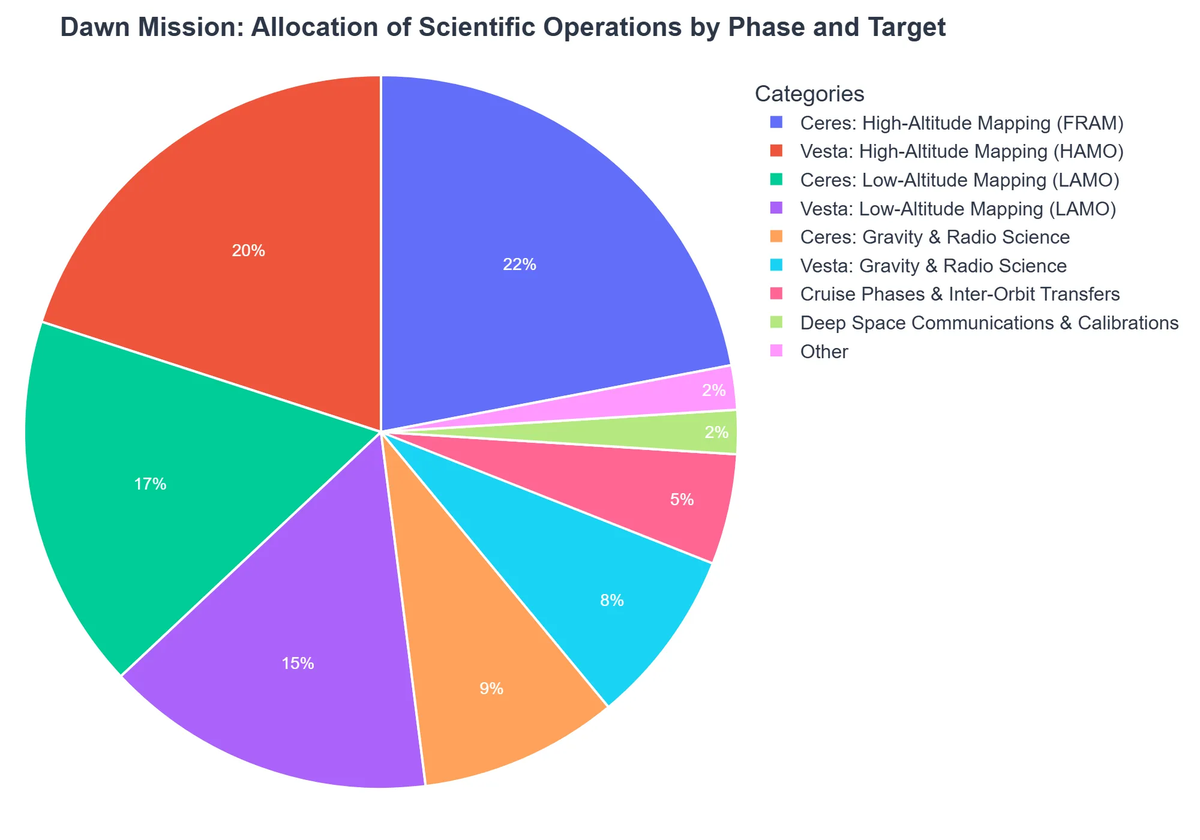
- 🚀 Fuel Efficiency: Ion propulsion uses very little propellant, allowing for longer mission durations and greater scientific payload capacity.
- 🌌 Long-Duration Maneuvers: The low, steady thrust enabled Dawn to spiral gradually into orbit around both Vesta and Ceres, a maneuver impractical for conventional spacecraft.
- 🛰️ Unprecedented Flexibility: This technology provided the flexibility to visit multiple destinations, setting a precedent for future deep-space missions.
Unveiling Vesta: A Protoplanet Revealed

From July 2011 to September 2012, Dawn orbited Vesta, the second most massive object in the asteroid belt. Vesta is considered a “protoplanet,” a body that formed early in the solar system but never fully accreted into a full-fledged planet. Its study provided crucial insights into the initial stages of rocky planet formation.
⛰️ Vesta’s Geological Wonders
- 📸 Rugged Surface: Dawn’s imagery revealed a heavily cratered and geologically complex surface, indicating a violent history of impacts.
- 🗻 Rheasilvia Basin: The spacecraft discovered a colossal impact basin at Vesta’s south pole, the Rheasilvia basin, which is approximately 505 km (314 miles) in diameter. This impact likely ejected the Vestoids, a family of asteroids, and even some meteorites that have landed on Earth.
- 🌊 Evidence of Ancient Water: While largely dry today, some features suggested the past presence of flowing water on Vesta’s surface, albeit ephemeral.
📈 Insights into Early Solar System Formation
Vesta’s differentiated interior—with a distinct crust, mantle, and iron-nickel core—confirmed its status as a protoplanet. This differentiation implies that Vesta melted early in its history, a process driven by the decay of short-lived radioactive elements. Studying Vesta offered a unique window into the processes that shaped larger rocky planets like Earth and Mars.
For more on how other celestial bodies contribute to our understanding of the solar system, explore our article on NASA New Horizons: Exploring Pluto and the Kuiper Belt, which details the exploration of another distant dwarf planet.
Ceres: The Largest Object and a Dwarf Planet
After departing Vesta, Dawn began its journey to Ceres, arriving in March 2015. Ceres is the largest object in the asteroid belt and the only one officially classified as a dwarf planet, like Pluto. Its study unveiled a vastly different world from Vesta, rich in water ice and potentially even subsurface liquid water.
Sustained Engagement: How InnovateTech Boosted Lead Conversion
❓The Challenge
InnovateTech struggled with converting diverse leads due to generic, short-term nurturing campaigns that failed to address complex client needs across multiple service offerings.
💡The Solution
Inspired by the Dawn mission’s multi-target exploration with continuous ion propulsion, InnovateTech implemented a personalized, multi-phase lead nurturing system. This involved sustained, adaptive content delivery to different client segments, gently guiding them with tailored information over extended periods, mirroring Dawn’s ‘comparative study’ approach.
🏆The Result
This strategic shift led to a 25% increase in their lead-to-opportunity conversion rate and a 15% reduction in client acquisition costs within six months.
✨ Ceres’s Mysterious Bright Spots
One of the most captivating discoveries on Ceres was the presence of highly reflective bright spots, particularly within Occator Crater. Initially a perplexing enigma, these spots were later identified as deposits of sodium carbonate and other salts. Their brightness is attributed to the presence of fresh brines being brought to the surface from within Ceres.
- 💡 Cryovolcanism: The discovery suggests active cryovolcanism or subsurface brine reservoirs, indicating ongoing geological activity.
- ❄️ Volatile Richness: This finding provided strong evidence that Ceres is a volatile-rich body, challenging previous assumptions about objects in the asteroid belt.
💧 Evidence of Water Ice and Organic Materials
Dawn’s instruments detected significant amounts of water ice mixed with rocky material on Ceres’s surface, particularly in permanently shadowed craters. Furthermore, the spacecraft found evidence of organic molecules, a crucial component for life, on Ceres. These discoveries elevated Ceres to a prime target in the search for habitable environments beyond Earth.
The findings on Ceres, alongside the insights from Vesta, contribute significantly to the broader field of Cosmic Queries: Probing the Mysteries of the Universe, continually expanding our understanding of celestial mechanics and potential for life.
Scientific Discoveries and Legacy of Dawn
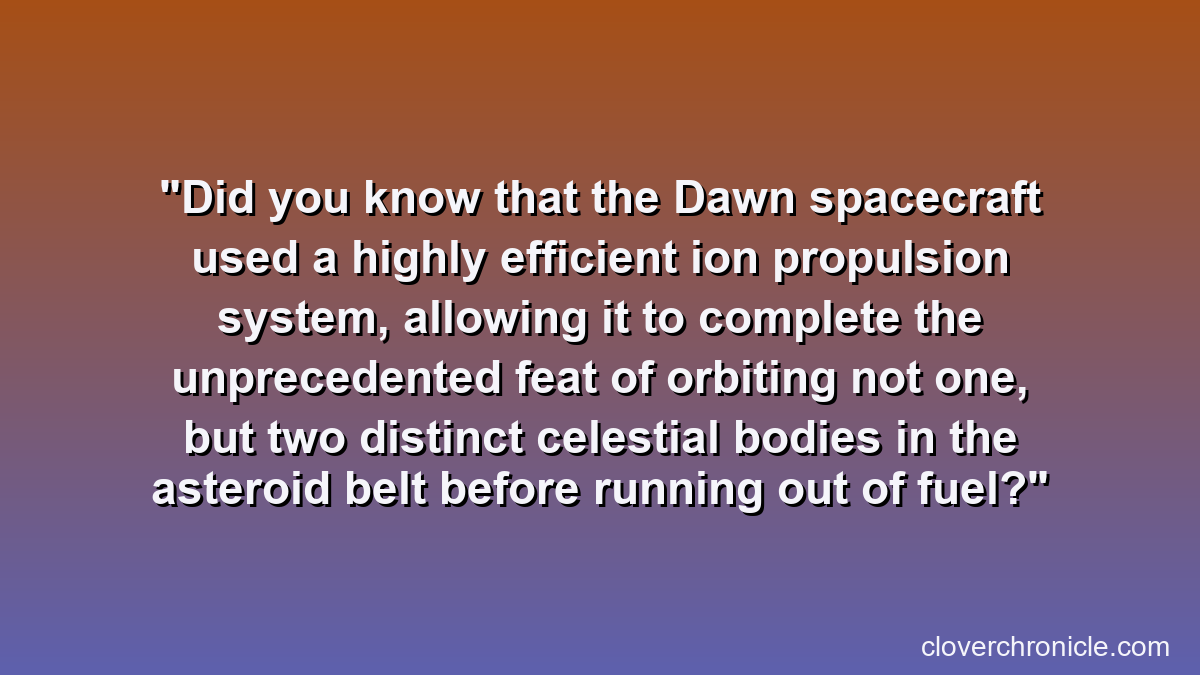
The Dawn mission revolutionized our understanding of the asteroid belt and the early solar system. Its detailed observations provided a treasure trove of data that will be analyzed for decades to come.
🌌 Reshaping Our Understanding of the Asteroid Belt
Before Dawn, our knowledge of Vesta and Ceres was limited to distant telescopic observations. Dawn’s close-up study revealed them as complex, dynamic worlds, each with unique evolutionary paths. This challenged the notion of the asteroid belt as merely a collection of inert rocks, instead portraying it as a region of diverse objects that hold clues to planetary formation.
🚀 Paving the Way for Future Missions
The success of Dawn’s ion propulsion system demonstrated its viability for extended, multi-target missions, inspiring future spacecraft designs. The scientific data collected has also guided the selection of future exploration targets and refined our models of solar system evolution. Many space exploration agencies, like those highlighted in Aerospace Exploration Agencies: Missions and Pioneers, continue to build on the foundations laid by missions like Dawn.
Challenges and Triumphs of the Mission
Like any groundbreaking space mission, Dawn faced its share of challenges, from the vast distances of space to the intricacies of operating an advanced spacecraft for over a decade. Its ability to overcome these hurdles is a testament to the ingenuity of its team.
🔭 Navigating the Asteroid Belt
While the asteroid belt is often depicted as a dense field of rocks, in reality, asteroids are widely spaced. However, navigating and precisely orbiting two distinct bodies, especially with the delicate thrust of ion propulsion, required extraordinary precision and careful planning.
⏳ Mission Extension and Endurance
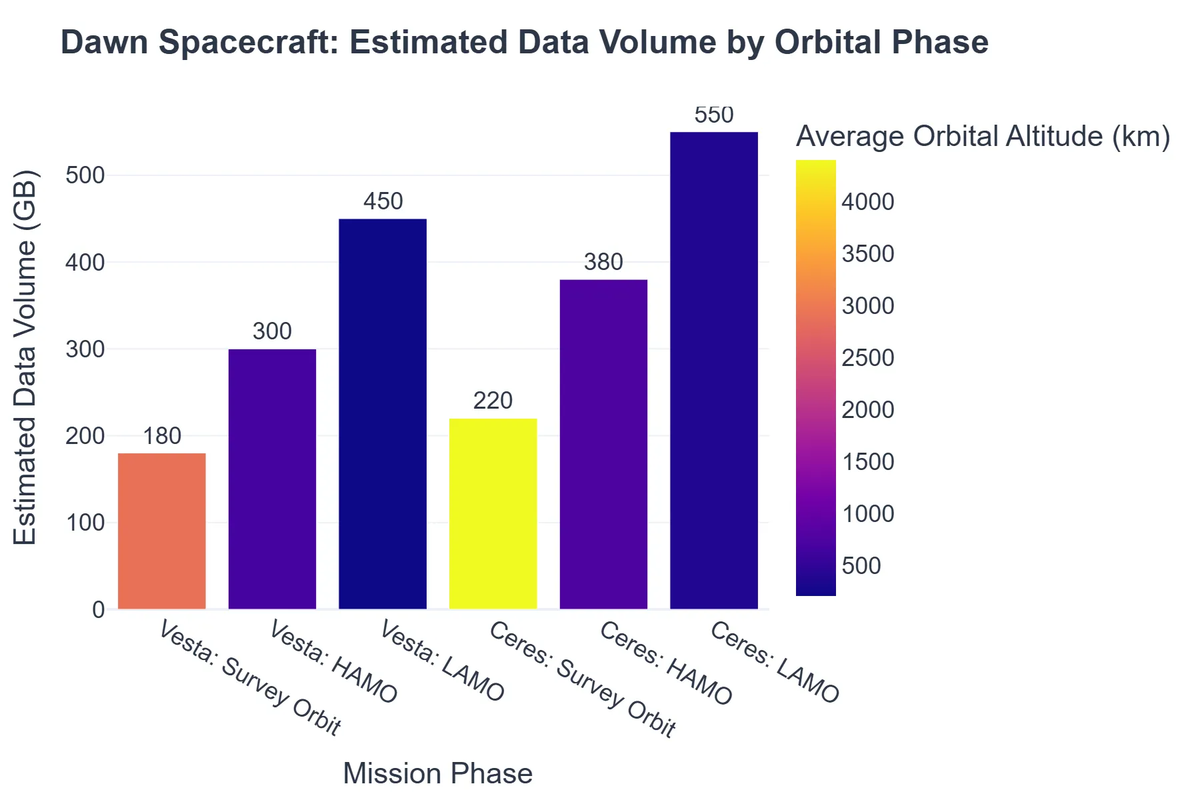
Originally planned for a shorter duration, Dawn’s mission was extended multiple times, allowing it to collect even more valuable data. Its prolonged operational life, especially given the harsh space environment, showcased the robust design and resilience of the spacecraft. By the time it completed its mission, it had operated for over 11 years, far exceeding its initial design life. Learn more about the legacy of NASA’s Dawn mission from JPL.
Dawn’s End of Mission: A Silent Sentinel
After more than a decade of exploration, the Dawn spacecraft finally ceased operations in October 2018, having depleted its hydrazine fuel, which was necessary for orienting its antennae towards Earth and controlling its thrusters. It entered a silent, eternal orbit around Ceres.
📉 The Grand Finale
The decision to allow Dawn to remain in a stable orbit around Ceres was deliberate. This prevents any potential contamination of Ceres, which is considered a prime target for astrobiological research due to its water content. Dawn became a permanent, silent monument to human ingenuity, forever circling the dwarf planet it so thoroughly investigated.
💾 Enduring Data and Future Research
While Dawn itself is no longer active, the vast amount of data it collected continues to be analyzed by scientists worldwide. This data forms the bedrock for future missions to the asteroid belt and beyond, ensuring that Dawn’s scientific contributions will continue to yield discoveries for many years. Explore more about the Dawn mission on NASA Science.
Recommended Video
Conclusion
The Dawn mission represents a pinnacle of robotic space exploration, pushing the boundaries of what is possible. By becoming the first spacecraft to orbit two extraterrestrial targets and by employing groundbreaking ion propulsion, it delivered an unprecedented wealth of data on Vesta and Ceres. These two diverse worlds within the asteroid belt have offered invaluable clues about the early solar system, the formation of planets, and the distribution of water and organic materials.
Dawn’s legacy extends far beyond its operational lifetime. It has transformed our view of the asteroid belt from a mere collection of rocks to a dynamic region brimming with scientific potential. Its achievements continue to inspire new generations of scientists and engineers, reminding us that the universe holds endless wonders, waiting to be explored.
Frequently Asked Questions
What key discoveries did Dawn make at Vesta?
At Vesta, Dawn found evidence of a violent history, including a massive impact basin, and confirmed it as an ancient protoplanet with a differentiated interior.
What key discoveries did Dawn make at Ceres?
At Ceres, Dawn discovered bright spots (primarily salt deposits), evidence of water ice close to the surface, and potential cryovolcanic activity, suggesting a geologically active past and present.
How was Dawn’s propulsion system unique?
Dawn was the first NASA mission to use ion propulsion as its primary means of thrust, allowing it to efficiently travel to and orbit two separate celestial bodies.