


Earth is a dynamic, living planet, constantly reshaped by forces both seen and unseen. At the heart of these transformative processes lies a fundamental geological theory: plate tectonics. This revolutionary concept explains how our planet’s rigid outer shell, the lithosphere, is broken into large, moving slabs called tectonic plates. These plates constantly interact, driving earthquakes, volcanic eruptions, and the formation of majestic mountain ranges and vast ocean basins. Understanding plate tectonics is not just an academic exercise; it’s key to comprehending the very ground beneath our feet, the distribution of natural resources, and the occurrence of some of Earth’s most devastating natural hazards.
💡 Key Takeaways
- Plate tectonics describes how Earth’s lithosphere is broken into large plates that are constantly moving.
- These plate movements drive major geological events, including earthquakes, volcanic eruptions, and the formation of mountain ranges.
- There are three main types of plate boundaries: divergent, convergent, and transform, each with distinct geological consequences.
- The continuous motion of tectonic plates has profoundly shaped Earth’s surface and influenced climate patterns over geological timescales.
“Plate tectonics isn’t just about moving landmasses; it’s the fundamental engine driving Earth’s geophysical processes, directly impacting everything from seismic activity to long-term climate dynamics. Understanding it is key to comprehending our dynamic planet.”
— Marcus Sterling, Geophysical Explorer & Climate Dynamics Analyst
This essential guide aims to provide a comprehensive and authoritative overview of this captivating field. We will delve deep into the mechanics of plate movement, explore the various types of plate boundaries, and illustrate the profound impact these geological phenomena have on our world. Prepare to gain a new appreciation for the incredible, slow-motion ballet that continually reshapes our planet.
In This Article
- — 💡 Key Takeaways
- → What is Plate Tectonics? A Primer on Earth’s Dynamic Layers
- → The Earth’s Major Plates: A Global View
- → Types of Plate Boundaries: Where the Action Happens
- — 1. Divergent Boundaries: Plates Pulling Apart
- — 2. Convergent Boundaries: Plates Colliding
- — 3. Transform Boundaries: Plates Sliding Past Each Other
- → Driving Forces Behind Plate Movement
- → Geological Phenomena Caused by Plate Tectonics
- → The History and Evolution of Tectonic Theory
- → Impacts and Importance of Plate Tectonics
- → Conclusion: A Living Planet
What is Plate Tectonics? A Primer on Earth’s Dynamic Layers
To truly understand plate tectonics, we must first grasp the layered structure of our planet. Earth is not a solid sphere; rather, it comprises several distinct layers, each with unique properties. The theory of plate tectonics primarily concerns the outermost layers:
- Crust: The outermost, thinnest layer. There are two types: continental crust (thicker, less dense, primarily granite) and oceanic crust (thinner, more dense, primarily basalt).
- Lithosphere: This rigid, brittle layer includes the crust and the uppermost part of the mantle. It’s this lithosphere that is broken into the tectonic plates.
- Asthenosphere: Beneath the lithosphere lies the asthenosphere, a semi-fluid, ductile layer of the upper mantle. While solid, it behaves like a very viscous liquid over geological timescales, allowing the rigid lithospheric plates to “float” and move upon it.
- Mantle: The thickest layer, extending to a depth of about 2,900 km. It’s composed of dense, hot, semi-solid rock that undergoes convection currents.
- Outer Core: A liquid layer composed primarily of iron and nickel. Its convection creates Earth’s magnetic field.
- Inner Core: A solid ball of iron and nickel at the Earth’s center, under immense pressure and extremely high temperatures.
The concept of tectonics describes the processes that build the Earth’s crust and outer layers. Plate tectonics specifically posits that the lithosphere is divided into several large and small plates that are in constant, albeit slow, motion. These movements, driven by heat from Earth’s interior, are responsible for most geological activity on the surface.
The Earth’s Major Plates: A Global View
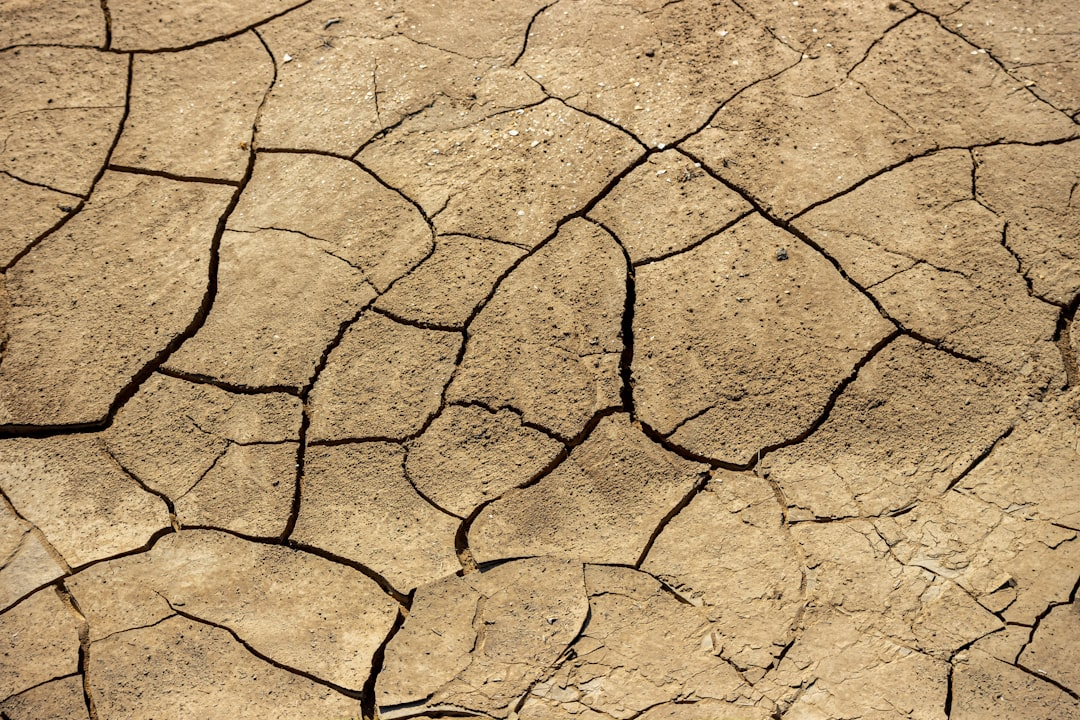
When we describe plate tectonics, it’s crucial to identify the major players. While there are dozens of smaller microplates, geologists typically recognize seven major plates, along with several significant minor ones, that cover the Earth’s surface. These plates are not fixed entities; their boundaries are constantly shifting and redefining the continents and ocean basins.
The major 7 plate tectonics include:
- African Plate: Encompassing the continent of Africa and parts of the surrounding oceanic crust.
- Antarctic Plate: The continent of Antarctica and the surrounding ocean.
- Eurasian Plate: Most of Europe and Asia.
- Indo-Australian Plate: Australia, India, and surrounding oceanic crust (often considered two separate plates: Indian and Australian). For a detailed look at its movements, consider our article on the Australian Plate: Movement, Collisions, and Geology.
- North American Plate: North America, Greenland, and parts of the Atlantic Ocean.
- South American Plate: South America and parts of the Atlantic Ocean.
- Pacific Plate: The largest plate, almost entirely oceanic, underlies most of the Pacific Ocean.
Beyond these major seven, significant minor plates like the Nazca Plate, Arabian Plate, Caribbean Plate, Juan de Fuca Plate, and Philippine Sea Plate also play critical roles in regional geology. The study of these individual plates helps us better understand the intricate dance of Earth’s surface. For more on the specifics, explore Earth’s Geo Plates: Understanding Plate Tectonics.
Review: Plate Tectonics Explained Guide
Pros
- ✔Simplifies complex geological concepts for easy understanding.
- ✔Provides a foundational understanding of Earth’s dynamic processes.
- ✔Helps in comprehending the causes of natural phenomena like earthquakes and volcanoes.
Cons
- ✖May lack the in-depth detail required for advanced scientific study.
- ✖Information could potentially become outdated with new geological discoveries.
- ✖Might oversimplify certain complex nuances of plate tectonics.
Types of Plate Boundaries: Where the Action Happens
The interaction points between these moving plates are where the most dramatic geological events unfold. There are three primary types of plate boundaries, each characterized by distinct movements and associated geological features:
1. Divergent Boundaries: Plates Pulling Apart
At divergent boundaries, two plates move away from each other. This separation allows magma from the mantle to rise to the surface, creating new crustal material. This process is known as seafloor spreading. Key features include:
- Mid-Ocean Ridges: Underwater mountain ranges like the Mid-Atlantic Ridge, where new oceanic crust is continuously formed.
- Rift Valleys: On continents, divergent boundaries can create large rift valleys, such as the East African Rift Valley, which could eventually lead to the formation of new ocean basins.
- Volcanic Activity: Frequent, often effusive (non-explosive) volcanism.
- Shallow Earthquakes: Common due to the tensional forces.
2. Convergent Boundaries: Plates Colliding
Convergent boundaries are characterized by plates moving towards each other, resulting in collisions. The outcome depends on the type of crust involved:
- Oceanic-Oceanic Convergence: When two oceanic plates collide, one typically subducts (sinks) beneath the other. This process forms deep ocean trenches (e.g., Mariana Trench) and volcanic island arcs (e.g., Japan, Aleutian Islands) due to the melting of the subducting plate.
- Oceanic-Continental Convergence: An oceanic plate, being denser, will subduct beneath a less dense continental plate. This creates a deep ocean trench adjacent to the continent and a chain of volcanic mountains on the continental margin (e.g., Andes Mountains, Cascade Range). Intense geological activity is a hallmark, including some of the most powerful earthquakes.
- Continental-Continental Convergence: When two continental plates collide, neither can subduct significantly due to their relatively low density. Instead, the crust is intensely compressed, folded, and uplifted, forming vast mountain ranges (e.g., Himalayas, Alps). This boundary is associated with widespread, but often shallow, seismicity.
3. Transform Boundaries: Plates Sliding Past Each Other
At transform boundaries, plates slide horizontally past one another. Crust is neither created nor destroyed. These boundaries are characterized by transform faults, which connect segments of mid-ocean ridges or other plate boundaries. The most famous example is the San Andreas Fault in California.
- Earthquakes: Transform boundaries are notorious for strong, shallow earthquakes as stress builds up and is released along the fault lines.
- No Volcanic Activity: Unlike divergent and convergent boundaries, transform boundaries generally lack volcanism.
Driving Forces Behind Plate Movement
The continuous movement of Earth’s tectonic plates is a complex dance powered by the planet’s internal heat. While scientists continue to refine their understanding, the primary mechanisms believed to drive tectonics include:
- Mantle Convection: This is considered the primary driving force. Heat from the Earth’s core causes molten rock in the mantle to rise, cool, and then sink. This cyclical motion creates convection currents that drag the overlying lithospheric plates along. Imagine a pot of boiling water, where the hot water rises, moves across the surface, cools, and sinks, creating currents.
- Ridge Push: At mid-ocean ridges (divergent boundaries), newly formed oceanic crust is hot and elevated. As it cools and becomes denser, it slides down the gentle slope away from the ridge crest under the influence of gravity, effectively “pushing” the plate ahead of it.
- Slab Pull: This is widely considered the most significant contributor to plate motion. At convergent boundaries, as an oceanic plate subducts into the mantle, its increasing density (due to cooling) pulls the rest of the plate along behind it, much like a sinking anchor pulling a chain. This downward pull is extremely powerful.
These forces act in concert, creating a continuous, slow-motion engine that has been shaping Earth’s surface for billions of years, leading to the grand movements described when we describe plate tectonics.
Geological Phenomena Caused by Plate Tectonics
The interactions at plate boundaries are responsible for the most dramatic geological features and events on Earth, making about plate tectonics a study of our planet’s very active nature. These include:
- Earthquakes: Sudden releases of energy caused by the sudden slip along faults, often at plate boundaries. Convergent and transform boundaries are particularly seismically active.
- Volcanoes: Formed when molten rock (magma) rises to the surface. Most active volcanoes are found at convergent boundaries (subduction zones) and divergent boundaries (mid-ocean ridges and rift valleys). The Pacific Ring of Fire is a prime example of volcanic activity driven by subduction.
- Mountain Ranges: Majestic mountain ranges like the Himalayas and Alps are formed by the immense compressional forces at continental-continental convergent boundaries. Volcanic mountain ranges like the Andes are formed at oceanic-continental convergent boundaries.
- Oceanic Trenches: The deepest parts of the ocean floor, formed at convergent boundaries where one oceanic plate subducts beneath another. The Mariana Trench, over 11,000 meters deep, is the deepest known point on Earth.
- Tsunamis: Giant ocean waves primarily caused by large undersea earthquakes, especially those occurring at subduction zones where significant vertical displacement of the seafloor occurs. For more on such powerful forces, read about Breathtaking Natural Phenomena: Explained.
- Hotspots: While not directly at plate boundaries, hotspots are plumes of superheated mantle material that rise through the plates, creating chains of volcanoes (e.g., Hawaiian Islands) as the plate moves over the stationary plume.
Understanding these phenomena is critical for hazard mitigation and for comprehending the processes that have shaped Earth’s diverse landscapes over geological time scales. The insights we gain when we describe plate tectonics are invaluable.
The History and Evolution of Tectonic Theory
The concept of a dynamic Earth with moving continents wasn’t always accepted. The journey to modern tectonics began with the idea of continental drift.
In the early 20th century, German meteorologist Alfred Wegener proposed the theory of continental drift, suggesting that continents had once been joined together in a supercontinent called Pangaea and had since drifted apart. His evidence included the “jigsaw puzzle” fit of continents, matching fossil records across oceans, similar rock formations, and paleoclimatic indicators. However, Wegener’s theory lacked a plausible mechanism for how continents could move, leading to widespread skepticism in the scientific community.
It wasn’t until the mid-20th century, with advances in oceanography and geophysics, that the pieces began to fall into place. Discoveries such as mid-ocean ridges, magnetic stripes on the seafloor (evidence of seafloor spreading), deep ocean trenches, and the distribution of earthquakes and volcanoes provided the irrefutable evidence needed. Harry Hess and Robert Dietz proposed the mechanism of seafloor spreading, explaining how new crust is generated at ridges and consumed at trenches. By the late 1960s, these various concepts coalesced into the unified theory of plate tectonics, explaining not just the movement of continents but also the formation of oceans and the distribution of geological activity. For a fascinating comparison of these early ideas, National Geographic offers an excellent resource on Continental Drift versus Plate Tectonics.
Impacts and Importance of Plate Tectonics
The profound influence of plate tectonics extends far beyond mere geological curiosity. It is a fundamental process that shapes our world in countless ways, from the grand scale of global geography to the microscopic availability of essential resources.
- Shaping Continents and Ocean Basins: The slow, continuous motion of plates has sculpted the continents we know today, created vast ocean basins, and continues to redefine coastlines. This ongoing reshaping influences climate patterns, ocean currents, and ultimately, the distribution of life on Earth.
- Distribution of Natural Resources: Many valuable mineral deposits (e.g., copper, gold, diamonds) are formed through processes directly linked to plate tectonics, particularly at convergent boundaries where volcanic activity and hydrothermal systems are prevalent. Hydrothermal vents, for example, are created by such processes. You can learn more about these fascinating formations in our article on Geothermal Vents: Exploring Deep Sea Wonders. Fossil fuels also accumulate in sedimentary basins often formed by tectonic subsidence.
- Geohazards: While beneficial in many ways, plate tectonics is also the root cause of natural hazards like earthquakes, volcanic eruptions, and tsunamis. Understanding plate movements is crucial for predicting and mitigating the risks associated with these events, protecting human lives and infrastructure.
- Influence on Climate: The positioning of continents and the formation of mountain ranges due to tectonic activity significantly impact global ocean circulation and atmospheric patterns, influencing long-term climate change. The opening and closing of ocean gateways, for instance, can drastically alter heat distribution across the globe. For a broader understanding of how these forces interact with Earth’s systems, our article Earth’s Unseen Forces: The Hidden Dynamics of Our Planet provides further context.
- Evolution of Life: Tectonic processes have played a crucial role in the evolution and distribution of species by creating and separating landmasses, leading to periods of isolation and subsequent speciation.
Ultimately, learning about plate tectonics helps us appreciate the intricate, interconnected systems that govern our planet and provides critical knowledge for managing its resources and preparing for its dynamic shifts. For a foundational understanding, you can consult authoritative sources such as National Geographic’s Plate Tectonics resource.

Recommended Video
Conclusion: A Living Planet
The theory of plate tectonics is a cornerstone of modern Earth science, providing a unifying framework for understanding a vast array of geological phenomena. From the awe-inspiring formation of mountain ranges to the destructive power of earthquakes and volcanoes, the slow but relentless movement of Earth’s lithospheric plates dictates the very fabric of our planet’s surface. We’ve explored how plates move, the distinct interactions at their boundaries, and the profound impacts these processes have on both the physical world and human society.
As we continue to unravel the mysteries of our planet’s interior, the principles of plate tectonics remain essential. They remind us that Earth is not static but a constantly evolving system, shaped by dynamic forces that have been at work for billions of years and will continue to be for eons to come. This understanding empowers us not only to marvel at Earth’s geological wonders but also to better prepare for its natural rhythms and hazards.
Frequently Asked Questions
What is plate tectonics?
Plate tectonics is a scientific theory explaining how the Earth’s rigid outer layer (lithosphere) is divided into large, rigid slabs called tectonic plates that are constantly moving.
What causes tectonic plates to move?
The primary driving force is convection currents within the Earth’s mantle, where heat from the core causes molten rock to rise and fall, dragging the plates along.
What are the main types of plate boundaries?
There are three main types: divergent (plates moving apart), convergent (plates moving together), and transform (plates sliding past each other).
How do plate tectonics affect Earth’s surface?
Plate movements are responsible for earthquakes, volcanic activity, the formation of mountain ranges, ocean trenches, and the gradual reshaping of continents.