The story of humanity is one of constant change, adaptation, and an incredible journey through time. Far from being static, our species has undergone profound transformations over millions of years, shaping who we are today. Understanding human evolution isn’t just about ancient history; it’s about comprehending the very essence of our biology, behavior, and place in the natural world.
💡 Key Takeaways
- Human evolution is a complex, non-linear process spanning millions of years, driven by environmental pressures and genetic adaptations.
- Key milestones include bipedalism, tool use, and the development of larger brains, each profoundly shaping our lineage.
- Fossil discoveries and genetic evidence continuously refine our understanding of human ancestral relationships and migrations.
- Modern humans (Homo sapiens) emerged in Africa and subsequently dispersed globally, interacting with and sometimes interbreeding with other hominin species.
“Our evolutionary journey isn’t just about physical adaptation; it’s a profound story of cognitive development, as our brains evolved to navigate increasingly complex social and environmental landscapes. Understanding this past sheds light on our present mental architecture.”
— Eleanor Vance, Neuroscience Communicator & Cognitive Psychologist
In this comprehensive guide, we’ll peel back the layers of time to trace our evolutionary roots, exploring the scientific evidence that illuminates our past. From the earliest primate ancestors to the emergence of modern humans, prepare to embark on a fascinating journey that will redefine your understanding of our species’ origins.
In This Article
- — 💡 Key Takeaways
- → Understanding Human Evolution: An Unfolding Story
- — What Does “Evolution” Mean in This Context?
- → Tracing Our Primate Ancestry: From What Did Humans Evol
ve? - — The Last Common Ancestor (LCA)
- → ⚙️ Key Evolutionary Milestones on the Hominin Path
- — Bipedalism: The Dawn of Upright Walking
- — Brain Expansion and Tool Use
- — Control of Fire and Language Development
- → 🌍 The “Out of Africa” Journey: From Where Did Humans Evolve?
- — The African Origin of Homo Sapiens
- — Waves of Migration
- → Modern Human Diversity: Interbreeding and Adaptation
- — Neanderthals and Denisovans
- — Ongoing Adaptations
- → The Future of Human Evolution: Are We Still Evolving?
- → Conclusion
Understanding Human Evolution: An Unfolding Story
Human evolution is the lengthy process of change by which people originated from ape-like ancestors. Scientific evidence indicates that the physical and behavioral traits shared by all people originated from ape-like ancestors and evolved over a period of approximately six million years.
What Does “Evolution” Mean in This Context?
Evolution, in biological terms, refers to the change in heritable characteristics of biological populations over successive generations. For humans, this encompasses:
- ✅ Genetic Changes: Mutations and natural selection leading to new traits.
- ➡️ Physical Adaptations: Development of bipedalism, larger brains, changes in diet.
- 💡 Behavioral Shifts: Tool use, social structures, language development.
It’s a continuous process, driven by environmental pressures and genetic variation.
Tracing Our Primate Ancestry: From What Did Humans Evol
ve?
The question, “from what did humans evolve?” is fundamental to understanding our lineage. The answer lies not in a direct transformation from modern apes, but in a shared common ancestor.
The Last Common Ancestor (LCA)
Around 6 to 8 million years ago, a common ancestor to both humans and chimpanzees lived in Africa. This LCA was not a chimpanzee, nor was it a human, but an ape-like creature from which both lineages diverged. This divergence marked the beginning of the hominin line—the group that includes modern humans and all our extinct direct ancestors.
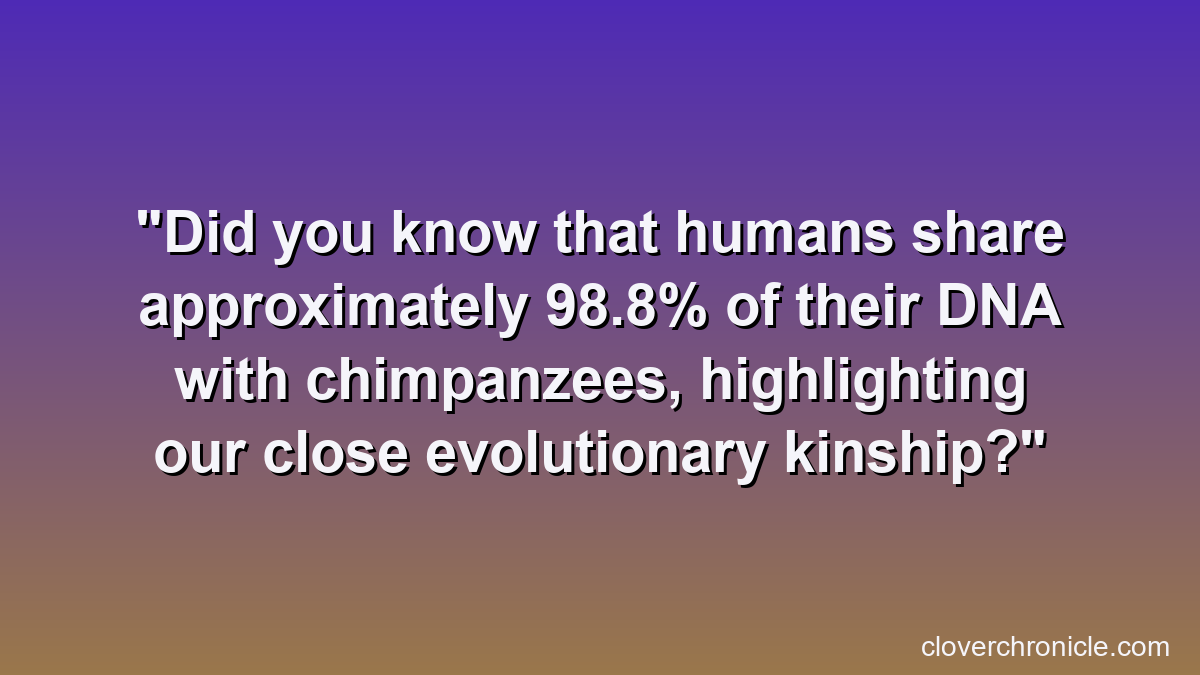
- 🌱 Shared Heritage: We share over 98% of our DNA with chimpanzees, a strong indicator of this shared ancestry.
- 🌿 Divergence: Environmental changes likely favored traits that led to bipedalism in one lineage (hominins) and knuckle-walking in the other (chimpanzees).
For a more in-depth exploration of this connection, read our article on Humans and Apes: Tracing the Evolutionary Link.
⚙️ Key Evolutionary Milestones on the Hominin Path
The journey from our ape-like ancestors to modern Homo sapiens is punctuated by several pivotal evolutionary breakthroughs.
Bipedalism: The Dawn of Upright Walking
One of the earliest and most significant adaptations was the ability to walk on two legs. This transition occurred millions of years ago, long before significant brain expansion.
- 🚶♀️ Advantages: Frees the hands for carrying, tool use, and foraging; improved long-distance travel efficiency; better vantage point for spotting predators or food.
- 🦴 Skeletal Changes: Pelvis shape, knee joint, and foot structure all adapted to support upright posture.
Brain Expansion and Tool Use
While early hominins like Australopithecus were bipedal, significant brain growth began with the genus Homo.
- 🧠 Increased Cranial Capacity: From about 400 cubic centimeters in early hominins to 1300-1400 cc in modern humans. This allowed for complex thought, problem-solving, and abstract reasoning.
- 🛠️ Technological Innovation: The development of stone tools (Oldowan, Acheulean cultures) revolutionized how hominins interacted with their environment, allowing for new food sources and defense strategies.
Discover more about this fascinating development in our piece on Human Brain Evolution: From Simple to Complex.
Control of Fire and Language Development
The mastery of fire and the emergence of complex language were crucial for social and cognitive development.
- 🔥 Fire: Provided warmth, protection from predators, enabled cooking (which increased nutrient absorption and reduced chewing time), and facilitated social bonding around a hearth.
- 🗣️ Language: The exact timeline is debated, but complex language facilitated cooperation, knowledge transfer across generations, and the development of culture.
For a detailed overview of these developments, refer to our Early Humans Timeline: Tracing Our Ancestors and Evolution.
🌍 The “Out of Africa” Journey: From Where Did Humans Evolve?
The scientific consensus strongly points to Africa as the cradle of humanity, answering the question: “from where did humans evolve?”
The African Origin of Homo Sapiens
Genetic and fossil evidence overwhelmingly supports the theory that modern humans (Homo sapiens) first evolved in East Africa approximately 300,000 years ago.

- 🗺️ Fossil Record: The oldest undisputed Homo sapiens fossils have been found in Ethiopia (Omo Kibish, Herto) and Morocco (Jebel Irhoud).
- 🧬 Genetic Evidence: Studies of mitochondrial DNA and Y-chromosome DNA show the greatest genetic diversity in African populations, indicating a longer period of evolution there.
Waves of Migration
From Africa, Homo sapiens embarked on multiple waves of migration, populating the rest of the world.
- ➡️ First Dispersals: Early attempts may have occurred around 120,000 years ago, though these populations may not have persisted globally.
- ➡️ Major Out-of-Africa Event: A significant dispersal around 60,000-70,000 years ago led to the colonization of Asia, Europe, Australia, and eventually the Americas.
Modern Human Diversity: Interbreeding and Adaptation
As Homo sapiens spread across the globe, they encountered and sometimes interbred with other archaic hominin species, leading to the rich genetic diversity we see today.
Neanderthals and Denisovans
Genetic evidence shows that non-African modern humans carry small percentages of Neanderthal DNA, and some Asian populations also have Denisovan DNA. This indicates successful interbreeding events.
- 🤝 Genetic Legacy: These archaic genes may have conferred advantages, such as improved immune responses, to our ancestors as they adapted to new environments.
- 💡 Complex Picture: This challenges the older “linear” view of evolution, showing a more braided and interconnected history of hominin species.
Ongoing Adaptations
Human evolution did not stop with the emergence of Homo sapiens. Adaptations continue, albeit often at a slower pace in terms of major morphological changes.
- 🥛 Lactose Tolerance: A recent adaptation in populations that domesticated dairy animals, allowing adults to digest milk.
- 🏔️ High-Altitude Adaptation: Populations living at high altitudes (e.g., Tibetans, Andeans) have evolved unique physiological traits to cope with low oxygen levels.
Recommended Video
The Future of Human Evolution: Are We Still Evolving?
Yes, humans are still evolving. Evolution is an ongoing process, though changes may be subtle and less dramatic than those seen over millions of years.
- 📈 Genetic Drift: Random changes in gene frequencies continue to occur.
- 🦠 Disease Resistance: Ongoing selection pressures from pathogens mean populations continue to evolve resistance to diseases.
- 🏙️ Urbanization & Technology: Our environments are increasingly shaped by human activity, which also creates new selective pressures, though these are complex and multifaceted.
While we might not grow wings or develop gills, the subtle shifts in our genetic makeup and physiological responses continue to unfold, driven by environmental factors, lifestyle changes, and even medical advances.
Conclusion
Tracing our evolutionary roots reveals a story of remarkable resilience, adaptation, and diversification. From the humble beginnings of bipedalism in Africa to the complex, globally dispersed species we are today, human evolution is a testament to the power of natural selection and genetic change. Understanding this journey provides profound insights into our shared heritage, our place in the web of life, and the dynamic potential that still lies within us.
For more insights into the intricate workings of our being, delve into our pillar content: The Human Enigma: Unlocking the Secrets of Our Body and Mind.
Frequently Asked Questions
What are the earliest signs of human evolution?
The earliest signs include evidence of bipedalism in species like Australopithecus afarensis around 3-4 million years ago, indicated by fossilized footprints and skeletal structures.
How has climate change influenced human evolution?
Climate shifts, particularly the drying of East Africa, are thought to have driven hominins from forests to savannas, favoring adaptations like bipedalism for long-distance travel and resource acquisition.
What is the significance of the “Out of Africa” theory?
The “Out of Africa” theory proposes that modern humans (Homo sapiens) originated in Africa and migrated out, colonizing the rest of the world, largely replacing earlier hominin populations.
Did modern humans interbreed with other hominin species?
Yes, genetic evidence indicates that modern humans interbred with Neanderthals and Denisovans as they migrated out of Africa, with their genetic legacies still present in non-African populations today.