

Astrogeology: Exploring Geological Wonders Beyond Earth
The vast expanse of our solar system is not just a cosmic void; it’s a sprawling gallery of geological marvels, each celestial body telling a unique story through its rocks, craters, and landscapes. Enter the fascinating field of astro geology, often known as planetary geology, a specialized branch of Earth sciences that extends our understanding of geological processes beyond our home planet.
💡 Key Takeaways
- Astrogeology studies the geology of planets, moons, asteroids, and comets.
- It helps us understand the formation and evolution of celestial bodies, including Earth.
- Exploration missions provide crucial data for astrogeological research.
- Future discoveries could reveal potential for past or present extraterrestrial life.
“Astrogeology isn’t just about rocks on other worlds; it’s a vital lens through which we decipher the fundamental geophysical processes at play across the cosmos, offering profound insights into Earth’s own dynamic history and future climate.”
— Marcus Sterling, Geophysical Explorer & Climate Dynamics Analyst
Astrogeology bridges the disciplines of geology and planetary science, focusing on the composition, structure, physical processes, and history of extraterrestrial solid bodies, including planets, moons, asteroids, and comets. It’s about deciphering the universal forces that shape worlds, providing crucial insights not only into other celestial bodies but also enriching our understanding of our own planet’s evolution. For a deeper dive into the foundational concepts that underpin this fascinating field, explore our comprehensive guide on Earth’s Unseen Forces: The Hidden Dynamics of Our Planet.
In This Article
- → Astrogeology: Exploring Geological Wonders Beyond Earth
- — 💡 Key Takeaways
- → What is Astrogeology? Defining the Field
- — 🚀 The Interdisciplinary Nature
- — 🌌 Key Branches of Study in Astrogeology
- → Tools of the Astrogeologist: How We Explore
- — 🤖 Robotic Missions & Probes
- — 📡 Orbital & Landed Instruments
- — 🔭 Terrestrial Observatories & Amateur Equipment
- → Planetary Surfaces: A Geological Canvas
- — 🌋 Volcanism Beyond Earth
- — ☄️ Impact Cratering: Universal Scars
- — ⛰️ Tectonics and Surface Evolution
- — 🧊 Ices and Volatiles
- → Exploring Specific Celestial Bodies
- — 🌕 The Moon: Our Closest Neighbor
- — 🔴 Mars: The Red Planet’s Geological History
- — 🔥 Venus: A Hellish Volcanic World
- — ❄️ Moons of the Outer Planets: Europa, Titan, Enceladus
- → The Future of Astrogeology: Missions and Discoveries
- — ✨ Upcoming Missions and Goals
- — 🚶♀️ The Role of Human Exploration
- — 📚 Advancing Our Understanding
- → Conclusion
What is Astrogeology? Defining the Field
Astrogeology is the scientific study of the geology of astronomical objects. It investigates the formation and evolution of rocky and icy bodies in our solar system, interpreting their surfaces and interiors through the lens of geological principles.
🚀 The Interdisciplinary Nature
This field is inherently multidisciplinary, drawing heavily from various scientific domains:
- ✅ Geology: Applying principles of volcanism, tectonics, erosion, and impact processes to extraterrestrial environments.
- ➡️ Astronomy & Planetary Science: Understanding orbital mechanics, planetary atmospheres, and the broader context of solar system formation.
- 💡 Physics & Chemistry: Analyzing the physical properties of materials under extreme conditions and the chemical composition of planetary surfaces and atmospheres.
- 🔬 Remote Sensing & Geophysics: Utilizing data from spacecraft to map, analyze, and infer subsurface structures.
By combining these fields, astrogeologists piece together the complex histories of distant worlds, from the ancient volcanism of Mars to the icy tectonics of Europa. To understand how astrogeology fits into the broader scientific landscape, consider exploring Different Types of Geology: Exploring Earth Science.
🌌 Key Branches of Study in Astrogeology
Within astrogeology, several key areas of focus allow scientists to specialize in different aspects of planetary formation and evolution:
- ✅ Planetary Volcanism: Studying volcanic features and processes on other planets, such as the colossal shield volcanoes on Mars or the active sulfur volcanoes of Io.
- ➡️ Impact Cratering: Analyzing the formation and distribution of impact craters, which are ubiquitous features across most solid solar system bodies, providing clues about their age and history.
- 💡 Extraterrestrial Tectonics: Investigating how forces within planets and moons deform their crusts, leading to features like rifts, faults, and mountain belts, even if plate tectonics as seen on Earth is rare.
- 🔬 Ices and Volatiles: Focusing on the behavior of water ice, methane ice, and other volatile compounds, particularly on icy moons and dwarf planets, where cryovolcanism and subsurface oceans are common.
Tools of the Astrogeologist: How We Explore
Exploring the geology of distant worlds requires sophisticated tools and innovative approaches. Astrogeologists rely on a combination of robotic missions, orbital instruments, and even terrestrial observation.
🤖 Robotic Missions & Probes
The backbone of astrogeological exploration comes from robotic spacecraft. These include:
- ✅ Orbiters: Circling planets and moons, mapping surfaces, measuring gravitational and magnetic fields, and analyzing atmospheric composition (e.g., NASA’s Mars Reconnaissance Orbiter, ESA’s Mars Express).
- ➡️ Landers & Rovers: Touching down on surfaces to conduct in-situ analysis of rocks, soil, and atmospheric conditions. Missions like NASA’s Curiosity and Perseverance rovers on Mars have provided unprecedented close-up views of Martian geology.
- 💡 Flybys: Missions that pass by celestial bodies, capturing initial images and data (e.g., Voyager probes, New Horizons).
📡 Orbital & Landed Instruments
These missions carry a suite of specialized instruments designed for geological investigation:
Astrogeology: Pros and Cons of Exploring Beyond Earth
Pros
- ✔Expands fundamental understanding of planetary formation and evolution.
- ✔Potential for discovery of valuable extraterrestrial resources.
- ✔Provides context for Earth’s geological processes and history.
- ✔Drives technological innovation and inspires future generations.
Cons
- ✖Extremely high costs associated with missions and research.
- ✖Significant technical challenges and inherent risks of space exploration.
- ✖Limited accessibility to sites and samples for direct analysis.
- ✖Long timelines for data collection and scientific return.
- ✅ Spectrometers: To identify mineral composition by analyzing light reflected or emitted from surfaces.
- ➡️ Cameras & Imagers: For detailed mapping, topographic analysis, and identifying surface features.
- 💡 Seismometers: Like NASA’s InSight lander on Mars, these detect “marsquakes” to probe the planet’s interior structure.
- 🔬 Drills & Robotic Arms: To collect samples of rocks and soil for on-board analysis.
🔭 Terrestrial Observatories & Amateur Equipment
While direct spacecraft missions provide invaluable data, ground-based observations also play a role:
- ✅ Powerful Telescopes: Large professional observatories on Earth can resolve significant geological features on closer celestial bodies like the Moon and Mars, and provide crucial pre-mission reconnaissance.
- ➡️ Telescopes for amateur astronomers: While not capable of the detailed geological analysis of professional instruments, even modest telescopes allow enthusiasts to observe lunar craters, Martian polar caps, and Jupiter’s prominent moons, sparking interest in planetary geology and inspiring future scientists.
- 💡 Laboratory Analysis: Meteorites, which are natural samples of asteroids and other celestial bodies, are analyzed in terrestrial labs to understand extraterrestrial materials firsthand.
Planetary Surfaces: A Geological Canvas
Each celestial body presents a unique geological narrative, shaped by distinct processes over billions of years. Understanding these allows us to compare and contrast them with Earth’s geological history.
🌋 Volcanism Beyond Earth
Volcanic activity is not unique to Earth. It’s a fundamental process that has shaped many planetary surfaces:
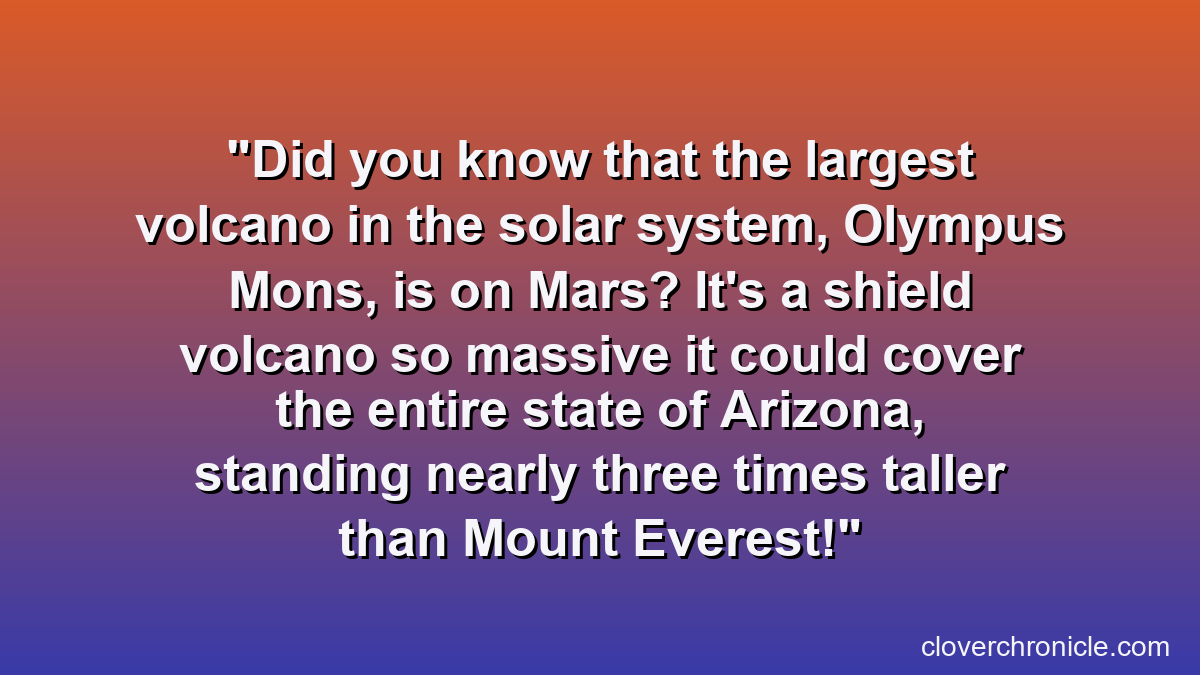
- ✅ Mars: Home to Olympus Mons, the largest volcano in the solar system, indicative of extensive past volcanism without active plate tectonics.
- ➡️ Venus: Its surface is dominated by vast plains formed by extensive lava flows and numerous volcanic features, suggesting resurfacing events.
- 💡 Io (Jupiter’s Moon): The most volcanically active body in the solar system, with hundreds of volcanic vents driven by tidal heating from Jupiter.
☄️ Impact Cratering: Universal Scars
Impact craters are perhaps the most common geological feature across solid bodies without dense atmospheres or active geological processes:
- ✅ The Moon & Mercury: Their ancient surfaces are heavily pockmarked, providing a visible record of the early solar system’s intense bombardment phase.
- ➡️ Mars: Exhibits a range of impact craters, some eroded by wind and water, others pristine.
- 💡 Crater Morphology: The size, shape, and preservation of craters offer clues about the age of a surface and the environmental conditions since impact. For instance, some large craters can be considered a type of Geological Depressions: Exploring Earth’s Sunken Features on an extraterrestrial scale.
⛰️ Tectonics and Surface Evolution
While Earth’s plate tectonics is unique, other forms of tectonic activity shape planetary surfaces:
- ✅ Mars: Displays features like Valles Marineris, a colossal canyon system likely formed by fracturing of the crust rather than plate movement.
- ➡️ Venus: Its surface shows evidence of “blob tectonics” or vertical mantle plumes causing localized crustal deformation, rather than moving plates.
- 💡 Icy Moons: Europa, for example, exhibits extensive fractured terrains and lineaments, indicative of forces acting on its icy shell, possibly linked to subsurface oceans.
🧊 Ices and Volatiles
Beyond silicate rocks, water ice and other volatiles are crucial geological components, especially in the outer solar system:
- ✅ Mars: Significant quantities of water ice are found in its polar caps and beneath the surface.
- ➡️ Europa: Believed to harbor a vast liquid water ocean beneath its icy crust, making it a prime target in the search for extraterrestrial life. This ties into the study of Geology and Oceanography: Exploring Earth’s Depths, albeit in an extraterrestrial context.
- 💡 Titan: Saturn’s largest moon, with a thick atmosphere and liquid methane/ethane lakes, rivers, and seas on its surface, indicating a complex hydrological cycle unlike Earth’s.
Exploring Specific Celestial Bodies
Astrogeology has provided incredible insights into the geological histories of various celestial bodies.
🌕 The Moon: Our Closest Neighbor
The Moon is the most thoroughly studied extraterrestrial body geologically due to its proximity and sample returns:
- ✅ Mare (Maria): Dark, vast plains of basaltic lava flows, formed from ancient volcanic eruptions.
- ➡️ Highlands: Heavily cratered, older, lighter-colored regions representing the Moon’s primordial crust.
- 💡 Impact History: The Moon’s surface is a pristine record of the solar system’s impact bombardment, allowing us to date events across other planets.
🔴 Mars: The Red Planet’s Geological History
Mars is a prime target for astrogeological research due to evidence of past water and potential for life:
- ✅ Polar Caps: Composed of both water ice and frozen carbon dioxide.
- ➡️ Valles Marineris: An immense canyon system, far larger than the Grand Canyon, representing significant crustal fracturing.
- 💡 Evidence of Past Water: Riverbeds, lakebeds, mineral deposits (e.g., hematite spherules, phyllosilicates) all point to a warmer, wetter past, crucial for understanding its habitability.
🔥 Venus: A Hellish Volcanic World
Venus’s dense, hot atmosphere makes direct observation challenging, but radar mapping has revealed its geology:
- ✅ Volcanic Plains: Over 80% of its surface is covered by volcanic plains, suggesting global resurfacing events perhaps 300-600 million years ago.
- ➡️ Coronae: Unique, large, circular features believed to be formed by upwelling mantle plumes, indicating internal geological activity without Earth-like plate tectonics.
❄️ Moons of the Outer Planets: Europa, Titan, Enceladus
These icy worlds are revolutionizing our understanding of geological diversity:
- ✅ Europa (Jupiter): Its smooth, cracked icy shell hints at a subsurface ocean warmed by tidal forces, making it a prime astrobiological candidate.
- ➡️ Titan (Saturn): Features a methane cycle analogous to Earth’s water cycle, with lakes, rivers, and rain, and cryovolcanic features.
- 💡 Enceladus (Saturn): Known for its “tiger stripes” (fractures) near the south pole, from which plumes of water vapor and ice particles erupt, confirming a subsurface ocean.
The Future of Astrogeology: Missions and Discoveries
Astrogeology is a dynamic field, continually expanding its frontiers with new missions and technologies.
✨ Upcoming Missions and Goals
Future missions aim to delve deeper into the secrets of other worlds:
- ✅ Europa Clipper (NASA): Designed to conduct detailed reconnaissance of Europa and investigate its habitability.
- ➡️ Mars Sample Return (NASA/ESA): A highly ambitious multi-mission effort to bring Martian rock and soil samples back to Earth for unparalleled laboratory analysis.
- 💡 Dragonfly (NASA): A rotorcraft lander set to explore the diverse environments of Titan, including its dunes and cryovolcanic features.
These missions promise to unlock new understanding of planetary formation, the distribution of water, and the potential for life beyond Earth. For more detailed insights into planned missions, especially those involving human exploration, the Artemis III Science Definition Report from NASA offers comprehensive information.
🚶♀️ The Role of Human Exploration
Human missions, such as NASA’s Artemis program aiming for a sustained human presence on the Moon, will greatly advance astrogeology:
- ✅ In-Situ Analysis: Astronauts can make on-the-spot geological observations, select critical samples, and deploy instruments with far greater flexibility than robots.
- ➡️ Field Geology Training: Future lunar and Martian missions will include dedicated geological field work, allowing humans to conduct complex surveys and drilling operations.
- 💡 Sample Return: Human missions can bring back larger, more diverse, and better-preserved samples for Earth-based analysis.
📚 Advancing Our Understanding
The continuous flow of data from space missions enriches our understanding of planetary processes, pushing the boundaries of scientific knowledge:
- ✅ Comparative Planetology: By studying other worlds, we gain a deeper appreciation for Earth’s unique geological history and the conditions that allow it to support life.
- ➡️ Educational Resources: The discoveries made in astrogeology inspire new generations of scientists and provide invaluable content for educational materials. For those keen to delve deeper, a wide array of planetary geology books and academic resources are available, offering comprehensive guides from introductory concepts to advanced research.
- 💡 Future Habitability: Understanding the geological evolution of other planets helps us identify potential future habitats and resources for human expansion.
Recommended Video
Conclusion
Astrogeology stands as a testament to humanity’s innate curiosity and relentless pursuit of knowledge. By meticulously studying the rocks, structures, and landforms of celestial bodies beyond Earth, we not only unravel the profound histories of other worlds but also gain an invaluable perspective on our own planet’s place in the cosmos.
From the ancient, cratered face of the Moon to the active, icy plumes of Enceladus, every discovery reinforces the notion that geological processes are universal, yet uniquely expressed on each body. This field continues to push the boundaries of exploration, promising new revelations that will undoubtedly reshape our understanding of the universe’s hidden dynamics and the incredible geological wonders it holds.
Frequently Asked Questions
What is astrogeology?
Astrogeology is the scientific discipline that studies the geology of celestial bodies such as planets, moons, asteroids, and comets, focusing on their composition, structure, and processes.
How do scientists study geology beyond Earth?
Scientists use data from space probes, orbiters, landers, and rovers, alongside remote sensing techniques and laboratory analysis of meteorites, to analyze extraterrestrial geological features and processes.
What are some major discoveries in astrogeology?
Key discoveries include evidence of past water on Mars, active volcanism on Io (Jupiter’s moon), and the presence of subsurface oceans on Europa and Enceladus, indicating potential for habitability.
Why is astrogeology important?
It provides crucial insights into the formation and evolution of our solar system, helps identify potential resources for future space missions, and informs the ongoing search for extraterrestrial life.