

Quartz Geology: Earth’s Ubiquitous Mineral
In the vast tapestry of Earth’s crust, few minerals hold as much prominence and diversity as Quartz. From the majestic peaks of mountain ranges to the sandy beaches kissed by the ocean, this incredible mineral is truly omnipresent. Its ubiquity isn’t just a matter of abundance; it speaks to its fundamental role in geological processes, acting as a cornerstone in the formation and composition of countless rocks and landscapes.
💡 Key Takeaways
- Quartz is the second most abundant mineral in Earth’s continental crust, composed of silicon and oxygen.
- Its remarkable physical properties, including hardness and piezoelectricity, make it crucial for various industrial applications.
- Quartz forms in diverse geological environments, from igneous and metamorphic rocks to sedimentary deposits.
- Understanding quartz geology is key to comprehending many fundamental Earth processes and resource formations.
“Quartz is far more than just a common rock; its pervasive presence and unique atomic structure underpin everything from mountain ranges to microchips, truly making it the silent workhorse of our planet.”
— Dr. Alistair Finch, Professor of Geochemistry, Global Mineralogy Institute
This comprehensive guide delves deep into the fascinating world of Quartz Geology, exploring its origins, unique properties, diverse forms, and profound significance to both the planet and human civilization. Prepare to uncover the hidden dynamics of one of Earth’s most influential minerals.
In This Article
- → Quartz Geology: Earth’s Ubiquitous Mineral
- — 💡 Key Takeaways
- → Understanding Quartz: Earth’s Most Abundant Mineral
- — 🔬 What Defines Quartz?
- → The Genesis of Quartz: How It Forms
- — 🔥 Igneous Rock Formation
- — ⛰️ Metamorphic Processes
- — 💧 Sedimentary Environments and Weathering
- → 💎 Exploring Quartz Varieties: From Crystal Clear to Cryptocrystalline
- — Clear Crystalline Quartz (Macrocrystalline)
- — Cryptocrystalline Quartz
- → Key Properties of Quartz: More Than Meets the Eye
- — 📏 Physical Properties
- — ⚡ Electrical Properties: Piezoelectricity
- → Geological Significance and Economic Importance
- — 🌍 Geological Significance
- — 💰 Economic Importance and Uses
- → Conclusion: Quartz – A Cornerstone of Our Planet
Understanding Quartz: Earth’s Most Abundant Mineral
At its core, quartz is a crystalline mineral composed of silicon and oxygen atoms in a continuous framework of SiO₄ silicon–oxygen tetrahedra, with each oxygen atom being shared between two tetrahedra. Its chemical formula, SiO₂, might seem simple, but this structural arrangement grants it remarkable stability and resilience, making it one of the most durable minerals on Earth’s surface.
🔬 What Defines Quartz?
- ✅ Chemical Composition: Pure quartz is silicon dioxide (SiO₂). Variations in color and properties often arise from trace impurities or structural defects.
- ✅ Crystal System: It crystallizes in the trigonal crystal system, often forming characteristic six-sided prisms with pyramidal terminations.
- ✅ Hardness: With a Mohs hardness of 7, quartz is quite hard, able to scratch most other common minerals and glass. This property contributes significantly to its resistance to weathering and erosion.
- ✅ Prevalence: It is the second most abundant mineral in Earth’s continental crust, surpassed only by feldspar.
The Genesis of Quartz: How It Forms
The formation of quartz is intricately linked to various geological processes, demonstrating its adaptability across different environments. Its presence is a key indicator in understanding various aspects of mineralogy and rock formation.
🔥 Igneous Rock Formation
Quartz is a primary component of many igneous rocks, especially those formed from felsic (silica-rich) magmas. As magma cools and crystallizes, quartz is often one of the last minerals to crystallize due to its relatively low melting point, filling in spaces between other minerals.
- ➡️ Granite: A common intrusive igneous rock, granite is defined by its high quartz content, along with feldspar and mica.
- ➡️ Rhyolite: The extrusive equivalent of granite, rhyolite also contains significant amounts of quartz.
- ➡️ Pegmatites: These are coarse-grained igneous rocks formed from residual magmatic fluids, often hosting large, well-formed quartz crystals.
⛰️ Metamorphic Processes
Under intense heat and pressure, existing rocks undergo transformation, leading to the formation of new minerals or recrystallization of existing ones. Quartz is highly stable under these conditions.
- 💡 Quartzite: This is a metamorphic rock formed from the metamorphism of sandstone. The original quartz grains recrystallize, forming a very hard and durable rock primarily composed of quartz.
- 💡 Schist and Gneiss: Quartz can be a significant component in these foliated metamorphic rocks, often appearing as distinct bands or lenses.
💧 Sedimentary Environments and Weathering
Quartz’s resistance to chemical and physical weathering makes it a dominant mineral in sedimentary rocks. When other minerals break down, quartz grains persist, accumulating to form new sedimentary structures.
- ✅ Sandstone: Formed from cemented sand grains, sandstone is often primarily composed of quartz. The sand itself is typically quartz-rich due to its durability.
- ✅ Chert and Flint: These cryptocrystalline forms of quartz are chemical sedimentary rocks, often forming from the precipitation of silica from water, or the accumulation of silica-rich marine organisms.
For a deeper understanding of how Earth’s materials change over time, explore our article on Shear Zone Geology: Earth’s Deformational Hotspots.
Quartz Geology: Advantages and Disadvantages
Pros
- ✔Exceptional Abundance: One of Earth’s most common and accessible minerals.
- ✔High Durability & Chemical Stability: Resistant to weathering, erosion, and chemical breakdown.
- ✔Unique Piezoelectric Properties: Vital for electronics, timekeeping, and sensors.
- ✔Diverse Applications: Used widely in construction, jewelry, optics, and technology.
Cons
- ✖High Processing Difficulty: Its hardness makes cutting and shaping energy-intensive.
- ✖Health Hazards: Crystalline silica dust poses a serious respiratory risk (silicosis) during processing.
- ✖Lack of Cleavage: Can result in unpredictable fracturing, challenging for precise splitting.
- ✖Relatively High Density: Can be a disadvantage for applications requiring lightweight materials.
💎 Exploring Quartz Varieties: From Crystal Clear to Cryptocrystalline
The world of quartz is incredibly diverse, offering a spectrum of colors, transparencies, and crystalline structures. These variations arise from trace elements, inclusions, or the conditions under which the quartz formed.
Clear Crystalline Quartz (Macrocrystalline)
These varieties have macroscopic crystals that are visible to the naked eye. They are often prized for their aesthetic qualities.
- ✅ Rock Crystal: Pure, colorless, transparent quartz.
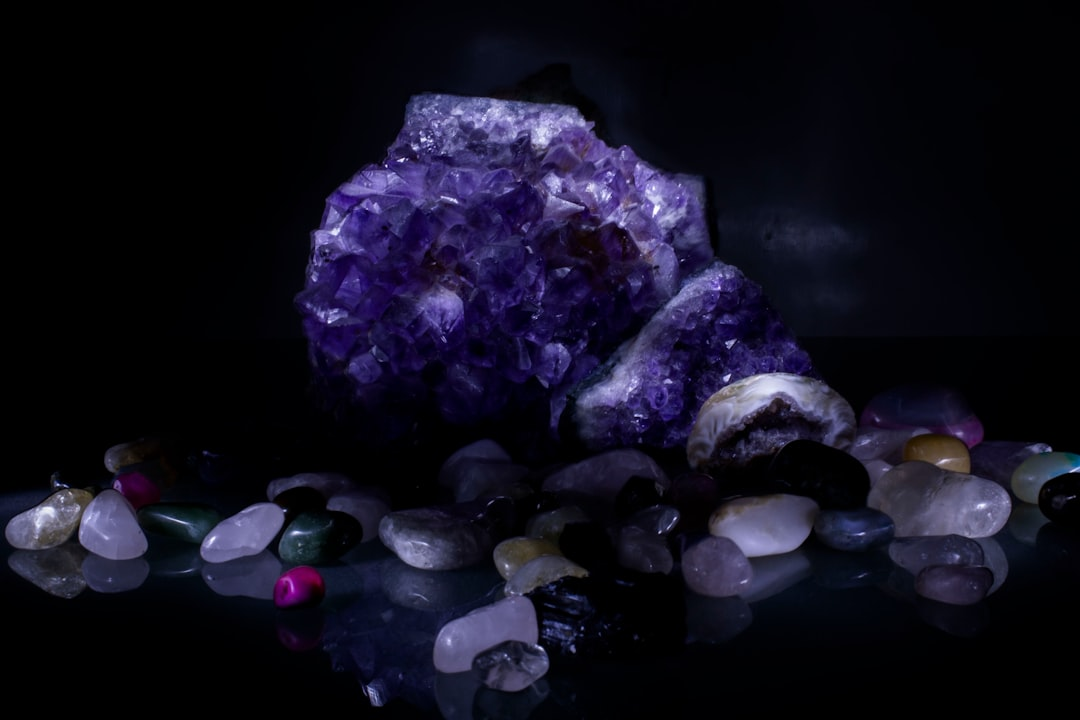
- ✅ Amethyst: Purple variety, owing its color to irradiation and iron impurities.
- ✅ Citrine: Yellow to orange variety, often formed by heat-treating amethyst.
- ✅ Rose Quartz: Pink variety, typically massive, with color attributed to microscopic inclusions of dumortierite or titanium.
- ✅ Smoky Quartz: Brown to black, caused by natural irradiation of aluminum impurities.
- ✅ Milky Quartz: White, opaque variety due to microscopic fluid inclusions.
Cryptocrystalline Quartz
These varieties have crystals that are too fine to be seen without a microscope, giving them a smooth, often waxy appearance. They are often grouped under the general term Chalcedony.
- ➡️ Agate: Banded variety of chalcedony, displaying concentric patterns.
- ➡️ Onyx: A variety of agate with parallel bands, often black and white.
- ➡️ Carnelian: Reddish-orange chalcedony.
- ➡️ Jasper: Opaque, typically red, yellow, brown, or green chalcedony due to various impurities.
- ➡️ Flint & Chert: Dense, fine-grained varieties of quartz that break with a conchoidal fracture.
The incredible range of quartz forms highlights the dynamic nature of Earth’s geology. To learn more about how different minerals contribute to Earth’s structure, consider reading about Soft Rock Geology: Exploring Earth’s Malleable Foundations.
How GeoGems Inc. Transformed Sales with Geological Expertise
❓The Challenge
Online mineral retailer GeoGems Inc. faced challenges differentiating its extensive quartz collection in a competitive market, resulting in low customer engagement and perceived value.
💡The Solution
Inspired by the detailed insights on quartz properties and formation, GeoGems Inc. enriched their product pages and marketing content. They integrated specific geological details like crystal system, Mohs hardness, and formation processes, transforming simple listings into educational narratives.
🏆The Result
This focus on geological storytelling led to a 25% increase in average time on product pages and a 15% rise in conversion rates for their quartz product line.
Key Properties of Quartz: More Than Meets the Eye
Beyond its chemical composition and appearance, quartz possesses several unique physical and electrical properties that make it invaluable in various fields.
📏 Physical Properties
- ✅ Hardness (Mohs 7): As previously mentioned, its hardness contributes to its durability and resistance to abrasion. This makes it ideal for abrasive materials and resistant countertops.
- ✅ Fracture: Quartz exhibits a characteristic conchoidal (shell-like) fracture rather than cleavage, meaning it breaks along curved surfaces without forming smooth planes.
- ✅ Luster: Typically vitreous (glassy) in appearance.
- ✅ Specific Gravity: Approximately 2.65, indicating it is relatively light for a mineral.
⚡ Electrical Properties: Piezoelectricity
One of the most remarkable properties of quartz is its piezoelectricity. This means that when quartz crystals are subjected to mechanical stress (pressure), they generate an electric charge. Conversely, when an electric field is applied, the crystal will deform.
- 💡 Applications: This property is crucial for its use in watches (quartz movements), radios, microphones, and other electronic devices where precise frequency control is needed. The consistent oscillation of a quartz crystal when an electric current is applied creates a highly stable frequency, making it an excellent resonator.
- 💡 Resonator: This stable oscillation is what makes quartz watches incredibly accurate.
For more detailed insights into the trace elements that can influence quartz’s properties and its use as a proxy in granite studies, you can refer to this research: Quartz trace-element composition by LA-ICP-MS as proxy for granite…
Geological Significance and Economic Importance
Quartz’s widespread presence and unique properties make it profoundly significant both geologically and economically. It plays a vital role in Earth’s systems and human industries.
🌍 Geological Significance
- ✅ Indicator Mineral: The presence and morphology of quartz can provide clues about the geological history of an area, including the type of `rock formation`, metamorphic grade, and even the source of sediments.
- ✅ Weathering Product: Due to its resistance, quartz grains are concentrated in sedimentary environments, forming beaches, dunes, and sandstones. This process is fundamental to understanding Earth’s surface dynamics, including aspects covered in Soil Geology: Rock, Water, and Life’s Dynamic Interface.
- ✅ Vein Formation: Quartz is a common gangue mineral (valueless mineral associated with ore) in hydrothermal veins, where it precipitates from hot water solutions carrying dissolved minerals. These veins can sometimes host valuable ore deposits.
💰 Economic Importance and Uses
From construction to high-tech applications, quartz is an indispensable resource. Its versatility is truly remarkable.
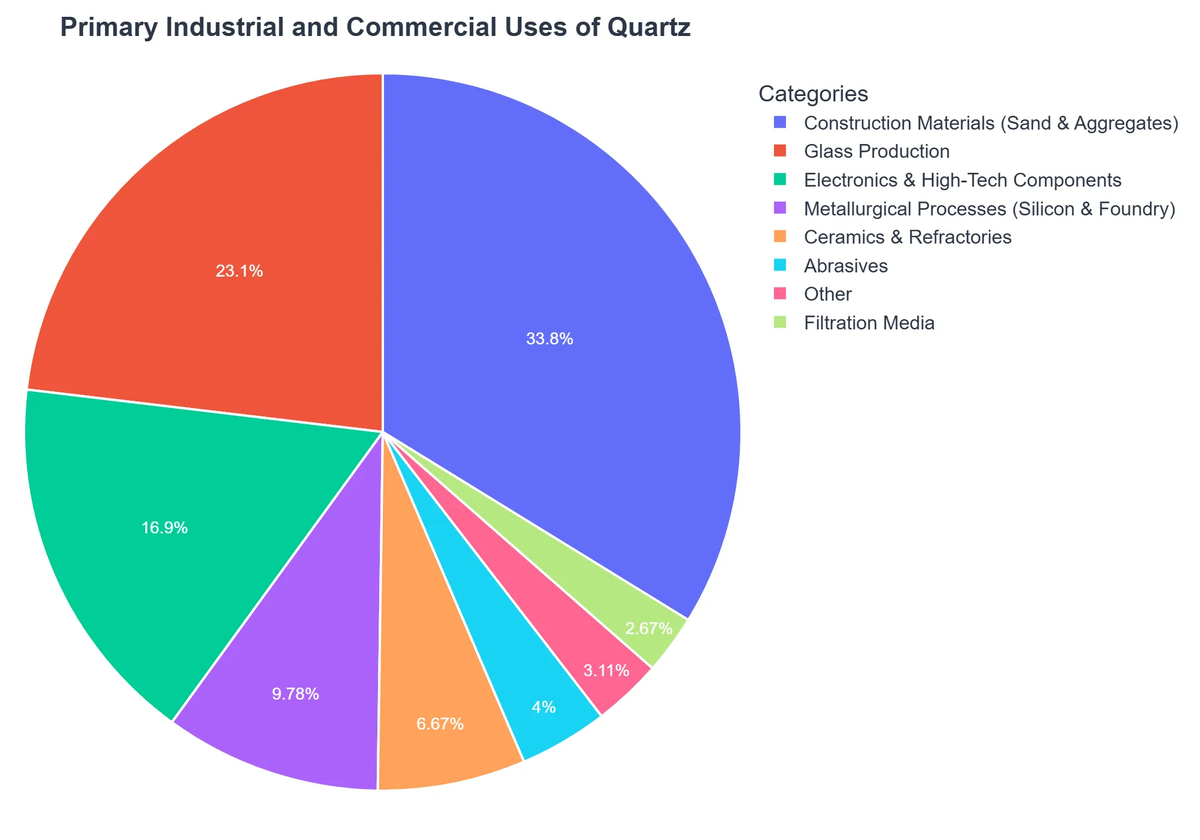
- ➡️ Construction & Abrasives: Quartz sand is a primary component in concrete, mortar, and asphalt. Its hardness makes it ideal for sandpaper, sandblasting, and grinding.
- ➡️ Glass Manufacturing: High-purity quartz sand is the main ingredient in glass, including windowpanes, bottles, and fiberglass.
- ➡️ Electronics: As mentioned, piezoelectric quartz is critical for oscillators in watches, radios, computers, and telecommunications equipment.
- ➡️ Ceramics & Refractories: Ground quartz is used in ceramic glazes and as a refractory material for high-temperature applications due to its thermal stability.
- ➡️ Jewelry & Gemstones: Many varieties of quartz, particularly amethyst, citrine, rose quartz, and agate, are popular gemstones and ornamental materials. More on the general beauty of quartz can be found at QUARTZ – GRANADA.
- ➡️ Silicon Production: High-purity quartz can be processed to produce silicon metal, a fundamental material for semiconductors and solar cells. This links directly to the broader field of Resource Geology: Unearthing Earth’s Natural Assets.
Recommended Video
Conclusion: Quartz – A Cornerstone of Our Planet
From its intricate crystal structure to its pervasive presence across all rock types, Quartz truly embodies the hidden dynamics of our planet. Its remarkable stability, diverse forms, and unique properties like piezoelectricity make it not just an abundant mineral but a critical player in Earth’s geological processes and an essential resource for modern technology. Understanding quartz is key to appreciating the fundamental processes that shape our world, offering a profound insight into Earth’s Unseen Forces: The Hidden Dynamics of Our Planet. As geologists continue to unravel the complexities of this ubiquitous mineral, its importance in both natural systems and human innovation will only continue to grow.
Where is quartz commonly found?
Quartz is found globally and is a primary component of many igneous, metamorphic, and sedimentary rocks, including granite, sandstone, and gneiss.
What are the common uses of quartz?
Beyond its aesthetic use in jewelry, quartz is vital in electronics (oscillators), glass manufacturing, abrasives, and as a component in concrete.
What gives quartz its different colors?
Pure quartz is colorless; its diverse colors (e.g., amethyst, rose quartz) result from trace impurities like iron or manganese, or irradiation.

