Bird Evolution: From Dinosaurs to Modern Fliers
Imagine a time when the Earth was ruled by colossal reptiles, yet somewhere among them, a subtle but profound transformation was beginning. It’s a story that reshapes our understanding of life, connecting the fearsome tyrants of the Mesozoic Era to the delicate chirps outside your window today. This is the incredible saga of bird evolution, revealing how winged wonders soared from the lineage of ground-shaking dinosaurs.
💡 Key Takeaways
- Birds are direct descendants of theropod dinosaurs.
- Feathers evolved initially for insulation and display, not solely for flight.
- Key adaptations like hollow bones and a specialized respiratory system enabled efficient avian flight.
- The fossil record, including transitional forms like Archaeopteryx, provides crucial evidence for bird evolution.
“The transition from ground-dwelling dinosaurs to magnificent birds is one of evolution’s most compelling narratives, showcasing how subtle genetic shifts can unlock entirely new ecological niches and forms of life.”
— Julian Aris, Evolutionary Biologist & Geneticist
Far from being mere descendants, modern birds are, in fact, direct living relatives of dinosaurs. This revolutionary understanding has transformed paleontology and biology, painting a vivid picture of adaptation, survival, and the relentless march of evolutionary change. Dive in with us as we decode this astonishing connection, a key chapter in The Code of Life: Decoding Genetics, Evolution, and Existence.
In This Article
- → Bird Evolution: From Dinosaurs to Modern Fliers
- — 💡 Key Takeaways
- → The Genesis of Avian Evolution: Early Clues
- — 🔎 Skeletal Similarities to Theropods
- — 💡 The Revelation of Feathered Dinosaurs
- → Archaeopteryx: The Iconic Transitional Fossil
- — 🦅 A Mosaic of Reptile and Bird Features
- → Feathers, Flight, and Form: Key Evolutionary Adaptations
- — 🌬️ The Evolution of Flight Feathers
- — 🦴 Skeletal Remodeling for Aerodynamics
- → Diversification and the Rise of Modern Birds
- — 🌍 Cretaceous Avian Diversity
- → The Extinction Event and Avian Survival
- — 🔥 Why Birds Endured the K-Pg Extinction
- → Beyond Fossils: Genetic and Developmental Evidence
- — 🔬 Unpacking Genetic Clues
- — embryological Insights
- → Conclusion: The Enduring Legacy of Dinosaur Ancestry
The Genesis of Avian Evolution: Early Clues
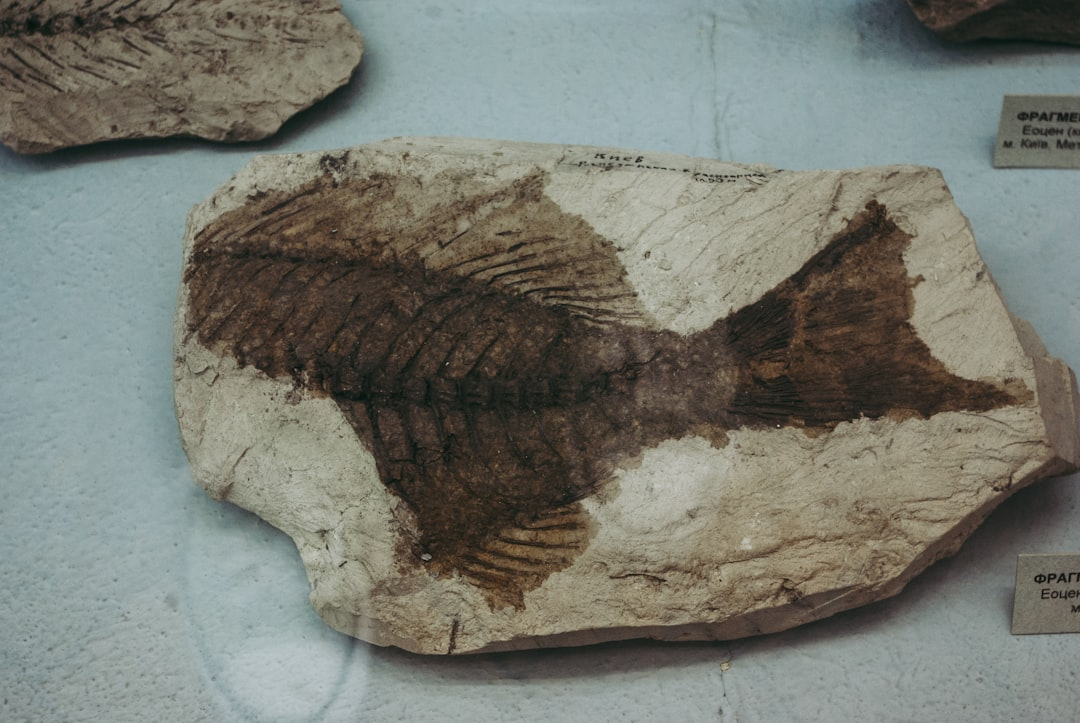
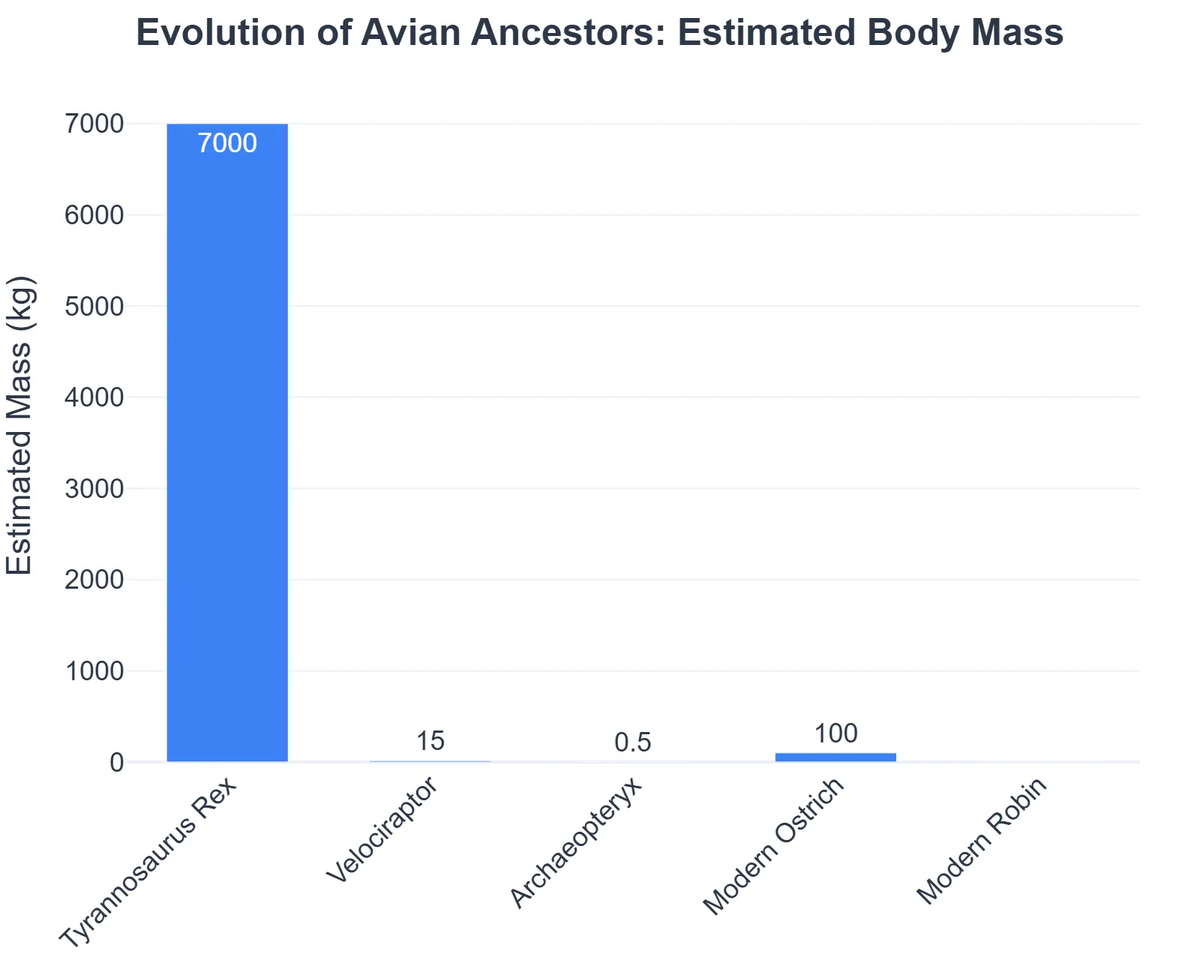
For centuries, the idea of a clear break between reptiles and birds persisted. However, groundbreaking fossil discoveries in the 19th and 20th centuries began to tell a different story. The clues pointed to the theropod dinosaurs – a group of bipedal, mostly carnivorous dinosaurs that includes famous names like Tyrannosaurus rex and Velociraptor – as the ancestral group for birds.
🔎 Skeletal Similarities to Theropods
Paleontologists noted striking anatomical resemblances between birds and theropods long before feathered dinosaurs were widely accepted. These include:
- ✅ Hollow, pneumatized bones: Similar to those found in birds, these lighter bones were beneficial for active, agile predators.
- ✅ Three-toed feet: Many theropods possessed a foot structure remarkably similar to that of modern birds.
- ✅ A furcula (wishbone): This fused clavicle, crucial for the powerful flight muscles in birds, has been found in numerous theropod fossils.
- ✅ S-shaped neck: A characteristic flexible neck posture common to both.
💡 The Revelation of Feathered Dinosaurs
The discovery of fossils like Sinosauropteryx in China in the 1990s was a game-changer. These fossils clearly showed impressions of primitive, filamentous feathers on dinosaur bodies, confirming that feathers predated flight and served other purposes, such as insulation or display. This firmly cemented the link, leading to the broader understanding of dinosaur bird evolution.
Archaeopteryx: The Iconic Transitional Fossil
No discussion of avian evolution is complete without mentioning Archaeopteryx lithographica. Discovered in Germany in 1861, just two years after Darwin published On the Origin of Species, it instantly became a celebrated example of a “transitional fossil.”
🦅 A Mosaic of Reptile and Bird Features
Archaeopteryx presented an astonishing blend of characteristics:
- ➡️ Dinosaurian Traits: It possessed a long, bony tail, teeth in its jaw, and claws on its wings – features typical of small theropod dinosaurs.
- ➡️ Avian Traits: Crucially, it had fully formed, asymmetrical flight feathers identical to those of modern birds, along with a wishbone.
Its existence provided compelling evidence for evolution, demonstrating how new groups could emerge through a gradual accumulation of changes from ancestral forms. While its flight capabilities are still debated (likely a glider or weak flier), its significance as a bridge species is undeniable. For more on the initial discoveries, see this article about a [external_link url=”https://www.smithsonianmag.com/science-nature/newly-discovered-fossil-bird-fills-gap-between-dinosaurs-and-modern-fliers-180973551/”]newly discovered fossil bird that continues to fill the gaps[/external_link] in this understanding.
Bird Evolution: Dinosaurs to Modern Fliers – Key Aspects
Pros
- ✔Provides compelling evidence for macroevolutionary processes.
- ✔Illuminates the direct evolutionary link between dinosaurs and birds.
- ✔Showcases remarkable adaptive diversification and speciation over time.
- ✔Enhances understanding of complex anatomical and physiological transformations.
Cons
- ✖Fossil record still contains gaps, leading to incomplete timelines.
- ✖Ongoing scientific debates exist regarding specific evolutionary pathways.
- ✖Challenges in precisely classifying some transitional forms.
- ✖Complexity can lead to public misunderstandings of the evolutionary process.
Feathers, Flight, and Form: Key Evolutionary Adaptations
The journey from ground-dwelling dinosaur to sky-mastering bird involved a series of intricate adaptations, with feathers and skeletal modifications being paramount.
🌬️ The Evolution of Flight Feathers
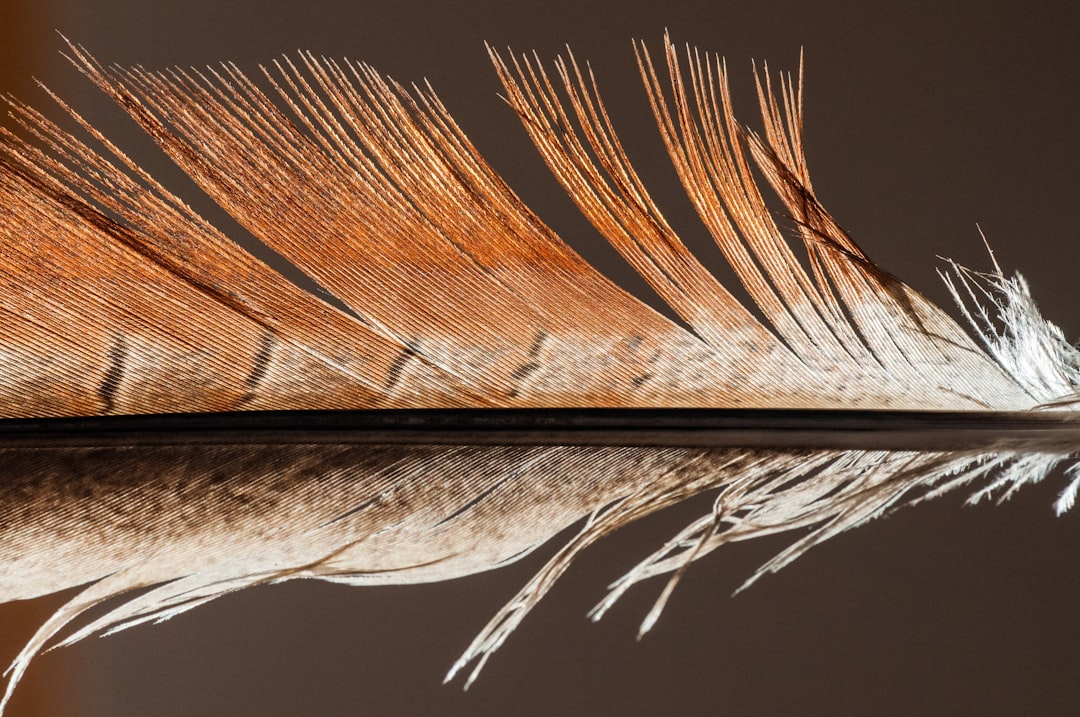
Feathers, as mentioned, evolved before flight. They likely served for insulation, camouflage, or courtship displays. Over millions of years, some feathers became longer and stiffer, particularly on the forelimbs, gradually becoming capable of generating lift and thrust. The development of asymmetrical vanes was a critical step, enabling true aerodynamic flight.
🦴 Skeletal Remodeling for Aerodynamics
The dinosaurian skeleton underwent dramatic changes to support powered flight:
- 💡 Fusion and Reduction: Bones in the hands, pelvis, and tail fused and became shorter, making the skeleton more rigid and lightweight. The long bony tail was reduced to a pygostyle (a fused series of caudal vertebrae that supports tail feathers).
- 💡 Keel Bone Development: The sternum (breastbone) evolved a prominent keel, providing a large surface area for the attachment of powerful flight muscles.
- 💡 Pneumaticity: The hollow bones became even more extensive, often connected to the respiratory system, further reducing weight.
These adaptations allowed early birds to transition from gliding to flapping flight, a highly energy-intensive mode of locomotion. Research suggests that early wing feathers, while revolutionary, [external_link url=”https://news.yale.edu/2012/11/21/ancient-birds-wing-feathers-were-serious-drag”]may have created significant drag[/external_link] for ancient birds, highlighting the ongoing refinement of flight mechanics.
Diversification and the Rise of Modern Birds
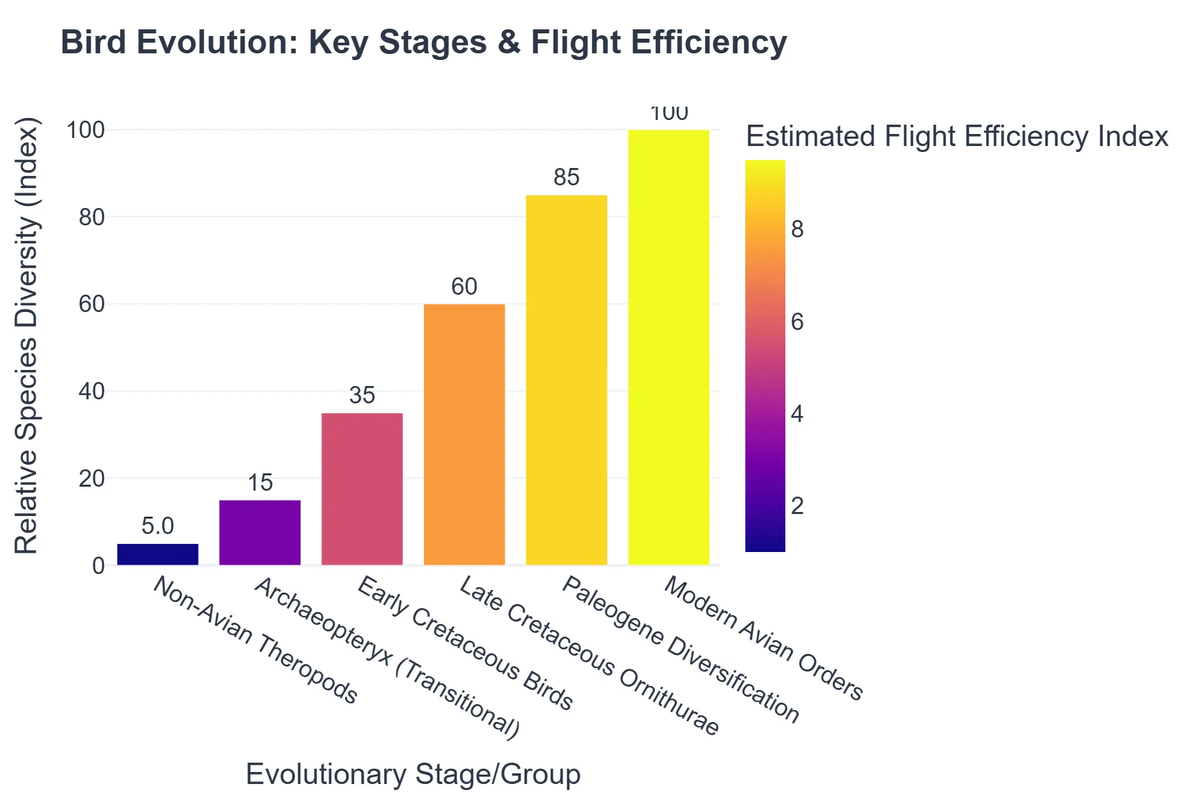
Following Archaeopteryx, a burst of diversification occurred during the Cretaceous period, leading to a variety of avian forms, many of which are now extinct. This period of rapid evolutionary change is a fascinating example of Ongoing Evolution: How Life Continues to Adapt Today.
🌍 Cretaceous Avian Diversity
Two main groups of early birds emerged:
- ✅ Enantiornithes (“Opposite Birds”): This diverse group was widespread during the Cretaceous. They retained teeth and clawed wings, but their shoulder girdle was structured differently from modern birds, leading to their name. They eventually died out with the non-avian dinosaurs.
- ✅ Ornithurae (“True Birds”): This lineage included ancestors of modern birds. They began to lose teeth, develop a pygostyle, and refine their flight apparatus. Groups like Ichthyornis and Hesperornis show a progression towards more modern features, with some even adapting to a marine, flightless existence.
The Extinction Event and Avian Survival
The cataclysmic impact of the Chicxulub asteroid 66 million years ago brought an end to the reign of the non-avian dinosaurs. Yet, the birds, their evolutionary cousins, survived and thrived.
🔥 Why Birds Endured the K-Pg Extinction
Several factors likely contributed to the survival of certain avian lineages:
- 💡 Smaller Size: Smaller bodies required less food and allowed them to find shelter more easily from the immediate devastation and subsequent climate collapse.
- 💡 Flight Advantage: The ability to fly allowed them to escape immediate hazards, potentially forage over wider areas, and colonize new, less impacted environments.
- 💡 Dietary Flexibility: Many surviving bird lineages were likely omnivores or insectivores, able to subsist on seeds and insects that were more resilient to the environmental collapse than the large plant-eaters or specialized carnivores. The ancestor of the modern chicken dinosaur evolution likely stemmed from one such resilient lineage.
- 💡 Faster Reproductive Cycles: Smaller, faster-reproducing organisms often have an advantage in rapidly changing environments.
The survival of these small, hardy birds paved the way for the incredible radiation of avian species we see today, from the smallest hummingbird to the largest ostrich.
Beyond Fossils: Genetic and Developmental Evidence
While fossils provide undeniable structural links, modern science offers even deeper insights into dinosaur bird evolution through genetics and developmental biology.
🔬 Unpacking Genetic Clues
Comparative genomics allows scientists to analyze the DNA of modern birds and compare it to the hypothetical DNA of their dinosaur ancestors (reconstructed through various methods). These studies consistently confirm the close genetic relationship, highlighting shared genes for bone development, feather formation, and metabolic pathways. This is where Molecular Evolution: Unpacking Genetic Change truly shines.
embryological Insights
Perhaps most fascinating is developmental biology. Researchers have been able to temporarily activate ancestral dinosaur traits in chicken embryos, such as:
- ✅ “Chicken Teeth”: By manipulating specific genes, scientists have induced the growth of reptilian-like teeth in chicken embryos, a feature their dinosaur ancestors possessed.
- ✅ Longer Tails: While more complex, research is ongoing into reverting chicken embryonic tails to a longer, more dinosaur-like form.
- ✅ Digit Development: Similarities in how digits (fingers/toes) develop in bird wings and dinosaur forelimbs further underscore their shared ancestry.
These experiments demonstrate that the genetic blueprints for many dinosaurian features are still present, though dormant, in modern birds, offering a living testament to their evolutionary past.
Recommended Video
Conclusion: The Enduring Legacy of Dinosaur Ancestry
The journey of bird evolution is one of the most compelling narratives in the history of life on Earth. It’s a tale of incremental changes over millions of years, driven by environmental pressures and opportunistic adaptations, transforming fearsome predators into elegant fliers.
From the early theropods to the iconic Archaeopteryx, and through the crucible of a global extinction event, birds represent a living success story. They are not merely “related” to dinosaurs; they are, in the most profound sense, modern dinosaurs, a testament to the incredible resilience and adaptability of life. Every time you hear a bird sing or watch it soar, you are witnessing the ongoing legacy of an ancient, awe-inspiring lineage.
Frequently Asked Questions
Are modern birds truly dinosaurs?
Yes, modern birds are scientifically classified as direct descendants of avian dinosaurs, specifically a lineage of small, feathered theropod dinosaurs.
What key features evolved for bird flight?
Essential adaptations include hollow bones, fused skeletal structures, a powerful keeled sternum for flight muscles, and highly specialized asymmetrical feathers.
Which fossil is crucial for understanding bird evolution?
Archaeopteryx is a pivotal fossil, displaying a mix of reptilian features (teeth, long bony tail) and avian features (feathers, wings), making it a significant transitional form.
How did feathers initially evolve?
Evidence suggests feathers initially evolved for insulation, display, and potentially aiding in running or climbing, before being co-opted for aerodynamic flight.