


The human mind is a labyrinth, intricate and endlessly fascinating. Understanding its nuances, predicting its reactions, and dissecting the forces that shape our choices has been a quest spanning millennia. Within this grand endeavor, social science experiments stand out as powerful tools, offering controlled environments to observe, analyze, and ultimately unpack the complexities of human behavior.
💡 Key Takeaways
- Social science experiments reveal complex drivers of human decision-making.
- Ethical considerations are paramount in designing and conducting behavioral studies.
- Understanding experimental methodologies is crucial for interpreting research findings.
- Insights from these studies can inform policy and improve societal well-being.
“Social science experiments are not just about observing; they’re about meticulously crafting environments to reveal the subtle, often subconscious, forces that shape our collective human experience.”
— Dr. Lena Petrov, Director, Institute for Applied Behavioral Research
From the subtle nudges of conformity to the stark realities of obedience to authority, these meticulously designed studies pull back the curtain on the hidden mechanisms driving our interactions, decisions, and perceptions. They provide empirical evidence that often challenges our intuition, revealing truths about ourselves and our societies that might otherwise remain obscured. This article delves into the world of social science experiments, exploring their methodologies, their profound impact, and the crucial ethical considerations that guide their execution.
In This Article
- — 💡 Key Takeaways
- → 🔬 What Are Social Science Experiments?
- — The Purpose Behind the Design
- → Why Are Social Science Experiments Crucial for Understanding Human Behavior?
- — Challenging Assumptions and Revealing Hidden Biases
- — Informing Policy and Driving Societal Change
- → ⚙️ Key Methodologies in Social Science Research
- — Types of Experimental Designs
- — Data Collection Methods
- → Iconic Social Science Experiments: Unpacking Profound Truths
- — Key Examples That Shaped Our Understanding
- → ⚖️ Ethical Considerations in Social Science Experiments
- — Cornerstones of Ethical Research
- → The Future of Social Science Research
- — Emerging Trends and Innovations
- → Conclusion: The Unfolding Story of Human Behavior
🔬 What Are Social Science Experiments?
At its core, a social science experiment is a research method used to investigate cause-and-effect relationships within human populations. Unlike experiments in the natural sciences which often deal with immutable physical laws, social experiments grapple with the fluid and context-dependent nature of human interaction and cognition.
The Purpose Behind the Design
- ✅ Uncovering Patterns: Identifying predictable responses to specific stimuli or situations.
- ✅ Testing Theories: Validating or refuting existing hypotheses about social phenomena, psychological processes, or economic decisions.
- ✅ Revealing Influences: Pinpointing the social, environmental, or psychological factors that shape individual and collective actions.
- ✅ Informing Interventions: Providing data that can be used to design more effective policies, educational programs, or therapeutic approaches.
These experiments often involve manipulating one or more variables (the independent variables) and observing the impact on another variable (the dependent variable), while attempting to control for confounding factors. This systematic approach allows researchers to draw more robust conclusions about causality.
Why Are Social Science Experiments Crucial for Understanding Human Behavior?
The insights gleaned from social science experiment design are invaluable. They move beyond mere observation or anecdotal evidence, providing rigorous data that illuminates the intricate dance of human interaction. For a broader perspective on this field, explore Social & Behavioral Science: Understanding Humanity.
Challenging Assumptions and Revealing Hidden Biases
Many widely held beliefs about human nature or societal norms are often based on intuition or cultural narratives. Social experiments frequently shatter these assumptions, revealing counter-intuitive truths.
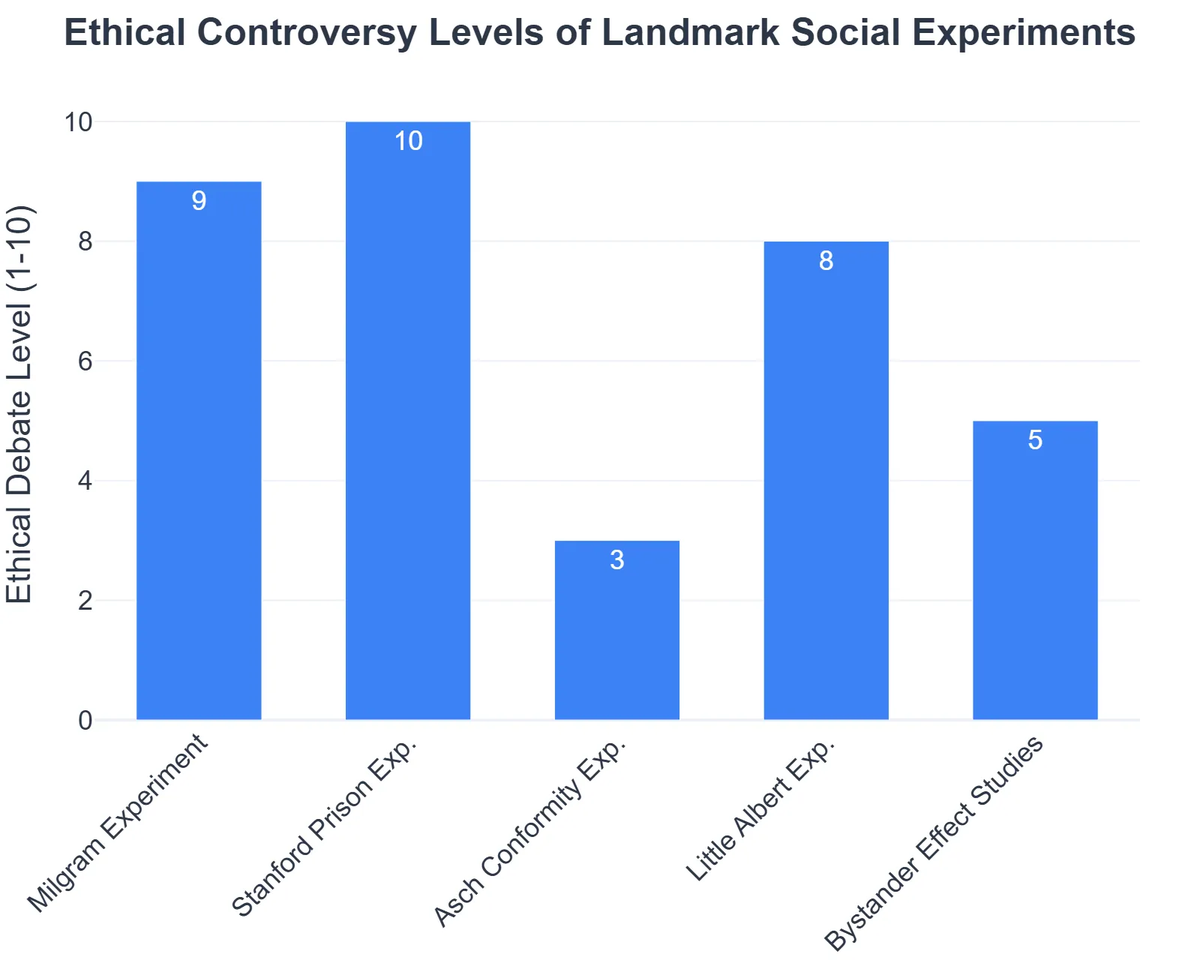
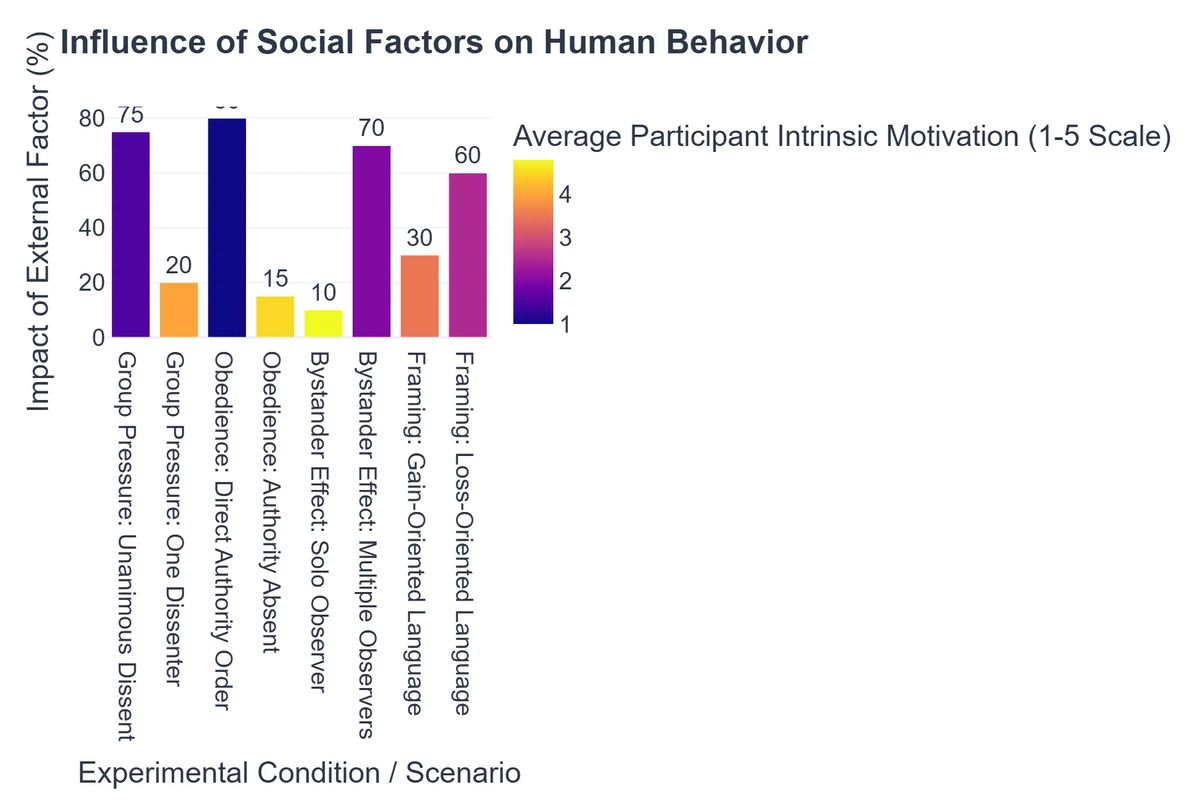
- ➡️ Conformity Bias: Experiments like Solomon Asch’s studies on conformity demonstrated how easily individuals can be swayed by group pressure, even when their own perceptions clearly contradict the group’s.
- ➡️ Authority’s Grip: The infamous Milgram obedience experiments showed the shocking extent to which individuals would obey instructions from an authority figure, even when those instructions conflicted with their personal conscience. For more, see Milgram Experiment & Obedience: Lessons on Authority.
- ➡️ Role Influence: The Stanford Prison Experiment, though highly controversial, highlighted the powerful impact that assigned social roles can have on individual behavior and identity. Dive deeper into Stanford Prison Experiment: Power, Roles, and Human Behavior.
Informing Policy and Driving Societal Change
The findings from a well-executed experiment social science study can have profound real-world implications, guiding decision-makers in areas ranging from public health campaigns to economic incentives.
For example, experiments on behavioral economics have demonstrated how framing choices in certain ways can significantly influence consumer decisions or public participation in initiatives like energy conservation or organ donation. Such insights are critical for effective governance and promoting citizen engagement, as highlighted by research on promoting engagement in complex systems like the internet of things (IoT).
Social Science Experiments: Benefits and Challenges
Pros
- ✔Enables the establishment of cause-and-effect relationships.
- ✔Provides empirical data to inform evidence-based policy and interventions.
- ✔Offers deep insights into complex human behaviors and societal phenomena.
- ✔Allows for controlled testing of theories and hypotheses.
Cons
- ✖Significant ethical considerations, including informed consent and potential for deception.
- ✖Findings may lack ecological validity due to artificial lab settings.
- ✖Challenges in generalizing results to diverse populations or real-world contexts.
- ✖Risk of experimenter bias or demand characteristics influencing participant behavior.
⚙️ Key Methodologies in Social Science Research
The landscape of social science experiments is diverse, employing various methods to capture the complexities of human behavior. Choosing the right methodology is crucial for the validity and generalizability of the findings.
Types of Experimental Designs
- True Experiments: Involve random assignment of participants to experimental and control groups, manipulation of an independent variable, and measurement of a dependent variable. This design offers the highest level of control over confounding variables.
- Quasi-Experiments: Similar to true experiments but lack random assignment. Participants are assigned to groups based on pre-existing conditions or natural groupings (e.g., comparing two different school districts). While useful, they make it harder to infer direct causality.
- Field Experiments: Conducted in natural settings rather than in a laboratory. This increases the ecological validity (how well the findings generalize to real-world situations) but often reduces the researcher’s control over extraneous variables.
- Natural Experiments: Situations where a “treatment” or intervention occurs naturally (e.g., a natural disaster, a new policy implementation) without researcher manipulation. Researchers observe the effects of this naturally occurring event on a population.
Data Collection Methods
Collecting reliable data is paramount. Researchers utilize a blend of qualitative and quantitative methods:
- 💡 Surveys and Questionnaires: Eliciting self-reported attitudes, beliefs, and behaviors.
- 💡 Observations: Directly watching and recording behavior in structured or naturalistic settings.
- 💡 Interviews: Gaining in-depth insights into individual experiences and perspectives.
- 💡 Physiological Measures: Using tools like fMRI, heart rate monitors, or eye-tracking to capture biological responses linked to psychological states.
- 💡 Behavioral Tasks: Designing specific tasks or games to elicit particular behaviors in a controlled environment.
Iconic Social Science Experiments: Unpacking Profound Truths
Over the decades, a handful of social experiment examples have become legendary, not just for their findings but for their lasting impact on our understanding of human psychology and societal dynamics. These experiments often push the boundaries of what we thought we knew about ourselves.
Key Examples That Shaped Our Understanding
- ✅ The Asch Conformity Experiments (1950s): Demonstrated the power of social pressure, showing how individuals would deny their own senses to conform to a group consensus.
- ✅ The Milgram Obedience Experiments (1960s): Revealed the astonishing extent to which people would obey orders from an authority figure, even when those orders involved inflicting apparent harm on another person. This work profoundly influenced the study of social behavioral psychology. You can learn more about Social Behavioral Psychology: Understanding Human Interaction and Milgram Experiment: Understanding Obedience to Authority.
- ✅ The Stanford Prison Experiment (1971): Though controversial and ethically debated, it highlighted the profound impact of situational factors and assigned roles on behavior, quickly transforming ordinary people into either abusive guards or submissive prisoners.
- ✅ The Bobo Doll Experiment (1961): Albert Bandura’s study on observational learning demonstrated that children learn aggressive behaviors by observing and imitating adults, forming a cornerstone of social learning theory.
These and other Iconic Social Experiments: Unveiling Human Behavior serve as cornerstones in the field, continually inspiring new research and challenging our preconceived notions of human nature. They force us to reflect on the complex interplay between individual agency and environmental influences, a core aspect of The Human Enigma: Unlocking the Secrets of Our Body and Mind.
How ‘ProductivityPal’ Unlocked User Engagement with Behavioral Insights
❓The Challenge
ProductivityPal, a new task management app, struggled with high user churn and low conversion rates to premium subscriptions, as their features, while robust, weren’t effectively driving sustained engagement.
💡The Solution
Inspired by the principles of social science experiments, ProductivityPal conducted a series of controlled A/B tests on their user onboarding process and in-app motivational ‘nudges,’ moving beyond intuition to systematically observe and analyze how different stimuli impacted user behavior.
🏆The Result
Applying these data-driven insights led to a 42% increase in weekly active users and a 28% uplift in premium subscription conversions within a single quarter.
⚖️ Ethical Considerations in Social Science Experiments
While the pursuit of knowledge is vital, it must never come at the expense of human dignity or well-being. The history of social science experiments includes instances where ethical boundaries were arguably crossed, leading to the establishment of strict guidelines and oversight.
Cornerstones of Ethical Research
- Informed Consent: Participants must fully understand the nature of the study, any potential risks, and their right to withdraw at any time without penalty before agreeing to participate.
- Minimizing Harm: Researchers have a responsibility to protect participants from physical, psychological, emotional, or social harm. Any potential risks must be justified by the potential benefits of the research.
- Confidentiality and Anonymity: Protecting participants’ identities and personal information is paramount, especially when dealing with sensitive topics.
- Debriefing: After the experiment, participants should be fully informed about the true purpose of the study, especially if deception was used (which should only be employed when absolutely necessary and justifiable). Any distress caused should be addressed.
- Institutional Review Boards (IRBs): Most research institutions have IRBs or ethics committees that review and approve research proposals involving human subjects, ensuring they meet ethical standards.
Adhering to these ethical principles is not just a matter of compliance; it is fundamental to maintaining trust between researchers and the public, ensuring the integrity and sustainability of social science research.
The Future of Social Science Research
The field of social science is continually evolving, driven by new technologies, emerging societal challenges, and a deeper understanding of the human condition. The next frontier for social science experiment design promises even more profound insights.
Emerging Trends and Innovations
- ➡️ Big Data and Computational Social Science: The explosion of digital data (social media interactions, online purchasing patterns, mobile phone usage) offers unprecedented opportunities to observe and analyze human behavior at scale. This allows for the study of complex interactions and emergent phenomena.
- ➡️ Neuroscience Integration: Advances in neuroimaging (fMRI, EEG) are allowing social scientists to explore the neural underpinnings of social behavior, decision-making, and emotional responses, bridging the gap between mind and brain.
- ➡️ Virtual Reality (VR) and Augmented Reality (AR): These technologies create immersive and controlled environments for experiments, offering new ways to simulate real-world social situations safely and ethically.
- ➡️ Replication Crisis and Open Science: A growing emphasis on transparency, data sharing, and replication studies aims to strengthen the reliability and credibility of social science findings.
Understanding complex human-AI interactions is also becoming a critical area of investigation within social science, as artificial intelligence increasingly shapes our daily lives. Research in this domain aims to unpack how people interact with AI systems, exploring both intended and unintended consequences as explored in recent studies.
Furthermore, new research initiatives, like those at Syracuse University’s iSchool, highlight ongoing efforts to apply computational methods to better understand human activities and social attributes, further demonstrating the interdisciplinary nature and forward momentum of social science research.
Recommended Video
Conclusion: The Unfolding Story of Human Behavior
Social science experiments are far more than academic exercises; they are indispensable tools for peeling back the layers of our collective and individual psyches. By rigorously testing hypotheses and observing behavior under controlled conditions, these experiments have unveiled uncomfortable truths, challenged long-held assumptions, and provided a data-driven foundation for understanding the intricate tapestry of human behavior.
From the subtle power of conformity to the profound influence of situational roles, the lessons learned continue to shape public policy, educational practices, and our fundamental grasp of what it means to be human. As technology advances and ethical considerations mature, the future of this field promises even deeper insights into Understanding Human Behavior: A Sociological Perspective and the grand complexities that define The Human Enigma: Unlocking the Secrets of Our Body and Mind. The journey to truly understand ourselves is ongoing, and social science experiments remain at its forefront.
What is the primary goal of social science experiments?
To systematically investigate and understand patterns, causes, and effects of human behavior and social phenomena.
Are social science experiments ethical?
Yes, ethical guidelines and review boards ensure participant safety, informed consent, and privacy are upheld in all studies.
How do experiments differ from observational studies?
Experiments involve manipulating variables to establish cause-and-effect relationships, whereas observational studies simply record existing phenomena.
Can social science predict individual behavior?
While they can identify general behavioral trends and influences, predicting specific individual actions remains complex due to unique personal variables.

