
Understanding Iconic Social Experiments
In the vast landscape of human psychology and sociology, few methodologies have offered insights as profound and often unsettling as social experiments. These meticulously designed studies, often conducted in controlled environments or real-world settings, aim to unveil the underlying mechanisms of human behavior, decision-making, and social interaction. They peel back layers of assumed rationality, revealing the powerful influences of situational factors, group dynamics, and authority on individual actions.
💡 Key Takeaways
- Classic social experiments offer profound insights into human nature and societal dynamics.
- Studies like Milgram and Stanford Prison highlight the powerful influence of authority and situation.
- Understanding these experiments helps us critically evaluate conformity and ethical considerations in research.
- Many iconic experiments raise ethical questions that continue to shape modern research guidelines.
“Social experiments, though often ethically complex, serve as vital mirrors, reflecting the astonishing malleability and inherent biases within the human psyche. They remind us that our environments powerfully shape our actions.”
— Dr. Eleanor Vance, PhD, Cognitive Neuroscientist & Human Potential Researcher
From exploring obedience to authority to dissecting the pressures of conformity, these landmark investigations have significantly shaped our understanding of why we act the way we do, particularly when faced with complex social dilemmas. They are crucial to The Human Enigma: Unlocking the Secrets of Our Body and Mind, providing empirical data for abstract concepts.
In This Article
- → Understanding Iconic Social Experiments
- — 💡 Key Takeaways
- → The Milgram Obedience Experiment: The Power of Authority
- — ⚙️ Experiment Design
- — 🧠 Key Findings & Implications
- → The Stanford Prison Experiment: The Impact of Roles
- — ⛓️ Experiment Design
- — 🚨 Key Findings & Implications
- → The Asch Conformity Experiments: The Pressure to Conform
- — 📏 Experiment Design
- — 🤝 Key Findings & Implications
- → Lasting Impact and Ethical Considerations in Social Experiments
- — 💡 Key Takeaways from These Studies:
- — ⚖️ Ethical Evolution in Research
The Milgram Obedience Experiment: The Power of Authority
One of the most infamous and ethically debated sociological experiments is Stanley Milgram’s study on obedience to authority, conducted at Yale University in the early 1960s. Prompted by the Eichmann trial, Milgram sought to understand how ordinary people could commit horrific acts under orders.
⚙️ Experiment Design
- ✅ Participants: Volunteers were recruited for a “study on memory and learning.”
- ✅ Roles: Participants were assigned the role of “Teacher” and confederates played the “Learner” and “Experimenter.”
- ✅ The Task: The Teacher was instructed to administer electric shocks to the Learner for every incorrect answer. The “shocks” were fake, but the Teacher believed they were real, increasing in intensity from “Slight Shock” to “XXX.”
- ✅ Authority Figure: The Experimenter (in a lab coat) prompted the Teacher to continue, even as the Learner (confederate) expressed pain and eventually silence.
🧠 Key Findings & Implications
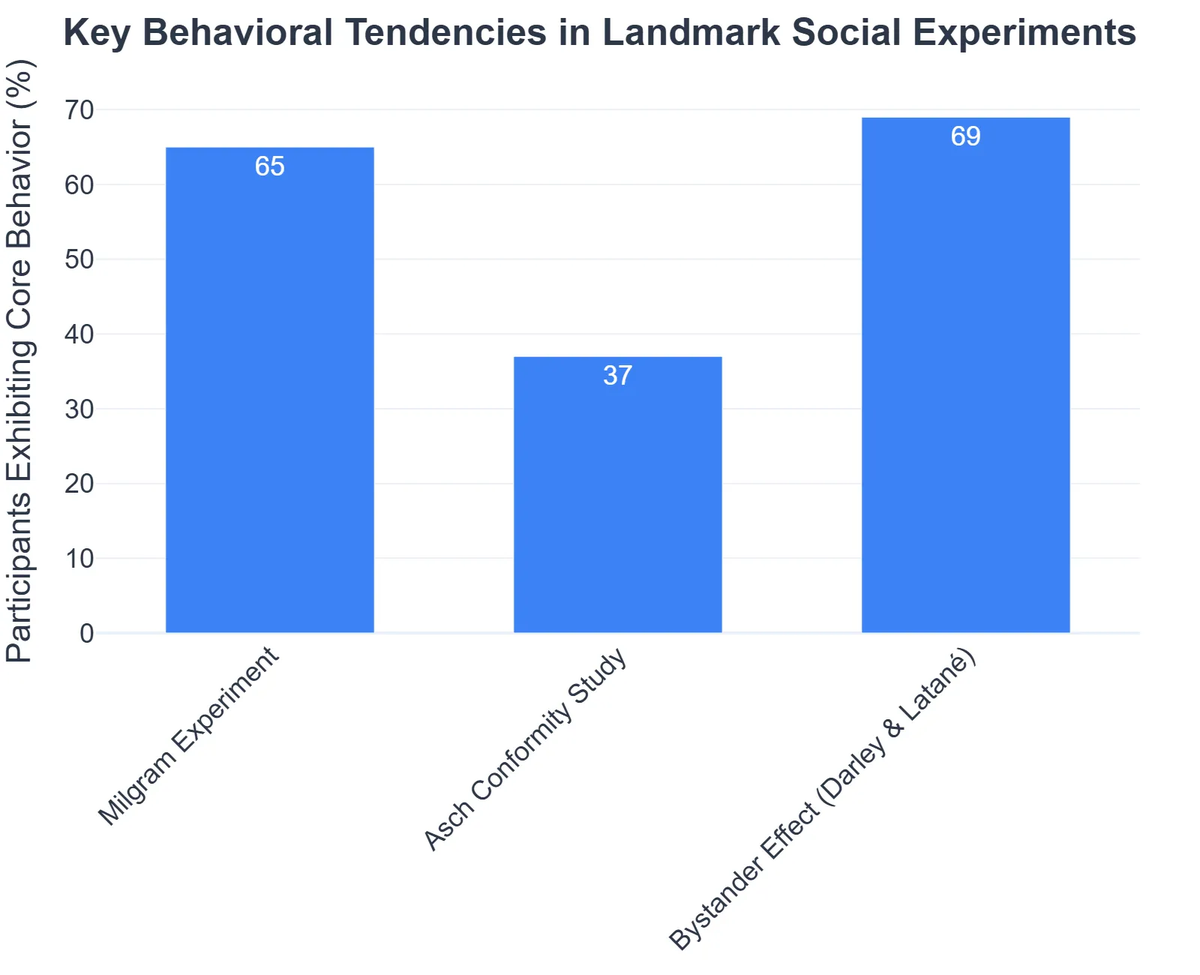
The results were chilling: a staggering 65% of participants administered the maximum 450-volt shock, despite the Learner’s apparent distress. This experiment highlighted:
Iconic Social Experiments: Benefits and Criticisms
Pros
- ✔Provided profound insights into human behavior and social dynamics.
- ✔Paved the way for modern psychological and sociological research.
- ✔Raised critical awareness of ethical considerations in scientific studies.
Cons
- ✖Often involved significant ethical concerns, including deception and potential participant distress.
- ✖Results may lack generalizability or have been difficult to replicate.
- ✖Can be criticized for methodological flaws or researcher bias.
- ➡️ The Agentic State: Individuals often shift responsibility to the authority figure, acting as their “agent.”
- ➡️ Situational Power: The situation, rather than inherent individual evil, can exert immense influence over behavior.
- ➡️ Ethical Concerns: The study faced widespread criticism for the psychological distress caused to participants, leading to stricter ethical guidelines in research.
For an in-depth look at this groundbreaking study, consider our article on Milgram’s Electric Shock Experiment: The Shocking Truth of Obedience. The enduring quotes from Milgram himself underscore the profound nature of his discoveries, as noted by Achology.com in their collection of [EXTERNAL_LINK url=”https://achology.com/psychology/21-timeless-stanley-milgram-quotes/” text=”21 Timeless Stanley Milgram Quotes”].
The Stanford Prison Experiment: The Impact of Roles
Philip Zimbardo’s 1971 Stanford Prison Experiment (SPE) is another pivotal, though controversial, study in the realm of social behavior and psychology. It explored how quickly people would adopt roles within a simulated prison environment and the psychological effects of power and powerlessness.
Quantum Leap CRM: Commanding Conversions with Authority
❓The Challenge
Despite a robust product, Quantum Leap CRM struggled with low conversion rates on their website, as visitors consumed content but rarely took the desired next step like signing up for a demo.
💡The Solution
Applying insights from social experiments on authority and situational influence, Quantum Leap CRM redesigned its marketing. They introduced ‘Expert-Led Pathways,’ positioning their in-house specialists as clear authorities who confidently guided users towards solution adoption, making the call-to-action feel like a logical directive.
🏆The Result
This shift resulted in a 55% increase in qualified demo sign-ups and a 30% boost in free trial conversions within the first quarter.
⛓️ Experiment Design
- ✅ Participants: 24 mentally healthy male college students were randomly assigned roles as either “prisoners” or “guards.”
- ✅ Setting: A mock prison was created in the basement of Stanford University’s psychology department.
- ✅ Rules: Guards were given uniforms, batons, and sunglasses (to prevent eye contact) and instructed to maintain order without physical violence. Prisoners wore smocks and were referred to by number.
🚨 Key Findings & Implications
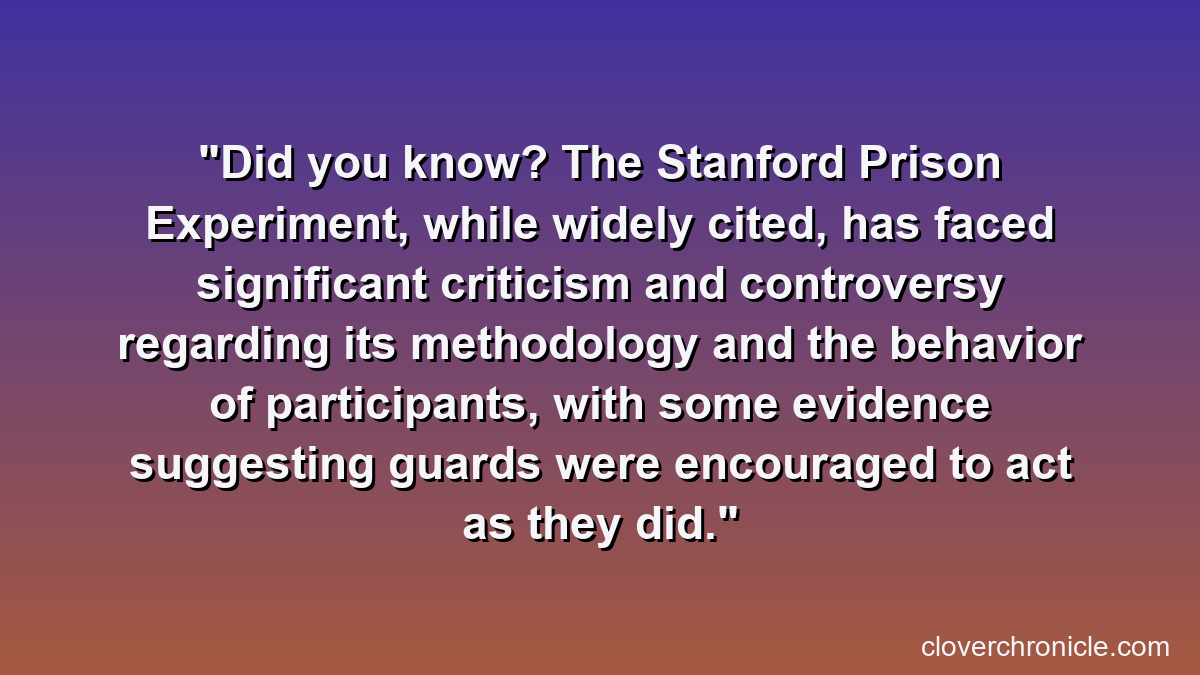
The experiment, planned for two weeks, had to be prematurely terminated after just six days due to the extreme behavior observed:
- ➡️ Rapid Role Adoption: Both prisoners and guards quickly internalized their assigned roles. Guards became increasingly abusive and authoritarian, while prisoners became submissive, rebellious, or emotionally distressed.
- ➡️ Dehumanization: The power imbalance led to the dehumanization of prisoners by guards.
- ➡️ Ethical Breaches: Like Milgram’s study, the SPE raised significant ethical concerns regarding participant harm and the experimenters’ involvement in the unfolding events.
The SPE underscores the powerful influence of situational variables and social roles on behavior, demonstrating how ordinary individuals can act out of character when placed in specific environments. You can learn more about how such environments shape behavior in general in our resource on Social Behavioral Psychology: Understanding Human Interaction.
The Asch Conformity Experiments: The Pressure to Conform
Solomon Asch’s social conformity experiments, conducted in the 1950s, provided compelling evidence of the power of group pressure on individual judgment. These studies explored how an individual’s opinion is influenced by a majority group.
📏 Experiment Design
- ✅ Participants: Real participants were placed in a room with several confederates (actors).
- ✅ The Task: Participants were shown a “standard line” and then three comparison lines, one of which matched the standard. They had to verbally state which comparison line matched the standard.
- ✅ The Twist: In certain trials, the confederates deliberately gave incorrect answers unanimously before the real participant responded.
🤝 Key Findings & Implications
Asch’s results revealed the surprising extent of social influence:
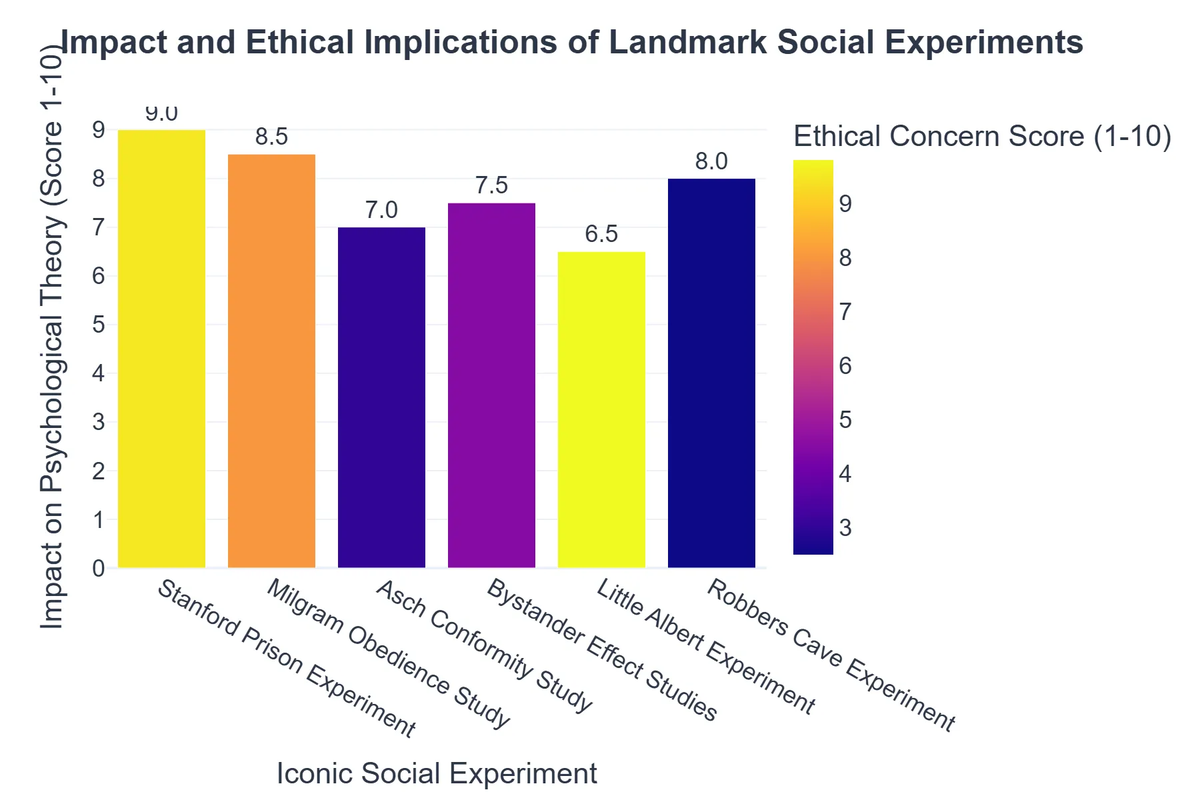
- ➡️ Conformity Rate: On average, about one-third of participants conformed to the clearly incorrect majority answer.
- ➡️ Reasons for Conformity: Participants often cited a desire to fit in (normative influence) or a belief that the group was somehow more knowledgeable (informational influence).
- ➡️ Individual Differences: While many conformed, a significant portion resisted, highlighting individual variations in susceptibility to group pressure.
Asch’s work is a cornerstone of understanding Conformity Studies: Classic Social Psychology Experiments and how social pressures shape our perceptions and decisions daily. For more details, explore our dedicated article on Asch Conformity Experiments: Understanding Social Influence. Verywell Mind offers additional context on these and other [EXTERNAL_LINK url=”https://www.verywellmind.com/famous-social-psychology-experiments-2795667″ text=”Famous Social Psychology Experiments”].
Recommended Video
Lasting Impact and Ethical Considerations in Social Experiments
The iconic social experiments discussed above, alongside countless others, have fundamentally reshaped our understanding of human nature. They demonstrate that while we perceive ourselves as autonomous, rational beings, our behavior is profoundly influenced by external factors such as authority, group dynamics, and the roles we assume.
💡 Key Takeaways from These Studies:
- ✅ Situational Power: Context often trumps individual personality traits in predicting behavior.
- ✅ Vulnerability to Influence: Humans are highly susceptible to social pressure, whether from authority or peers.
- ✅ The Banality of Evil: Ordinary people can be led to commit extraordinary acts under specific social conditions.
⚖️ Ethical Evolution in Research
While the insights gained from these studies are invaluable, they also sparked a critical re-evaluation of research ethics. The distress caused to participants in experiments like Milgram’s and the SPE led to the establishment of strict guidelines by review boards (IRBs in the U.S.). These guidelines ensure:
- ➡️ Informed Consent: Participants must fully understand the nature and potential risks of a study before agreeing.
- ➡️ Minimizing Harm: Researchers must take all reasonable steps to prevent physical or psychological harm.
- ➡️ Debriefing: Participants must be fully informed about the study’s true purpose and any deception used, and psychological support provided if necessary.
- ➡️ Right to Withdraw: Participants must be free to leave the study at any time without penalty.
Modern social science experiments continue to explore human behavior, but now with a heightened awareness of participant welfare and ethical responsibilities. The legacy of these iconic studies lies not only in their shocking findings but also in their enduring contribution to the ethical framework that now safeguards research participants worldwide.
What is the most famous social experiment?
The Milgram experiment on obedience to authority and the Stanford Prison Experiment on the psychological effects of perceived power are among the most famous and impactful.
Why are social experiments important?
They are crucial for understanding group dynamics, individual decision-making under pressure, and the influence of societal norms, providing insights into human behavior that might otherwise remain hidden.
What ethical concerns arose from these experiments?
Many iconic experiments faced criticism for causing psychological distress to participants, leading to the development of stricter ethical guidelines and review boards in modern research.
Can social experiments be replicated today?
Due to significant ethical advancements and regulations, many historical social experiments cannot be replicated in their original forms today, though modified versions or simulations might be conducted.