


Unmasking Cyber Threats: Understanding the Adversaries
In the digital realm, the concept of “bad actors” is pervasive, representing a continuous challenge to security, privacy, and stability. These individuals or groups, driven by diverse motivations, constantly evolve their tactics to exploit vulnerabilities. Understanding who these bad actors cybersecurity encompasses, their methods, and the sophisticated techniques used to unmask them is crucial for anyone navigating our interconnected world. Just as we understand the forces at play in The Science of Everyday: How the World Really Works, comprehending the dynamics of cyber conflict is essential for digital resilience.
💡 Key Takeaways
- Understand the evolving landscape of cyber threats and the profiles of various bad actors.
- Discover common tactics used by cybercriminals to infiltrate systems and exploit vulnerabilities.
- Learn proactive strategies and tools essential for identifying, mitigating, and responding to cyber attacks.
- Recognize the critical importance of continuous vigilance and education in digital self-defense.
“Just as biology reveals hidden pathogens, cybersecurity illuminates the digital viruses and predators that exploit our interconnected world. Understanding their ‘anatomy’ is key to defense.”
— Garrison Leo, Science Educator & Author

In This Article
- → Unmasking Cyber Threats: Understanding the Adversaries
- — 💡 Key Takeaways
- → Who Are the Bad Actors in Cybersecurity?
- — Types of Cyber Adversaries:
- → Common Tactics and Techniques Used by Threat Actors
- — Popular Attack Methodologies:
- → 🕵️♀️ The Science of Unmasking: Attribution and Intelligence
- — Methods of Attribution:
- → Protecting Against Bad Actors: Best Practices
- — Essential Defense Strategies:
Who Are the Bad Actors in Cybersecurity?
The landscape of cyber adversaries is complex and multifaceted. Identifying these groups and individuals by their motives and capabilities is the first step in building effective defenses against them.
Types of Cyber Adversaries:
- ✅ Cybercriminals: This is the largest and most varied group. Their primary motivation is financial gain, achieved through activities like ransomware, phishing scams, credit card fraud, and data theft for resale. They range from lone wolves to highly organized crime syndicates.
- ✅ State-Sponsored Actors: Often referred to as Advanced Persistent Threats (APTs), these groups are backed by nation-states. Their objectives are typically espionage (stealing intellectual property, classified information), sabotage (disrupting critical infrastructure), or influencing geopolitical events. Their resources are vast, and their attacks are highly sophisticated and targeted. For more on specific groups, see CrowdStrike Adversaries: Understanding Global Cyber Threats.
- ✅ Hacktivists: Motivated by ideological, political, or social causes, hacktivists use cyberattacks to draw attention to their message or disrupt organizations they oppose. Their methods can range from website defacements and denial-of-service (DoS) attacks to data leaks.
- ✅ Insider Threats: These are individuals within an organization who misuse their authorized access, either maliciously or inadvertently, to compromise security. Motivations can include financial gain, revenge, or even simple negligence.
- ✅ Terrorist Groups: While less common than other groups, some terrorist organizations attempt to use cyberattacks to spread propaganda, recruit, raise funds, or even conduct physical damage through critical infrastructure attacks.
Common Tactics and Techniques Used by Threat Actors
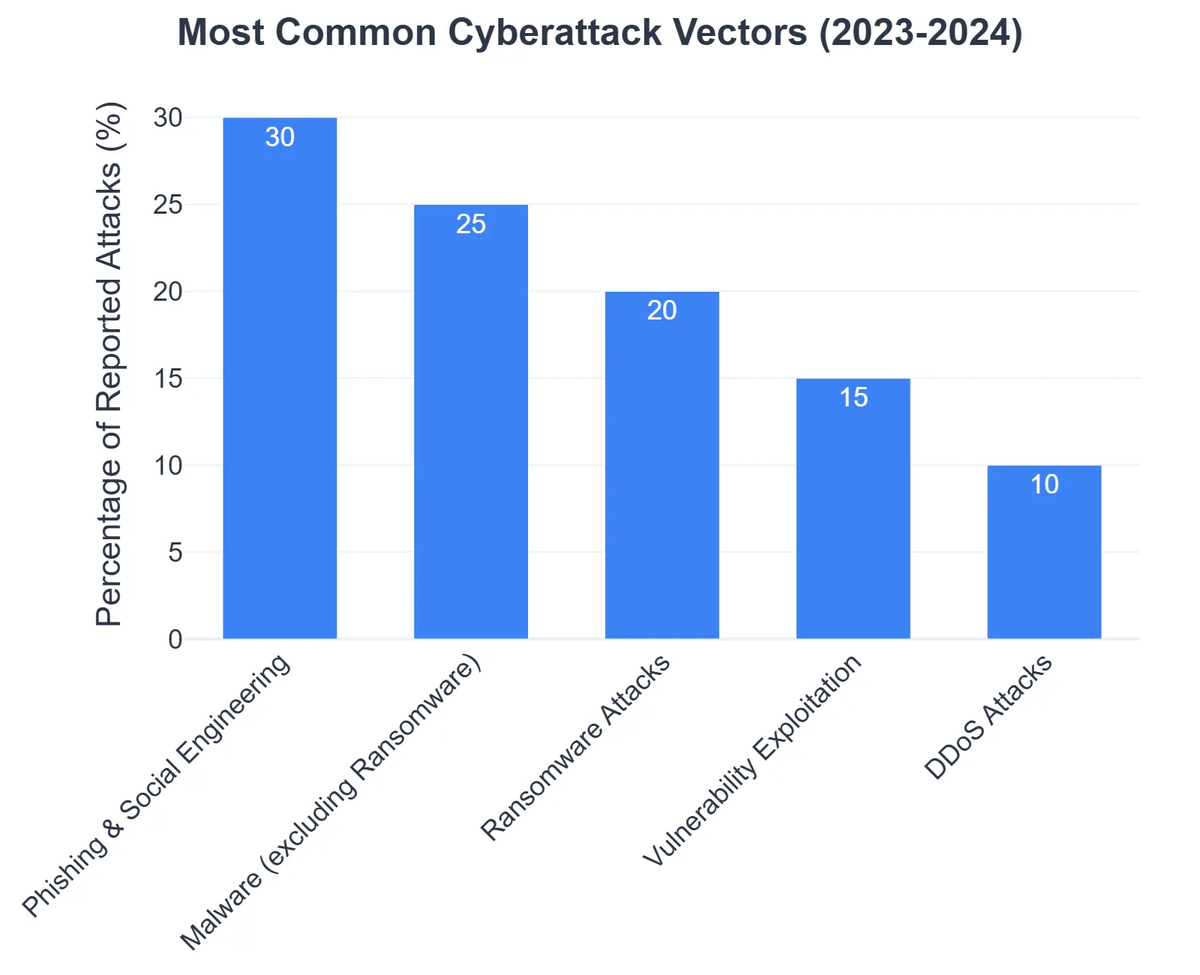
Regardless of their identity or motivation, cybersecurity threats materialize through a variety of tactics designed to exploit human, technical, or procedural weaknesses. Staying informed about these methods is vital for prevention.

Popular Attack Methodologies:
- ➡️ Malware & Ransomware: Malicious software designed to infiltrate or damage computer systems. Ransomware encrypts data and demands payment for its release, while other forms like viruses, worms, and Trojans aim to steal data, disrupt operations, or gain unauthorized access.
- ➡️ Phishing & Social Engineering: These tactics manipulate individuals into performing actions or divulging confidential information. Phishing, a common form, uses deceptive emails or messages. More broadly, social engineering exploits psychological vulnerabilities. Learn more about these in Social Engineering Attacks: Phishing and Prevention.
- ➡️ Distributed Denial of Service (DDoS) Attacks: Overwhelming a target system with a flood of internet traffic to disrupt its services, making it unavailable to legitimate users.
- ➡️ Exploiting Vulnerabilities: Bad actors constantly scan for and exploit known or unknown (zero-day) weaknesses in software, hardware, or network configurations. Patch management is critical to mitigate these risks.
- ➡️ Supply Chain Attacks: Targeting less secure elements in an organization’s supply chain (e.g., third-party software vendors) to gain access to the primary target. This leverages trust relationships to bypass direct defenses.
- ➡️ Brute Force & Credential Stuffing: Attempting to guess passwords (brute force) or using leaked credentials from previous breaches to gain access to accounts (credential stuffing).
According to the National Cyber Threat Assessment, the threat environment is continuously evolving, with cybercrime remaining the most likely threat to Canadians and Canadian organizations. The Canadian Centre for Cyber Security provides insights into these evolving threats.
How InnovateTech Solutions Decrypted Cyber Threats and Saved $200K
❓The Challenge
InnovateTech was plagued by a surge in sophisticated phishing attacks and persistent network intrusions, creating vulnerability to intellectual property theft and employee anxiety.
💡The Solution
Following the principles of unmasking cyber threats, InnovateTech implemented a strategy focused on understanding the diverse types of ‘bad actors’ and their evolving tactics, from cybercriminals to state-sponsored actors. They deployed advanced threat intelligence and conducted targeted employee training, enabling proactive identification of specific adversary methodologies.
🏆The Result
This approach led to a 65% reduction in successful phishing attempts within three months and improved incident response time by 40%, ultimately averting potential data breach costs estimated at over $200,000.
🕵️♀️ The Science of Unmasking: Attribution and Intelligence
Identifying the perpetrators behind a cyberattack is a complex, often painstaking process known as attribution. It involves a blend of technical forensics, intelligence gathering, and sometimes even geopolitical analysis.
Methods of Attribution:
- 🕵️♀️ Digital Forensics: Analyzing digital evidence such as logs, malware samples, network traffic, and system artifacts to reconstruct the attack timeline, understand the tools used, and identify indicators of compromise (IOCs). This is like piecing together fragments of a puzzle.
- 🕵️♀️ Threat Intelligence: Leveraging vast databases of known attack patterns, malware signatures, IP addresses, command-and-control servers, and actor profiles. Threat intelligence platforms aggregate data from various sources (government agencies, private security firms, research institutions) to provide context and predictive insights.
- 🕵️♀️ Open Source Intelligence (OSINT): Gathering and analyzing publicly available information (social media, news articles, public forums, dark web) to identify connections, motives, and even the identities of bad actors cybersecurity groups. Tools like SocialNet assist in OSINT for social media investigations. ShadowDragon’s SocialNet is one such example.
- 🕵️♀️ Behavioral Analysis: Instead of focusing solely on technical indicators, this involves studying the unique methods, operational security (or lack thereof), and common mistakes made by specific threat groups. APT groups often leave distinct “signatures” in their attack methodologies.
Complete and irrefutable attribution is challenging due to the ability of sophisticated adversaries to use proxies, false flags, and advanced evasion techniques. However, security researchers often achieve high confidence in attributing attacks to specific groups based on a pattern of life and consistent TTPs (Tactics, Techniques, and Procedures).
Protecting Against Bad Actors: Best Practices
While the threat landscape is dynamic, robust cybersecurity practices, rooted in a scientific understanding of vulnerabilities and human behavior, can significantly reduce risk.
Essential Defense Strategies:
- 🔒 Multi-Factor Authentication (MFA): A simple yet highly effective measure that requires two or more verification factors to gain access to an account, vastly reducing the risk from stolen passwords.
- 🔒 Regular Software Updates and Patching: Keeping all operating systems, applications, and firmware updated closes known security holes that cybersecurity threats often exploit.
- 🔒 Employee Training and Awareness: Human error is a leading cause of breaches. Regular training on recognizing phishing attempts, safe browsing habits, and data handling protocols is paramount. This ties into the broader ethical considerations of data use, as explored in Big Data and Privacy: Navigating Ethical Considerations.
- 🔒 Robust Backup and Recovery Plans: In the event of a ransomware attack or data loss, having secure, offline backups ensures business continuity.
- 🔒 Network Segmentation & Least Privilege: Dividing networks into smaller, isolated segments limits the lateral movement of attackers. Granting users only the minimum access necessary for their role reduces the potential impact of a compromised account.
- 🔒 Incident Response Plan: A well-defined plan for detecting, responding to, and recovering from security incidents minimizes damage and speeds recovery.
- 🔒 Proactive Threat Hunting: Actively searching for subtle signs of malicious activity within a network, rather than waiting for an alert.
The continuous battle against bad actors cybersecurity professionals face is a testament to the ongoing evolution in digital warfare. Staying vigilant, employing robust defense mechanisms, and understanding the scientific principles behind these attacks are our strongest tools in this shadow war.
Recommended Video
Who are ‘bad actors’ in cybersecurity?
Bad actors refer to individuals, groups, or state-sponsored entities that engage in malicious cyber activities like hacking, phishing, ransomware, and data theft for illicit gain or disruption.
What motivates cyber bad actors?
Motivations range from financial profit and espionage to political activism (hacktivism), intellectual property theft, competitive advantage, and even simple notoriety or challenge.
How can I protect myself from cyber threats?
Key protections include using strong, unique passwords, enabling multi-factor authentication, keeping software updated, being wary of suspicious links, and using reliable antivirus software.
Is reporting cybercrime effective?
Yes, reporting cybercrime helps law enforcement track trends, identify perpetrators, and develop countermeasures, contributing to a safer digital environment for everyone.