


Does NASA Believe Aliens Exist? The Search for Extraterrestrial Life
The question of whether we are alone in the universe has captivated humanity for millennia. From ancient myths to modern science fiction, the concept of life beyond Earth sparks profound curiosity. But what is the official stance of the world’s leading space agency, NASA, on this monumental inquiry?
💡 Key Takeaways
- NASA’s official position focuses on the scientific search for biosignatures, not a ‘belief’ in aliens.
- Key missions like Perseverance, James Webb, and Europa Clipper are critical to NASA’s astrobiology efforts.
- The agency invests in studying exoplanets and primitive life forms, not intelligent civilizations.
- NASA maintains transparency regarding their data, inviting public and scientific scrutiny on their findings.
“NASA’s rigorous scientific approach isn’t about ‘belief,’ but rather a methodical, data-driven quest for life’s universal blueprints. Every mission, every telescope, pushes us closer to understanding if the cosmos truly teems with life.”
— Astrid Bellweather, Astrophysicist & Science Fiction Consultant
Contrary to popular misconceptions, NASA doesn’t operate on “belief” in the traditional sense when it comes to life beyond Earth. Instead, their approach is rooted firmly in scientific inquiry: the rigorous search for evidence of extraterrestrial life. This article will delve into NASA’s methodical pursuit, exploring their programs, missions, and the scientific principles guiding their quest to answer one of humanity’s most profound questions: does aliens exist NASA?
In This Article
- → Does NASA Believe Aliens Exist? The Search for Extraterrestrial Life
- — 💡 Key Takeaways
- → NASA’s Official Stance on Extraterrestrial Life: A Scientific Pursuit
- — ➡️ “Believe” vs. “Search for Evidence”
- — 💡 The Scientific Method as a Guiding Principle
- → The NASA Astrobiology Program: Leading the Charge
- — What is Astrobiology?
- — ⚙️ Key Research Areas and Missions
- → Hunting for Habitable Worlds: Exoplanet Discoveries
- — ✨ The Goldilocks Zone and Biosignatures
- — 🔭 Missions like Kepler and TESS
- → Beyond Earth: Exploring Our Solar System for Life
- — 🔴 Mars: A Prime Candidate
- — 🔵 Ocean Worlds: Europa and Enceladus
- → The Role of SETI Institute in the Broader Search
- — 📡 Listening for Signals
- — 🤝 Collaboration with NASA and Other Agencies
- → The Drake Equation and the Probability of Life
- — 📊 Understanding the Variables
- — 🤔 A Framework for Discussion, Not Proof
- → Conclusion: The Ongoing Quest for Answers
NASA’s Official Stance on Extraterrestrial Life: A Scientific Pursuit
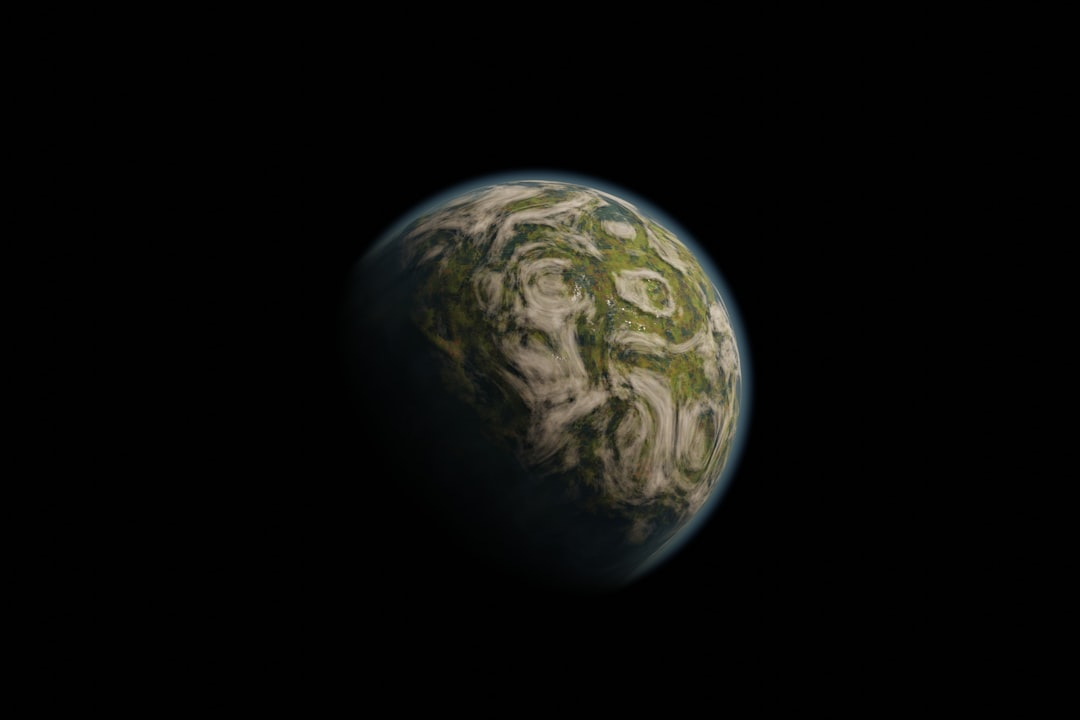
When discussing whether NASA “believes” in aliens, it’s crucial to understand the agency’s scientific methodology. NASA, as a scientific organization, bases its conclusions on observable evidence and data, not on conjecture or faith.
➡️ “Believe” vs. “Search for Evidence”
NASA scientists operate on the principle that the universe is vast, and the conditions necessary for life could exist elsewhere. They don’t simply “believe” aliens exist; rather, they invest immense resources and intellectual capital into scientifically searching for empirical proof. Their focus is on finding any form of life, from microbial to intelligent.
- ✅ Evidence-Based: All conclusions are drawn from data gathered through telescopes, probes, and laboratory analyses.
- ✅ Probability, Not Certainty: While the statistical probability of life elsewhere is high given the sheer number of stars and planets, certainty requires direct detection.
- ✅ Focus on Conditions: Much of NASA’s work centers on understanding what makes a planet habitable and searching for those conditions.
💡 The Scientific Method as a Guiding Principle
Every NASA mission, whether it’s exploring Mars or studying exoplanets, is designed with testable hypotheses and clear objectives. The search for life is no different. It involves:
- 🔭 Observing and analyzing distant planets and moons.
- 🔬 Detecting potential biosignatures (signs of past or present life).
- 🧪 Developing technologies to improve detection capabilities.
This rigorous adherence to the scientific method ensures that any discovery of extraterrestrial life would be thoroughly vetted and verifiable.
The NASA Astrobiology Program: Leading the Charge
At the forefront of NASA’s search for life is the NASA Astrobiology Program. This interdisciplinary field combines biology, chemistry, physics, and astronomy to study the origins, evolution, distribution, and future of life in the universe.
What is Astrobiology?
Astrobiology is not just about finding aliens; it’s about understanding life itself. It asks fundamental questions:
- ✅ How did life begin on Earth?
- ✅ Can life exist in extreme environments?
- ✅ Where else in the universe could life be found?
The program supports research at universities and institutions worldwide, fostering a collaborative approach to tackling these grand challenges.
NASA’s Stance and Search for Extraterrestrial Life
Pros
- ✔NASA actively funds and conducts rigorous scientific research (astrobiology, exoplanet discovery) to search for life.
- ✔Their approach is evidence-based, focusing on identifying biosignatures and habitable environments rather than speculation.
- ✔Promotes scientific literacy and public engagement with questions about life beyond Earth.
- ✔Work expands human knowledge of the universe, astrobiology, and planetary science.
Cons
- ✖NASA officially maintains an objective, evidence-first stance, meaning they don’t ‘believe’ but ‘search,’ which can be misconstrued by the public.
- ✖Primary focus is on microbial or simple life, which may not align with public expectations of ‘aliens’ (intelligent life).
- ✖The vastness of space and technical limitations make definitive detection extremely challenging.
- ✖Lack of conclusive proof to date can lead to public impatience or skepticism regarding the search efforts.
⚙️ Key Research Areas and Missions
The Astrobiology Program funds a wide array of research and plays a crucial role in shaping NASA’s missions. Their work spans:
- ➡️ Planetary Science: Investigating environments within our solar system that might harbor life, such as Mars, Europa, and Enceladus.
- ➡️ Exoplanet Research: Discovering and characterizing planets outside our solar system that could potentially host life, including the study of their atmospheres for biosignatures.
- ➡️ Origin of Life Studies: Exploring the chemical pathways that could lead to the emergence of life, both on Earth and elsewhere.
- ➡️ Life in Extreme Environments: Studying extremophiles on Earth to understand the potential resilience of life in harsh cosmic conditions.
For more insights into current discoveries, you might be interested in our article on Extraterrestrial News: Latest Discoveries and Updates.
Hunting for Habitable Worlds: Exoplanet Discoveries
A significant part of NASA’s search for life involves the discovery and study of exoplanets – planets orbiting stars other than our Sun. The sheer number of these distant worlds suggests that habitable environments might be common.
✨ The Goldilocks Zone and Biosignatures
Scientists look for exoplanets located in the “Goldilocks Zone” (or habitable zone), which is the region around a star where temperatures are just right for liquid water to exist on a planet’s surface. Liquid water is considered essential for life as we know it.
Beyond simply finding planets, researchers also search for biosignatures in exoplanet atmospheres, which are chemical indicators that could suggest the presence of life. These include gases like oxygen, methane, and water vapor in specific combinations that are difficult to explain by non-biological processes.
🔭 Missions like Kepler and TESS
NASA’s Kepler Space Telescope revolutionized exoplanet discovery, identifying thousands of new worlds and demonstrating that planets are abundant in our galaxy. Its successor, the Transiting Exoplanet Survey Satellite (TESS), continues this work, focusing on nearby bright stars to facilitate follow-up observations by other telescopes, like the James Webb Space Telescope (JWST).
Discoveries like TOI 700 e: Potentially Habitable Exoplanet Discovered provide concrete examples of how NASA missions are expanding our understanding of potentially life-supporting worlds.
Beyond Earth: Exploring Our Solar System for Life
While exoplanets hold immense promise, NASA also heavily invests in exploring our own cosmic neighborhood for signs of life, both past and present. Several bodies within our solar system present intriguing possibilities.
🔴 Mars: A Prime Candidate
Mars has long been a focal point for the search for life. Evidence suggests that ancient Mars was a warmer, wetter planet with abundant liquid water, making it potentially habitable. Current missions, like the Perseverance rover, actively search for signs of ancient microbial life and collect samples for potential return to Earth. A NASA scientist discusses this topic in detail: Do Aliens Exist? We Asked a NASA Scientist: Episode 5.
From Speculation to Success: The Veritas Group’s Data-Driven Transformation
❓The Challenge
The Veritas Group struggled to win high-stakes consulting bids because their initial market assessments, while insightful, were perceived by clients as too speculative and lacking concrete empirical evidence.
💡The Solution
Inspired by NASA’s commitment to ‘scientific inquiry’ over ‘belief,’ The Veritas Group overhauled its approach. They shifted from presenting assumptions to rigorously backing every recommendation with verifiable data, pilot project results, and clearly defined methodologies for testing market hypotheses, emphasizing ‘probability’ based on observed conditions.
🏆The Result
This adoption of an ‘evidence-based’ scientific methodology significantly boosted client confidence, leading to a 40% increase in the conversion rate for their high-value strategic proposals within nine months.
🔵 Ocean Worlds: Europa and Enceladus
Beyond Mars, icy moons of gas giants have emerged as incredibly promising candidates for harboring life. Europa, a moon of Jupiter, and Enceladus, a moon of Saturn, are believed to contain vast subsurface oceans of liquid water beneath their icy shells. These oceans are thought to be in contact with rocky cores, potentially providing hydrothermal vents that could support chemosynthetic life, similar to some ecosystems found on Earth’s ocean floors.
Future missions, such as Europa Clipper, are designed to investigate these moons for their potential to support life, looking for plumes erupting from their surfaces that could carry telltale signs from their hidden oceans. This ongoing exploration is critical to the broader quest for Extraterrestrial Life: The Search for Planets and Life.
The Role of SETI Institute in the Broader Search
While NASA focuses on direct detection and conditions for life, the SETI Institute (Search for Extraterrestrial Intelligence) plays a complementary, vital role in the wider search for intelligent life.
📡 Listening for Signals
The SETI Institute uses radio telescopes to scan the skies for narrow-band radio signals that might indicate the presence of advanced technological civilizations. This approach is based on the assumption that if intelligent life exists, some civilizations might emit signals that we could detect.
🤝 Collaboration with NASA and Other Agencies
While independently funded, SETI’s work often complements NASA’s broader astrobiology efforts. NASA provides valuable data from its exoplanet discoveries, helping SETI prioritize targets for their listening campaigns. Both organizations share the ultimate goal of understanding life beyond Earth, albeit through different methodologies. SETI’s efforts, combined with NASA’s deep space missions, contribute to the comprehensive pursuit detailed in our pillar article, Cosmic Queries: Probing the Mysteries of the Universe.
The Drake Equation and the Probability of Life
The Drake Equation, formulated by astronomer Frank Drake in 1961, is not a calculation for the exact number of extraterrestrial civilizations, but rather a probabilistic argument used to estimate the number of active, communicative extraterrestrial civilizations in the Milky Way galaxy.
📊 Understanding the Variables
The equation considers several variables, including:
- ✅ The rate of star formation in our galaxy.
- ✅ The fraction of stars with planetary systems.
- ✅ The average number of planets that can potentially support life.
- ✅ The fraction of planets that actually develop life.
- ✅ The fraction of planets where intelligent life emerges.
- ✅ The fraction of intelligent civilizations that develop technology capable of interstellar communication.
- ✅ The length of time such civilizations release detectable signals into space.
🤔 A Framework for Discussion, Not Proof
While many of the variables are currently unknown or highly speculative, the Drake Equation serves as a powerful tool for structuring scientific discussion and highlighting areas where more research is needed. It underscores the immense statistical possibility of life elsewhere, even if definite proof remains elusive. NASA scientists often refer to the equation to frame the vastness of the search and the potential for discovery.
Recommended Video
Conclusion: The Ongoing Quest for Answers
So, does NASA “believe” aliens exist? The answer is nuanced: NASA doesn’t operate on belief, but on the profound scientific imperative to search for and understand life beyond Earth. Their extensive Astrobiology Program, coupled with groundbreaking missions to exoplanets and solar system bodies, demonstrates a dedicated and methodical commitment to this quest.
The search for extraterrestrial life is one of the most exciting and fundamental pursuits of our time. It pushes the boundaries of human knowledge and technology, continually reshaping our understanding of our place in the cosmos. While definitive proof remains elusive, the ongoing discoveries and the sheer scale of the universe suggest that the question “Are we alone?” is far from settled, and NASA is leading the charge to find the answer.
Frequently Asked Questions
Does NASA officially confirm the existence of aliens?
No, NASA has not officially confirmed the existence of extraterrestrial life. Their focus is on the scientific search for biosignatures and potential habitable environments.
What is NASA’s astrobiology program?
NASA’s astrobiology program investigates the origin, evolution, distribution, and future of life in the universe. It combines biology, chemistry, physics, and astronomy.
What missions are searching for life?
Missions like the Perseverance rover on Mars, the Europa Clipper mission to Jupiter’s moon Europa, and the James Webb Space Telescope are all actively involved in the search for signs of life or habitable conditions.
Does NASA study UFOs (Unidentified Anomalous Phenomena)?
While NASA’s primary focus is not UFOs, they have established a study team to investigate Unidentified Anomalous Phenomena (UAP) from a scientific perspective, seeking to apply scientific methods to categorize and analyze observations.