


Dragonfly Mission to Titan: Exploring an Alien Ocean World
Titan, Saturn’s largest moon, is a celestial body unlike any other in our solar system. Shrouded in a dense, nitrogen-rich atmosphere, it boasts a captivating landscape of liquid methane and ethane lakes, rivers, and even rain. This alien world, with its intriguing chemistry and potential for complex organic processes, has long fascinated scientists. To unravel its mysteries, NASA is sending a revolutionary rotorcraft: the Dragonfly mission to Titan.
💡 Key Takeaways
- Dragonfly is a nuclear-powered rotorcraft designed to fly across Titan’s dense atmosphere.
- The mission aims to study Titan’s organic chemistry, habitability, and atmospheric processes.
- Titan is unique for its methane cycle, analogous to Earth’s water cycle, featuring lakes, rivers, and rain.
- Data from Dragonfly could provide crucial insights into the origins of life beyond Earth.
“Titan is a cosmic canvas, a place where the familiar rules of chemistry play out in an alien ocean of hydrocarbons. Dragonfly isn’t just a mission; it’s our first true deep dive into an extraterrestrial laboratory, a testbed for life’s potential beyond our blue marble.”
— Astrid Bellweather, Astrophysicist & Science Fiction Consultant
This article delves deep into the specifics of the Dragonfly space mission, its ambitious goals, the cutting-edge technology it employs, and the profound scientific implications of exploring this distant, ocean-filled moon. Prepare to journey to a place where the familiar rules of Earth are beautifully inverted.
In This Article
- → Dragonfly Mission to Titan: Exploring an Alien Ocean World
- — 💡 Key Takeaways
- → Why Titan? A World Unlike Any Other
- — 🧊 Unique Chemistry and Atmosphere
- — 🌊 Lakes, Rivers, and Cryovolcanoes
- — 🌱 Potential for Prebiotic Chemistry
- → The Dragonfly Space Mission: A Revolutionary Rotorcraft
- — ⚙️ How Dragonfly Will Navigate Titan
- — 🔬 Scientific Payload and Instruments
- — 🚀 Launch and Arrival Timeline
- → Core Scientific Objectives of Dragonfly
- — 🧬 Searching for Chemical Signatures of Life
- — 🗺️ Exploring Titan’s Diverse Environments
- — 🌬️ Studying Atmospheric and Surface Processes
- → Anticipated Discoveries and Their Impact
- — 💡 Unveiling Titan’s Geological History
- — 🌟 Insights into the Origin of Life
- — 🛰️ Paving the Way for Future Ocean World Missions
- → Challenges and Innovations of the Dragonfly Mission
- — 🌬️ Navigating a Dense, Cold Atmosphere
- — 📡 Autonomous Operation and Communication
- — ⚡ Powering a Rotorcraft on an Alien World
- → The Legacy of Cassini and Future Explorations
- — 🔭 Building on Cassini’s Revelations
- — 🌌 Titan’s Place in the Search for Life Beyond Earth
- → Conclusion: A New Era of Exploration on Titan
Why Titan? A World Unlike Any Other
Titan stands out as a prime target for astrobiological exploration due to its unique combination of characteristics. It’s a moon that truly challenges our preconceived notions of what makes a world habitable.
🧊 Unique Chemistry and Atmosphere
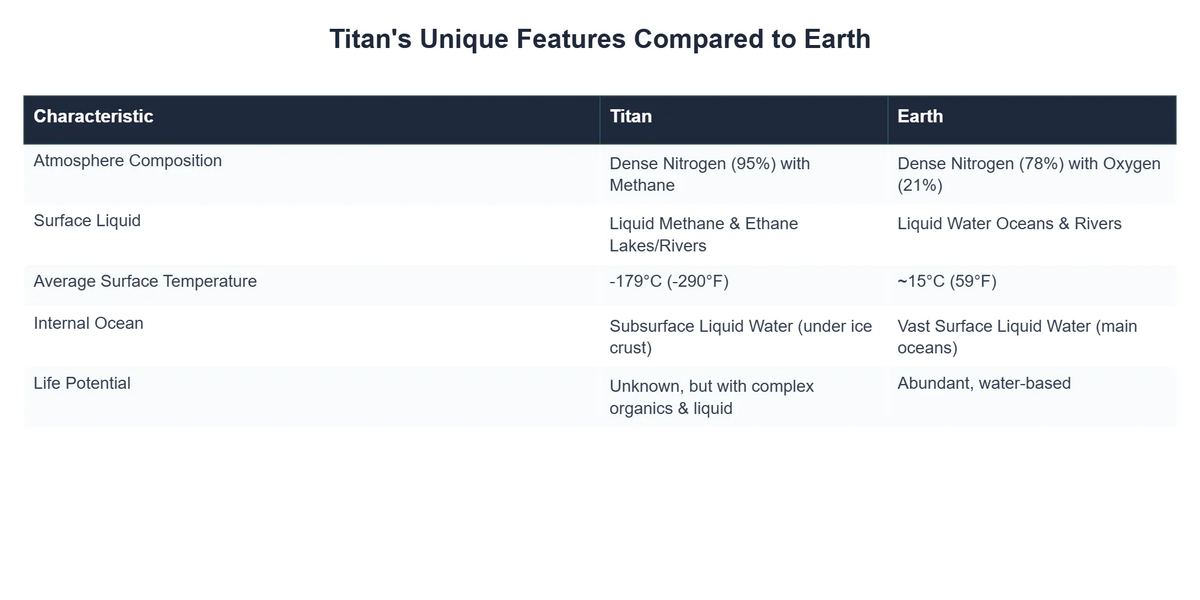
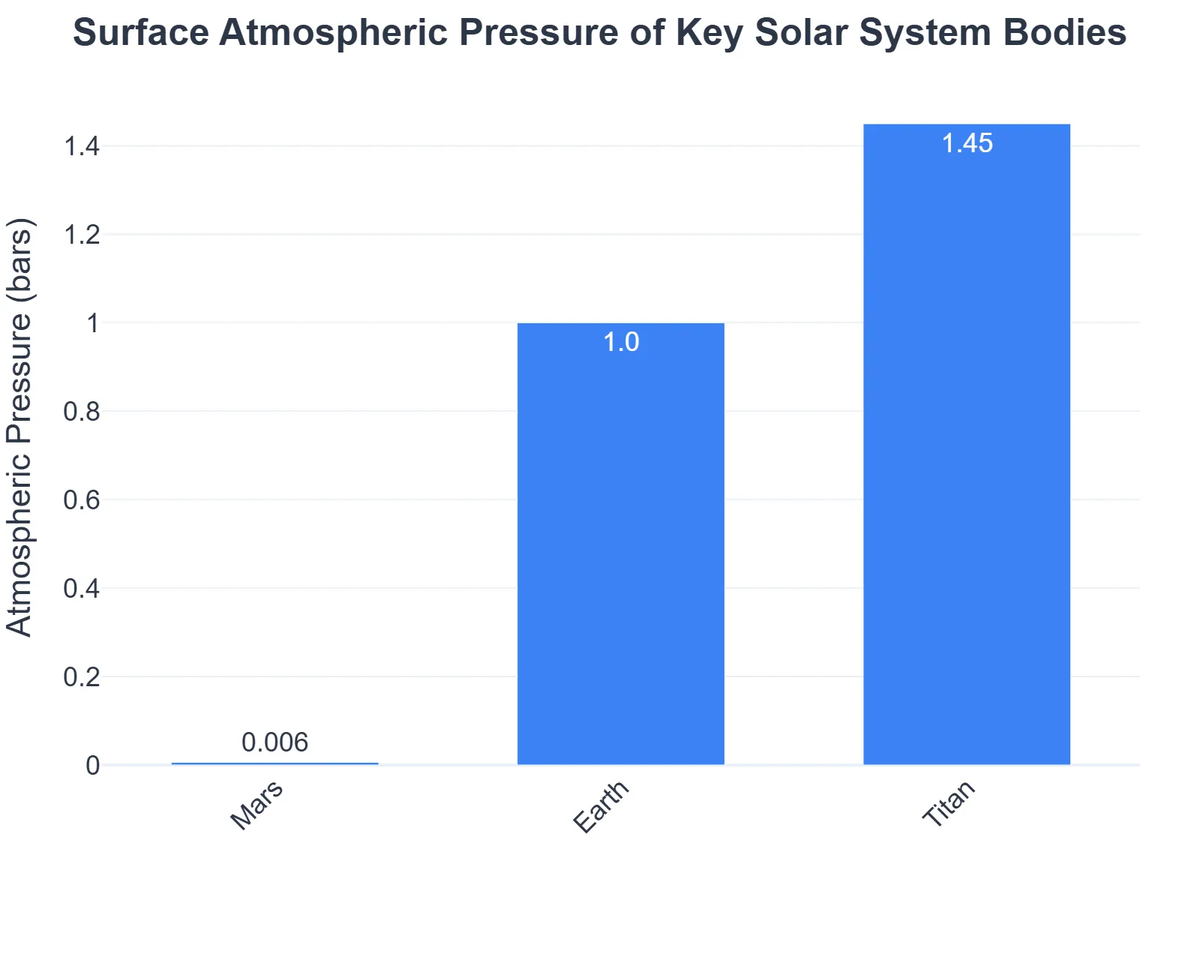
Titan is the only moon in our solar system with a substantial atmosphere, thicker than Earth’s. This atmosphere is primarily composed of nitrogen (about 95%) with significant amounts of methane (around 5%) and other trace hydrocarbons. This dense, orange haze gives rise to complex organic chemistry, powered by sunlight, that constantly rains down onto the surface. It’s a natural laboratory for studying prebiotic chemistry, the building blocks of life.
- ✅ Nitrogen-Methane Cycle: Analogous to Earth’s water cycle, but with liquid hydrocarbons.
- ✅ Organic Production: The atmosphere is a factory for complex organic molecules.
- ✅ Prebiotic Relevance: The conditions may resemble those on early Earth, before life emerged.
🌊 Lakes, Rivers, and Cryovolcanoes
Beneath its orange veil, Titan features an active hydrological cycle – but instead of water, it’s liquid methane and ethane. Vast lakes and seas, like Kraken Mare and Ligeia Mare, dominate its polar regions, fed by extensive river networks. Evidence also suggests the presence of cryovolcanoes, which erupt water-ammonia mixtures rather than molten rock, indicating an active interior and potentially a subsurface liquid water ocean. For more on the moon’s unique features, explore Titan Unveiled: Cassini’s Legacy and Future Exploration.
🌱 Potential for Prebiotic Chemistry
While surface temperatures on Titan are a frigid -179 °C (-290 °F), making liquid water unstable on the surface, the presence of complex organic molecules, liquid hydrocarbons, and the possibility of a subsurface water ocean make it a compelling world in the search for life beyond Earth. Scientists believe that if life were to exist on Titan, it might be fundamentally different from Earth life, potentially utilizing methane as a solvent rather than water.
The Dragonfly Space Mission: A Revolutionary Rotorcraft
The Dragonfly mission is a groundbreaking endeavor, representing NASA’s first robotic rotorcraft to fly on another planetary body. Its design is specifically tailored to navigate Titan’s dense atmosphere and explore its diverse terrain.
⚙️ How Dragonfly Will Navigate Titan
Dragonfly is essentially a large, car-sized drone, equipped with eight rotors, allowing it to fly from one location to another. This mobility is key to its scientific success, enabling it to explore dozens of sites over its multi-year mission. The dense atmosphere and low gravity of Titan make aerial flight significantly easier than on Earth, allowing the vehicle to cover much greater distances than a traditional rover.
- ➡️ Hop-and-Fly Approach: Dragonfly will make short flights between scientifically interesting sites.
- ➡️ Autonomous Navigation: Given the significant communication delay with Earth, Dragonfly will operate largely autonomously.
- ➡️ Power Source: A Multi-Mission Radioisotope Thermoelectric Generator (MMRTG) provides power for propulsion, instruments, and heating.
🔬 Scientific Payload and Instruments
Dragonfly carries a sophisticated suite of instruments designed to characterize Titan’s habitability and search for chemical biosignatures. Its primary instruments include:
- 💡 Drill for Titan Organic Material (DrACO): To sample surface materials and analyze their organic composition.
- 💡 Dragonfly Mass Spectrometer (DraMS): For high-resolution analysis of organic and volatile compounds.
- 💡 Dragonfly Gamma-Ray and Neutron Spectrometer (DraGNS): To measure surface composition, including water ice and hydrocarbons.
- 💡 Dragonfly Metrology and Atmospheric Sensors (DraMMS): For atmospheric measurements, meteorology, and surface imaging.
- 💡 Dragonfly Cameras (DragonCam): For panoramic and microscopic imaging of the terrain and samples.
For more details on its design, you can refer to insights provided by NASA, for instance, on how NASA’s Dragonfly Will Fly Around Titan Looking for Origins, Signs of Life.
🚀 Launch and Arrival Timeline
The Dragonfly mission is currently targeting a launch in July 2028. After an approximately six-year journey through space, it is projected to arrive at Titan in 2034. Upon arrival, it will perform a complex entry, descent, and landing sequence before beginning its two-year primary mission exploring the equatorial region of Titan, specifically the Shangri-La dune field.
Core Scientific Objectives of Dragonfly
The primary goals of the Dragonfly mission are deeply rooted in astrobiology and understanding the potential for life beyond Earth. Its focus is on deciphering the complex organic chemistry and environmental processes on Titan.
🧬 Searching for Chemical Signatures of Life
One of the most compelling objectives is to search for chemical evidence of past or present life, or prebiotic chemistry. By analyzing samples from diverse locations, Dragonfly will look for complex organic molecules that might hint at biological processes, even if they’re not exactly like Earth’s. This includes identifying specific molecular structures and isotopic ratios that could be indicative of biological activity.
🗺️ Exploring Titan’s Diverse Environments
Dragonfly’s mobility will allow it to visit multiple geological settings, including vast dune fields, impact craters, and the margins of liquid lakes. This unprecedented access to varied environments will provide a comprehensive understanding of Titan’s surface composition, geology, and atmospheric interactions across different regions.
- ✅ Dune Fields: To study the composition of organic sands.
- ✅ Impact Craters: To expose subsurface materials and potential cryovolcanic activity.
- ✅ Lake Shores: To investigate the interface between liquid hydrocarbons and solids.
🌬️ Studying Atmospheric and Surface Processes
The mission will extensively study the methane cycle on Titan, including meteorological phenomena, surface-atmosphere exchange processes, and the evolution of the atmosphere over time. This includes measuring atmospheric temperature, pressure, and wind speeds, as well as observing how liquids interact with the solid surface.
Anticipated Discoveries and Their Impact
The data returned by the Dragonfly mission holds the potential to revolutionize our understanding of planetary science and astrobiology. The insights gained will extend far beyond Titan itself.
💡 Unveiling Titan’s Geological History
By exploring its surface features, Dragonfly will provide crucial data to reconstruct Titan’s geological evolution. Understanding the interplay of tectonics, cryovolcanism, erosion by liquid hydrocarbons, and atmospheric deposition will paint a clearer picture of how this unique world formed and changed over billions of years.
🌟 Insights into the Origin of Life
Titan offers a natural laboratory for studying the conditions that could lead to the emergence of life. Even if no direct signs of life are found, the detailed analysis of its complex organic chemistry will provide invaluable insights into the processes that could have occurred on early Earth, before the advent of life as we know it. This contributes significantly to the broader Cosmic Queries: Probing the Mysteries of the Universe about life’s origins.
🛰️ Paving the Way for Future Ocean World Missions
Dragonfly’s success will demonstrate the viability of rotorcraft for planetary exploration, opening doors for similar missions to other atmospheric bodies. More importantly, its findings on Titan, a moon with a suspected subsurface ocean, will inform future missions to other “ocean worlds” like Europa and Enceladus, where liquid water oceans are known to exist beneath icy shells.
Challenges and Innovations of the Dragonfly Mission
Undertaking a mission to a world as distant and unique as Titan presents formidable challenges, requiring significant technological innovation and meticulous planning. For deeper insights into the specific challenges of NASA’s missions, you can listen to podcasts like EPISODE 60: DRAGONFLY | APPEL Knowledge Services.
🌬️ Navigating a Dense, Cold Atmosphere
While Titan’s dense atmosphere makes flight easier, it also brings challenges. The extremely cold temperatures require robust thermal management for all systems. The atmospheric composition and density also demand careful aerodynamic design and propulsion system optimization.

📡 Autonomous Operation and Communication
The sheer distance to Titan means a significant communication delay (over an hour each way). This necessitates a high degree of autonomy for Dragonfly, enabling it to make decisions about navigation, hazard avoidance, and even scientific sampling without real-time input from Earth. Planning flight paths and scientific activities must be pre-programmed or managed by onboard AI.
⚡ Powering a Rotorcraft on an Alien World
The MMRTG is crucial for Dragonfly, providing continuous electrical power regardless of sunlight, which is minimal at Titan’s distance from the Sun. This nuclear power source allows the mission to operate both day and night, and crucially, provides heat to keep the spacecraft’s instruments and electronics at operational temperatures in the frigid environment.
The Legacy of Cassini and Future Explorations
The Dragonfly mission is not just a standalone endeavor; it builds directly upon the invaluable groundwork laid by previous missions, particularly the Cassini-Huygens mission, and sets the stage for future cosmic explorations.
🔭 Building on Cassini’s Revelations
The Cassini spacecraft, with its Huygens probe that successfully landed on Titan in 2005, provided the first close-up look at this enigmatic moon. Cassini’s long tenure in the Saturnian system revealed Titan’s dense atmosphere, its methane lakes, river systems, and the evidence of a subsurface ocean. Dragonfly is designed to follow up on these discoveries, providing the mobility and in-situ analysis that Cassini could only hint at from orbit. For more on this, check out NASA Titan Mission: Exploring Saturn’s Moon.
🌌 Titan’s Place in the Search for Life Beyond Earth
Titan remains one of the most promising candidates for harboring life, or at least the conditions for its emergence, within our solar system. Alongside Europa and Enceladus, it represents a class of “ocean worlds” that hold subsurface liquid water. Dragonfly’s direct exploration of Titan’s surface and organic chemistry will profoundly influence how we approach the search for extraterrestrial life and help prioritize future missions to other potentially habitable bodies.
Recommended Video
Conclusion: A New Era of Exploration on Titan
The Dragonfly mission to Titan is more than just another space probe; it’s a testament to human ingenuity and our insatiable drive to understand our place in the cosmos. By sending a flying laboratory to explore an alien ocean world, NASA is pushing the boundaries of what’s possible, seeking answers to fundamental questions about the origins of life and the diversity of habitable environments.
As Dragonfly prepares for its long journey, the scientific community and the public alike eagerly await its arrival. The discoveries it promises to unveil on Titan will undoubtedly reshape our understanding of astrobiology and ignite new possibilities for future explorations of the universe’s most mysterious corners.
Frequently Asked Questions
What is the primary goal of the Dragonfly mission?
The Dragonfly mission’s main goal is to explore Titan’s surface and atmosphere, studying its organic chemistry, methane cycle, and potential for past or present habitability, looking for signs of prebiotic chemistry.
Why is Titan considered an ‘ocean world’?
Titan is considered an ‘ocean world’ not for liquid water on its surface, but for its vast subsurface ocean of liquid water and its surface lakes, rivers, and seas of liquid methane and ethane, forming a complete hydrological cycle.
When is Dragonfly expected to reach Titan?
Dragonfly launched in 2027 and is projected to arrive at Titan in the mid-2030s, around 2034-2035, after a multi-year journey through the solar system.