


Robotics: Exploring Types, Applications, and Future Trends
In a world increasingly driven by technological innovation, few fields capture the imagination and promise quite like robotics. From automating arduous tasks to enabling unprecedented scientific discovery, robots are reshaping industries and redefining the boundaries of what’s possible. Understanding the landscape of modern robotics is crucial for anyone charting the course of tomorrow’s technology, as explored in our pillar content on Future Perfect?: Charting the Course of Tomorrow’s Technology.
💡 Key Takeaways
- Robotics encompasses diverse types, from manufacturing arms to social companions, each serving distinct purposes.
- Robots are revolutionizing sectors like healthcare, manufacturing, and logistics, enhancing efficiency and safety.
- The future of robotics is deeply intertwined with advancements in AI, machine learning, and ethical development.
- Understanding robotic trends is crucial for navigating societal and industrial transformations.
“Robotics isn’t just about building machines; it’s about shaping our societal evolution. We must ensure that as AI propels robotic capabilities, ethics remain the bedrock of their integration into our lives, fostering trust and equitable progress.”
— Kira Chen, Futurist & AI Ethics Advocate
This comprehensive guide dives deep into the fascinating world of robotics, exploring the diverse robotics types, their transformative applications across various sectors, and the exciting, yet challenging, future trends that lie ahead. Whether you’re a student, an industry professional, or simply curious about the machines shaping our future, you’ll find immense practical value here.

In This Article
- → Robotics: Exploring Types, Applications, and Future Trends
- — 💡 Key Takeaways
- → What Exactly is Robotics? A Foundational Understanding
- → Understanding the Diverse Robotics Types
- — ⚙️ Industrial Robots
- — 📍 Mobile Robots
- — 🤖 Humanoid Robots
- — 🤝 Collaborative Robots (Cobots)
- — 🩺 Medical & Healthcare Robots
- → Key Applications Across Industries
- — 🏭 Manufacturing & Automotive
- — 📦 Logistics & Warehouse Robotics
- — ⚕️ Healthcare & Medicine
- — 🚧 Construction & Architectural Robotics
- — 🌍 Exploration & Dangerous Environments
- — 🛍️ Service & Domestic Robotics
- — 🎓 Education & Research
- → The Horizon: Future Trends in Robotics
- — 🧠 AI & Machine Learning Integration
- — 🤝 Human-Robot Collaboration & Companionship
- — 🌐 Connected Robotics & IoT
- — 📏 Miniaturization & Nanorobotics
- — 🌱 Soft Robotics & Bio-inspired Designs
- → Challenges and the Path Forward
- — ⚖️ Ethical & Societal Implications
- — 🔒 Security & Resilience
- — 💰 Cost & Accessibility
- → Conclusion
What Exactly is Robotics? A Foundational Understanding
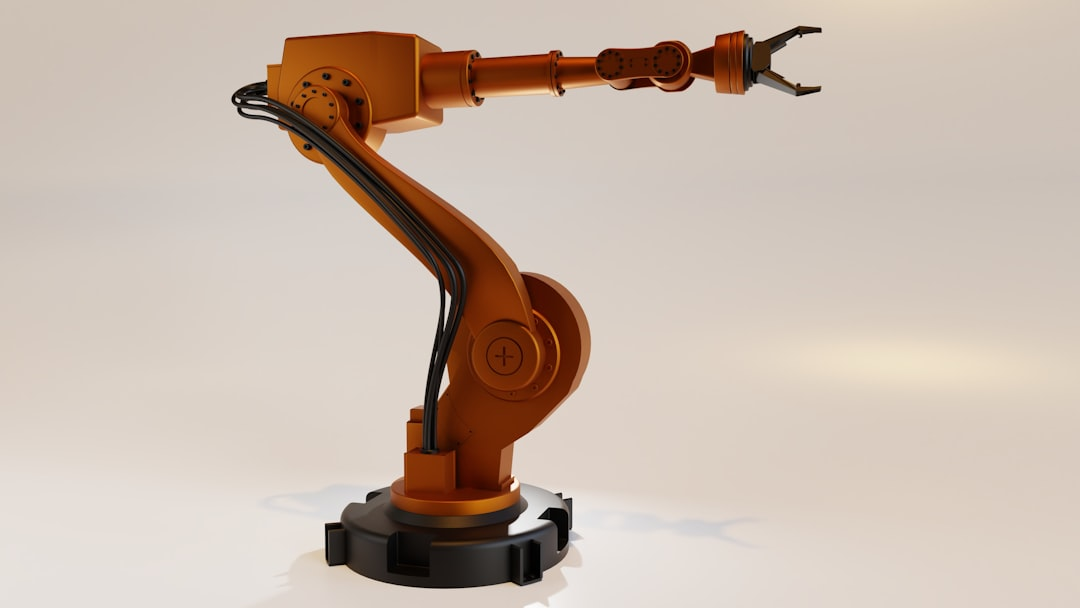
At its core, robotics is an interdisciplinary branch of engineering and science that deals with the design, construction, operation, and application of robots. It integrates fields such as mechanical engineering, electrical engineering, computer science, artificial intelligence, and more.
The primary goal of robotics is to design machines that can assist humans, automate processes, or perform tasks that are dangerous, repetitive, or beyond human capabilities. These machines, known as robots, are typically programmable and often capable of performing a series of actions autonomously or semi-autonomously. For a deeper dive into the engineering principles, you can explore resources like What is Robotics? A Comprehensive Guide.
Precision Parts Inc. Boosts Production by 40% with Smart Robotics Integration
❓The Challenge
Precision Parts Inc., a mid-sized automotive components manufacturer, faced significant challenges with high manual labor costs, production inefficiencies, and quality inconsistencies on their assembly lines.
💡The Solution
Inspired by the insights on ‘Robotics: Exploring Types, Applications, and Future Trends,’ Precision Parts Inc. strategically implemented industrial robots for precision welding and assembly, alongside mobile robots (AMRs) to automate material handling across their factory.
🏆The Result
Within one year, this integration led to a 40% increase in production throughput, a 20% reduction in operational expenditure, and a marked improvement in product quality due to reduced human error.
Understanding the Diverse Robotics Types
The world of robotics is far more varied than popular culture often depicts. Robots come in myriad forms, each designed for specific functions and environments. Here’s a breakdown of the most significant robotics types:
⚙️ Industrial Robots
- ✅ Definition: Programmable mechanical arms or manipulators designed to perform tasks in manufacturing and industrial settings.
- ➡️ Characteristics: High precision, speed, strength, and repeatability. Often operate in caged environments for safety.
- 💡 Examples: Robotic arms for welding, painting, assembly, material handling, and packaging. Major players include FANUC, KUKA, ABB. Think of the advanced auto robotics seen in a modern car plant, where Toyota Robotics utilizes them extensively for efficiency.
📍 Mobile Robots
- ✅ Definition: Robots capable of moving in their environment without being constrained to a fixed physical position.
- ➡️ Characteristics: Equipped with wheels, tracks, or legs; often use sensors for navigation and obstacle avoidance.
- 💡 Examples: Autonomous Guided Vehicles (AGVs) and Autonomous Mobile Robots (AMRs) for logistics, drones for aerial surveillance, and quadruped robots like Boston Dynamics’ Spot, renowned for its ability to navigate challenging terrain in field robotics applications like construction sites or hazardous inspections.
🤖 Humanoid Robots
- ✅ Definition: Robots built to resemble the human body, often with a torso, head, two arms, and two legs.
- ➡️ Characteristics: Designed for human-centric environments, often focusing on interaction, communication, and performing human-like tasks.
- 💡 Examples: Boston Dynamics’ Atlas (known for its incredible agility and balance), and perhaps most famously, Hanson Robotics’ Sophia. For a deeper look into the ethical and capabilities of humanoids like Sophia, consider exploring our articles on Sophia AI: Exploring Humanoid Robotics and AI Ethics and AI Female Robot: Exploring Sophia and Beyond. The development of humanoids like the Ameca robot also pushes the boundaries, as discussed in Ameca Human Robot: The Future of Humanoid Robotics.
🤝 Collaborative Robots (Cobots)
- ✅ Definition: Robots designed to safely interact and work alongside humans in a shared workspace, without the need for safety cages.
- ➡️ Characteristics: Force-sensing capabilities, easy programming, and inherent safety features to prevent harm to human co-workers.
- 💡 Examples: Universal Robots is a pioneer and leading manufacturer in this space, with their cobots found in various industries for tasks like assembly, packaging, and quality inspection. They represent a significant shift towards more integrated human-robot teams.
🩺 Medical & Healthcare Robots
- ✅ Definition: Robots designed for surgical assistance, rehabilitation, patient care, and pharmaceutical automation.
- ➡️ Characteristics: High precision, sterile operation, patient safety focus, and often specialized sensors.
- 💡 Examples: Surgical robots (e.g., Da Vinci Surgical System), prosthetic limbs, exoskeletons for rehabilitation, and companion robots in elderly care. The increasing demand for robotics in nursing and patient support highlights their growing role in healthcare.
Key Applications Across Industries
Robots are no longer confined to factory floors; their presence is expanding into nearly every sector, driving efficiency, safety, and innovation.

🏭 Manufacturing & Automotive
- ✅ Impact: Core of industrial automation for decades, driving mass production and precision manufacturing.
- ➡️ Tasks: Welding, painting, assembly, material handling, quality control. Auto robotics, particularly at companies like Toyota Robotics, are synonymous with modern vehicle production lines.
📦 Logistics & Warehouse Robotics
- ✅ Impact: Revolutionizing supply chains, inventory management, and order fulfillment.
- ➡️ Tasks: Picking, packing, sorting, transporting goods. Warehouse robotics, including AGVs and AMRs, are essential for e-commerce giants and distribution centers to handle massive volumes.
⚕️ Healthcare & Medicine
- ✅ Impact: Enhancing surgical precision, supporting patient care, and automating laboratory tasks.
- ➡️ Tasks: Minimally invasive surgery, drug discovery, telepresence for remote consultations, and assisting nurses with patient mobility, demonstrating the immense value of robotics in nursing.
🚧 Construction & Architectural Robotics
- ✅ Impact: Automating hazardous or repetitive construction tasks, enabling new design possibilities.
- ➡️ Tasks: Bricklaying, concrete pouring, demolition, 3D printing of structures, and complex fabrication. Architectural robotics is opening new frontiers in custom building and sustainable construction.
🌍 Exploration & Dangerous Environments
- ✅ Impact: Accessing places too hazardous or remote for humans.
- ➡️ Tasks: Deep-sea exploration, space missions (e.g., Mars rovers), disaster relief (e.g., search and rescue in collapsed buildings), and nuclear facility inspections. This is a crucial application area for field robotics.
🛍️ Service & Domestic Robotics
- ✅ Impact: Improving daily life, enhancing customer service, and providing companionship.
- ➡️ Tasks: Vacuum cleaning, lawn mowing, elder care assistance, customer service kiosks, and delivery services.
🎓 Education & Research
- ✅ Impact: Fostering STEM skills, advancing robotic capabilities, and inspiring future innovators.
- ➡️ Tasks: Providing hands-on learning experiences (e.g., FIRST Tech Robotics competitions), conducting cutting-edge research in AI and control systems, and developing new robotic paradigms.
The Horizon: Future Trends in Robotics
The field of robotics is constantly evolving, driven by advancements in AI, materials science, and computational power. The future promises even more sophisticated and integrated robotic systems.
🧠 AI & Machine Learning Integration
- ✅ Trend: Robots are becoming smarter, capable of learning from experience, adapting to new situations, and making autonomous decisions.
- ➡️ Impact: This fusion is at the forefront of frontiers in robotics and AI, leading to more flexible and versatile robots that can handle unstructured environments and complex tasks. Think beyond simple programming to true machine intelligence.
🤝 Human-Robot Collaboration & Companionship
- ✅ Trend: Increasing emphasis on robots working seamlessly alongside humans, both in industrial settings and as companions.
- ➡️ Impact: Cobots will become even more ubiquitous. Furthermore, robots providing emotional support, education, or assistance in homes will bridge the gap between robotics and humanity. Research highlights this growing area, as seen in publications on Human–Robot Companionship: Current Trends and Future Agenda.
🌐 Connected Robotics & IoT
- ✅ Trend: Robots are integrating into the Internet of Things (IoT), enabling data exchange and remote operation.
- ➡️ Impact: Connected robotics will allow fleets of robots to coordinate, share information, and optimize operations across vast networks, from smart factories to smart cities.
📏 Miniaturization & Nanorobotics
- ✅ Trend: Development of increasingly smaller robots, including those at the nanoscale.
- ➡️ Impact: Nanorobots hold potential for targeted drug delivery within the human body, micro-assembly, and environmental monitoring at unprecedented scales.
🌱 Soft Robotics & Bio-inspired Designs
- ✅ Trend: Moving away from rigid, metallic designs to robots made from flexible, deformable materials.
- ➡️ Impact: Soft robots can safely interact with delicate objects, navigate complex environments, and mimic biological organisms, opening new avenues for medical and exploration applications.
Challenges and the Path Forward
While the future of robotics is bright, several challenges must be addressed to ensure its responsible and beneficial integration into society.
⚖️ Ethical & Societal Implications
- ✅ Challenge: Addressing concerns about job displacement, data privacy, accountability for robotic actions, and the impact of autonomous systems on human interaction.
- ➡️ Path Forward: Developing robust ethical guidelines, fostering public dialogue, and ensuring equitable access to education and new opportunities. The discussions surrounding robots like Sophia highlight many of these ethical considerations.
🔒 Security & Resilience
- ✅ Challenge: Protecting robotic systems from cyberattacks, ensuring their reliable operation, and making them resilient to failures.
- ➡️ Path Forward: Implementing advanced cybersecurity measures, designing for fault tolerance, and establishing clear protocols for incident response.
💰 Cost & Accessibility
- ✅ Challenge: The high initial investment for advanced robotic systems can be a barrier for smaller businesses or developing economies.
- ➡️ Path Forward: Continued innovation to reduce manufacturing costs, development of more accessible programming interfaces, and flexible deployment models like Robotics-as-a-Service (RaaS).
Recommended Video
Conclusion
The journey of robotics, from early industrial automation to sophisticated humanoid companions and highly specialized field robots, is a testament to human ingenuity. As we continue to push the boundaries of what these machines can do, understanding the nuances of robotics types, their applications, and the unfolding future trends becomes paramount.
Robots are not just tools; they are evolving partners poised to transform every aspect of our lives. By embracing innovation responsibly, addressing ethical considerations, and continuously educating ourselves, we can ensure that robotics truly contributes to a “Future Perfect” for all, as we continue to explore in Future Perfect?: Charting the Course of Tomorrow’s Technology.
Frequently Asked Questions
What are the main types of robots?
Robots are generally categorized into industrial (manufacturing, assembly), service (medical, logistics, domestic), and research robots, each designed for specific functions.
How is AI impacting robotics?
AI significantly enhances robotics by enabling robots to learn, adapt, make decisions, and interact more naturally, moving beyond pre-programmed tasks to autonomous operations.
What are some ethical concerns regarding the future of robotics?
Key ethical concerns include job displacement, data privacy, accountability for autonomous systems, bias in AI algorithms, and the potential for misuse, emphasizing the need for robust ethical frameworks.
Where are robots most commonly applied today?
Robots are widely used in manufacturing (automotive, electronics), healthcare (surgery, rehabilitation), logistics (warehousing, delivery), and even domestic settings (cleaning, lawn care).