In 2016, the world witnessed an unprecedented convergence of digital magic and physical reality with the launch of Pokémon GO. This wasn’t just another game; it was a global phenomenon that fundamentally altered our perception of what was possible in interactive entertainment. By blending beloved characters with real-world exploration, Pokémon GO ushered in a new era of augmented reality gaming, proving to be a monumental tipping point for the entire industry.
💡 Key Takeaways
- Pokémon GO pioneered mainstream augmented reality gaming.
- It significantly impacted public health by encouraging outdoor activity.
- The game fostered unique global communities and social interactions.
- It redefined the potential for location-based and real-world gaming.
“Pokémon GO wasn’t just a game; it was a societal event. It momentarily transformed public spaces into shared digital playgrounds, demonstrating the profound capacity of technology to bridge the physical and virtual, sparking unprecedented collective joy and movement.”
— Arthur Pendleton, Cultural Historian & Event Analyst
From bustling city streets to quiet suburban parks, millions suddenly found themselves venturing outdoors, phones in hand, in pursuit of virtual creatures. This article delves into how Pokémon GO achieved this groundbreaking success, its profound impact on mobile gaming and cultural interaction, and its enduring legacy that continues to shape technological innovation.
In This Article
- — 💡 Key Takeaways
- → The Dawn of a New Era: What Made Pokémon GO a Tipping Point?
- — ✅ Bridging Digital and Physical Worlds
- — 💡 Accessibility and Global Appeal
- → Beyond the Screen: How AR Reshaped Mobile Gaming
- — 🚀 From Niche Concept to Mainstream Sensation
- — ⚙️ The Role of GPS and Real-World Interaction
- → A Cultural Phenomenon: More Than Just a Game
- — 🏘️ Impact on Social Interaction and Public Spaces
- — 🏃♀️ Health and Exploration Incentives
- — 💰 Economic Ripple Effects
- → Technical Innovations and Challenges
- — 🛠️ Niantic’s Vision and Infrastructure
- — 🐛 Early Hurdles and Evolution
- → The Lasting Legacy of Pokémon GO
- — 🔬 Paving the Way for Future AR Applications
- — 🎮 Redefining the Mobile Gaming Landscape
- → Conclusion
The Dawn of a New Era: What Made Pokémon GO a Tipping Point?
The success of Pokémon GO wasn’t accidental; it was the culmination of clever design, a beloved IP, and a perfectly timed release that tapped into a latent desire for more immersive digital experiences. Its innovative approach set a new standard for what a game could be.
✅ Bridging Digital and Physical Worlds
At its core, Pokémon GO distinguished itself by demanding physical interaction with the real world. Unlike traditional mobile games played while sitting, Pokémon GO required players to walk, explore, and visit landmarks to find Pokémon, PokéStops, and Gyms. This novel gameplay loop turned mundane commutes and local parks into exciting new frontiers.
- ➡️ Real-world exploration: Players had to physically move to catch Pokémon, hatch eggs, and interact with game elements.
- ➡️ Location-based mechanics: Utilized GPS data to overlay virtual content onto the real environment, creating a sense of wonder.
- ➡️ Iconic IP integration: Leveraged the massive, intergenerational appeal of the Pokémon franchise, drawing in both nostalgic adults and new players.
💡 Accessibility and Global Appeal
Pokémon GO wasn’t confined to a niche audience. Its simple mechanics made it accessible to people of all ages and technical proficiencies. The global launch saw immediate and widespread adoption, transcending language barriers and cultural differences.
- ✅ Free-to-play model: Lowered the barrier to entry, allowing anyone with a smartphone to join.
- ✅ Intuitive gameplay: Easy to learn, yet deep enough to encourage continued engagement.
- ✅ Viral spread: Word-of-mouth, social media, and mainstream news coverage propelled its growth into a worldwide phenomenon.
Beyond the Screen: How AR Reshaped Mobile Gaming

Before Pokémon GO, augmented reality was largely a theoretical concept or confined to experimental applications. The game transformed AR from a futuristic idea into a tangible, mainstream experience, irrevocably changing the trajectory of mobile gaming.
🚀 From Niche Concept to Mainstream Sensation
Prior to Pokémon GO, augmented reality apps often struggled to find a broad audience. While early pioneers like Google’s Ingress (also developed by Niantic) laid foundational groundwork, it was Pokémon GO that cracked the code for mass adoption. It demonstrated AR’s potential for truly engaging, interactive entertainment.
For more on its predecessor, consider reading about John Hanke’s early vision at Niantic and how Google Ingress: Pioneering AR Gaming Before Pokémon GO set the stage.
⚙️ The Role of GPS and Real-World Interaction
The game’s reliance on GPS and real-world mapping was its secret sauce. It didn’t just project characters onto the camera feed; it anchored the game to actual locations, encouraging players to explore their surroundings. This created a unique blend of digital interaction and physical activity.
- 🗺️ GPS-driven gameplay: Integrated real-world maps and locations directly into the game’s core mechanics.
- 🚶♀️ Active engagement: Encouraged walking and exploration, leading to unexpected health benefits for many players.
- 🤝 Community formation: Spawned spontaneous gatherings in public spaces as players converged on popular PokéStops and Gyms.
A Cultural Phenomenon: More Than Just a Game
The impact of Pokémon GO extended far beyond the realm of gaming. It became a true cultural phenomenon, influencing social behavior, public spaces, and even local economies.
🏘️ Impact on Social Interaction and Public Spaces
Suddenly, parks, museums, and historical landmarks were teeming with people, not just visiting, but actively interacting with each other through the shared experience of the game. It sparked conversations, built communities, and even led to new friendships among strangers.
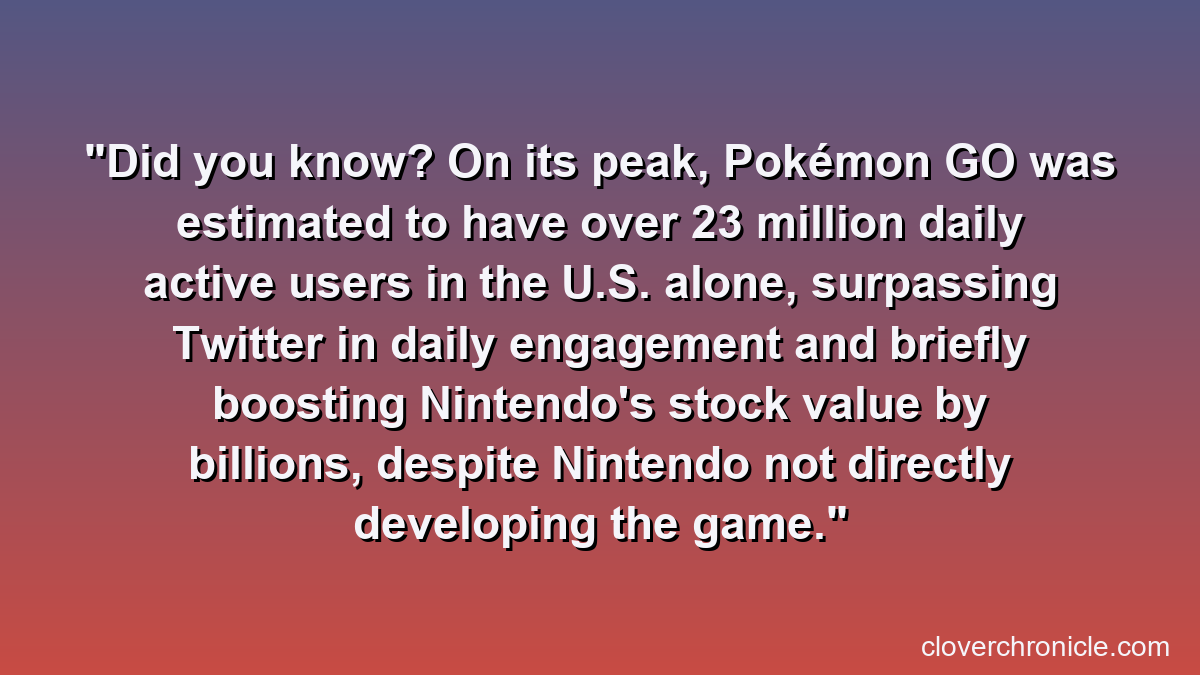
- 🗣️ Increased social interaction: Players bonded over shared goals, trading tips, and strategizing.
- 🏞️ Revitalization of public spaces: Areas previously underused became vibrant hubs of activity.
- 🚨 New challenges: Also brought challenges like overcrowding, trespassing, and safety concerns, forcing public spaces and police to adapt.
🏃♀️ Health and Exploration Incentives
One of the most widely discussed benefits was the game’s ability to get people moving. Anecdotal evidence, and later studies, pointed to increased physical activity among players, demonstrating how gaming could be a catalyst for healthier lifestyles.
- 👟 Promoted walking: Required movement to progress, inherently encouraging exercise.
- 🌳 Encouraged outdoor activity: Drew players out of their homes and into nature or urban environments.
💰 Economic Ripple Effects
Local businesses quickly recognized the potential. Many saw an influx of foot traffic from players congregating near PokéStops or Gyms, leading to increased sales and innovative marketing strategies. This showcased the unexpected economic power of a well-executed AR experience.
The widespread effects of Pokémon GO on communities and industries highlight how significant societal shifts can occur from unexpected sources. To understand more about how such large-scale changes reshape our world, explore our article on Societal Shifts: How Major Changes Reshape Our World.
Technical Innovations and Challenges
Developing Pokémon GO was no small feat. Niantic, the company behind the game, leveraged years of experience with location-based technology to create a seamless AR experience, though not without its initial hurdles.
🛠️ Niantic’s Vision and Infrastructure
Niantic’s expertise, stemming from their work on Ingress and their background within Google, was crucial. They had already built a robust infrastructure for mapping and managing millions of real-world points of interest, which became the backbone of Pokémon GO’s gameplay.
- 🌐 Scalable backend: Designed to handle unprecedented player numbers and real-time data.
- 📸 AR camera integration: Advanced use of device cameras to overlay virtual creatures onto the real world.
- 🔒 Security and anti-cheat: Continuous efforts to combat GPS spoofing and other forms of cheating.
🐛 Early Hurdles and Evolution
The immense popularity led to significant server issues, bugs, and initial design limitations. However, Niantic demonstrated responsiveness, continuously updating the game, introducing new features, and refining the experience, ensuring its longevity. The initial server stability issues were a major challenge, as detailed on Wikipedia.
- 📈 Server stability issues: Massive launch demand led to frequent crashes and downtime.
- 🔄 Continuous updates: Regular patches, new Pokémon generations, and feature additions kept the game fresh.
- 🤝 Community feedback: Engaged with the player base to address concerns and guide development.
The Lasting Legacy of Pokémon GO
Even years after its initial boom, Pokémon GO remains a popular game with a dedicated player base. Its true legacy, however, lies in its role as a trailblazer, demonstrating the immense potential of augmented reality gaming and influencing countless subsequent titles and technologies.
🔬 Paving the Way for Future AR Applications
Pokémon GO proved that AR wasn’t just a gimmick; it could be a powerful tool for entertainment, education, and social connection. Its success spurred investment and innovation in AR technology across various industries, from consumer apps to enterprise solutions. Many companies now look to emulate its success in other fields.
- 🌟 Inspiration for AR developers: Showcased the commercial viability and player engagement potential of AR.
- 🆕 New AR games: Paved the way for titles like Harry Potter: Wizards Unite and Pikmin Bloom, also from Niantic, and countless others.
- 💡 Broader AR adoption: Helped normalize the idea of digital overlays in the real world, setting the stage for future AR glasses and devices.
🎮 Redefining the Mobile Gaming Landscape
The game fundamentally reshaped expectations for mobile gaming. It proved that deep engagement could come from encouraging players to interact with their physical environment, rather than just tapping a screen. This shift continues to influence game design and player expectations for what a mobile experience can offer.
As Aequilibrium highlights, Augmented Reality made Pokémon GO a Best Seller and changed the industry.
Recommended Video
Conclusion
Pokémon GO (2016) was far more than a fleeting fad; it was a genuine technological and cultural turning point. It brought augmented reality gaming into the mainstream, redefined how we interact with our smartphones and our surroundings, and ignited a global phenomenon that captivated millions. Its innovative use of GPS and AR, coupled with the power of a beloved brand, created an immersive experience that transcended traditional gaming boundaries. As a true Tipping Points: The Moments That Changed Everything, Pokémon GO solidified AR’s place in the future of entertainment and continues to inspire new ways for digital worlds to intersect with our own.
Frequently Asked Questions
What made Pokémon GO revolutionary?
Pokémon GO was revolutionary because it seamlessly integrated augmented reality (AR) with location-based gameplay, forcing players to physically explore their surroundings to catch Pokémon, interact with Gyms, and find PokéStops, merging digital and physical worlds.
How did Pokémon GO impact physical activity?
The game significantly encouraged physical activity, prompting players of all ages to walk, run, and explore their neighborhoods and cities, often leading to increased daily steps and outdoor time as they sought out in-game objectives.
What is the long-term legacy of Pokémon GO?
Its long-term legacy includes paving the way for other successful AR games, demonstrating the commercial viability of AR, and proving the power of games to foster community and encourage real-world interaction and exploration.