What is NEA Scout: A Pioneer in Asteroid Exploration
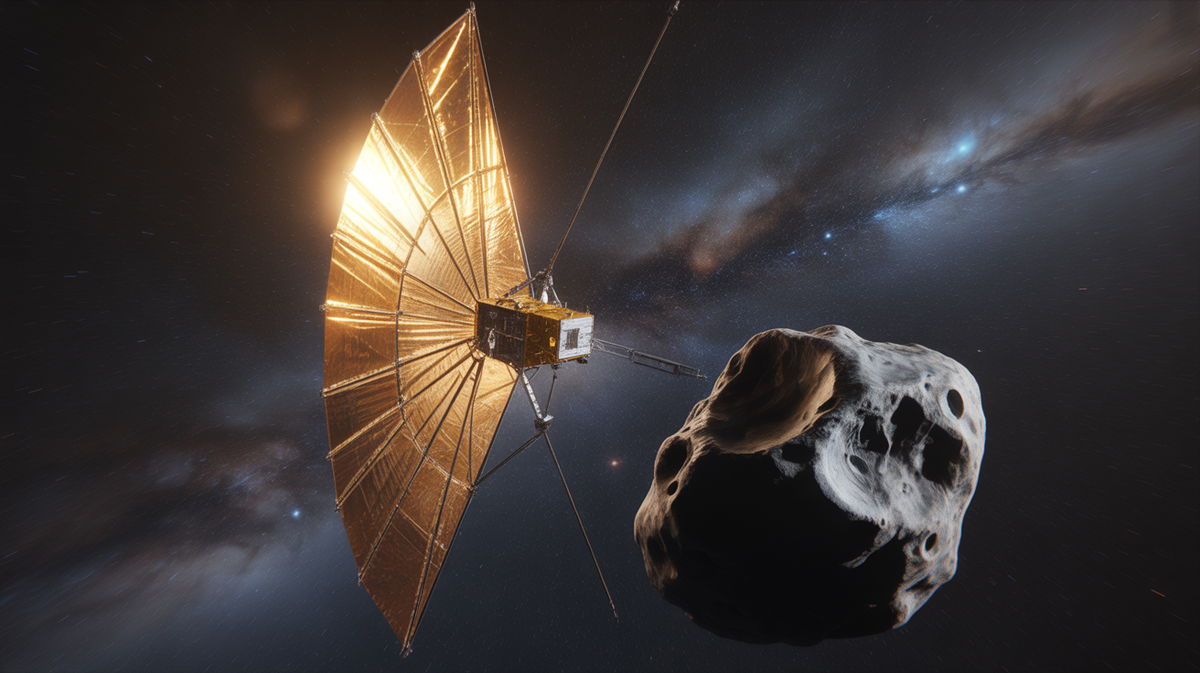
In the vast expanse of space, small, often overlooked celestial bodies hold keys to understanding our solar system’s origins and safeguarding our future. One such groundbreaking mission, the NEA Scout, represents a pivotal step in NASA’s strategy for near-Earth asteroid (NEA) characterization and defense. Launched alongside the Artemis I mission, NEA Scout is a small, innovative spacecraft designed to rendezvous with and gather data on a specific near-Earth asteroid, leveraging an advanced propulsion system: a solar sail.
💡 Key Takeaways
- NEA Scout is NASA’s first interplanetary mission to use a solar sail for primary propulsion.
- It’s designed to scout a near-Earth asteroid, collecting vital data on its surface and characteristics.
- The mission demonstrates the viability of solar sail technology for future deep space exploration.
- This small spacecraft showcases miniaturized technology enabling cost-effective scientific missions.
“NEA Scout represents a paradigm shift in deep space exploration. Its solar sail isn’t just a propulsion method; it’s a testament to human ingenuity, harnessing the sun’s gentle push to unlock the secrets of our cosmic neighborhood. Truly remarkable.”
— Astrid Bellweather, Astrophysicist & Science Communicator
In This Article
- → What is NEA Scout: A Pioneer in Asteroid Exploration
- — 💡 Key Takeaways
- — The Mission’s Core Objectives
- — CubeSat Technology: Small Satellite, Big Impact
- → How NEA Scout’s Solar Sail Propels Itself ☀️
- — The Principles of Solar Sailing
- — Advantages for Deep Space Missions
- → The Target: Near-Earth Asteroids (NEAs)
- — Why Study NEAs?
- — NEA Scout’s Specific Target
- → Challenges and Innovations
- — Overcoming Distance with Light
- — Future Implications for Asteroid Defense
- → NEA Scout’s Legacy and Future Missions
The Mission’s Core Objectives
The primary goals of the NEA Scout mission are multifaceted, focusing on both technological demonstration and scientific discovery:
- ✅ Demonstrate Solar Sail Propulsion: Prove the viability and efficiency of solar sail technology for deep-space missions, paving the way for future low-cost explorations.
- ✅ Characterize a Near-Earth Asteroid: Obtain detailed images and measurements of an NEA from close proximity, providing crucial data on its size, shape, rotation, surface properties, and orbital path.
- ✅ Advance Small Satellite Capabilities: Showcase the power and potential of CubeSat technology for scientific investigations beyond Earth orbit.
- ✅ Inform Planetary Defense: Contribute valuable insights for understanding the properties of potentially hazardous asteroids, supporting efforts like the NASA Asteroid Strategy: Defending Earth.
CubeSat Technology: Small Satellite, Big Impact
NEA Scout is a prime example of a CubeSat mission. CubeSats are miniature satellites, typically made of multiple 10 cm × 10 cm × 10 cm cubic units. NEA Scout itself is a 6U CubeSat, meaning it is six units long. This compact design offers several advantages:
- ➡️ Reduced Cost: Significantly lower manufacturing and launch costs compared to traditional large spacecraft.
- ➡️ Rapid Development: Shorter development cycles allow for more frequent missions and quicker adoption of new technologies.
- ➡️ Rideshare Opportunities: Their small size enables them to “hitch a ride” on larger missions, like the Artemis I, as secondary payloads.
Despite its small size, NEA Scout is equipped with a camera capable of resolving features as small as 10 cm across, along with a sophisticated navigation system to guide it on its multi-year journey to an asteroid.
How NEA Scout’s Solar Sail Propels Itself ☀️
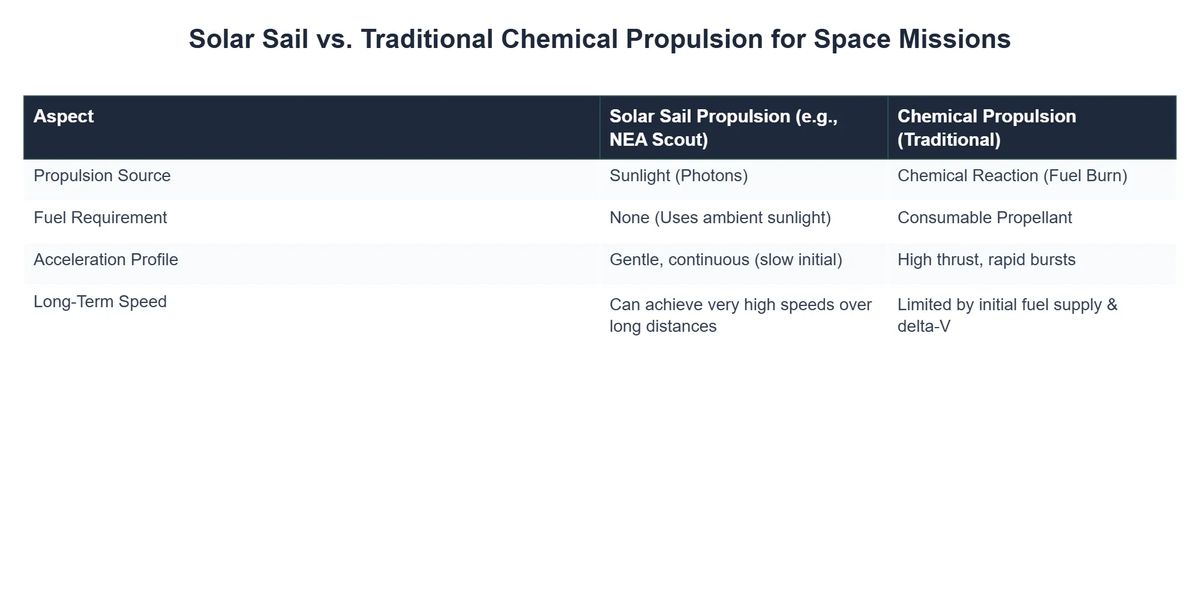
Unlike traditional spacecraft that rely on chemical propellants, NEA Scout harnesses the subtle but continuous pressure of sunlight for propulsion. This revolutionary method, known as solar sail technology, is central to the mission’s design and its ability to explore distant targets without carrying heavy fuel.
The Principles of Solar Sailing
A solar sail works on the principle that photons, though massless, carry momentum. When photons from the Sun strike the reflective surface of the sail, they impart a tiny push. Over time, this continuous, gentle push can accelerate a spacecraft to immense velocities. NEA Scout’s sail is a remarkable engineering feat:
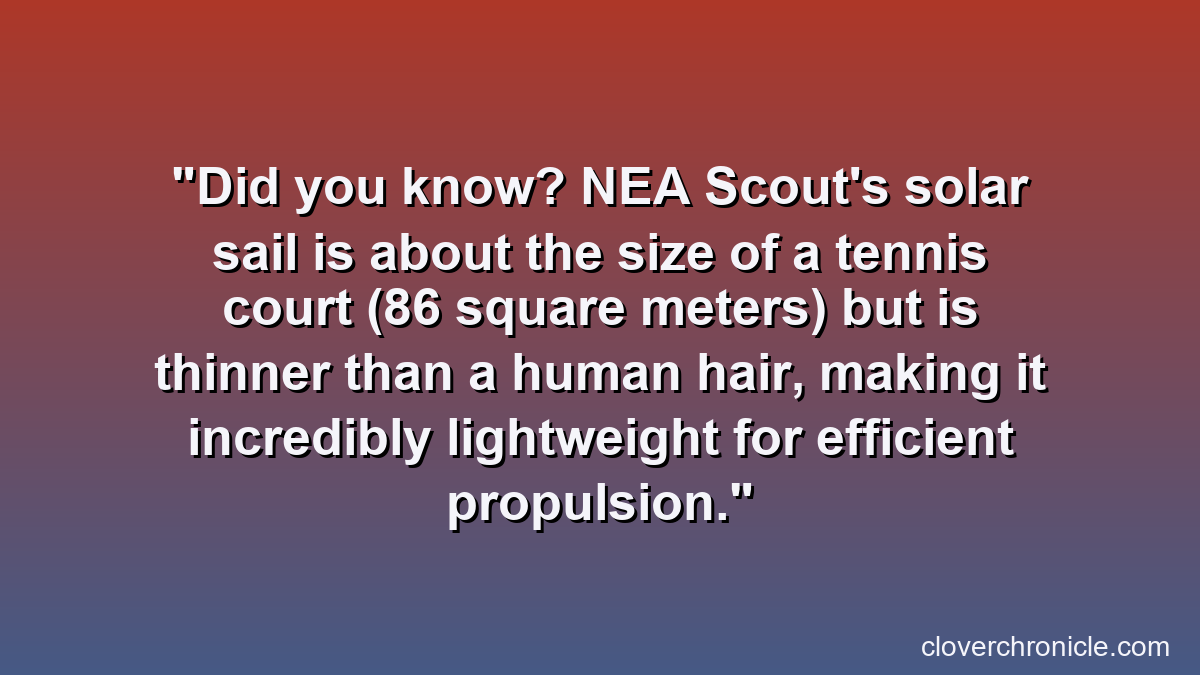
- 💡 Thinness: The sail is incredibly thin, about half the thickness of a human hair.
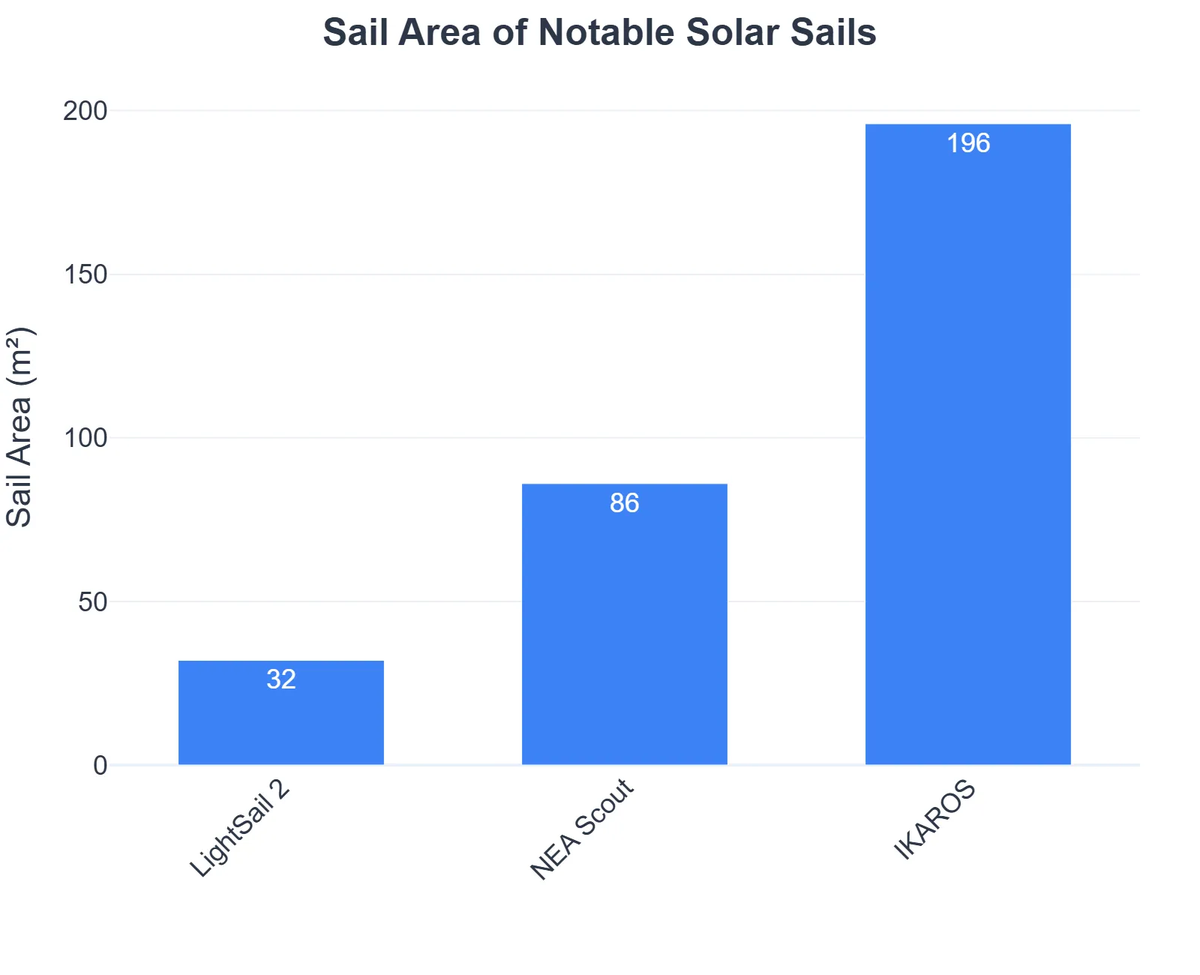
- 📐 Vast Area: It deploys to an impressive 86 square meters (925 square feet), roughly the size of a tennis court.
- 🚀 Constant Acceleration: While the thrust is minimal at any given moment, it’s continuous, allowing the spacecraft to achieve very high speeds over long durations, far surpassing what chemical rockets can manage without prohibitive fuel loads for similar mission profiles.
This method offers distinct advantages for long-duration, low-thrust missions, making targets previously unreachable or too costly, now within grasp. For context on other deep-space marvels, consider missions like NASA New Horizons: Exploring Pluto and the Kuiper Belt which relied on traditional propulsion but achieved incredible feats.
Advantages for Deep Space Missions
The adoption of solar sail technology by NEA Scout highlights its potential to revolutionize future space exploration, especially for probing the mysteries of the universe far beyond Earth’s immediate vicinity. Its benefits include:
- ✅ Fuel Efficiency: Eliminates the need for large amounts of propellant, reducing launch mass and cost.
- ✅ Extended Missions: Enables missions to last longer as propulsion is not limited by onboard fuel reserves.
- ✅ High Delta-V Capability: Allows for significant changes in velocity over time, facilitating access to distant or otherwise hard-to-reach targets.
- ✅ Versatility: Can be used for a variety of missions, from asteroid rendezvous to deep-space observatories.
The Target: Near-Earth Asteroids (NEAs)
NEA Scout’s mission specifically targets a near-Earth asteroid, a type of asteroid whose orbit brings it within close proximity to Earth. These objects are of particular interest for both scientific research and planetary defense.
Why Study NEAs?
The investigation of NEAs offers profound insights into several critical areas:
- ➡️ Solar System Formation: NEAs are remnants from the early solar system, providing clues about the conditions and materials present during planetary accretion.
- ➡️ Resource Potential: Some NEAs contain valuable resources, such as water ice and metals, which could be utilized for future space exploration and colonization.
- ➡️ Planetary Defense: Understanding the physical properties (composition, density, porosity) and orbital dynamics of NEAs is crucial for developing strategies to mitigate potential impact threats. This aspect is key to our broader understanding of Cosmic Queries: Probing the Mysteries of the Universe.
NEA Scout’s Specific Target
Initially, NEA Scout’s primary target was a small asteroid known as 2020 GE. However, due to various mission parameters and the nature of the launch window, the target can be adjusted. The mission’s flexibility allows it to adapt to encounter the most accessible and scientifically valuable near-Earth asteroid within its operational constraints. This adaptability underscores the agility of CubeSat missions. For more details on the target selection, one can refer to official NASA communications via JPL News.
Challenges and Innovations
Despite its elegant simplicity, the NEA Scout mission, like all deep-space endeavors, faces significant challenges. Its innovative design and operational approach address many of these head-on.
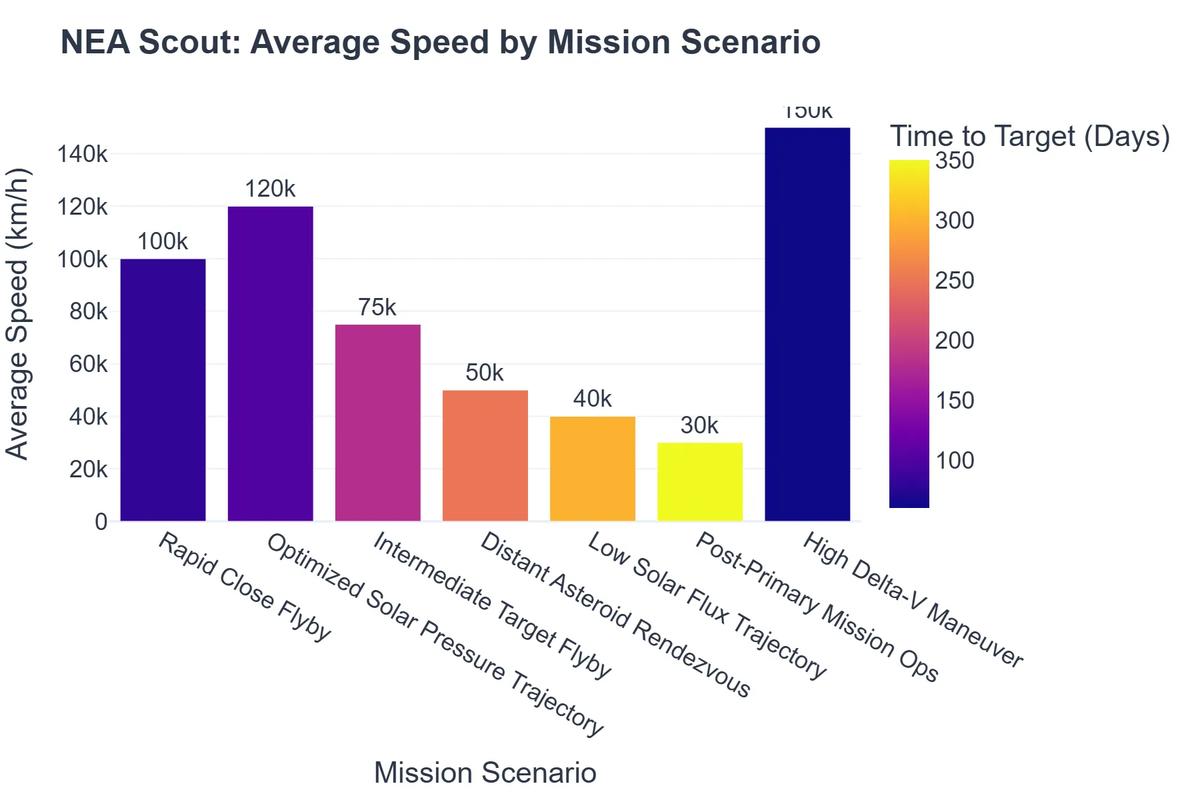
Overcoming Distance with Light
The primary challenge for any deep-space mission is covering vast distances efficiently. While NEA Scout’s solar sail provides continuous thrust, the low acceleration means it takes time to build up speed. Navigation for such a small spacecraft over millions of miles also requires extreme precision. The mission’s success hinges on:
- ⚙️ Precise Deployment: The delicate solar sail must unfurl perfectly in space.
- ⚙️ Autonomous Navigation: The CubeSat must largely navigate itself using onboard systems, minimizing reliance on constant ground control.
- ⚙️ Miniaturized Instruments: Developing scientific instruments capable of delivering high-quality data while adhering to strict mass and power constraints of a CubeSat.
Overcoming these hurdles provides invaluable experience for future interstellar probes, pushing the boundaries of what small spacecraft can achieve.
Future Implications for Asteroid Defense
The data collected by NEA Scout on its target asteroid will not only enhance our scientific understanding of these celestial bodies but also directly contribute to planetary defense efforts. Knowing the precise characteristics of an NEA, such as its density and surface composition, is vital for designing effective mitigation strategies, whether it involves a kinetic impactor or a gravity tractor. This mission is a testament to NASA’s commitment to safeguarding Earth from potential cosmic threats, building on the knowledge gained from other pioneering missions like Curiosity Rover: Exploring NASA’s Martian Discoveries which gather vital data in other planetary contexts.
Recommended Video
NEA Scout’s Legacy and Future Missions
The NEA Scout mission is more than just a single expedition; it’s a pathfinder for a new era of space exploration. Its success will validate solar sail technology for cost-effective deep-space travel and elevate the standing of CubeSats as legitimate platforms for ambitious scientific pursuits.
The lessons learned from NEA Scout will directly inform the design and operation of future small-satellite missions targeting other asteroids, comets, or even destinations further into the solar system. The Planetary Society provides excellent resources on such missions, including details on NEA Scout’s journey on their website. This innovative approach aligns with the broader vision of making space exploration more accessible and sustainable, opening doors to a deeper understanding of the universe around us.
What is NEA Scout’s primary mission?
NEA Scout is NASA’s solar sail spacecraft designed to perform close flybys of near-Earth asteroids, gathering data on their size, shape, rotation, and surface properties.
How does a solar sail work?
A solar sail uses the pressure of sunlight (photons) reflecting off a large, highly reflective membrane to generate thrust, propelling the spacecraft without traditional rocket fuel.
Why is NEA Scout important?
It’s a technology demonstration mission proving solar sail capabilities for future low-cost deep space exploration and asteroid characterization, which is vital for planetary defense.