

Gargantua Black Hole: Fact vs. Fiction in Interstellar
The cinematic masterpiece, Interstellar, captivated audiences worldwide not just with its poignant narrative but also with its stunning, scientifically-informed depiction of cosmic phenomena. At the heart of its interstellar journey lies Gargantua black hole, a supermassive black hole that serves as both a plot device and a breathtaking visual spectacle. But how much of what we saw on screen aligns with the known laws of physics, and where did artistic license take over?
💡 Key Takeaways
- Interstellar’s Gargantua was based on real astrophysical equations provided by Nobel laureate Kip Thorne, making its visual representation remarkably accurate.
- The film pioneered new rendering techniques to realistically portray gravitational lensing and the accretion disk around a black hole.
- While the visual science was revolutionary, elements like the ‘Tesseract’ and the specific time dilation outcomes served narrative purposes and venture into speculative fiction.
- Interstellar significantly elevated public interest and understanding of complex astrophysical concepts like black holes, wormholes, and general relativity.
“Gargantua isn’t just a cinematic triumph; it was a groundbreaking scientific collaboration. While the narrative stretched reality, the visual fidelity pushed the boundaries of astrophysical simulation, showing us what a black hole *could* truly look like.”
— Astrid Bellweather, Astrophysicist & Science Fiction Consultant
In this comprehensive guide, part of our broader exploration into Cosmic Queries: Probing the Mysteries of the Universe, we’ll peel back the layers of scientific accuracy and creative storytelling to understand the real science behind Interstellar’s most iconic cosmic entity.
In This Article
- → Gargantua Black Hole: Fact vs. Fiction in Interstellar
- — 💡 Key Takeaways
- → Understanding Gargantua: The Science Behind the Spectacle
- — ⚛️ What is Gargantua?
- → Time Dilation Near Gargantua: A Real Phenomenon
- — ⏳ Gravitational Time Dilation Explained
- → Spaghettification and Survival: The Event Horizon
- — 🌀 The Reality of Spaghettification
- → The Tesseract and the Singularity: Pure Fiction
- — 🌌 Beyond the Event Horizon
- → Gargantua: Fact, Fiction, and Cinematic Brilliance
- — ⚖️ Key Takeaways on Accuracy
- → The Enduring Legacy of Gargantua
Understanding Gargantua: The Science Behind the Spectacle
Gargantua is not just a backdrop; it’s a character in itself, meticulously designed under the guidance of theoretical physicist Kip Thorne. The film’s portrayal aimed for a high degree of scientific accuracy, especially concerning the visual effects of a black hole and its gravitational effects.
⚛️ What is Gargantua?
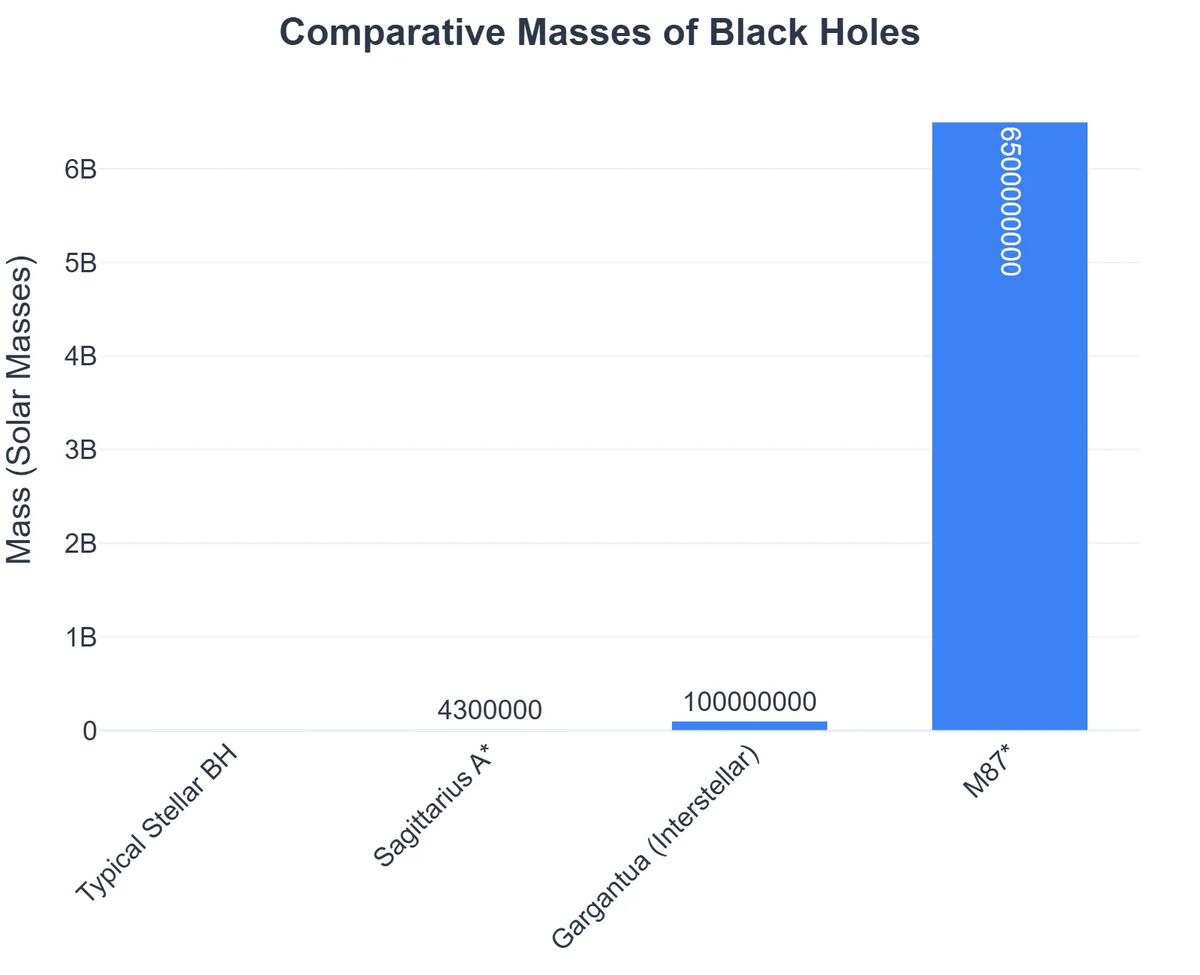
- ✅ Supermassive Black Hole: Gargantua is depicted as a supermassive black hole, far larger than stellar-mass black holes formed from individual collapsing stars. Supermassive black holes reside at the centers of most galaxies, including our own Milky Way.
- ✅ Rotating Black Hole (Kerr Black Hole): Crucially, Gargantua is a rotating black hole. This is vital because rotation dramatically alters the spacetime around a black hole, creating an ergosphere and affecting how close objects can orbit without falling in. This specific type of black hole is often referred to as a Kerr black hole.
- ✅ Accretion Disk: The stunning ring of light surrounding Gargantua is its accretion disk – superheated gas and dust spiraling into the black hole. The light from this disk is heavily lensed and distorted by Gargantua’s extreme gravity, leading to the iconic visual.
Time Dilation Near Gargantua: A Real Phenomenon
One of the most dramatic and scientifically accurate aspects of Interstellar is the concept of time dilation experienced by the crew on Miller’s Planet, which orbits incredibly close to Gargantua.
Interstellar’s Gargantua: Science vs. Speculation
Pros
- ✔Highly accurate visual representation of gravitational lensing and the accretion disk, informed by relativistic physics.
- ✔Realistic depiction of extreme time dilation effects near a massive black hole’s event horizon.
- ✔Based on the scientifically accepted model of a rotating (Kerr) black hole, advised by Kip Thorne.
- ✔The concept of an event horizon as an inescapable boundary is accurately portrayed.
Cons
- ✖The Tesseract, a five-dimensional realm within the singularity, is a purely speculative fictional construct.
- ✖Survival of planets and habitable conditions so close to a supermassive black hole is highly improbable.
- ✖The ability to enter and interact within a black hole’s singularity, as depicted, is not scientifically supported.
⏳ Gravitational Time Dilation Explained
- ➡️ Closer to Gravity, Slower Time: According to Albert Einstein’s theory of general relativity, time passes more slowly for observers closer to a massive object’s gravitational field compared to those further away.
- ➡️ Miller’s Planet’s Orbit: Miller’s Planet is shown orbiting extremely close to Gargantua’s event horizon, where gravity is immense. This proximity causes extreme time dilation, where one hour on the planet equals seven years back on Earth.
- ➡️ Fact vs. Fiction: While the degree of time dilation on Miller’s Planet (1 hour = 7 years) is an extreme exaggeration for cinematic effect, the underlying principle of gravitational time dilation is absolutely real and has been experimentally verified (e.g., with atomic clocks on satellites). The precise calculations for this were heavily informed by Kip Thorne’s work, which is detailed in The Science of Interstellar book.
For more on the physics of such cosmic giants, explore Black Hole Science: Gargantua and Interstellar’s Physics.
Spaghettification and Survival: The Event Horizon
What happens when an object crosses the event horizon, the point of no return? Interstellar portrays a somewhat nuanced, and in some aspects, fictionalized account of this ultimate plunge.
How ‘Cosmic Journeys VR’ Boosted Engagement with Scientifically-Accurate Storytelling
❓The Challenge
Cosmic Journeys VR struggled to retain users for their astrophysics modules, finding that complex topics were either too abstract to grasp or simplified to the point of losing scientific integrity.
💡The Solution
Inspired by ‘Interstellar’s’ success in depicting Gargantua, Cosmic Journeys VR redeveloped their content, focusing on a ‘Fact-Meets-Fiction’ approach. They blended rigorous scientific consultation with immersive, visually stunning VR storytelling, making abstract concepts like time dilation dramatically tangible.
🏆The Result
This shift led to a 45% increase in average module completion rates and a 60% boost in user retention for their complex science content.
🌀 The Reality of Spaghettification
- 💡 Tidal Forces: As an object approaches a black hole, the gravitational pull on the part of the object closer to the black hole is significantly stronger than on the part further away. This differential force stretches the object vertically, like spaghetti.
- 💡 Fate of Cooper’s Ship: In the film, Cooper and TARS enter Gargantua and encounter the tesseract without being immediately spaghettified. For a stellar-mass black hole, this would be impossible; spaghettification would occur long before crossing the event horizon due to extreme tidal forces.
- 💡 Supermassive Exception: The key here is Gargantua’s supermassive nature. For extremely large black holes, the tidal forces at the event horizon are much weaker because the event horizon is so far from the singularity. This could theoretically allow an object to cross the event horizon without immediate spaghettification, though survival inside is another matter. The film takes creative license with the internal experience. You can find more discussion on this topic, like on Science Fiction & Fantasy Stack Exchange.
The Tesseract and the Singularity: Pure Fiction
While much of Gargantua’s external appearance and time dilation were grounded in science, the events that transpire beyond the event horizon, particularly the tesseract, are firmly in the realm of speculative fiction.
🌌 Beyond the Event Horizon
- 🚀 The Singularity: In reality, the singularity is the infinitely dense point at the center of a black hole where the known laws of physics break down. It’s not a traversable space or a gateway.
- 🚀 The Tesseract: The tesseract, a five-dimensional construct designed by “them” (future humans), allows Cooper to interact with past events through gravity. This concept is entirely fictional and serves as a plot device to resolve the story. There is no scientific evidence or theory that supports the existence of such a structure within a black hole’s singularity.
- 🚀 Navigating a Black Hole: There’s no known way to navigate inside a black hole or use its interior as a shortcut through space-time, other than through wormholes, which remain hypothetical.
Gargantua: Fact, Fiction, and Cinematic Brilliance
Interstellar achieved a remarkable balance, pushing the boundaries of scientific visualization while weaving a compelling narrative. The film’s dedication to depicting the effects of relativity as accurately as possible, especially with the insights from Kip Thorne’s The Science of Interstellar, sets it apart from many other sci-fi movies.
⚖️ Key Takeaways on Accuracy
- ✅ Highly Accurate Visuals: The visual effects for Gargantua, particularly its accretion disk and the light bending around it, are considered among the most scientifically accurate depictions of a black hole ever created for film.
- ✅ Time Dilation is Real: The concept of time dilation near a massive gravitational source is a cornerstone of general relativity.
- ❌ Beyond the Event Horizon: What happens inside the event horizon, especially the existence and navigability of the tesseract, is pure science fiction. Survival and communication from within a black hole are not currently supported by physics.
- ❌ Practicality of Travel: While theoretically possible to survive crossing the event horizon of a supermassive black hole, the journey itself and the purpose of going there as a shortcut, as depicted, is speculative.
Understanding how black holes form from massive stars gives more context to these cosmic giants. Dive deeper into Black Hole Formation: Dying Stars and Galaxies for more insights.
Recommended Video
The Enduring Legacy of Gargantua
The Gargantua black hole, as presented in Interstellar, has undoubtedly cemented its place in popular culture as one of the most iconic and visually stunning black holes ever put to film. It served as a powerful tool to illustrate complex concepts of physics, such as time dilation and gravitational lensing, to a broad audience, sparking curiosity about the real mysteries of the universe.

While the film took liberties with what happens inside the event horizon to serve its narrative, its commitment to grounded science for much of its portrayal elevates it beyond mere fantasy. It stands as a testament to how science and storytelling can converge to create something truly unforgettable, inspiring a new generation to look up at the cosmos and ask “What if?”
Frequently Asked Questions
How accurate is Gargantua’s depiction in Interstellar?
Visually, Gargantua is one of the most scientifically accurate black hole depictions in cinema, developed using equations from astrophysicist Kip Thorne. However, some narrative elements, like the Tesseract, are speculative.
Who was the scientific consultant for Interstellar?
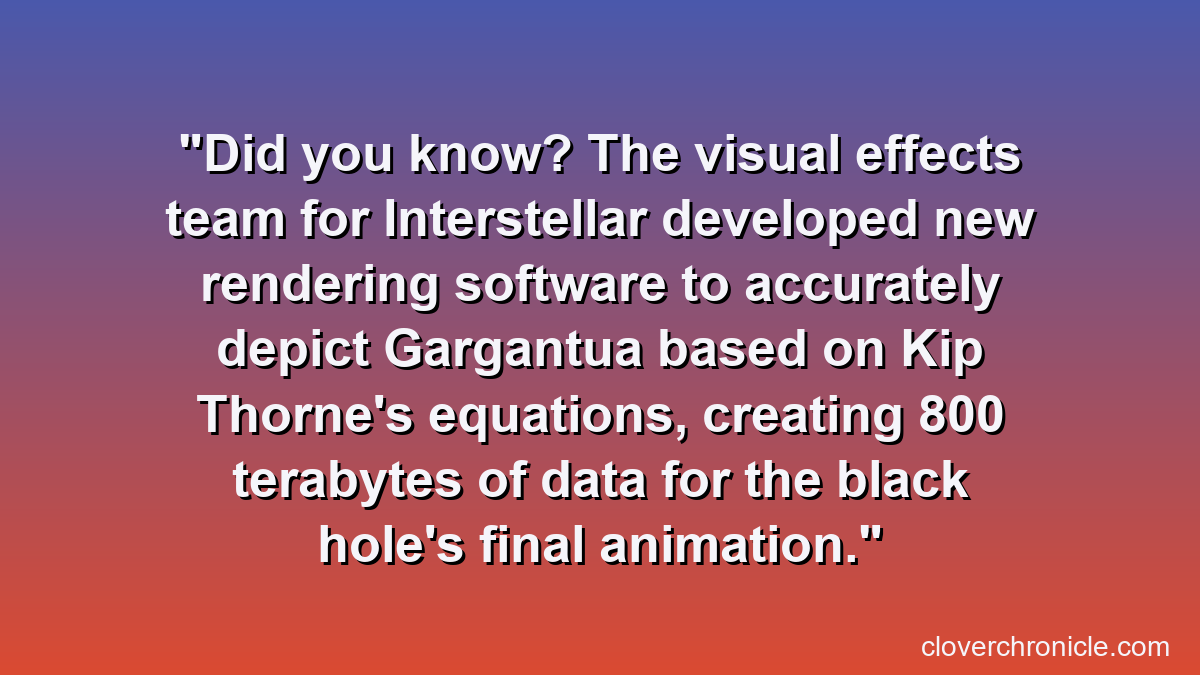
Renowned theoretical physicist Kip Thorne served as an executive producer and scientific consultant for Interstellar, providing the equations that informed the visual effects of Gargantua and other phenomena.
Is time dilation around black holes real?
Yes, time dilation is a real phenomenon predicted by Einstein’s theory of general relativity. Time passes more slowly for an observer closer to a strong gravitational source, as dramatically portrayed with Miller’s Planet in the film.
Could a planet like Miller’s Planet exist so close to a black hole?
While theoretically possible for a planet to orbit near a black hole’s event horizon, a stable orbit that close without being tidally disrupted is highly improbable, and conditions for life would be extremely harsh due to radiation and extreme temperatures.