Geology in Action: Real-World Examples of Earth Science Impact
Geology is far more than just the study of rocks; it’s a dynamic science that fundamentally shapes our world, influencing everything from the landscapes we inhabit to the resources we utilize daily. Understanding geology in action provides critical insights into natural hazards, resource availability, and environmental challenges. These real-world applications underscore the immense practical value of Earth science, demonstrating how geological processes constantly interact with human society.
💡 Key Takeaways
- Geology isn’t just about rocks; it’s crucial for understanding natural hazards and their mitigation.
- Earth science plays a vital role in sustainable resource extraction and responsible land-use planning.
- Geological research informs critical infrastructure development and strategies for climate change adaptation.
- Real-world geological applications profoundly impact daily life, societal safety, and future planetary health.
“Geology is the fundamental lens through which we comprehend Earth’s dynamic systems, from ancient climate shifts to predicting future natural events and even understanding other worlds. It’s truly geology in action.”
— Dr. Marcus Sterling, PhD, Planetary Geoscientist & Climatologist
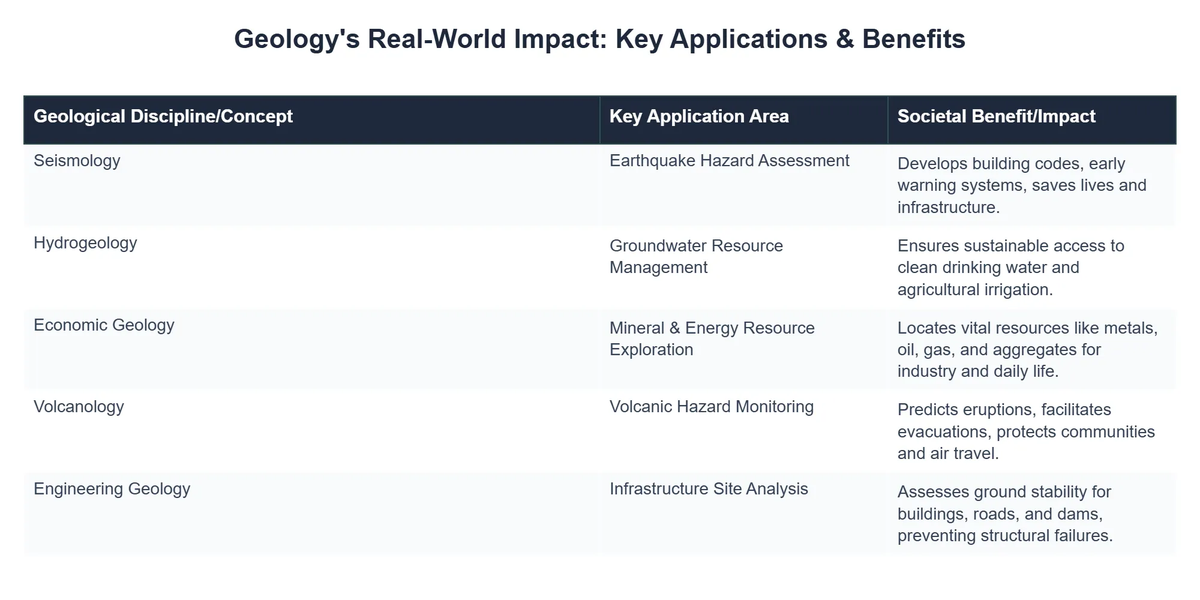
From the immense forces that build continents to the subtle shifts that affect our infrastructure, the impact of geological phenomena is undeniable. Let’s explore compelling examples of geology actively shaping our planet and our lives.
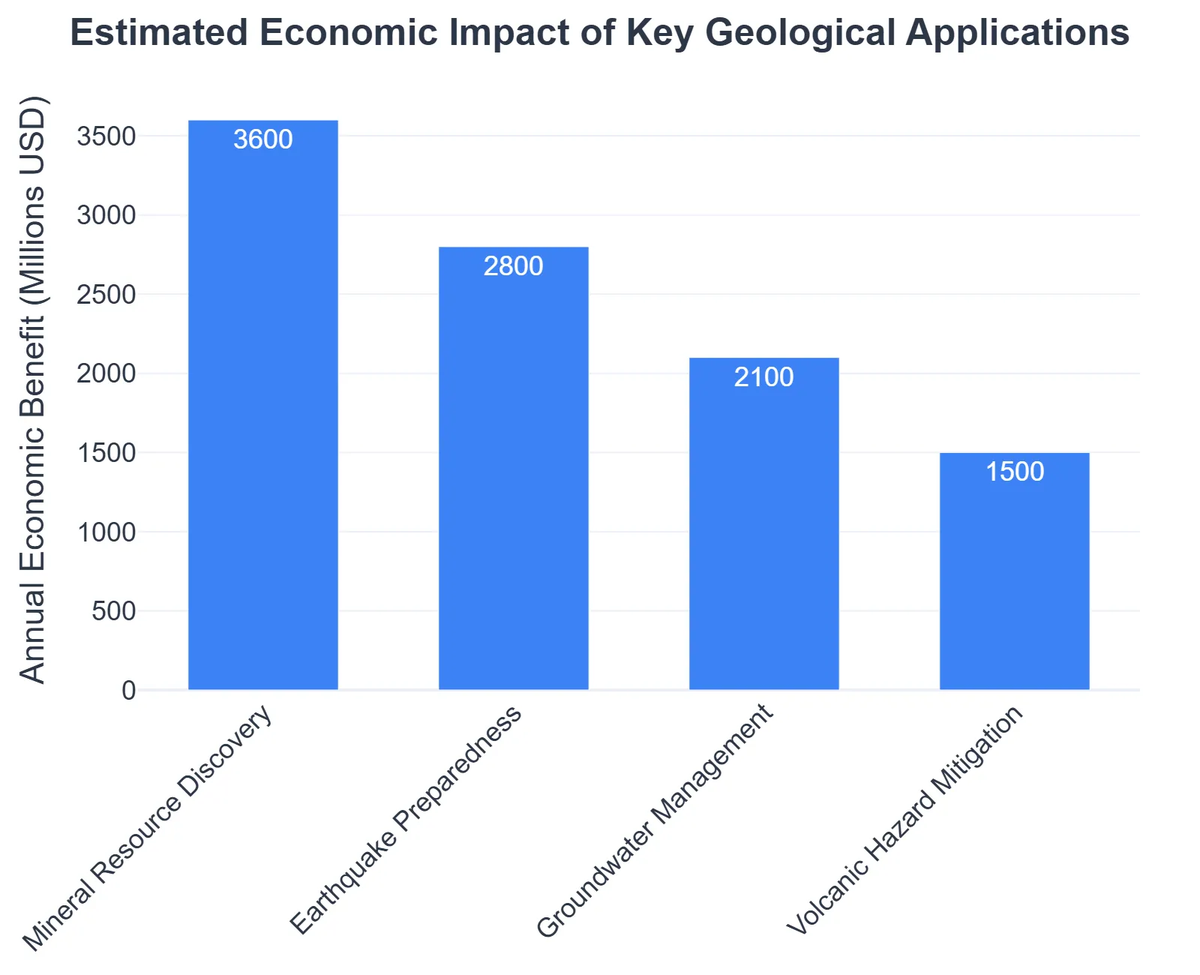
In This Article
- → Geology in Action: Real-World Examples of Earth Science Impact
- — 💡 Key Takeaways
- → 🌍 The Dynamic Earth: Plate Tectonics and Surface Transformation
- → ⛏️ Resource Extraction and Management: Fueling Modern Society
- → 🏗️ Geology in Infrastructure and Hazard Mitigation
- → ♻️ Environmental Geology: Protecting Our Planet’s Future
🌍 The Dynamic Earth: Plate Tectonics and Surface Transformation
The Earth’s crust is not a static shell but a mosaic of massive tectonic plates constantly in motion. This slow, relentless movement is the primary driver behind many of the planet’s most dramatic geological features and events.
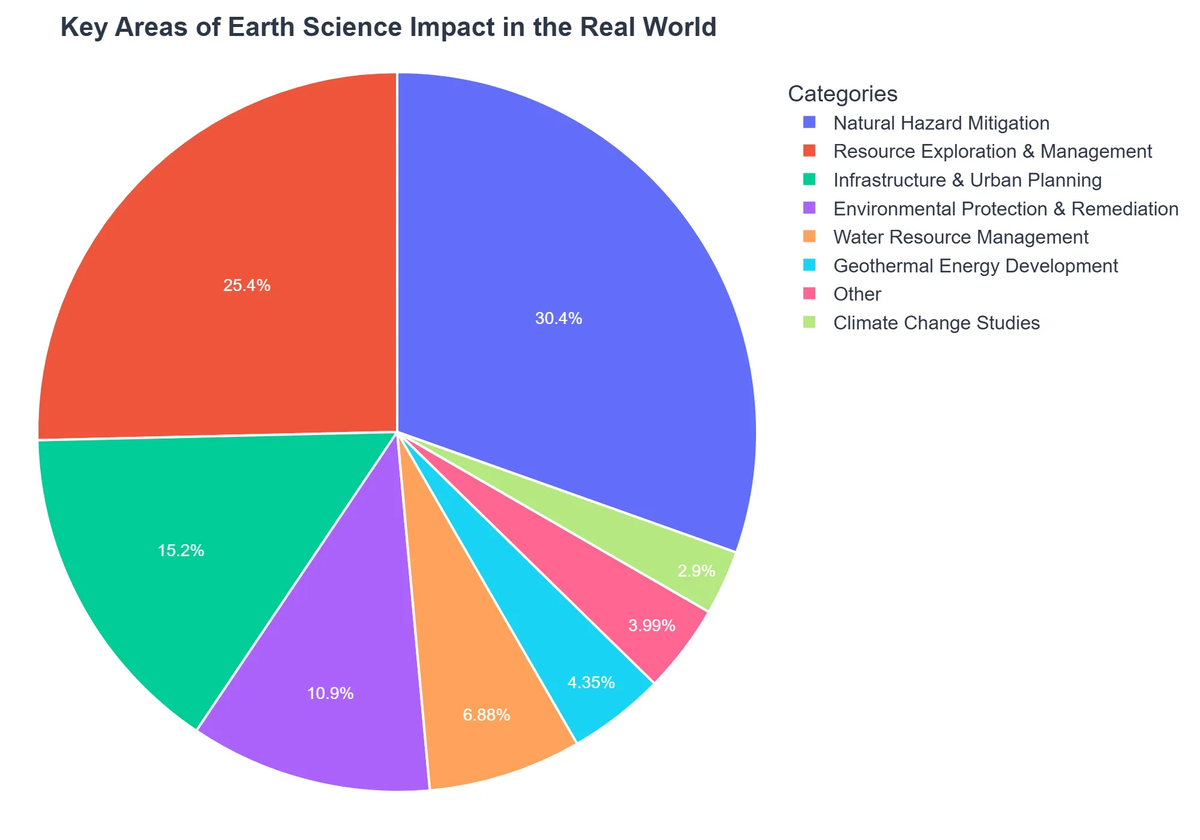
- ✅ Mountain Formation: When two continental plates collide, the immense pressure causes the crust to buckle, fold, and uplift, leading to the creation of towering mountain ranges. The Himalayas, for instance, are a testament to the ongoing collision of the Indian and Eurasian plates. Understanding this process is crucial for predicting seismic activity in mountainous regions. For more depth on these majestic formations, see our article on Mountain Geology: Formation and Transformation of Peaks.
- ➡️ Earthquakes: The grinding and slipping of tectonic plates along fault lines release vast amounts of energy, resulting in earthquakes. The infamous San Andreas Fault in California, where the Pacific Plate slides past the North American Plate, is a prime example of a highly active seismic zone. Geologists study fault lines and seismic waves to assess risk and inform building codes, aiming to mitigate potential damage and save lives.
- 🔥 Volcanoes: Where plates diverge or converge, molten rock (magma) can rise to the surface, forming volcanoes. The Pacific Ring of Fire, a horseshoe-shaped zone of intense volcanic and seismic activity, illustrates the profound impact of subduction zones. Volcanic eruptions, while destructive, also enrich soil, create new land, and provide geothermal energy opportunities.
⛏️ Resource Extraction and Management: Fueling Modern Society
Beneath the Earth’s surface lie the essential resources that power our industries, construct our cities, and sustain our way of life. Geology plays an indispensable role in locating, extracting, and managing these vital assets.
- 💡 Mineral Deposits: Geologists are key in discovering and assessing ore deposits—concentrations of valuable minerals like gold, copper, iron, and rare earth elements. Understanding the geological processes that lead to the formation of these deposits, such as hydrothermal alteration or magmatic crystallization, is crucial for efficient and responsible mining operations. You can delve deeper into this topic with our guide on Ore Geology: From Formation to Extraction of Valuable Minerals.
- 💧 Groundwater Resources: A significant portion of the world’s freshwater supply comes from underground aquifers. Hydrogeologists study the movement and storage of groundwater, identifying suitable locations for wells and managing these critical resources to prevent depletion and contamination. This also involves understanding the Geological Deposits: How Sediments and Minerals Accumulate.
- ⚡ Fossil Fuels and Geothermal Energy: Geologists are fundamental in exploring for oil, natural gas, and coal reserves, understanding the sedimentary basins where these energy sources accumulate. Furthermore, they identify regions with high geothermal potential, harnessing the Earth’s internal heat for clean energy generation.
🏗️ Geology in Infrastructure and Hazard Mitigation
Every building, road, and bridge relies on a stable foundation, and geology provides the blueprint for safe and resilient infrastructure development. Moreover, geological science is at the forefront of protecting communities from natural hazards.
- 🚧 Construction Site Assessment: Before any major construction project begins, geological surveys are conducted to evaluate soil stability, bedrock strength, and potential risks like landslides or subsidence. This ensures that structures are built on stable ground, preventing costly failures and ensuring public safety.
- 🌊 Coastal Erosion and Landslide Management: Coastal communities often face threats from erosion, while hilly regions are vulnerable to landslides. Geologists analyze geological formations, soil types, and hydrological patterns to predict these events and design mitigation strategies, such as retaining walls, drainage systems, or managed retreat plans. Human impacts on the environment often exacerbate these natural processes, highlighting the critical link between geology and sustainable development. For more on how human activities intersect with environmental changes, consider exploring resources like the National Geographic’s collection on Human Impacts on the Environment.
- 🚧 Waste Disposal and Storage: The safe disposal of various types of waste, especially hazardous and nuclear waste, depends heavily on geological knowledge. Geologists identify stable rock formations that can safely contain waste materials for millennia, preventing leakage into groundwater or the environment.
♻️ Environmental Geology: Protecting Our Planet’s Future
Environmental geology applies geological principles to solve environmental problems, aiming to minimize human impact on natural systems and protect ecosystems for future generations. This field is integral to achieving sustainable development goals.
- 🔬 Pollution Remediation: Geologists investigate groundwater and soil contamination, tracing the pathways of pollutants and designing effective remediation strategies to clean up polluted sites. This often involves understanding how contaminants interact with different geological materials.
- 🌬️ Climate Change Studies: Earth scientists contribute significantly to understanding past climate changes through ice core analysis, sediment records, and ancient rock formations. This historical geological data is crucial for modeling future climate scenarios and developing adaptation strategies.
- 🌱 Land Use Planning: By mapping geological hazards, soil types, and resource availability, environmental geologists provide essential information for urban planning and land management, ensuring that development is sustainable and resilient. Pursuing higher education in fields like environmental science or geology can deepen understanding and contribute to these efforts, as highlighted by programs like those at Bowling Green State University’s Geology Master’s program.
Recommended Video
Ultimately, geology is a foundational science that underpins our understanding of Earth’s Unseen Forces: The Hidden Dynamics of Our Planet. Its applications are vast and continuous, impacting virtually every aspect of our lives, from the stability of our homes to the availability of the resources we depend on. Embracing geological knowledge is not just an academic exercise; it’s a practical necessity for navigating the challenges and opportunities presented by our ever-changing planet.
What is ‘Geology in Action’?
‘Geology in Action’ refers to the practical application of geological principles and research to solve real-world problems, understand Earth’s processes, and address their impact on human society and the environment.
How does geology impact daily life?
Geology influences daily life through natural hazard prediction (earthquakes, volcanoes, landslides), discovery and management of essential resources (water, minerals, energy), land-use planning for development, and understanding climate patterns and changes.
Can geology help with climate change?
Yes, geology provides crucial insights into past climate changes through geological records, helps identify suitable sites for carbon sequestration, assesses the stability of permafrost, and informs strategies for adapting to environmental shifts like sea-level rise.
What career paths involve ‘Geology in Action’?
Career paths include environmental consulting, geotechnical engineering, hydrogeology, petroleum geology, mining geology, volcanology, seismology, urban planning, and even planetary science, all focused on applying geological knowledge.