The realm of quantum mechanics, once primarily confined to theoretical physics laboratories, has rapidly transitioned into the domain of practical innovation. Applied quantum physics is the crucial bridge that translates the mind-bending principles of quantum mechanics into tangible technologies poised to redefine our future. It’s not just about understanding the universe at its most fundamental level; it’s about harnessing its bizarre rules—superposition, entanglement, and tunneling—to create devices and systems far beyond the capabilities of classical technology.
💡 Key Takeaways
- Quantum physics, once theoretical, now underpins groundbreaking technologies in diverse fields.
- Key applications include quantum computing, advanced sensing, secure communications, and novel materials.
- The journey from quantum theory to practical devices requires interdisciplinary collaboration and significant engineering innovation.
- Future advancements in quantum physics promise to reshape industries and redefine technological capabilities.
“Applied quantum physics is not just about building faster computers; it’s about fundamentally altering our relationship with information and reality, raising profound ethical considerations for our interconnected future.”
— Kira Chen, Futurist & AI Ethics Analyst
This field is spearheading a technological revolution, promising advancements across computing, communication, sensing, and materials science. As we navigate the complex landscape of tomorrow’s technology, understanding the practical implications of quantum phenomena is paramount.
In This Article
- — 💡 Key Takeaways
- → Understanding Applied Quantum Physics: Bridging Theory and Innovation
- → The Core Pillars of Quantum Technology
- — 🔬 Quantum Computing
- — 📡 Quantum Communication
- — ⚡ Quantum Sensing and Metrology
- — 💡 Quantum Materials
- → Challenges and the Future Horizon of Applied Quantum Physics
- — 🚧 Current Hurdles
- — 🚀 The Road Ahead for Applied Quantum Physics
Understanding Applied Quantum Physics: Bridging Theory and Innovation
At its core, applied quantum physics is an engineering discipline driven by the unique properties of quantum mechanics. While theoretical quantum physics seeks to describe and understand the universe, its applied counterpart focuses on manipulating quantum states for specific technological outcomes. This involves:
- ✅ Harnessing Quantum Phenomena: Leveraging properties like superposition (a quantum particle existing in multiple states simultaneously) and entanglement (two or more particles becoming linked, regardless of distance) to perform computations or transmit information in novel ways.
- ➡️ Material Science and Engineering: Developing new materials with quantum properties that enable groundbreaking functionalities, from superconductors operating at higher temperatures to topological insulators with unique electronic structures.
- 💡 Precision Measurement: Exploiting the extreme sensitivity of quantum systems to external influences for ultra-precise measurements in fields like navigation, medical diagnostics, and fundamental science.
The distinction lies in the objective: moving beyond theoretical understanding to practical device creation and system development. It’s a field that demands expertise not only in physics but also in engineering, computer science, and materials science, embodying the very essence of Future Perfect?: Charting the Course of Tomorrow’s Technology.
The Core Pillars of Quantum Technology
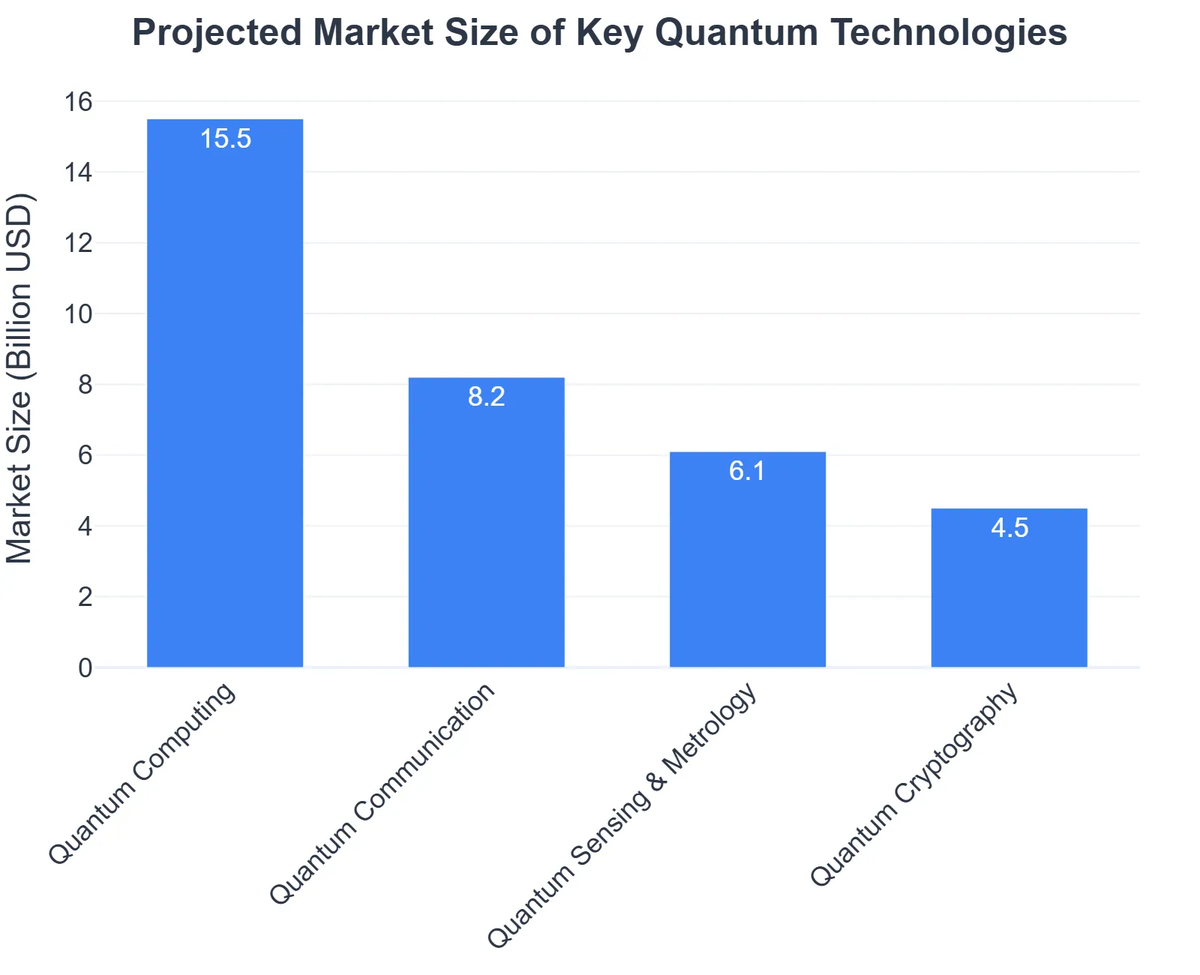
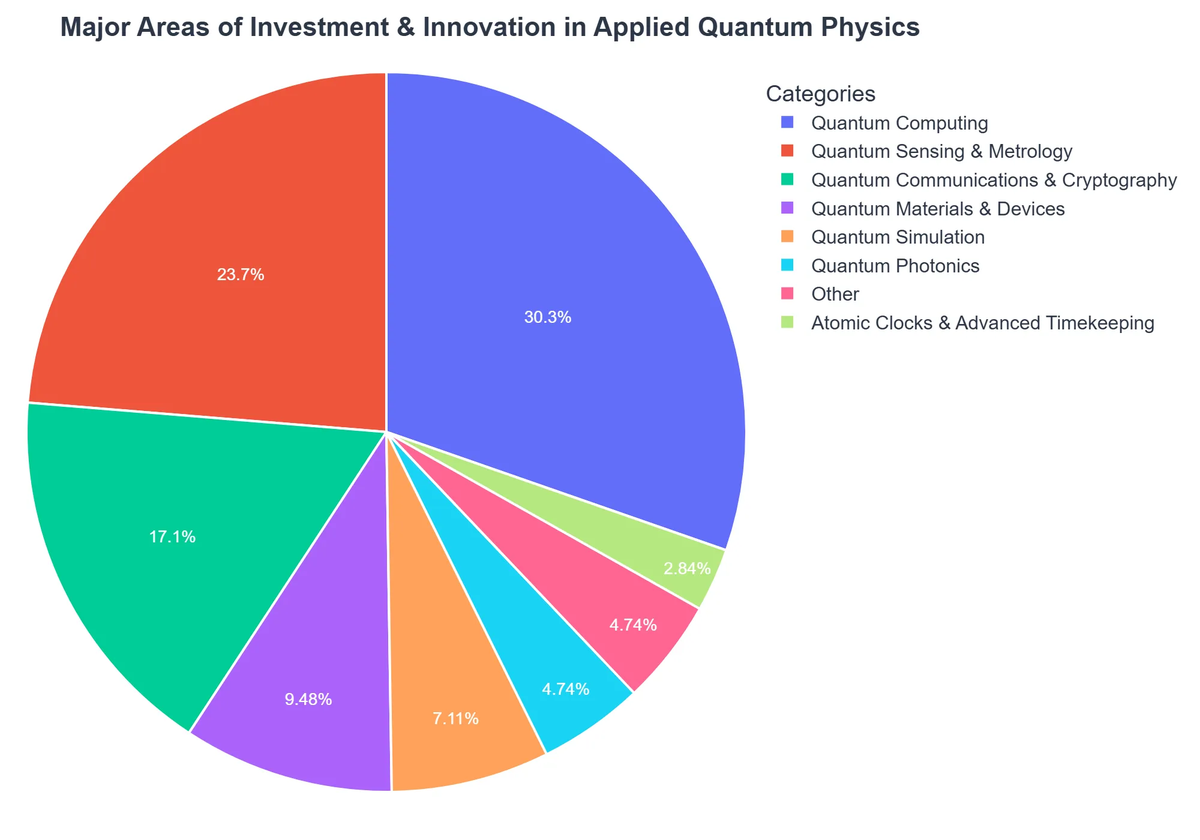
The transformative potential of applied quantum physics is most evident in the distinct yet interconnected pillars of quantum technology emerging today:
🔬 Quantum Computing
Quantum computing stands as the most widely discussed application. Unlike classical computers that store information as bits (0s or 1s), quantum computers use qubits, which can represent 0, 1, or a superposition of both simultaneously. This, combined with entanglement, allows quantum computers to process vast amounts of information in parallel, potentially solving problems intractable for even the most powerful supercomputers.
Applied Quantum Physics: Benefits and Hurdles
Pros
- ✔Enables unprecedented computational power for complex problems.
- ✔Provides ultra-secure communication through quantum cryptography.
- ✔Leads to highly sensitive sensors for medical and scientific applications.
- ✔Facilitates the creation of novel materials with unique properties.
Cons
- ✖Requires extremely high development costs and specialized infrastructure.
- ✖Faces significant technical and engineering challenges in practical implementation.
- ✖Demands highly specialized expertise, limiting accessibility.
- ✖Involves long timelines for widespread commercial viability and adoption.
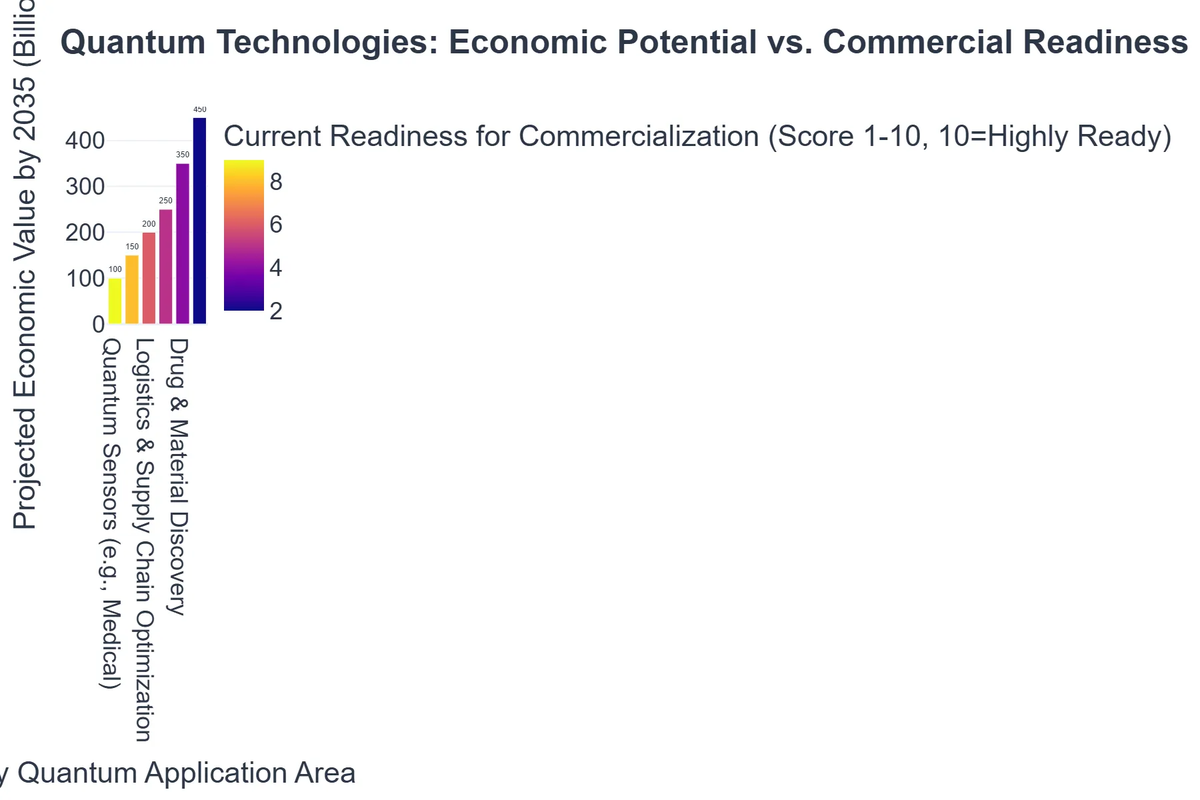
- ✅ Potential Applications: Drug discovery, advanced materials design, complex optimization problems (e.g., logistics, financial modeling), and breaking modern encryption.
- ➡️ Challenges: Maintaining qubit coherence, error correction, and scaling up to fault-tolerant systems.
The development of algorithms like Shor’s Algorithm: The Quantum Threat to Cryptography highlights the profound impact quantum computing could have on existing cybersecurity paradigms. The underlying principle of Quantum Factoring: The Algorithm Threatening Modern Encryption underscores the urgency of developing quantum-resistant cryptographic solutions.
📡 Quantum Communication
Quantum communication leverages quantum mechanics to secure information transfer, primarily through Quantum Key Distribution (QKD). QKD relies on the fundamental principle that any attempt to intercept the quantum state used to transmit a cryptographic key will inevitably disturb it, alerting the communicating parties. This makes the communication “unhackable” in principle.
QuantumLeap Innovations: Revolutionizing Diagnostics with Applied Quantum Physics
❓The Challenge
QuantumLeap Innovations faced a critical bottleneck in developing their next-generation medical diagnostic devices, as conventional sensing technologies couldn’t meet the required ultra-high precision and speed for early disease detection.
💡The Solution
By rigorously applying principles of applied quantum physics, specifically leveraging quantum entanglement and superposition for precision measurement, they engineered novel sensor modules that harnessed quantum phenomena to detect biomarkers at an unprecedented resolution.
🏆The Result
This strategic pivot resulted in a 5x improvement in diagnostic sensitivity and a 40% reduction in processing time per sample, positioning their technology as a leader in rapid, early-stage medical diagnostics.
- ✅ Benefits: Theoretically uncrackable encryption, highly secure networks for sensitive data.
- ➡️ Applications: Financial transactions, government communications, secure military operations.
⚡ Quantum Sensing and Metrology
This pillar utilizes the extreme sensitivity of quantum states to external disturbances for ultra-precise measurements. Small changes in environmental factors (magnetic fields, gravity, temperature) can be detected with unprecedented accuracy by monitoring changes in quantum systems.
- ✅ Examples:
- ➡️ Highly accurate atomic clocks for navigation and timing systems.
- ➡️ Ultra-sensitive magnetic field sensors for medical imaging (e.g., MEG, MRI enhancements) and geological surveys.
- ➡️ Quantum gravimeters for mapping underground structures or monitoring volcanic activity.
💡 Quantum Materials
This area focuses on designing and synthesizing novel materials that exhibit exotic quantum phenomena at macroscopic scales. These materials can possess properties like superconductivity without extreme cooling, superior energy efficiency, or entirely new functionalities that could revolutionize electronics, energy storage, and more.
For more insights into current applications of quantum physics, Spectra-Physics provides an excellent overview of diverse quantum applications, from fundamental research to industrial use cases: Quantum Physics Applications.
Recommended Video
Challenges and the Future Horizon of Applied Quantum Physics
Despite the immense promise, the journey of applied quantum physics from theory to widespread adoption is fraught with significant challenges, especially given its role as a Disruptive Technology: Innovations Reshaping Industries.
🚧 Current Hurdles
- ✅ Technical Complexity: Building and maintaining quantum systems is incredibly difficult. Qubits are fragile and prone to decoherence (losing their quantum state), requiring extreme isolation and precise control.
- ➡️ Scalability: Scaling quantum computers to thousands or millions of stable, interconnected qubits for fault tolerance remains a formidable engineering challenge.
- 💡 Error Correction: Quantum error correction is far more complex than classical error correction, requiring many physical qubits to encode a single logical qubit.
- 🔬 Infrastructure & Integration: Deploying quantum communication networks or widespread quantum sensors requires significant infrastructure development and integration with existing classical systems.
- 🚀 Talent Gap: There is a critical shortage of skilled professionals—quantum physicists, engineers, and software developers—capable of advancing these technologies.
🚀 The Road Ahead for Applied Quantum Physics
Despite these challenges, the future of applied quantum physics is unequivocally bright. Governments, academia, and industry are investing heavily in research and development, fostering a vibrant ecosystem for innovation. The focus is on:
- ✅ Hybrid Systems: Developing quantum-classical hybrid algorithms and architectures that leverage the strengths of both paradigms, allowing quantum computers to tackle more problems in the near term.
- ➡️ Quantum Networks: Building robust quantum internet infrastructure for secure communication and distributed quantum computing.
- 💡 Material Advancements: Continued discovery and engineering of new quantum materials to overcome current hardware limitations.
- 🔬 Workforce Development: Universities worldwide are launching specialized programs, like the Masters in Applied Quantum Technology, to train the next generation of quantum innovators. An example is the program at The Hague University of Applied Sciences: Applied Quantum Technology opleiding | Master.
The ongoing progress suggests that while a full-scale, fault-tolerant universal quantum computer may still be decades away, practical applications of quantum technology in sensing, communication, and specialized computing are already impacting sectors from healthcare to defense. The journey from the abstract theory of quantum mechanics to the tangible technologies shaping tomorrow is a testament to human ingenuity and persistent scientific endeavor.
What is applied quantum physics?
Applied quantum physics focuses on utilizing the principles of quantum mechanics to develop practical technologies, rather than just studying the theory itself.
How does quantum computing work?
Quantum computing uses quantum-mechanical phenomena like superposition and entanglement to perform computations on qubits, allowing for exponential speedups for certain complex problems.
What are some real-world applications of quantum technology?
Beyond computing, quantum tech is used in highly sensitive sensors for medical imaging and navigation, unbreakable quantum cryptography for secure communication, and advanced materials science.