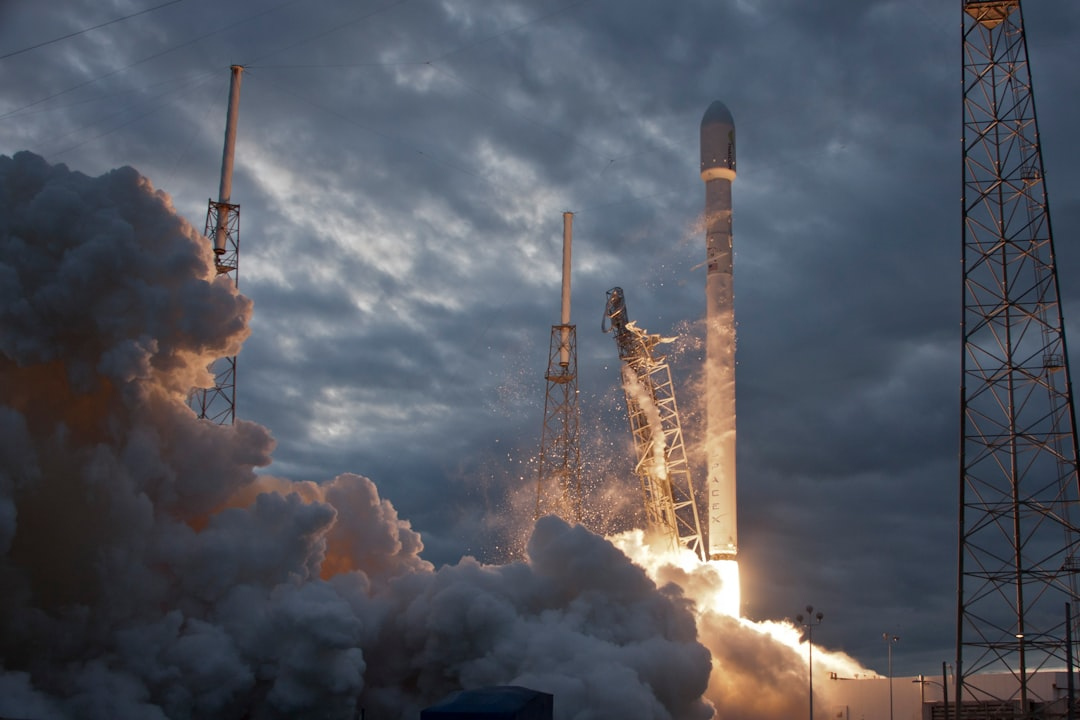
Humanity stands at the precipice of a new frontier in space exploration, driven by audacious vision and groundbreaking engineering. For decades, space travel has been a prohibitively expensive and logistically complex endeavor, largely confined to government agencies and a select few private entities. However, this paradigm is rapidly shifting, largely thanks to a single, transformative vehicle: the SpaceX Starship.
💡 Key Takeaways
- Starship’s full reusability dramatically reduces the cost of space access.
- It’s designed for rapid, mass transport of cargo and humans to Mars and the Moon.
- Starship’s capabilities extend to Earth-to-Earth travel and satellite deployment.
- Its development is crucial for establishing sustainable off-world habitats.
“Starship isn’t just a rocket; it’s the crucible where our multi-planetary future is forged. Its ethical deployment and accessibility will define humanity’s next chapter among the stars.”
— Kira Chen, Futurist & AI Ethics Advocate
This article delves deep into starship tech, exploring how this ambitious project is poised to redefine our capabilities in space, from routine orbital flights to the ambitious colonization of Mars. We’ll examine its revolutionary design, its core principles, and the immense challenges and opportunities it presents as a true disruptive technology in the space industry and beyond.
In This Article
- — 💡 Key Takeaways
- → What is SpaceX Starship? A New Era in Spaceflight
- — ⚙️ Design and Core Capabilities
- — 🚀 The Vision: Why Starship Matters
- → Reusability: The Game-Changer for Space Exploration
- — ♻️ Fully Reusable Architecture
- — 💲 Economic Impact
- → Starship’s Ambitious Missions: From Moon to Mars
- — 🌕 Lunar Ambitions: Artemis Program
- — 🪐 Martian Destiny: Colonizing the Red Planet
- → Engineering Challenges and Progress
- — 🛠️ Iterative Development and Testing
- — 🔬 Key Technological Innovations
- → The Broader Impact of Starship Technology
- — 🌐 Catalyzing Space Industry Growth
- — 🌍 Earth-to-Earth Transportation Potential
- → Conclusion
What is SpaceX Starship? A New Era in Spaceflight
At its core, SpaceX Starship is an integrated, two-stage launch vehicle, designed from the ground up for full and rapid reusability. Standing nearly 120 meters (394 feet) tall, it’s the most powerful rocket system ever built, dwarfing even the Saturn V of Apollo fame. It represents a fundamental shift from the expendable rockets of the past.
⚙️ Design and Core Capabilities
- ✅ Two-Stage System: Consists of Starship (the upper stage spacecraft) and Super Heavy (the booster). Both are designed to return to Earth for vertical landing and reuse.
- ✅ Material Choice: Primarily constructed from stainless steel, chosen for its strength, corrosion resistance, and performance at extreme temperatures, simplifying manufacturing and reducing costs compared to traditional aerospace alloys.
- ✅ Powerhouse Engines: Propelled by SpaceX’s cutting-edge Raptor engines, which use a full-flow staged combustion cycle, providing immense thrust and efficiency.
- ✅ Versatile Payload Capacity: Designed to carry over 100 metric tons to Low Earth Orbit (LEO) and capable of transporting crew and cargo to the Moon, Mars, and potentially beyond.
For more detailed specifications, you can explore the official Starship page on SpaceX’s website.
🚀 The Vision: Why Starship Matters
The vision behind Starship is nothing short of audacious: to make humanity a multi-planetary species. This isn’t just about launching satellites or conducting scientific experiments; it’s about enabling large-scale space infrastructure and human settlements. Starship’s importance lies in:
- ➡️ Massive Cost Reduction: By being fully reusable, Starship promises to drastically lower the cost per launch, making space access affordable for a much wider range of missions and entities.
- ➡️ Enabling Colonization: Its immense payload capacity and in-orbit refueling capabilities are crucial for transporting the vast amounts of cargo and personnel needed for sustainable bases on the Moon and Mars.
- ➡️ Accelerating Innovation: Starship’s iterative design and rapid development cycles push the boundaries of what’s possible, inspiring further innovation across the entire space sector.
Reusability: The Game-Changer for Space Exploration

The concept of reusable rockets isn’t new, but SpaceX Starship takes it to an unprecedented level. While previous systems like the Space Shuttle had reusable components, Starship aims for full and rapid reusability of both its stages, akin to an airplane that lands, refuels, and flies again within hours.
♻️ Fully Reusable Architecture
Traditional rockets are largely expendable, meaning most of their components are discarded after a single use. This is incredibly inefficient and expensive. Starship, by contrast, is engineered for:
- ✅ Vertical Landing: Both the Super Heavy booster and the Starship spacecraft perform vertical landings back at the launch site or a dedicated landing pad.
- ✅ Rapid Turnaround: The ultimate goal is to enable refilling and relaunching within hours, dramatically increasing flight frequency and operational tempo.
- ✅ Refueling in Orbit: For deep-space missions, Starship can be refueled in Earth orbit by other Starship vehicles, allowing it to carry more payload to its destination.
💲 Economic Impact
The economic implications of Starship’s reusability are profound, representing a seismic shift in the cost of accessing space:
- 💡 Lower Launch Costs: By eliminating the need to build a new rocket for every launch, operational costs plummet, making space more accessible for commercial ventures, scientific research, and eventually, tourism.
- 💡 Democratization of Space: Reduced costs open doors for smaller companies, universities, and even individuals to participate in the space economy, fostering a new era of space-based innovation.
- 💡 New Business Models: Enables concepts like space manufacturing, large-scale satellite constellations, and even point-to-point Earth transportation, which were previously economically unfeasible. This complements the growing trend of commercial spaceflights.
Starship’s Ambitious Missions: From Moon to Mars
The ultimate goal for SpaceX Starship extends far beyond Earth orbit. It is designed to be the primary transportation system for humanity’s expansion into the solar system, with lunar and Martian missions at the forefront.
🌕 Lunar Ambitions: Artemis Program
NASA has selected Starship as the Human Landing System (HLS) for its Artemis Program, which aims to return humans to the Moon by the mid-2020s and establish a sustainable lunar presence. Starship’s role is critical:
- ➡️ Artemis III Lander: Starship will be responsible for landing astronauts on the lunar surface for the first time since Apollo.
- ➡️ Cargo & Infrastructure: Its massive capacity will be used to deliver habitats, rovers, and supplies needed for a permanent Moon base.
- ➡️ Future Lunar Missions: Starship will be integral to building out the infrastructure for a sustained human presence on the Moon.
🪐 Martian Destiny: Colonizing the Red Planet
While lunar missions are a near-term objective, the long-term vision for starship tech is to enable the colonization of Mars. This is not just about a temporary visit but about establishing a self-sustaining civilization on another planet.
- ➡️ Cargo Delivery: Transporting the necessary equipment, materials, and initial resources for Martian habitats and life support systems.
- ➡️ Human Transportation: Safely carrying hundreds of people per journey to Mars during optimal launch windows.
- ➡️ In-Situ Resource Utilization (ISRU): Starship will be able to utilize Martian resources (like ice for propellant) to make return journeys or further exploration possible, reducing reliance on Earth.
Engineering Challenges and Progress
Developing a vehicle as revolutionary as SpaceX Starship is an immense undertaking, fraught with engineering challenges. SpaceX’s approach, however, emphasizes rapid iteration and learning from real-world testing.
🛠️ Iterative Development and Testing
Unlike traditional aerospace programs that spend decades on design before a single flight, SpaceX adopts an agile, “fail fast, learn faster” methodology:
- ✅ Prototype Testing: Numerous prototypes (e.g., Starhopper, SN series) have undergone atmospheric flight tests to validate landing procedures and engine performance.
- ✅ Orbital Flight Tests: Full-stack integrated tests aim to demonstrate the complete flight profile, from launch to in-space operations and atmospheric re-entry and landing of both stages.
- ✅ Data-Driven Improvement: Every test, successful or not, provides invaluable data for rapid design modifications and improvements.
🔬 Key Technological Innovations
The advancements embedded within starship tech are numerous and complex:
- 💡 Raptor Engine Evolution: Continuous refinement of the full-flow staged combustion engine, pushing the boundaries of rocket propulsion.
- 💡 Propellant Transfer: Developing the capability for in-orbit refueling, a critical technology for deep-space missions that allows more mass to be delivered.
- 💡 Advanced Heat Shield: Designing and testing a durable heat shield capable of withstanding the extreme temperatures of atmospheric re-entry from orbital or planetary velocities.
- 💡 Automated Manufacturing: Innovating new manufacturing processes to produce Starship vehicles at high volume and low cost.
The scale of these innovations is pushing the entire space industry forward, much like the advancements seen in small spacecraft have done for satellite deployment.
The Broader Impact of Starship Technology
While the primary focus of SpaceX Starship is space exploration and colonization, its disruptive nature will reverberate across various industries and human endeavors, reinforcing its status as a major tech disruptor.
🌐 Catalyzing Space Industry Growth
Starship isn’t just a rocket; it’s a catalyst for a burgeoning space economy:
- ➡️ Increased Investment: Its potential to lower costs and enable new missions attracts significant private investment into space-related ventures.
- ➡️ Competition & Innovation: Other companies are pushed to innovate and develop their own reusable systems, leading to a more dynamic and competitive space landscape.
- ➡️ New Space Applications: With affordable heavy-lift capability, previously uneconomical applications, like massive satellite internet constellations (e.g., Starlink), space tourism, and orbital manufacturing, become viable.
🌍 Earth-to-Earth Transportation Potential
Beyond its spaceflight capabilities, Starship is also envisioned for rapid point-to-point transportation on Earth:
- ➡️ Global Logistics: The ability to deliver cargo anywhere on Earth within an hour, significantly transforming global logistics and emergency response.
- ➡️ High-Speed Travel: Eventually, it could enable passengers to travel between major cities across the globe in mere minutes, though this application presents its own unique challenges and regulatory hurdles.
Recommended Video
Conclusion
The development of SpaceX Starship marks a pivotal moment in human history. It’s more than just a rocket; it’s a testament to the power of audacious goals, iterative engineering, and the relentless pursuit of making the impossible possible. While challenges remain, the progress made in starship tech has already redefined expectations for what’s achievable in space.
As we look towards the future, Starship is not merely a vehicle but a key enabler for humanity’s long-term survival and expansion. Its impact will stretch from democratizing access to orbit to establishing permanent outposts on other celestial bodies, fundamentally shaping our collective destiny and paving the way for a truly Future Perfect?: Charting the Course of Tomorrow’s Technology.
Frequently Asked Questions
What makes Starship unique compared to other rockets?
Starship is designed for full and rapid reusability, including both its first stage (Super Heavy) and second stage (Starship), dramatically reducing launch costs and enabling frequent, mass-scale missions.
What are Starship’s primary missions?
Its primary missions include transporting humans and cargo to the Moon and Mars, deploying large satellite constellations, and potentially enabling rapid point-to-point travel on Earth.
How powerful is Starship?
Starship, when combined with its Super Heavy booster, will be the most powerful launch system ever built, capable of lifting over 100 metric tons to low-Earth orbit in a reusable configuration.
When is Starship expected to become fully operational?
While testing is ongoing, SpaceX aims for Starship to be fully operational for lunar missions by the mid-2020s and Mars missions shortly after, though timelines can shift based on development progress.