What is NASA VIPER? Mission Overview
The Moon, often seen as a barren, desolate rock, holds secrets vital to humanity’s future in space. Among these, the most sought-after resource is water ice, tucked away in the permanently shadowed regions of its poles. To uncover these hidden reserves, NASA is developing the Volatiles Investigating Polar Exploration Rover, better known as NASA VIPER.
💡 Key Takeaways
- The NASA VIPER rover is designed to explore the Moon’s South Pole, specifically targeting areas believed to harbor water ice.
- VIPER’s mission is crucial for understanding the distribution and accessibility of lunar water, a vital resource for future lunar bases.
- Equipped with advanced drills and instruments, VIPER will analyze subsurface ice, providing unprecedented data on lunar resources.
- Data collected by VIPER will inform strategic planning for human lunar missions under the Artemis program, enabling sustainable exploration.
“VIPER isn’t just a rover; it’s a trailblazer for lunar living. Finding and understanding lunar water ice is the key to unlocking sustainable human presence beyond Earth.”
— Astrid Bellweather, Astrophysicist & Science Communicator
VIPER is a robotic lunar rover designed to map and characterize the presence of water ice and other potential resources. It represents a critical step in NASA’s broader Artemis program, which aims to return humans to the Moon and establish a long-term presence. The mission is not just about scientific discovery; it’s about resource utilization, paving the way for sustainable lunar exploration and eventual missions to Mars. The data collected by VIPER will inform where future lunar bases might be established and how astronauts could live off the land.
Originally, VIPER was slated to launch aboard Astrobotic Technology’s Griffin lander, delivered by a SpaceX Falcon Heavy rocket. While the launch timeline has seen adjustments, the mission’s core objectives remain steadfast: to revolutionize our understanding of lunar water and its accessibility. For a comprehensive look at the overall strategy informing such missions, explore our resource on Cosmic Queries: Probing the Mysteries of the Universe.
In This Article
- → What is NASA VIPER? Mission Overview
- — 💡 Key Takeaways
- → Why Water Ice on the Moon? The Scientific & Strategic Importance
- → The VIPER Rover: Technology & Tools
- — ⚙️ Key Technological Features:
- — 🔬 Scientific Instruments Onboard:
- → Where and When Will VIPER Explore? Landing Site & Timeline
- — 🗺️ The Chosen Landing Site:
- — 📅 Mission Timeline & Duration:
- → The Future of Lunar Exploration: VIPER’s Legacy
Why Water Ice on the Moon? The Scientific & Strategic Importance
The existence of water ice on the Moon is not merely a scientific curiosity; it’s a game-changer for future space exploration. Decades of lunar missions, including the Lunar Reconnaissance Orbiter (LRO) and Chandrayaan-1, have provided compelling evidence of water ice, particularly in the cold traps of the lunar poles where sunlight never reaches. VIPER will provide ground truth to these orbital observations.
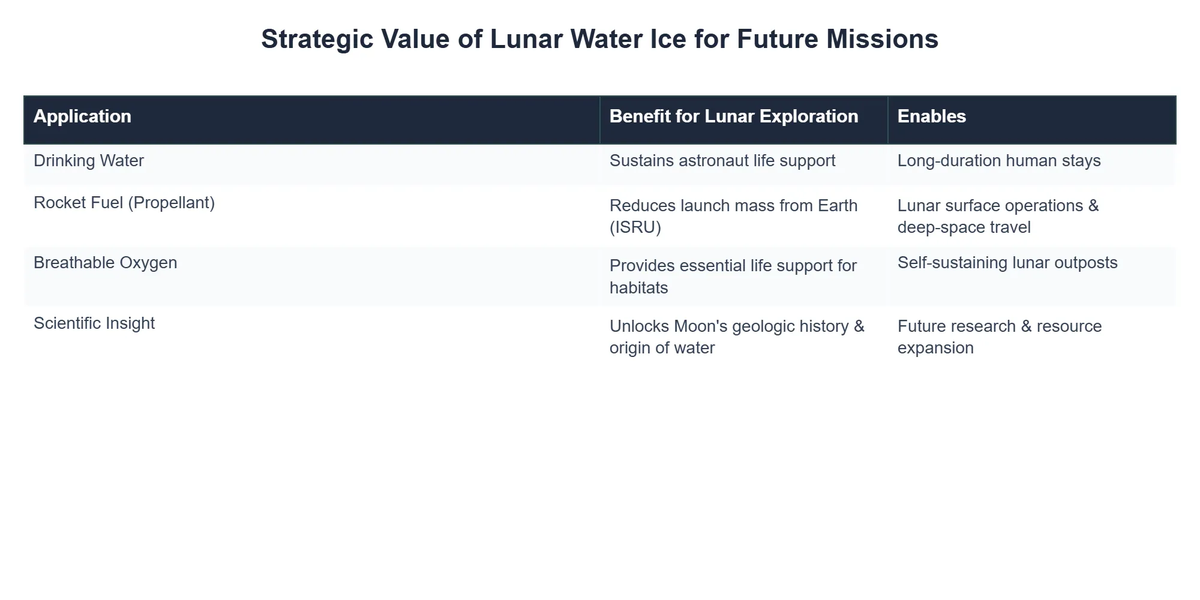
The strategic importance of lunar water cannot be overstated:
- ✅ Life Support: Water is essential for drinking, growing food, and maintaining breathable air for astronauts.
- ➡️ Rocket Fuel: Water can be split into hydrogen and oxygen, the primary components of rocket propellant. This means future missions could refuel on the Moon, significantly reducing the cost and complexity of deep-space journeys.
- 💡 Construction Material: Water ice could potentially be used as a structural material or for radiation shielding in lunar habitats.
- ⚙️ Scientific Insights: The ice also acts as a “time capsule” of solar system history, preserving records of cometary and asteroid impacts and solar wind interactions over billions of years.
By understanding the distribution, form, and abundance of lunar water, VIPER will help NASA identify prime locations for future human landings and potential resource extraction operations, crucial for initiatives like establishing NASA Lunar Bases: Building on the Moon.
The VIPER Rover: Technology & Tools
The VIPER rover is a highly advanced, golf cart-sized mobile laboratory designed to withstand the extreme lunar environment, including temperatures ranging from searing sunlight to cryogenic darkness. Its design prioritizes maneuverability, robust power systems, and specialized instruments for its ice-hunting mission.
⚙️ Key Technological Features:
- Advanced Mobility: VIPER is equipped with a unique wheel system allowing it to drive sideways and navigate challenging terrain, including the steep slopes and soft regolith of the polar regions.
- Power System: Solar panels provide power during lunar day, charging batteries that will sustain the rover through shadowed areas and lunar nights (though its mission is specifically timed to avoid the longest nights).
- Thermal Management: Given the extreme temperature swings, VIPER incorporates sophisticated thermal systems to keep its sensitive instruments within operational limits.
🔬 Scientific Instruments Onboard:
VIPER carries four primary science instruments designed to locate and analyze water ice:
NASA VIPER Lunar Rover Mission: Pros and Cons
Pros
- ✔Directly identifies and maps lunar water ice, a crucial resource.
- ✔Paves the way for future human lunar bases and long-duration missions.
- ✔Advances robotic exploration and in-situ resource utilization technologies.
- ✔Contributes significantly to understanding lunar geology and water origins.
Cons
- ✖High mission cost and significant public investment required.
- ✖Extreme lunar environment poses risks to rover operation and longevity.
- ✖Technical complexities and potential for mission-ending failures.
- ✖Limited mission duration may restrict data collection scope.
- Nirvana (Near InfraRed Volatiles Analyzer): This spectrometer will identify water and other volatiles by analyzing the light reflected from the lunar surface.
- TRIDENT (The Regolith and Ice Drill for Exploring New Terrain): A 1-meter (3.28-foot) drill capable of excavating lunar soil and ice samples from beneath the surface.
- MSolo (Mass Spectrometer Observing Lunar Operations): This instrument will analyze the gases released from drilled samples, confirming the presence and composition of water and other volatiles.
- NSS (Neutron Spectrometer System): NSS can detect hydrogen-bearing materials, including water ice, up to 3 feet below the surface without needing to drill, helping VIPER identify promising drill sites.
These instruments, working in concert, will provide an unprecedented 3D view of the Moon’s subsurface water ice. Understanding the intricacies of lunar rovers like VIPER is key to future exploration, including how they interact with vital infrastructure like NASA CAPSTONE: Paving the Way for the Lunar Gateway.
Where and When Will VIPER Explore? Landing Site & Timeline
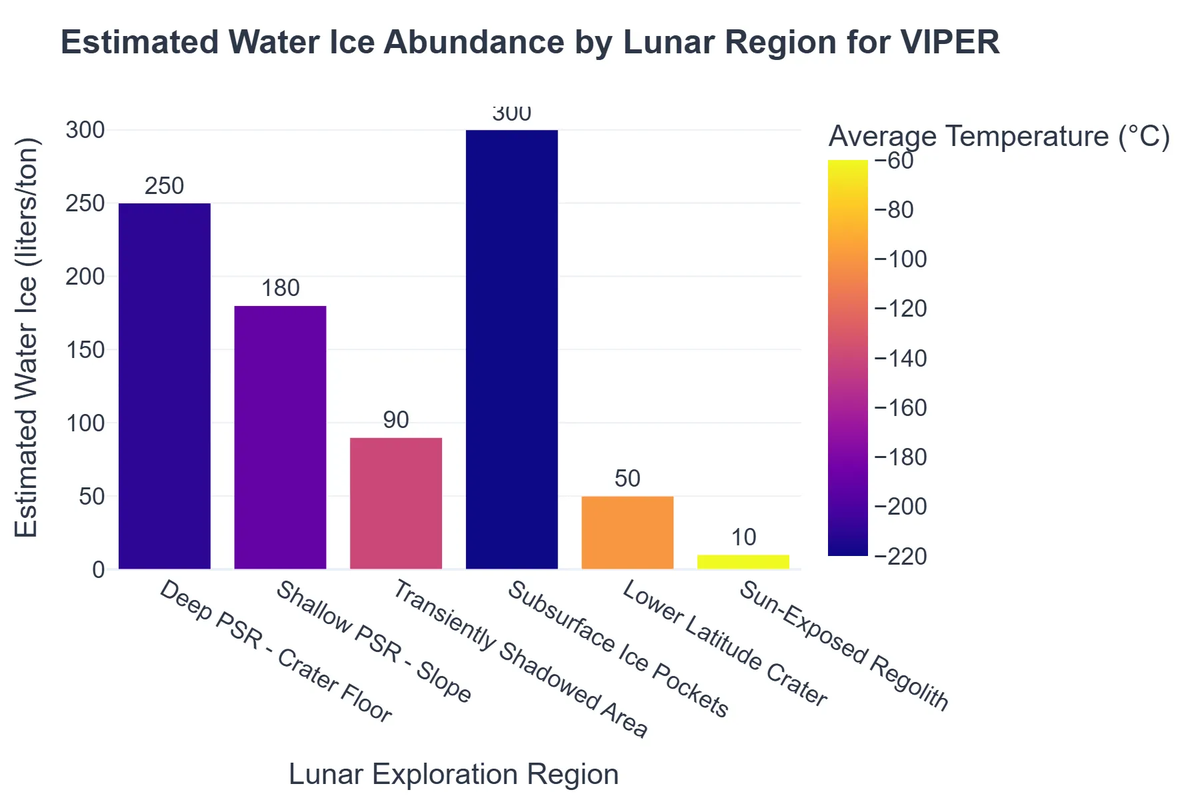
The mission concept for VIPER targets the Moon’s South Pole, specifically an area near the western edge of the Nobile crater. This region is of high scientific interest due to its permanently shadowed craters and ridges, which are believed to harbor significant quantities of water ice.
🗺️ The Chosen Landing Site:
- Nobile Crater Region: This area was selected for its diverse terrain, offering access to both permanently shadowed regions (PSRs) and sunlit areas, which are crucial for rover operations and power generation.
- Topographical Complexity: The site presents a challenging but rewarding landscape, allowing VIPER to traverse various depths and thermal environments to understand water ice distribution.
📅 Mission Timeline & Duration:
While the exact launch date has been subject to adjustments due to various factors, including the need for additional testing and integration, the mission is designed for approximately 100 Earth days of operation. This duration allows VIPER to cover several kilometers, collecting thousands of data points on ice concentration and distribution.
The successful deployment and operation of VIPER are crucial for informing subsequent Artemis missions, particularly those focused on establishing a sustained human presence. The insights gained will directly influence where and how astronauts will live and work on the lunar surface. For more on how rovers like VIPER fit into the broader strategy, consider our article on Artemis & VIPER: Exploring the Next Lunar Rovers. For official updates on the mission’s status, you can refer to NASA’s dedicated VIPER science page: VIPER – NASA Science.
Recommended Video
The Future of Lunar Exploration: VIPER’s Legacy
The NASA VIPER mission is more than just a single scientific endeavor; it’s a foundational pillar for humanity’s long-term aspirations in space. By providing critical data on lunar water ice, VIPER will directly impact the feasibility and design of future lunar settlements and deep-space missions.
The legacy of VIPER will be multifaceted:
- ✨ Resource Mapping: It will create the first detailed resource maps of lunar volatiles, pinpointing locations with the highest concentration of water ice.
- 🚀 In-Situ Resource Utilization (ISRU): The data will be vital for developing technologies and strategies for ISRU, enabling astronauts to “live off the land” by extracting and utilizing resources found on the Moon. This dramatically reduces reliance on Earth-supplied materials.
- 🌌 Gateway to Mars: A sustainable lunar presence, fueled by local resources, could serve as a vital staging post for future human missions to Mars, making these ambitious journeys more achievable.
- 🔬 Paving the Way for Science: Beyond water, VIPER’s methods and findings could help locate and characterize other valuable lunar resources, opening new avenues for scientific research and commercial opportunities.
VIPER embodies the innovative spirit of space exploration, blending cutting-edge robotics with critical scientific objectives to unlock the Moon’s potential as a stepping stone to the cosmos. As we continue to push the boundaries of human exploration, missions like VIPER underscore the collaborative efforts required, often involving partnerships like the one detailed by NASA selecting Astrobotic to fly the rover: NASA Selects Astrobotic to Fly Water-Hunting Rover to the Moon.
What is NASA VIPER?
VIPER (Volatiles Investigating Polar Exploration Rover) is a robotic lunar rover developed by NASA to search for and characterize water ice and other resources at the Moon’s South Pole.
When is VIPER scheduled to launch?
VIPER is currently scheduled to launch in late 2024, targeting a landing near the Nobile Crater at the lunar South Pole.
Why is lunar water ice important?
Lunar water ice is a critical resource that can be processed into drinking water, breathable oxygen, and rocket fuel, essential for sustaining long-duration human missions on the Moon and beyond.
What instruments does VIPER carry?
VIPER is equipped with a drill (TRIDENT) to extract samples, and three spectrometers (MSolo, NIRVSS, NSS) to analyze the composition of the lunar regolith and detect water ice.