

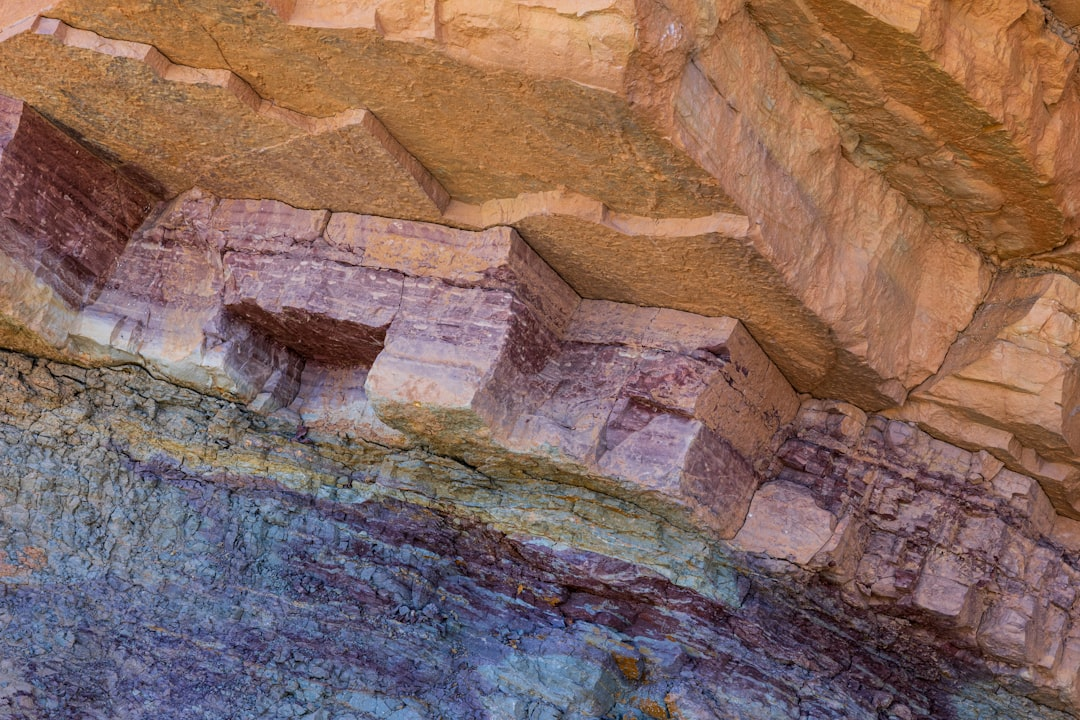
Understanding Slate Geology: A Metamorphic Marvel
In the vast realm of geology, certain rocks stand out not just for their aesthetic appeal but for their remarkable formation and enduring utility. Among these is slate, a fine-grained, foliated metamorphic rock renowned for its exceptional durability and unique cleavage properties. Understanding slate geology involves delving into the incredible forces that transform ancient sediments into this versatile material.
💡 Key Takeaways
- Slate is a fine-grained, foliated metamorphic rock formed from shale or mudstone under intense pressure and temperature.
- Its key properties include excellent cleavage (allowing it to split into thin sheets), low water absorption, and high durability.
- Historically and presently, slate is valued for roofing, flooring, blackboards, and decorative landscaping.
- The unique geological conditions for slate formation often involve regional metamorphism in tectonic settings.
“Slate’s journey from muddy sediment to a robust, finely cleaving rock is a profound testament to Earth’s dynamic crust. Its metamorphic transformation reveals the immense pressures and temperatures shaping our planet, offering us a window into deep time and geological processes that parallel those on other rocky bodies.”
— Dr. Marcus Sterling, PhD, Planetary Geoscientist & Climatologist
Slate originates from sedimentary rocks like shale or mudstone that undergo significant alteration due to heat and intense pressure deep within the Earth’s crust. This transformation process, known as metamorphism, imbues slate with characteristics far superior to its parent materials, making it impermeable and incredibly strong.
In This Article
- → Understanding Slate Geology: A Metamorphic Marvel
- — 💡 Key Takeaways
- → The Formation of Slate: A Journey Through Tectonic Pressure
- → Key Geological Properties of Slate
- → Diverse Uses and Applications of Slate
- — 🏡 Construction & Architecture
- — 🎨 Decorative & Artistic Uses
- — 📚 Historical & Niche Applications
- → Identifying and Sourcing Quality Slate
- — 🔍 Key Indicators of Quality Slate
- — 🌍 Major Global Sources
The Formation of Slate: A Journey Through Tectonic Pressure
The creation of slate is a compelling testament to the Earth’s dynamic geological processes. This intricate rock formation typically begins with the accumulation of fine-grained clay minerals, silt, and sometimes organic matter in calm water environments, forming mud. Over geological timescales, these mud deposits are compacted and dewatered, eventually lithifying into shale or mudstone. This is the first crucial step in the slate’s genesis.
The real transformation occurs when these sedimentary layers are subjected to regional metamorphism, often as a result of continental collision or mountain-building events (orogeny). Here’s a breakdown of the key stages:
- ✅ Burial & Compaction: As more layers accumulate, the overlying pressure compacts the mudstone, forcing out water and reducing its volume.
- ➡️ Low-Grade Metamorphism: With increasing depth, temperature and pressure rise. This “low-grade” metamorphism is just enough to recrystallize the clay minerals without completely melting them.
- 💡 Directed Pressure (Stress): Crucially, the metamorphic process involved in slate formation is characterized by strong directed pressure, or differential stress. This stress, often caused by tectonic plate movements, compresses the rock in one direction while allowing it to lengthen in others.
- ➡️ Development of Slaty Cleavage: The platy minerals (like clay minerals, and later, new micas such as muscovite and chlorite) within the rock begin to reorient themselves perpendicular to the direction of maximum stress. This parallel alignment of minerals creates a distinctive feature known as “slaty cleavage” or “foliation,” which allows slate to be split into thin, flat sheets.
This process highlights how Earth’s Unseen Forces: The Hidden Dynamics of Our Planet shape the materials we find and utilize on the surface. Understanding these deep-seated transformations helps us appreciate the complexity of our planet’s geological engine.
For more insights into how different geological forces shape the Earth’s crust, explore our article on Trough Geology: Formations, Significance, and Examples.
Key Geological Properties of Slate
The unique formation process endows slate with a suite of distinctive geological properties that make it incredibly valuable for various applications. These properties are critical for its identification and practical use:
Unearthing Value: How Summit Stone & Tile Elevated Slate Sales
❓The Challenge
Summit Stone & Tile, a high-end architectural materials supplier, struggled to differentiate their premium slate, finding clients often opted for cheaper alternatives due to a lack of understanding of slate’s unique benefits.
💡The Solution
By deeply understanding the metamorphic processes and directed pressure that give slate its exceptional durability, impermeability, and cleavability, Summit Stone & Tile re-engineered their sales pitch. They educated their team and marketing materials to highlight these geological advantages, explaining why their slate offered superior long-term value over competitors.
🏆The Result
This strategic shift led to a 35% increase in sales of their premium slate products within the following year, alongside a 15% rise in the average deal size for slate-inclusive projects.
- ✅ Slaty Cleavage (Fissility): This is slate’s defining characteristic. It allows the rock to be easily split into thin, smooth, and relatively parallel sheets, perpendicular to the direction of the applied compressive stress during metamorphism. This property is due to the preferred orientation of platy minerals like muscovite, chlorite, and biotite.
- 💪 Hardness: Slate typically ranges from 2.5 to 4 on the Mohs scale of mineral hardness. While not as hard as quartz, it is sufficiently hard to be durable and resistant to abrasion.
- 💧 Low Porosity & Impermeability: Due to its fine-grained nature and metamorphic compaction, slate has very low porosity, meaning it absorbs very little water. This makes it highly resistant to frost damage and chemical weathering, ideal for outdoor applications like roofing.
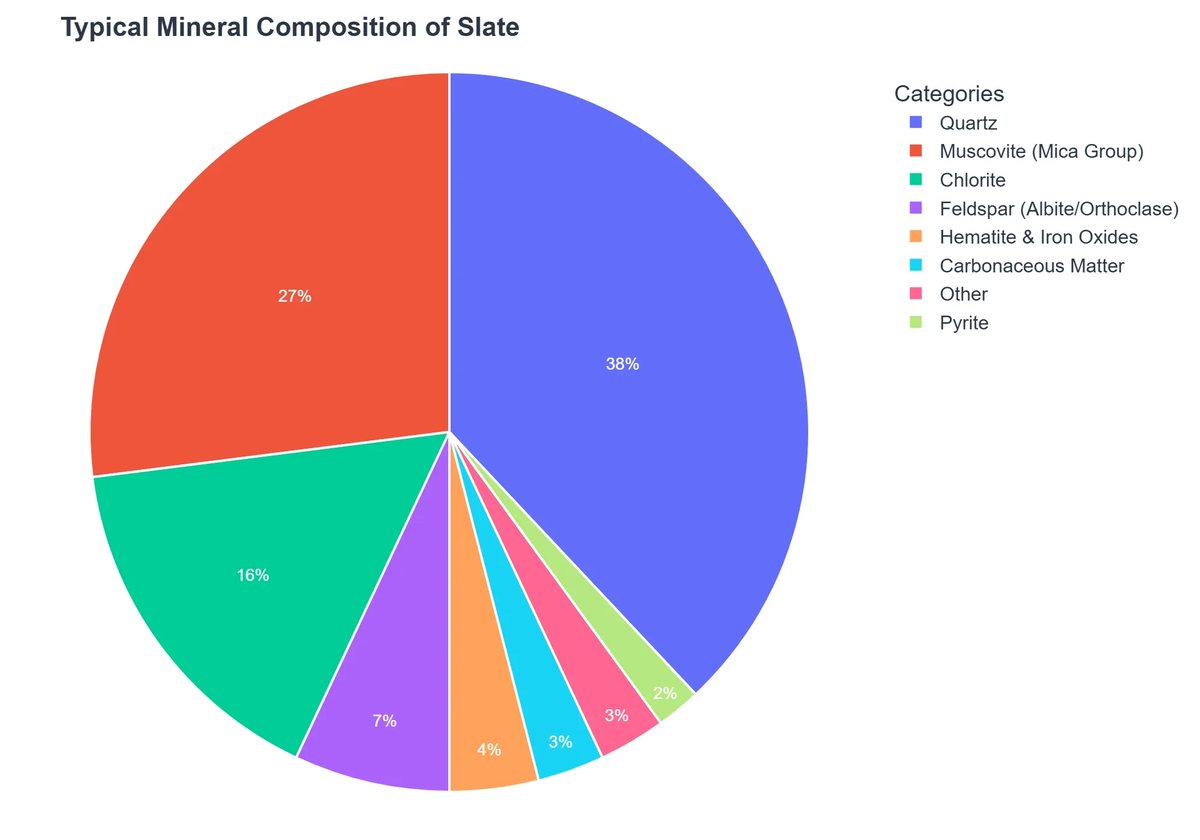
- 🌈 Color Variation: Slate comes in a wide range of colors, including gray, black, green, purple, red, and even mottled variations. These colors are primarily due to the presence of trace minerals:
- ⚫ Black/Gray: Organic matter and/or iron sulfides.
- 🟢 Green: Chlorite.
- 🟣 Purple/Red: Iron oxides (hematite).
- 🔬 Mineral Composition: The primary minerals in slate are quartz, muscovite, illite, and chlorite. Other common accessory minerals can include biotite, hematite, pyrite, and carbonaceous material.
- 🌡️ Thermal Stability: Slate exhibits good thermal stability, expanding and contracting minimally with temperature changes, which contributes to its longevity in exposed environments.
The remarkable resistance of slate to weathering is further detailed in studies like the one from the National Institute of Standards and Technology on the Physical properties and weathering characteristics of slate.
Diverse Uses and Applications of Slate
The exceptional properties of slate have made it a preferred material across numerous industries for centuries. Its combination of durability, aesthetic appeal, and workability ensures its continued relevance today.
🏡 Construction & Architecture
Slate’s primary application has historically been in the construction industry, particularly for:
- ✅ Roofing Tiles: Its low water absorption, durability, and ability to be split into thin, overlapping tiles make it an ideal roofing material, offering centuries of protection.
- ➡️ Flooring & Paving: The inherent strength and slip resistance of slate make it suitable for both interior flooring and exterior paving.
- 💡 Wall Cladding & Veneer: Its natural beauty and resistance to elements make it a popular choice for architectural finishes, both indoors and out.
- 🧱 Worktops & Sills: Its impermeability and resistance to staining make it a good material for kitchen worktops, window sills, and fireplace surrounds.
🎨 Decorative & Artistic Uses
Beyond its utilitarian applications, slate is valued for its unique texture and color variations in decorative contexts:

- 🖼️ Art & Craft: Artists utilize slate for carving, engraving, and as a natural canvas.
- 🍽️ Tableware: Slate platters and coasters have become popular for serving food due to their natural elegance and heat retention properties.
📚 Historical & Niche Applications
Historically, slate played a significant role in education and communication:
- ✍️ Blackboards & Writing Slates: Before the advent of whiteboards, slate was the standard material for classroom blackboards and individual writing slates.
- 🪦 Gravestones & Memorials: Its durability and ease of engraving made it a common choice for tombstones.
The enduring legacy of slate in construction and design is a testament to its robust nature and adaptability. For further reading on other significant geological resources, consider our article on Petroleum Geology: The Science of Oil and Gas.
Identifying and Sourcing Quality Slate
Identifying high-quality slate involves assessing several factors that speak to its durability and aesthetic longevity. Not all slate is created equal, and variations in its parent material and metamorphic history can significantly impact its properties.
🔍 Key Indicators of Quality Slate
- ✅ Soundness: High-quality slate should be free from excessive cracks, fissures, or weak spots. A good piece of slate will produce a clear, ringing sound when lightly tapped.
- 📏 Uniformity of Cleavage: The ability to split cleanly and evenly is paramount. This ensures consistent thickness and ease of installation, especially for roofing or flooring.
- 🧪 Mineral Impurities: While some mineral inclusions contribute to color, excessive amounts of certain minerals (like pyrite) can lead to weathering issues, such as rust staining or degradation over time.
- ⚖️ Density & Porosity: Denser slate with lower porosity generally indicates greater strength and impermeability, crucial for outdoor applications.
🌍 Major Global Sources
Historically, significant slate quarries have been found worldwide, often in regions that experienced intense tectonic activity. Some of the most renowned sources include:
- 🇪🇸 Spain: Known for its high-quality black and grey roofing slate.
- 🇬🇧 Wales, UK: Historically famous for its purple and blue-grey slate, particularly from quarries in Snowdonia.
- 🇺🇸 Vermont & Pennsylvania, USA: Produces various colors, including green, purple, and black slate.
- 🇧🇷 Brazil: A major exporter of multi-colored slate for flooring and paving.
- 🇨🇳 China: Emerging as a significant producer of black and green slate.
The responsible sourcing of slate, like any natural resource, increasingly involves considering environmental impact and quarrying practices. The properties and origins of this versatile rock are extensively covered by resources such as Britannica’s entry on Slate, providing a deeper understanding of its geological significance.
Recommended Video
What is slate and how does it form?
Slate is a fine-grained, foliated metamorphic rock. It forms when shale or mudstone undergoes low-grade regional metamorphism, meaning it’s subjected to intense pressure and relatively low temperatures, typically during tectonic plate collisions.
What are the primary uses of slate?
Due to its durability, low water absorption, and ability to split into thin sheets, slate is primarily used for roofing tiles, flooring, paving, blackboards, billiard tables, and decorative landscaping. Its aesthetic appeal also makes it popular for architectural features.
What gives slate its unique cleavage property?
Slate’s distinctive cleavage (the ability to split into thin, parallel layers) is due to the alignment of microscopic clay minerals and micas during metamorphism. The pressure causes these minerals to reorient perpendicular to the applied stress, creating planes of weakness.
Are there different colors of slate?
Yes, slate comes in various colors, including gray, black, green, purple, and red. The color depends on the specific mineral composition of the original sediment and the metamorphic conditions. For example, red slate often indicates the presence of iron oxides.