

Understanding Biotechnology in Agriculture: Driving Sustainable Harvests
Biotechnology in agriculture represents a pivotal convergence of science and farming, leveraging biological processes, organisms, or systems to improve agricultural practices. This innovative field is crucial for addressing global challenges such as food security, climate change, and resource scarcity. By enhancing crop resilience, improving yields, and reducing environmental impact, agricultural biotechnology is transforming how we produce food and manage our land, moving us closer to truly sustainable agriculture.
💡 Key Takeaways
- Biotechnology significantly boosts crop resilience and yields.
- It facilitates more environmentally friendly and resource-efficient farming practices.
- Plays a critical role in achieving global food security and nutrition.
- Enables the development of crops resistant to pests, diseases, and climate change.
“Biotechnology isn’t just about tweaking genes; it’s about understanding the evolutionary potential of plants to adapt, thrive, and sustainably feed a growing population.”
— Julian Aris, PhD, Geneticist & Evolutionary Biologist
At its core, agricultural biotechnology applies genetic engineering, molecular diagnostics, vaccine and tissue culture technologies to crops, livestock, and microorganisms. It aims to develop agricultural products that are more productive, resistant to pests and diseases, and less reliant on external inputs like chemical fertilizers and pesticides. Understanding its mechanisms and applications is key to appreciating its vast potential in feeding a growing population sustainably.
In This Article
- → Understanding Biotechnology in Agriculture: Driving Sustainable Harvests
- — 💡 Key Takeaways
- → Key Applications of Biotechnology in Agriculture
- — 🌱 Crop Improvement Through Genetic Engineering
- — 🔬 Precision Breeding and Gene Editing
- — 🌿 Biofertilizers and Biopesticides
- — ⚙️ Advanced Diagnostic Tools
- → The Role of Biotechnology in Achieving Sustainable Agriculture
- → Benefits and Challenges of Agricultural Biotechnology
- — ✅ Key Benefits
- — ⚠️ Potential Challenges
- → Future Trends: Shaping Sustainable Harvests
Key Applications of Biotechnology in Agriculture
The applications of biotechnology are diverse, touching nearly every aspect of the agricultural value chain. These advancements are not merely about increasing output but also about optimizing resource use and building more robust food systems.
🌱 Crop Improvement Through Genetic Engineering
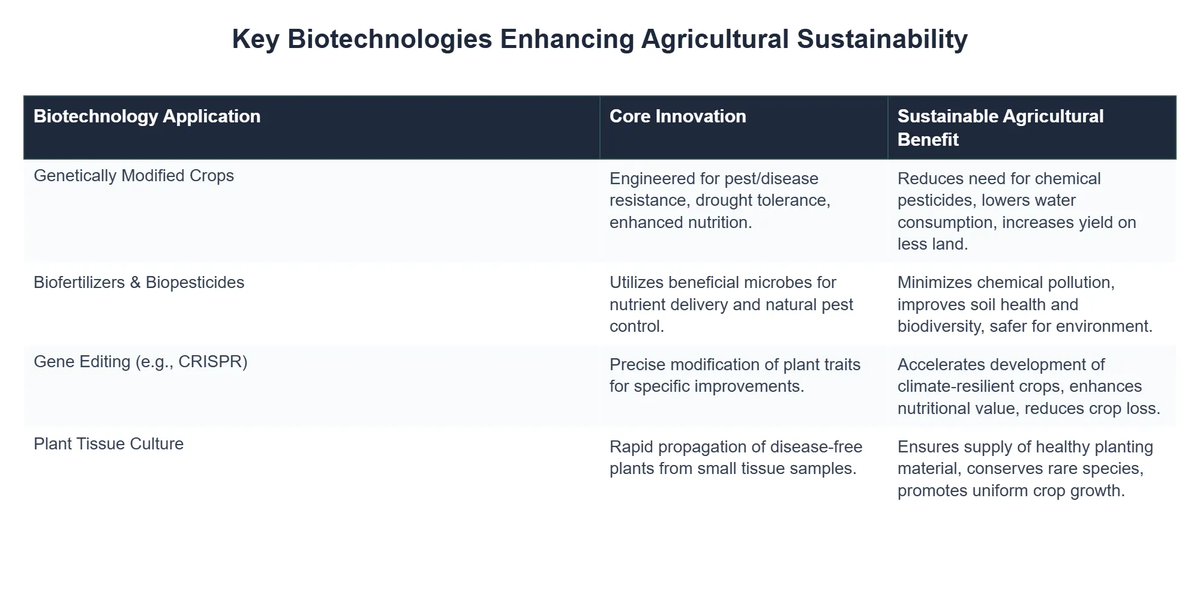
Perhaps the most well-known application, genetic engineering enables scientists to introduce, remove, or modify genes in plants to achieve desired traits. This has led to the development of:
- ✅ Pest-Resistant Crops: Crops engineered to produce their own insecticidal proteins, significantly reducing the need for chemical sprays.
- ✅ Herbicide-Tolerant Crops: Allowing farmers to use specific herbicides more effectively for weed control, often with reduced tillage.
- ✅ Disease-Resistant Varieties: Protecting crops from devastating viral, bacterial, and fungal infections, minimizing yield losses.
- ✅ Nutritionally Enhanced Crops: Biofortification efforts, like Golden Rice (enhanced with Vitamin A), aim to address micronutrient deficiencies in populations. For a comprehensive look at specific applications, consider our article on GMOs in Food and Agriculture: Benefits, Risks, and Impact.
These innovations exemplify how biotechnology and agriculture work hand-in-hand to produce more resilient and nutritious food sources.
🔬 Precision Breeding and Gene Editing
Beyond traditional genetic engineering, newer technologies like CRISPR-Cas9 allow for highly precise changes to an organism’s DNA without necessarily introducing foreign DNA. This allows for:

- ➡️ Accelerated Breeding: Rapidly introducing desirable traits found in wild relatives or landraces into cultivated crops.
- ➡️ Improved Nutritional Profiles: Enhancing the content of vitamins, minerals, or beneficial fats in crops with greater precision.
- ➡️ Stress Tolerance: Developing crops more tolerant to environmental stresses such as drought, salinity, and extreme temperatures.
🌿 Biofertilizers and Biopesticides
Biotechnology in agriculture also extends to microbial applications. Biofertilizers (microorganisms that enhance nutrient availability) and biopesticides (naturally occurring substances or microbes that control pests) offer eco-friendly alternatives to synthetic chemicals.
- 💡 Reduced Chemical Runoff: Minimizing environmental pollution and protecting biodiversity.
- 💡 Improved Soil Health: Promoting beneficial microbial activity and nutrient cycling in the soil.
- 💡 Sustainable Pest Management: Offering targeted control with less harm to non-target organisms.
⚙️ Advanced Diagnostic Tools
Biotechnology provides sophisticated tools for early and accurate detection of plant and animal diseases, as well as contaminants in food. This allows for timely intervention, preventing widespread outbreaks and ensuring food safety.
The Role of Biotechnology in Achieving Sustainable Agriculture
The imperative for sustainable agriculture is clear: feed a growing global population while protecting natural resources. Biotechnology and agriculture are key enablers in this mission, contributing to sustainability in multiple ways.
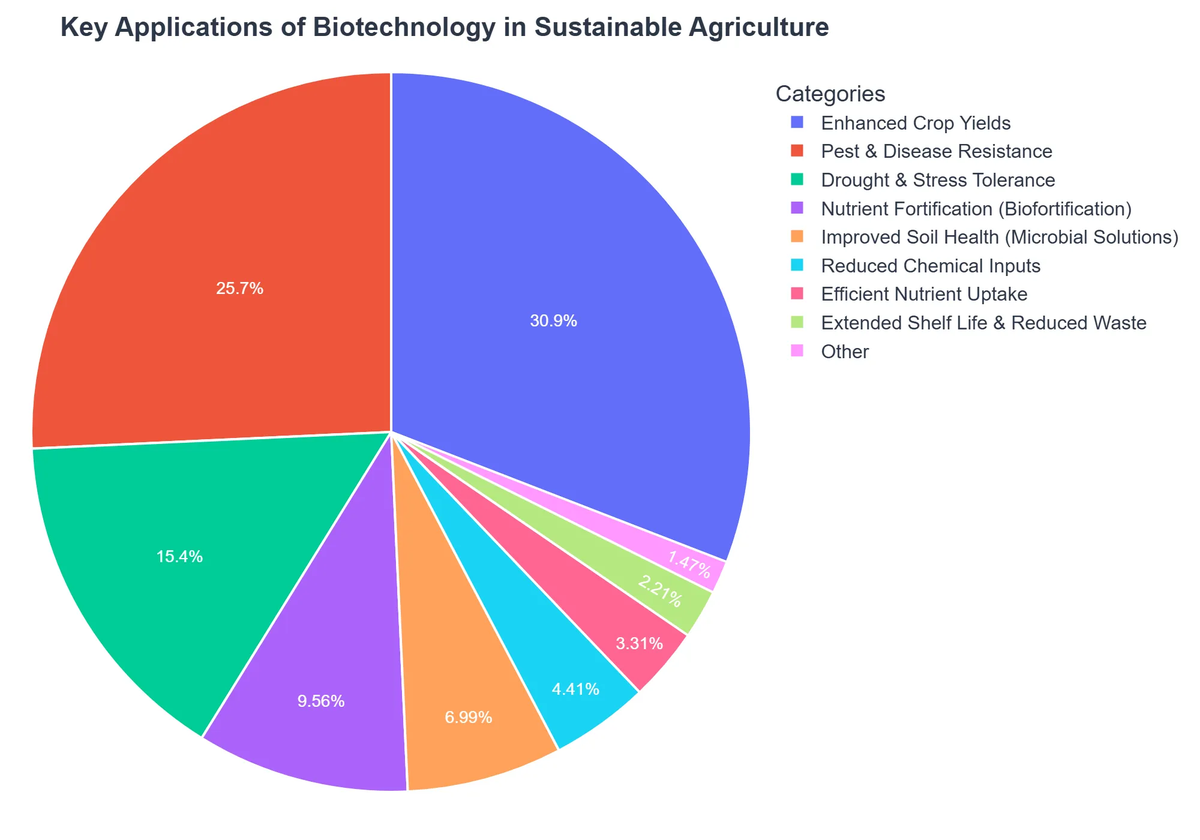
- ✅ Resource Efficiency: Biotech crops often require less water, land, and energy inputs. For instance, drought-tolerant crops can maintain yields in water-stressed regions, conserving precious water resources.
- ✅ Reduced Environmental Footprint: By developing crops resistant to pests and diseases, biotechnology reduces the reliance on chemical pesticides, minimizing their impact on soil health, water quality, and beneficial insects. This aligns perfectly with the goals of Environmental Biotechnology: Sustainable Solutions for Pollution Control.
- ✅ Enhanced Food Security: Increased yields and reduced crop losses mean more food from the same or less land, helping to meet the demands of a population projected to reach nearly 10 billion by 2050.
- ✅ Climate Change Adaptation: Developing crops that can thrive in adverse conditions – such as increased salinity, drought, or extreme temperatures – makes agricultural systems more resilient to the impacts of climate change.
These contributions are vital for building agricultural systems that can sustain productivity and ecological integrity long into the future. For a broader understanding of how biological systems contribute to human existence, explore The Code of Life: Decoding Genetics, Evolution, and Existence.
Benefits and Challenges of Agricultural Biotechnology
While the promise of biotechnology in agriculture is immense, a balanced perspective requires acknowledging both its advantages and the hurdles it faces.
✅ Key Benefits
- Increased Crop Yields: Directly addresses food security by producing more food per acre.
- Reduced Pesticide Use: Insect-resistant crops lead to significantly lower applications of chemical insecticides.
- Improved Nutritional Content: Biofortified crops can alleviate hidden hunger in vulnerable populations.
- Enhanced Environmental Stewardship: Leads to better soil health, reduced erosion (due to less tillage), and lower greenhouse gas emissions from agriculture. As highlighted by Politico, biotechnology is becoming critical for major crops, such as corn, showcasing its economic and environmental advantages. Six Reasons Why Biotechnology is Critical to Corn Growers.
- Economic Benefits: Farmers can experience higher profitability due to reduced input costs and increased yields.
⚠️ Potential Challenges
- Public Perception and Acceptance: Concerns about “GMOs” persist, often driven by misinformation, leading to regulatory complexities and consumer skepticism.
- Regulatory Hurdles: The development and commercialization of new biotech products can be slow and expensive due to stringent regulatory frameworks.
- Access and Equity: Ensuring that the benefits of biotechnology are accessible to smallholder farmers in developing countries remains a challenge.
- Ethical Considerations: Debates surrounding intellectual property, gene flow to wild relatives, and potential impacts on biodiversity require careful consideration.
Recommended Video
Future Trends: Shaping Sustainable Harvests
The field of biotechnology in agriculture is continuously evolving, with exciting innovations on the horizon that promise to further enhance sustainable practices.
- 🚀 Nanobiotechnology: The application of nanotechnology to biology offers solutions for precision agriculture, such as smart delivery systems for pesticides or nutrients, and enhanced diagnostic tools. This could revolutionize resource efficiency. Nanobiotechnology-mediated sustainable agriculture and post-harvest management.
- 🚀 AI and Data Integration: Combining biotechnology with artificial intelligence and big data analytics will enable more precise farming, optimizing planting strategies, disease forecasting, and resource management based on real-time data.
- 🚀 Microbiome Engineering: Understanding and manipulating the plant and soil microbiomes to enhance nutrient uptake, disease resistance, and stress tolerance naturally.
- 🚀 Vertical Farming and Controlled Environment Agriculture (CEA): Biotechnology will play a critical role in developing plant varieties specifically optimized for these indoor, resource-efficient farming systems.
- 🚀 Synthetic Biology: Designing novel biological functions from scratch could lead to entirely new ways of producing food and agricultural inputs with unprecedented efficiency and sustainability. This aligns with concepts explored in White Biotechnology: Revolutionizing Industrial Processes Sustainably.
These emerging trends highlight a future where agriculture is not only productive but also profoundly integrated with ecological principles, ensuring sustainable harvests for generations to come.
What is agricultural biotechnology?
Agricultural biotechnology involves using scientific tools and techniques to modify living organisms, primarily plants, to improve their characteristics like yield, nutrition, or pest resistance.
How does biotechnology contribute to sustainable agriculture?
It enables the development of crops that require less water, pesticides, or fertilizer, reduce tillage (conserving soil), and increase yields on existing land, thereby lessening environmental impact.
Are biotech crops safe for consumption and the environment?
Globally, major scientific bodies and regulatory agencies have consistently found approved biotech crops to be as safe as their conventional counterparts for consumption and the environment, after rigorous testing.