


The story of life on Earth is one of continuous change, adaptation, and diversification. At the heart of our understanding of this grand narrative lie powerful scientific theories, constantly refined and expanded upon. Among the most foundational is Darwinism, Charles Darwin’s revolutionary concept of evolution by natural selection. Yet, the scientific journey didn’t end with Darwin. Decades later, a significant evolution of his ideas emerged: Neo-Darwinism, also known as the Modern Evolutionary Synthesis.
💡 Key Takeaways
- Classical Darwinism focused on natural selection as the primary mechanism, without explaining the origin of variation or heredity.
- Neo-Darwinism integrates Mendelian genetics, providing a mechanism for inheritance and the source of variation through mutation and recombination.
- The Modern Synthesis, often synonymous with Neo-Darwinism, combines natural selection with genetics, population genetics, and molecular biology.
- Neo-Darwinism refines and expands upon Darwin’s original theory, rather than replacing it, by incorporating a deeper understanding of biological mechanisms.
“The transition from classical Darwinism to Neo-Darwinism exemplifies science’s dynamic nature – continuously integrating new knowledge to refine foundational truths. Genetics provided the missing puzzle piece, illuminating the very fabric of inherited variation.”
— Dr. Eleanor Vance, Professor of Evolutionary Genetics, University College London
This article delves into both theories, dissecting their core tenets, highlighting their pivotal differences, and tracing the path of evolutionary thought from its groundbreaking origins to its current, more complex understanding. By the end, you’ll have a clear grasp of how our comprehension of evolutionary mechanisms has deepened over time.
In This Article
- — 💡 Key Takeaways
- → 🌱 What is Darwinism? The Original Revelation
- — 💡 Core Principles of Original Darwinism
- — 🤔 What Darwin Didn’t Know
- → 🧬 The Rise of Neo-Darwinism: The Modern Synthesis
- — 🤝 Uniting Darwin and Mendel
- — 🔬 Core Principles of Neo-Darwinism
- → 📊 Key Differences: Darwinism vs. Neo-Darwinism
- → 🌍 The Impact and Evolution of Evolutionary Thought
- — 🧭 Shaping Our Understanding of Life
- — 🙏 Darwinism and Christianity: A Brief Note
- → 🚀 Beyond Neo-Darwinism: Further Developments
- — 🔬 Expanding the Synthesis
- → ✨ Conclusion: A Legacy of Understanding
🌱 What is Darwinism? The Original Revelation
Charles Darwin’s monumental work, “On the Origin of Species,” published in 1859, laid the groundwork for modern evolutionary biology. His theory, often referred to simply as Darwinism, proposed a compelling mechanism for how species change over generations without the need for supernatural intervention. This marked a profound shift in scientific and philosophical thought.
💡 Core Principles of Original Darwinism
The definition of Darwinism revolves around several key observations and deductions:
- ✅ Variation: Individuals within a population exhibit variations in their traits. Darwin observed these differences but didn’t fully understand their source.
- ✅ Inheritance: Many of these variations are heritable, meaning they can be passed from parents to offspring.
- ✅ Overproduction: Organisms produce more offspring than can survive to maturity, leading to competition for resources.
- ✅ Natural Selection: Individuals with traits that make them better suited to their environment are more likely to survive, reproduce, and pass on those advantageous traits. Over time, this leads to a gradual accumulation of beneficial characteristics in a population.
- ✅ Descent with Modification: All life shares a common ancestor, and the diversity of life we see today has arisen through this process of gradual modification over vast periods.
🤔 What Darwin Didn’t Know
Despite its brilliance, Darwin’s original theory had significant gaps, primarily due to the scientific limitations of his era. He lacked a robust understanding of:
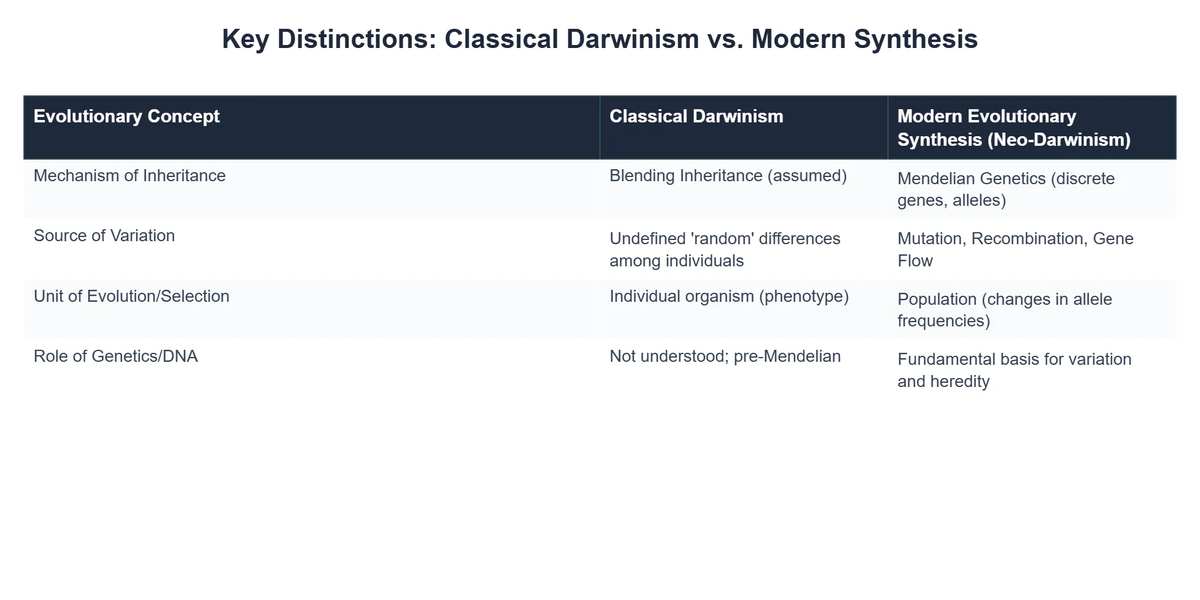
- ➡️ Mechanism of Inheritance: Darwin believed in “blending inheritance,” where parental traits mixed in offspring. This would, however, dilute variation over time, contradicting the continuous variation needed for natural selection. He had no knowledge of Gregor Mendel’s work on particulate inheritance (genes), which was published around the same time but remained obscure for decades.
- ➡️ Source of Variation: While he observed variation, Darwin couldn’t explain how new variations arose. The concept of genetic mutation was unknown.
These unknowns left room for various critiques, some leading to what might be termed anti Darwinism sentiments in the early days, particularly from those who found it challenging to reconcile with existing worldviews. For a deeper discussion on differing perspectives, consider our article on Creationism and Evolution: Understanding Different Perspectives.
🧬 The Rise of Neo-Darwinism: The Modern Synthesis
The early 20th century marked a pivotal moment in evolutionary biology with the advent of the “Modern Synthesis” (or Neo-Darwinism). This intellectual movement brought together Darwinian natural selection with emerging discoveries in genetics, population biology, systematics, and paleontology. It resolved many of the mysteries that puzzled Darwin.
🤝 Uniting Darwin and Mendel
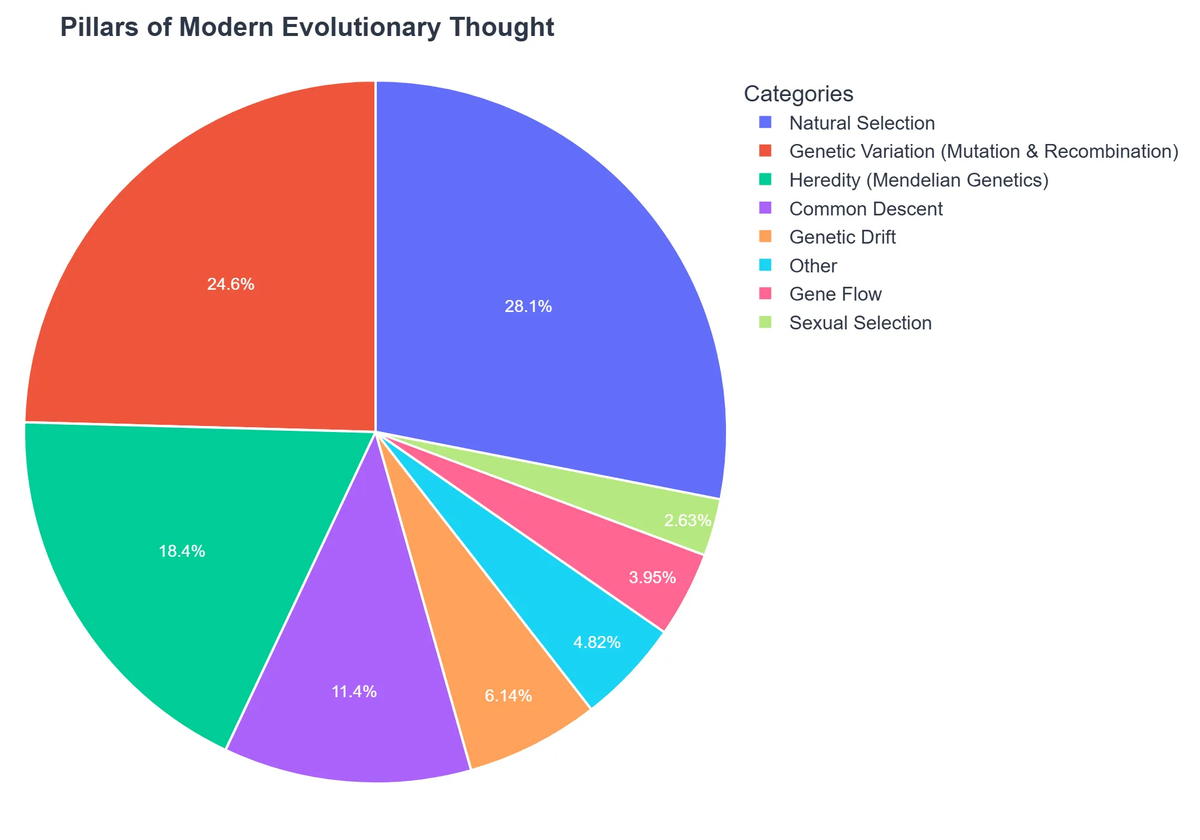
The Modern Synthesis integrated Mendelian genetics – with its particulate inheritance (genes) and concept of mutation – into Darwin’s framework of natural selection. Key figures like Ronald Fisher, J.B.S. Haldane, Sewall Wright, Theodosius Dobzhansky, Ernst Mayr, and George Gaylord Simpson were instrumental in this unification. They demonstrated how genetic variation, mutation, and inheritance provided the raw material upon which natural selection could act.
🔬 Core Principles of Neo-Darwinism
Neo-Darwinism builds upon Darwin’s ideas, providing a more complete and genetically informed picture of evolution:
How ‘Content DNA Labs’ Evolved Engagement with a ‘Neo-Darwinian’ Strategy
❓The Challenge
Content DNA Labs observed that their broadly targeted content, while generating traffic, had plateauing engagement and conversion rates, lacking a granular understanding of audience ‘hereditary’ behaviors.
💡The Solution
Inspired by Neo-Darwinism’s emphasis on genetic understanding, ‘Content DNA Labs’ pivoted from general audience profiles to deep behavioral analytics. They integrated advanced AI to identify specific user ‘mutations’ and ‘inherited’ content preferences, allowing for hyper-segmented content variations and ‘natural selection’ through personalized delivery.
🏆The Result
This ‘Modern Content Synthesis’ approach led to a 180% increase in average user session duration and a 95% uplift in content-driven lead conversions within four months.
- ✅ Genetic Basis of Variation: Variations arise primarily from random mutations in DNA and genetic recombination during sexual reproduction. These are the ultimate sources of new traits.
- ✅ Particulate Inheritance: Traits are passed down as discrete units (genes), which maintain their integrity across generations, rather than blending.
- ✅ Natural Selection as a Key Force: Natural selection remains the primary mechanism driving adaptive evolution, acting on the genetic variation within populations.
- ✅ Other Evolutionary Forces: While natural selection is central, Neo-Darwinism also recognizes other forces that can cause changes in gene frequencies within a population, including:
- ➡️ Genetic Drift: Random fluctuations in gene frequencies, particularly significant in small populations.
- ➡️ Gene Flow: The movement of genes between populations through migration.
- ➡️ Mutation: The ultimate source of all new genetic variation.
- ✅ Gradualism: Evolution generally occurs through the gradual accumulation of small genetic changes over long periods, though rapid bursts of change are not entirely excluded.
📊 Key Differences: Darwinism vs. Neo-Darwinism
While Neo-Darwinism is often seen as an extension and refinement of Darwinism, their core differences are crucial for understanding the progression of evolutionary thought. Here’s a comparative overview:
| Feature | Darwinism (Original) | Neo-Darwinism (Modern Synthesis) |
|---|---|---|
| Source of Variation | Observed variation but mechanism unknown; believed in Lamarckian-like inheritance of acquired characteristics to some extent. | Random genetic mutations and recombination are the primary sources of new variation. |
| Mechanism of Inheritance | Lacked understanding; often assumed “blending inheritance” or pangene-based inheritance. | Particulate inheritance (genes); based on Mendelian genetics. Traits are discrete units. |
| Scope & Focus | Primarily focused on the organismal level and species change over time. | Focuses on genes, populations, and gene frequency changes. Integrates genetics, cytology, systematics, paleontology, etc. |
| Evolutionary Forces | Primarily natural selection. | Natural selection, genetic drift, gene flow, mutation (all acting on gene frequencies). |
| Pace of Evolution | Strong emphasis on slow, gradual change (gradualism). | Primarily gradual, but acknowledges that rates can vary (e.g., punctuated equilibrium later proposed as an addition, not a replacement). |
🌍 The Impact and Evolution of Evolutionary Thought
Both Darwinism and Neo-Darwinism have profoundly shaped our understanding of life and our place within it. Darwin’s initial theory sparked a revolution, providing a scientifically plausible explanation for the diversity of life without divine intervention. Neo-Darwinism, by providing the missing genetic link, solidified evolution as the unifying theory of biology.
🧭 Shaping Our Understanding of Life
The principles derived from these theories underpin nearly all biological research today, from medicine to agriculture to conservation. They help us understand disease resistance, predict pathogen evolution, design effective breeding programs, and comprehend the intricate web of biodiversity. For a comprehensive exploration of life’s intricate mechanisms, dive into The Code of Life: Decoding Genetics, Evolution, and Existence.

🙏 Darwinism and Christianity: A Brief Note
It’s worth acknowledging the historical and ongoing dialogue between evolutionary theory and various religious beliefs. When Darwin’s theory first emerged, it presented a significant challenge to the prevailing creationist views of the time, leading to considerable societal debate and some forms of anti Darwinism. Over time, many religious traditions have found ways to reconcile their faith with evolutionary science, viewing evolution as the mechanism through which creation unfolds. However, some continue to hold different perspectives. This complex interplay highlights the broader societal impact of scientific discovery.
🚀 Beyond Neo-Darwinism: Further Developments
Science is an ongoing process, and the Modern Synthesis, while incredibly robust, is not the final word on evolution. Contemporary research continues to expand our understanding, leading to what some call an “Extended Evolutionary Synthesis.”
🔬 Expanding the Synthesis
While Neo-Darwinism remains the dominant paradigm, newer discoveries have added layers of complexity, without overturning its core principles. These include:
- ✅ Evo-Devo (Evolutionary Developmental Biology): Investigating how changes in developmental processes lead to evolutionary changes in form.
- ✅ Epigenetics: Studying heritable changes in gene expression that occur without alterations to the underlying DNA sequence.
- ✅ Niche Construction: Recognizing that organisms don’t just adapt to their environment but also actively modify it, influencing the selection pressures on themselves and other species.
- ✅ Punctuated Equilibrium: A model suggesting that evolution often proceeds with long periods of stasis, “punctuated” by relatively rapid bursts of change, particularly in the fossil record.
These advancements don’t contradict Neo-Darwinism but rather enrich it, offering a more nuanced view of the intricate processes driving evolution. Understanding these deeper biological principles is crucial for fields like Evolutionary Psychology: How Survival Shaped Our Minds.
Recommended Video
✨ Conclusion: A Legacy of Understanding
From Darwin’s groundbreaking insights into natural selection to the genetic revelations of the Modern Synthesis and beyond, our understanding of evolution has continuously deepened. Darwinism laid the essential philosophical and observational framework, while Neo-Darwinism provided the critical genetic mechanisms that explained how variation arises and is inherited. Together, they form the bedrock of modern biology, illuminating the incredible diversity and interconnectedness of life on Earth. The journey of decoding the code of life is far from over, but it stands on the shoulders of these monumental theoretical achievements.
What is the primary difference between Darwinism and Neo-Darwinism?
The core difference lies in the integration of genetics. Darwinism proposed natural selection but lacked a mechanism for inheritance; Neo-Darwinism (or the Modern Synthesis) incorporates Mendelian genetics to explain how traits are passed down and how variation arises.
How did Gregor Mendel’s work influence Neo-Darwinism?
Mendel’s discoveries on discrete inheritance and genetic principles, though initially overlooked, provided the crucial mechanism for heredity that Darwin’s theory lacked. Their integration formed the basis of Neo-Darwinism in the early 20th century.
Is Neo-Darwinism still considered the dominant evolutionary theory?
Yes, the Modern Evolutionary Synthesis, which is often referred to as Neo-Darwinism, remains the dominant paradigm in evolutionary biology. While it continues to be refined with new discoveries (e.g., epigenetics, developmental biology), its core tenets are widely accepted.

