
Environmental Biotechnology: Sustainable Solutions for Pollution Control
As the global population expands and industrial activities intensify, environmental pollution has emerged as one of the most pressing challenges of our time. From contaminated water bodies and polluted air to vast amounts of solid waste, the impact on ecosystems and human health is undeniable. Traditional remediation methods often prove costly, energy-intensive, and sometimes even introduce secondary pollutants.
💡 Key Takeaways
- Environmental biotechnology utilizes living organisms and their products to prevent, detect, and remediate environmental pollution.
- It offers highly sustainable and often cost-effective alternatives to traditional chemical or physical pollution control methods.
- Key applications include cleaning contaminated soil and water, managing waste, and developing renewable energy sources.
- Advances in genetic engineering and synthetic biology are rapidly expanding the capabilities and efficiency of biotechnological environmental solutions.
“Environmental biotechnology exemplifies evolution in action; by understanding and harnessing the genetic potential of microorganisms, we can engineer natural systems to adapt and thrive, transforming pollutants into harmless or even beneficial compounds.”
— Julian Aris, Evolutionary Biologist & Geneticist
Enter environmental biotechnology: a revolutionary field leveraging biological processes and organisms to prevent, detect, and remediate environmental pollution. It offers a suite of innovative, sustainable solutions that harness nature’s own mechanisms for a cleaner, healthier planet. This article delves deep into the core principles, applications, and future potential of environmental biotechnology in our relentless pursuit of pollution control.
In This Article
- → Environmental Biotechnology: Sustainable Solutions for Pollution Control
- — 💡 Key Takeaways
- → What is Environmental Biotechnology?
- — 💡 Core Principles
- — ⚙️ Key Objectives
- → The Power of Bioremediation: Nature’s Clean-Up Crew
- — Types of Bioremediation
- — Applications in Pollution Control
- → Addressing Different Pollution Challenges
- — 💧 Water and Wastewater Treatment
- — 🗑️ Solid Waste Management
- — 💨 Air Pollution Mitigation
- → Innovations and Emerging Trends
- — Genetic Engineering in Environmental Cleanup
- — Biosensors and Monitoring
- — Circular Economy Integration
- → Benefits and Challenges of Environmental Biotechnology
- — ✅ Advantages
- — 🚧 Hurdles and Future Outlook
- → Conclusion
What is Environmental Biotechnology?

Environmental biotechnology is a specialized discipline that applies biotechnological tools and principles to solve environmental problems. It encompasses a broad range of applications, from treating wastewater and decontaminating hazardous waste to monitoring environmental quality and producing renewable energy. Essentially, it’s about using living organisms or their products to manage environmental issues.
💡 Core Principles
- ✅ Sustainability: Prioritizing methods that are environmentally friendly, economically viable, and socially equitable.
- ✅ Efficiency: Developing highly effective processes to remove pollutants, often more efficiently than conventional methods.
- ✅ Minimization of Secondary Pollution: Aiming for solutions that do not generate new harmful byproducts.
- ✅ Resource Recovery: Often, environmental biotechnologies can recover valuable resources (e.g., nutrients, energy) from waste streams.
⚙️ Key Objectives
The primary goals of environmental biotechnology revolve around:
- Pollution Prevention: Developing cleaner industrial processes to reduce pollutant generation at the source.
- Pollution Detection and Monitoring: Creating sensitive biosensors for real-time monitoring of contaminants.
- Pollution Remediation: Using biological agents to degrade, detoxify, or remove pollutants from air, water, and soil.
- Resource Management: Facilitating waste treatment and turning waste into valuable resources, aligning with circular economy principles.
The Power of Bioremediation: Nature’s Clean-Up Crew
At the heart of environmental biotechnology for pollution control lies bioremediation. This process utilizes microorganisms (like bacteria, fungi) or plants to degrade, transform, or remove contaminants from soil, water, or air. It’s an elegant, often cost-effective, and environmentally benign alternative to physical and chemical methods.
Types of Bioremediation
Bioremediation can take various forms, depending on the type of contaminant, the environment, and the biological agents used:
- 🌿 Phytoremediation: Uses plants to absorb, accumulate, or degrade pollutants. This can include:
- Rhizofiltration: Roots absorb pollutants from water.
- Phytoextraction: Plants absorb and accumulate metals in their tissues.
- Phytostabilization: Plants immobilize contaminants in the soil.
- Phytodegradation: Plants break down organic pollutants.
- 🍄 Mycoremediation: Employs fungi to degrade or sequester pollutants. Fungi are particularly effective at breaking down complex organic compounds due to their powerful enzyme systems.
- 🔬 Biostimulation: Involves enhancing the growth and activity of indigenous microorganisms by adding nutrients (e.g., nitrogen, phosphorus), electron acceptors (e.g., oxygen), or other limiting factors.
- 🧪 Bioaugmentation: Introducing exogenous (non-native) microorganisms with specific metabolic capabilities to a contaminated site to accelerate contaminant degradation.
- 🌬️ Bioventing & Biosparging: Air or oxygen is injected into contaminated soil or groundwater to stimulate aerobic biodegradation of contaminants.
Applications in Pollution Control
Bioremediation techniques have been successfully applied to a wide range of environmental contamination scenarios:
AquaTextile Solutions: Cleaning Up Effluent with Biotech
❓The Challenge
AquaTextile Solutions faced escalating operational costs due to conventional chemical wastewater treatment methods and struggled to consistently meet stringent environmental discharge regulations for its dye-laden effluent.
💡The Solution
Leveraging the power of environmental biotechnology, the company implemented a cutting-edge bioremediation system, utilizing specially cultivated microbial consortia to naturally degrade and detoxify organic dyes and chemical pollutants in their industrial wastewater.
🏆The Result
This innovative approach reduced annual wastewater treatment operational costs by 35%, achieved an impressive 95% removal of stubborn reactive dyes, and ensured full compliance with all environmental discharge standards.
- ➡️ Oil Spills: Microorganisms naturally present in marine environments can break down crude oil hydrocarbons, making bioremediation a key strategy for mitigating oil spill impacts.
- ➡️ Contaminated Soil: Sites contaminated with heavy metals, pesticides, or industrial chemicals can be treated using phytoremediation or microbial techniques.
- ➡️ Groundwater Pollution: Microbes can degrade solvents, fuels, and other organic pollutants leaching into groundwater.
- ➡️ Wastewater Treatment: Biological processes are fundamental to modern wastewater treatment plants, removing organic matter and nutrients.
Addressing Different Pollution Challenges
Environmental biotechnology offers tailored solutions for various forms of pollution, making it a cornerstone for comprehensive pollution control strategies.
💧 Water and Wastewater Treatment
Biological processes are central to both municipal and industrial wastewater treatment. Activated sludge, trickling filters, and anaerobic digestion systems use microbial communities to break down organic pollutants, remove nutrients like nitrogen and phosphorus, and reduce pathogen loads. Emerging biotechnologies are exploring advanced oxidation processes driven by enzymes or microbes, and membrane bioreactors for higher efficiency and smaller footprints. For more insights into how biology can drive sustainability, consider reading about Debut Biotechnology: Sustainable Biomanufacturing Solutions, which also touches upon efficient biological processes.
🗑️ Solid Waste Management
Beyond traditional landfills, biotechnology provides solutions for managing solid waste. Composting and anaerobic digestion convert organic waste into valuable products like nutrient-rich compost and biogas (a renewable energy source). This not only reduces landfill volume but also generates resources, aligning with the principles of a circular economy. The principles of sustainable resource management are crucial here, much like those discussed in Biotechnology in Agriculture: Sustainable Harvests for food waste reduction.
💨 Air Pollution Mitigation
While less common than water or soil applications, biotechnology also plays a role in air pollution control. Biofilters, bioscrubbers, and biotrickling filters use microorganisms immobilized on a support medium to degrade volatile organic compounds (VOCs), hydrogen sulfide, and other hazardous gases from industrial emissions. These systems are often more cost-effective and environmentally friendly than physical or chemical air pollution control technologies.
Innovations and Emerging Trends
The field of environmental biotechnology is dynamic, with continuous advancements pushing the boundaries of what’s possible in pollution control and environmental stewardship. For a holistic understanding of how life sciences contribute to our environment, exploring Earth & Life Science: Origins to Environmental Stewardship would provide valuable context.
Genetic Engineering in Environmental Cleanup
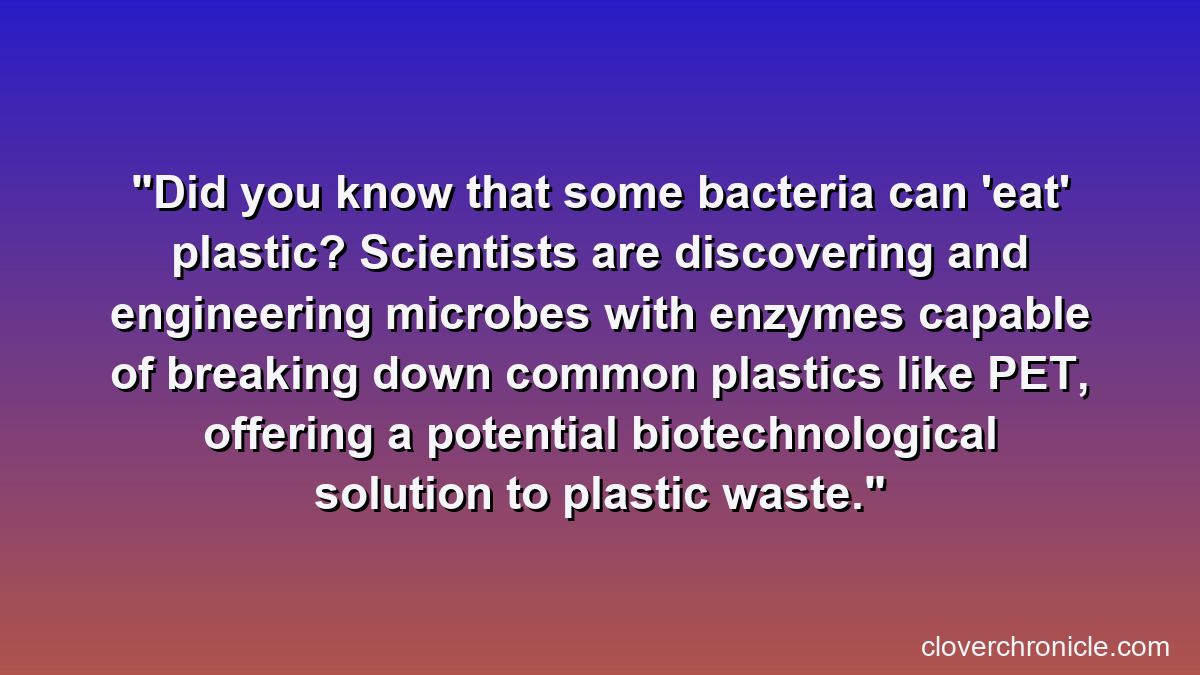
Advanced genetic engineering techniques, including CRISPR/Cas9, are enabling the development of “designer microbes” with enhanced capabilities for pollutant degradation or detection. These engineered organisms can be optimized to target specific persistent pollutants, resist toxic conditions, or even produce valuable byproducts during remediation. Researchers are actively exploring how to safely deploy these organisms in the environment for more effective cleanup operations.
Further reading on advances in environmental biotechnology with CRISPR/Cas9 can be found here.
Biosensors and Monitoring
Biotechnology is revolutionizing environmental monitoring through the development of highly sensitive and specific biosensors. These devices use biological components (e.g., enzymes, antibodies, DNA) coupled with transducers to detect pollutants in real-time, providing rapid assessment of environmental quality and helping to identify contamination sources quickly. This enables proactive pollution management rather than reactive cleanup.
Circular Economy Integration
Environmental biotechnology is a key enabler of the circular economy, which aims to eliminate waste and continuously use resources. By transforming waste into valuable resources (e.g., bioenergy, bioplastics, biochemicals), it closes resource loops and reduces reliance on virgin materials. This systemic shift moves away from the linear “take-make-dispose” model towards a regenerative approach. To understand the broader impact of biotechnology on resource sustainability, you might find our article on White Biotechnology: Revolutionizing Industrial Processes Sustainably particularly insightful.
An interesting project on symbiotic, circular bioremediation systems and biotechnology can be found on Cordis Europa.
Benefits and Challenges of Environmental Biotechnology
While environmental biotechnology offers immense promise, it also faces certain hurdles.
✅ Advantages
- Eco-Friendly: Often uses natural processes, leading to less harm to ecosystems.
- Cost-Effective: Can be less expensive than traditional physical or chemical methods, especially for large-scale or long-term remediation.
- Reduced Waste: Often degrades pollutants into benign substances, rather than simply transferring them to another medium.
- In Situ Application: Many techniques can be applied directly at the contaminated site, minimizing disruption and transportation costs.
- Resource Recovery: Can transform waste into valuable products (e.g., energy, fertilizers).
🚧 Hurdles and Future Outlook
- Site Specificity: Effectiveness can vary significantly depending on soil type, contaminant concentration, climate, and microbial populations.
- Slow Process: Bioremediation can sometimes take longer than physical or chemical methods.
- Public Perception: Concerns about genetically modified organisms (GMOs) in environmental applications exist, though research is focused on safety and containment.
- Regulatory Challenges: Developing clear regulatory frameworks for new biotechnological applications can be complex.
Despite these challenges, the trajectory for environmental biotechnology is overwhelmingly positive. Continued research and development, coupled with growing public and governmental demand for sustainable solutions, will drive its wider adoption and refinement. The future of pollution control is undoubtedly biological, integrating seamlessly with our understanding of The Code of Life: Decoding Genetics, Evolution, and Existence to build a more sustainable future.

Recommended Video
Conclusion
Environmental biotechnology stands as a beacon of hope in the global fight against pollution. By harnessing the incredible power of biological systems, we can develop effective, sustainable, and often more economical solutions for cleaning up our planet. From pioneering bioremediation techniques to cutting-edge genetic engineering and advanced biosensors, this field is continually evolving to meet the complex challenges of environmental degradation.
Embracing these biotechnological innovations is not just an option but a necessity for fostering a healthier environment, recovering valuable resources, and paving the way for a truly sustainable future. As our understanding of life’s intricate processes deepens, so too does our capacity to leverage them for the good of the Earth.
Frequently Asked Questions
What is environmental biotechnology?
Environmental biotechnology is a field that applies biological processes, organisms, or systems to solve environmental problems, such as pollution control, waste management, and renewable energy production.
How does bioremediation work?
Bioremediation is a core application where microorganisms (bacteria, fungi) are used to degrade or detoxify pollutants in soil, water, or air. They convert harmful substances into less toxic or harmless compounds.
What are the benefits of using biotechnology for pollution control?
Benefits include reduced reliance on harsh chemicals, lower energy consumption, the ability to treat complex mixtures of pollutants, and often more sustainable and cost-effective long-term solutions compared to traditional methods.
Can environmental biotechnology help with climate change?
Yes, it contributes through carbon capture technologies, sustainable biofuel production, enhancing agricultural practices to reduce greenhouse gas emissions, and improving waste management to minimize methane release.