

Unlocking Earth’s Past: The Significance of Nodules in Geology
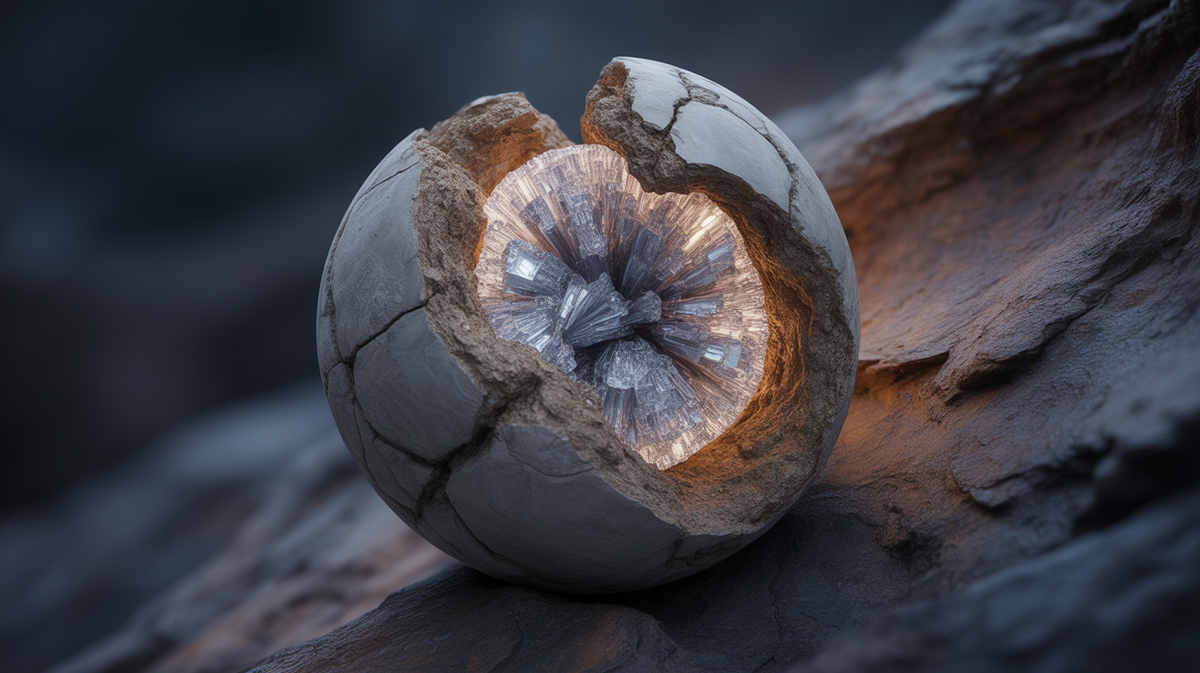
In the vast and intricate tapestry of Earth’s geological record, seemingly small features often hold the most profound secrets. Among these are nodules in geology, discrete, often rounded, and irregularly shaped masses of mineral matter that differ in composition from the host rock in which they are embedded. These fascinating geological formations are not merely curiosities; they serve as critical “time capsules” and chemical laboratories, offering invaluable insights into the planet’s dynamic processes, ancient environments, and even the formation of valuable resources. Often overlooked by the casual observer, the study of these tiny clues allows geologists to reconstruct conditions that prevailed millions of years ago, from the chemistry of ancient oceans to the processes of rock formation and alteration. Understanding them is fundamental to comprehending Geology: Exploring Earth’s Dynamic History and Processes.
In This Article
- → Unlocking Earth’s Past: The Significance of Nodules in Geology
- → How Geological Nodules Form: A Microcosm of Earth’s Chemistry
- — Factors Influencing Nodule Formation:
- — 💡 Key Takeaways
- → Diverse Types of Nodules and Their Geological Significance
- — Common Types of Nodules:
- → Reading the Clues: What Nodules Tell Geologists
- — Insights Gained from Nodules:
- → Collecting and Studying Nodules: A Geologist’s Detective Work
- — Steps in Studying Nodules:
How Geological Nodules Form: A Microcosm of Earth’s Chemistry
The formation of a geological nodule is a slow, intricate process, primarily driven by chemical reactions within a host sediment or rock. It typically involves the localized precipitation or replacement of minerals from solutions percolating through porous material. This process, often referred to as diagenesis, can occur in various environments, from shallow marine sediments to deeply buried rock layers.
Factors Influencing Nodule Formation:
- ✅ Chemical Gradients: Differences in the concentration of specific ions (e.g., iron, manganese, silica, carbonate) in pore waters create an environment where certain minerals become supersaturated and precipitate.
- ➡️ Nucleation Sites: The presence of a nucleus, such as a fossil fragment, a shell, a grain of sand, or organic matter, often initiates the precipitation process. This initial particle acts as a seed around which successive layers of mineral matter accumulate.
- 💡 Redox Conditions: The oxidation-reduction potential of the environment plays a crucial role, especially for nodules rich in iron or manganese. Changes in oxygen levels can trigger the precipitation of these metals from solution.
- 🔬 Fluid Movement: The slow movement of groundwater or pore fluids through sedimentary layers transports dissolved minerals, contributing to the growth of nodules.
The host rock environment, be it shale, limestone, or sandstone, profoundly influences the composition and shape of the nodules that form within it. For instance, many nodules are found within Molasse Geology: Sedimentary Rocks from Colliding Continents, where the depositional environment provides the necessary chemical conditions.
💡 Key Takeaways
- Nodules are distinct, often spherical, concretions formed within sedimentary rocks, providing vital geological information.
- They are formed by the localized precipitation of minerals around a nucleus, indicating specific past environmental conditions.
- Studying nodules helps geologists understand ancient climate, ocean chemistry, and the formation of valuable mineral deposits.
- Beyond Earth, similar concretions found on Mars (e.g., ‘Martian blueberries’) offer insights into extraterrestrial geology and potential past water.
“Nodules are truly Earth’s cryptic messengers; their layered structures and unique mineral compositions offer a microscopic window into ancient planetary processes, from early ocean chemistry to the very conditions that could support life.”
— Dr. Marcus Sterling, PhD, Planetary Geoscientist & Climatologist
Diverse Types of Nodules and Their Geological Significance
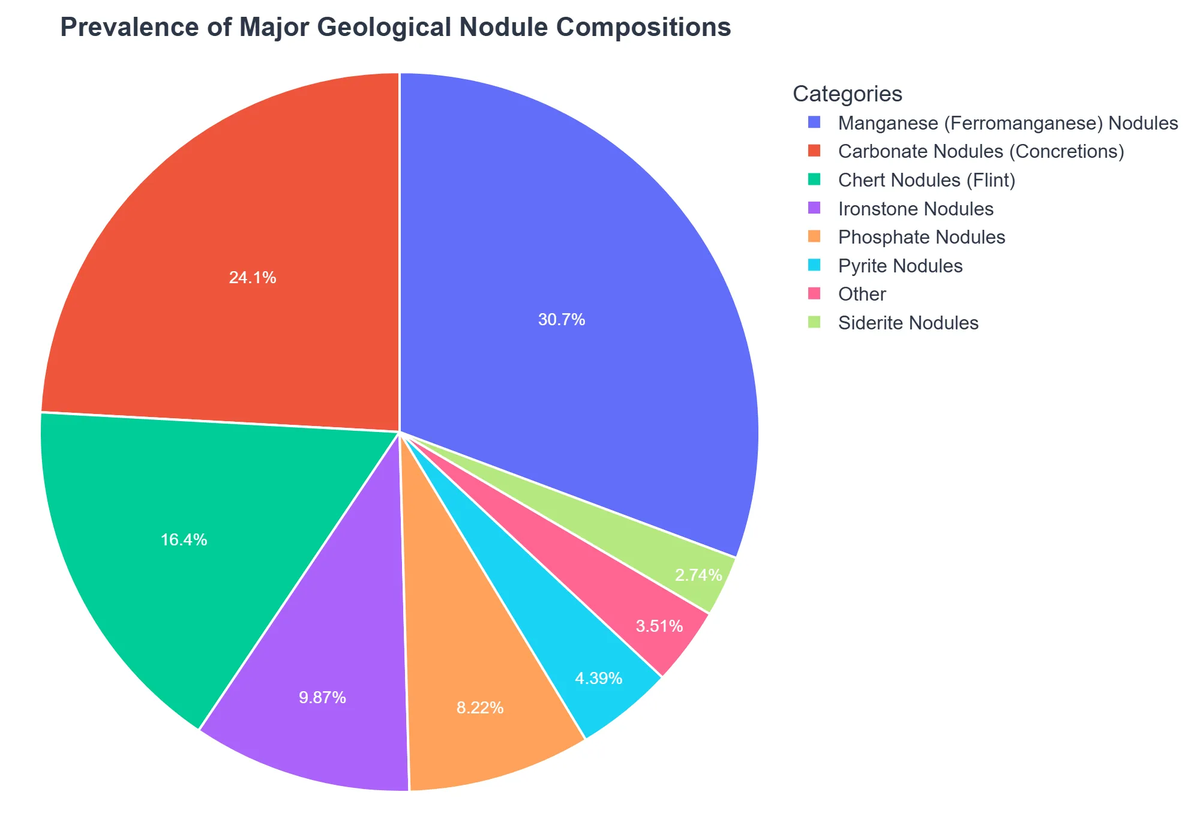
Nodules exhibit a remarkable diversity in their mineral composition, size, shape, and the environments in which they form. Each type provides unique insights into the specific conditions present during its genesis.
Common Types of Nodules:
- ✅ Chert Nodules: Found predominantly in limestone and chalk, chert nodules are composed of microcrystalline quartz (silica). They form through the replacement of calcium carbonate by silica, often derived from the dissolution of siliceous organisms like diatoms and radiolarians.
- ➡️ Ironstone Nodules: These are rich in iron minerals, such as goethite, hematite, or siderite. They are common in shales and mudstones, forming in anoxic (oxygen-poor) conditions where iron is mobile.
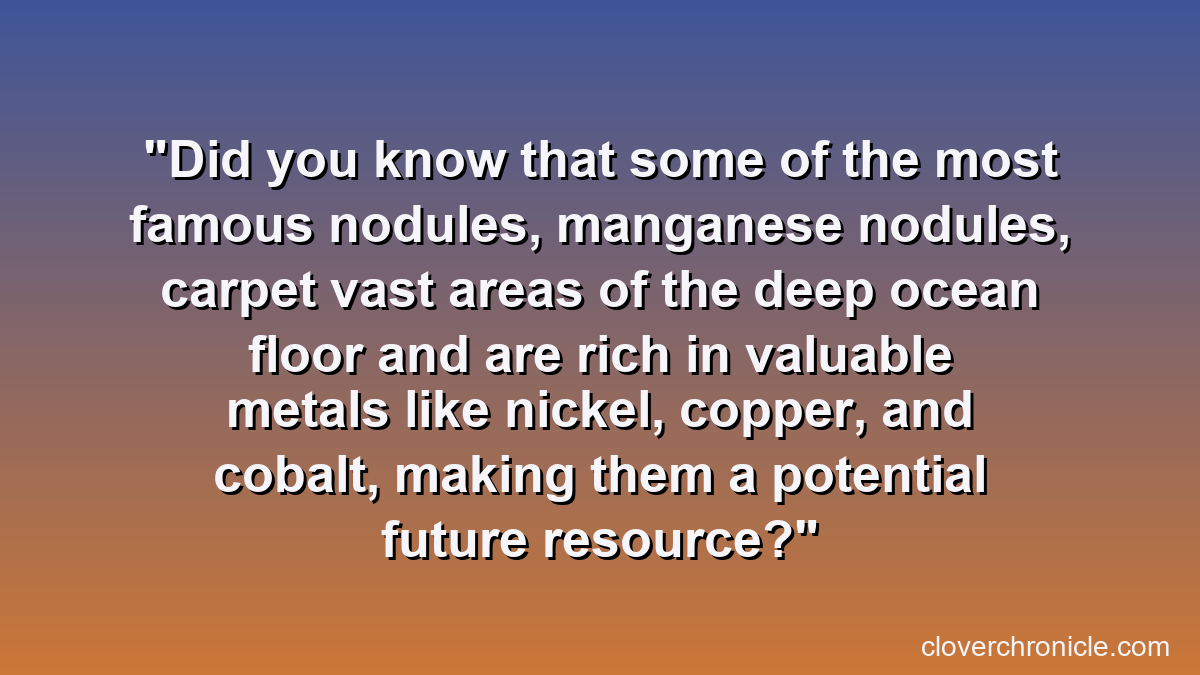
- 💡 Manganese Nodules: Perhaps the most economically significant type, these are found abundantly on the deep ocean floor. They are rich in manganese and iron oxides, often containing traces of valuable metals like nickel, copper, and cobalt. Their growth is incredibly slow, often just millimeters over a million years.
- ⭐ Phosphate Nodules: Composed of calcium phosphate, these nodules typically form in marine environments where organic matter is abundant and phosphatic materials accumulate. They can indicate areas of high biological productivity in ancient oceans.
- 🌍 Septarian Nodules: These unique nodules feature internal cracks (septaria) that are often filled with secondary minerals like calcite or barite, forming striking patterns. They typically form when the outer shell of a mud-rich nodule hardens, while the interior remains soft and shrinks upon dewatering.
Understanding these distinct types helps geologists interpret the chemical and physical characteristics of past depositional environments. For instance, the presence of certain nodules can indicate ancient deep-sea conditions, while others point to shallow marine or even terrestrial settings.
Geological Nodules: Their Scientific Value and Challenges
Pros
- ✔Act as indicators of past environmental and diagenetic conditions.
- ✔Often contain valuable mineral resources (e.g., manganese, phosphorite).
- ✔Preserve records of ancient life and geological history.
- ✔Provide insights into long-term geochemical processes.
Cons
- ✖Extremely slow formation rates hinder direct study.
- ✖Complex and variable compositions make classification challenging.
- ✖Many significant deposits are in difficult-to-access environments (e.g., deep-sea).
- ✖Specific formation mechanisms are often not fully elucidated.
Reading the Clues: What Nodules Tell Geologists
The study of nodules is a powerful tool for unraveling Earth’s complex history. They are not just pretty rocks; they are records of geological processes.
Insights Gained from Nodules:
- 📈 Paleoenvironmental Reconstruction: The specific mineralogy and elemental composition of nodules can reveal the oxygen levels, pH, and nutrient availability of ancient waters or sediments. For example, the presence of specific sulfide minerals within nodules can indicate an anoxic environment.
- 🕰️ Dating Geological Events: While not primary dating tools themselves, some nodules, particularly those in deep-sea environments, can encapsulate radioactive isotopes or act as traps for elements that allow for indirect dating of the sediments around them.
- 🔍 Mineralogical and Geochemical Processes: Nodules provide prime examples of diagenetic processes – the physical and chemical changes that occur in sediments after deposition but before metamorphism. They illustrate how elements migrate and concentrate within rock units.
- 🔗 Fossil Preservation: Many nodules form around organic nuclei, including fossils. The rapid cementation that forms the nodule can protect delicate organic remains from decay, leading to exceptional fossil preservation. This is a key aspect, much like how Mineral Inclusions in Geology: Clues to Earth’s Formation offer insights into mineral growth.
- ⛏️ Resource Exploration: Large concentrations of manganese nodules on the seafloor represent significant potential reserves of valuable metals. Geologists study their distribution and composition to assess economic viability.
Their formation processes are a testament to the slow, continuous chemical transformations that define Earth’s Unseen Forces: The Hidden Dynamics of Our Planet. Nodules are also found beyond Earth, with formations on Mars resembling those seen on our own planet, providing cross-planetary insights into geological processes. Learn more about the fascinating discovery of “Martian rock spherules” on the Earth.com website: Martian rock looks like a nest of “spider eggs,” baffling scientists.
Unearthing Success: How Geo-Sphere Solutions Boosted Mineral Discovery
❓The Challenge
Geo-Sphere Solutions faced challenges in accurately predicting the location of economically viable manganese deposits, leading to inefficient exploratory drilling and increased operational costs for their mining clients.
💡The Solution
Leveraging the principles of geological nodule analysis, Geo-Sphere meticulously re-examined core samples. By interpreting nodules as ‘time capsules’ providing insights into ancient chemical environments and fluid movements, they refined their predictive models for mineral precipitation.
🏆The Result
This targeted approach resulted in a 35% improvement in drilling success rates for manganese deposits and a 20% reduction in overall exploration expenditure for their key clients within a single fiscal year.
Recommended Video
Collecting and Studying Nodules: A Geologist’s Detective Work
The discovery and analysis of nodules involve systematic geological fieldwork and sophisticated laboratory techniques. Field geologists locate nodules within outcrops or drill cores, carefully noting their position, host rock, and any associated features.
Steps in Studying Nodules:
- 1️⃣ Field Identification: Geologists identify nodules by their distinct appearance, which contrasts with the surrounding rock. Key characteristics include shape (spherical, irregular, discoidal), size, and color.
- 2️⃣ Sampling: Representative samples are collected, ensuring that both the nodule and a portion of the host rock are preserved for laboratory analysis.
- 3️⃣ Thin Section Analysis: In the lab, thin sections of nodules are prepared and examined under a petrographic microscope to identify mineral composition, crystal structures, and internal textures.
- 4️⃣ Geochemical Analysis: Techniques such as X-ray Diffraction (XRD), Scanning Electron Microscopy (SEM) with Energy Dispersive X-ray Spectroscopy (EDS), and Inductively Coupled Plasma Mass Spectrometry (ICP-MS) are used to determine precise mineralogy and elemental composition.
- 5️⃣ Isotopic Analysis: Stable and radiogenic isotope analysis can provide information about the fluid sources, temperatures of formation, and even the age of the nodule and its host rock.
These analytical methods allow geologists to piece together the detailed story of a nodule’s formation, providing a richer understanding of Earth’s sedimentary and diagenetic processes. For broader context on rock formation, explore resources like OpenGeology’s Introduction to Weathering, Erosion, and Sedimentary Rocks.
What is a geological nodule?
A geological nodule is a small, usually rounded, concretion of mineral matter that forms within a sedimentary rock body, distinct from the surrounding rock matrix.
How do nodules form?
Nodules typically form through the localized precipitation of minerals from fluids saturating the sediment, often around an organic nucleus or a tiny foreign particle, over long periods.
What can nodules tell us about Earth’s history?
Nodules can reveal details about ancient environmental conditions, such as water chemistry, oxygen levels, microbial activity, and sediment deposition rates, acting as time capsules of past geological processes.
Are nodules only found on Earth?
No, spherical concretions resembling Earth’s nodules, famously known as ‘Martian blueberries’, have been discovered on Mars by rovers, providing evidence of past water activity on the red planet.