

Understanding Brain Bias: The Shortcuts Our Minds Take
Our brains are magnificent, complex organs, capable of incredible feats of thought, creativity, and problem-solving. Yet, for all their sophistication, they often rely on mental shortcuts, known as cognitive biases, to navigate the vast amount of information we encounter daily. These biases are systematic patterns of deviation from rationality in judgment, leading us to perceive reality in a skewed way.
💡 Key Takeaways
- Cognitive biases are systematic errors in thinking that affect decisions and judgments.
- These biases are often unconscious and serve as mental shortcuts to process information quickly.
- Understanding common biases like confirmation bias or anchoring effect can improve critical thinking.
- Developing strategies to mitigate bias allows for a more objective view of reality and better decision-making.
“Our brains are masterful storytellers, often prioritizing efficiency over accuracy. Recognizing how these innate biases weave our personal narratives is the first step towards true self-awareness and unlocking our full cognitive potential.”
— Dr. Eleanor Vance, PhD, Cognitive Neuroscientist & Human Potential Researcher
Far from being flaws, these innate cognitive tendencies are often evolutionary adaptations designed to help us make quick decisions and conserve mental energy. In a world saturated with stimuli, our brains employ these biases to process information rapidly, sometimes at the expense of accuracy or objectivity. Understanding this fundamental aspect of The Human Enigma: Unlocking the Secrets of Our Body and Mind is crucial to deciphering how we perceive the world around us.
What is a Cognitive Bias?
At its core, a cognitive bias is a predictable error in thinking that affects the decisions and judgments people make. It’s not about being illogical or unintelligent; it’s about the inherent wiring of our brains. These biases influence everything from our memories and perceptions to how we interpret data and interact with others.
- ✅ They are systematic: Biases are not random errors but consistent patterns.
- ✅ They are unconscious: Often, we are unaware of their influence on our thoughts and actions.
- ✅ They are widespread: Everyone is susceptible to cognitive biases, regardless of intelligence or background.
The Evolutionary Roots of Bias
The existence of brain biases can largely be attributed to our evolutionary history. Our ancestors needed to make rapid decisions to survive threats and seize opportunities. The luxury of exhaustive analysis was often unavailable. Therefore, mechanisms that allowed for quick judgments, even if imperfect, were favored.
For instance, an innate bias to detect danger quickly (e.g., seeing a shadow and assuming it’s a predator) was far more beneficial for survival than waiting for complete information, even if it led to false alarms. This “better safe than sorry” approach, or a specific safety bias, is deeply ingrained.
For a deeper dive into how our minds developed, explore our article on Evolved Brain: How Our Minds Adapted for Survival and Society.
In This Article
- → Understanding Brain Bias: The Shortcuts Our Minds Take
- — 💡 Key Takeaways
- — What is a Cognitive Bias?
- — The Evolutionary Roots of Bias
- → Common Brain Biases That Shape Our Worldview
- — 🧠 Confirmation Bias
- — 💡 Anchoring Bias
- — 📈 Escalation of Commitment Bias
- — 🎲 Illusion of Control Bias
- — 💖 Rosy Retrospection Bias
- → The Impact of Brain Biases on Daily Life and Decision-Making
- — Personal Decisions
- — Professional & Societal Ramifications
- → Strategies to Mitigate the Influence of Bias
- — Cultivating Awareness
- — Employing Critical Thinking
- — Seeking Diverse Perspectives
Common Brain Biases That Shape Our Worldview
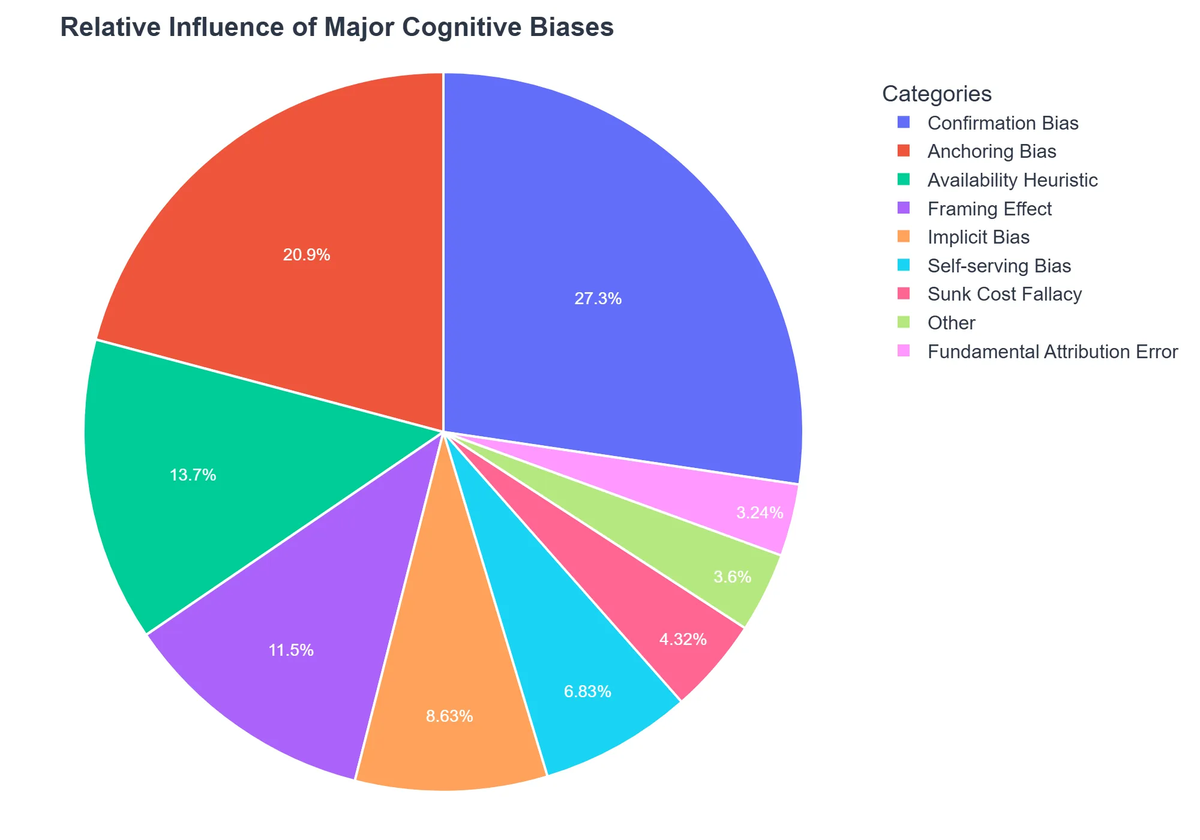
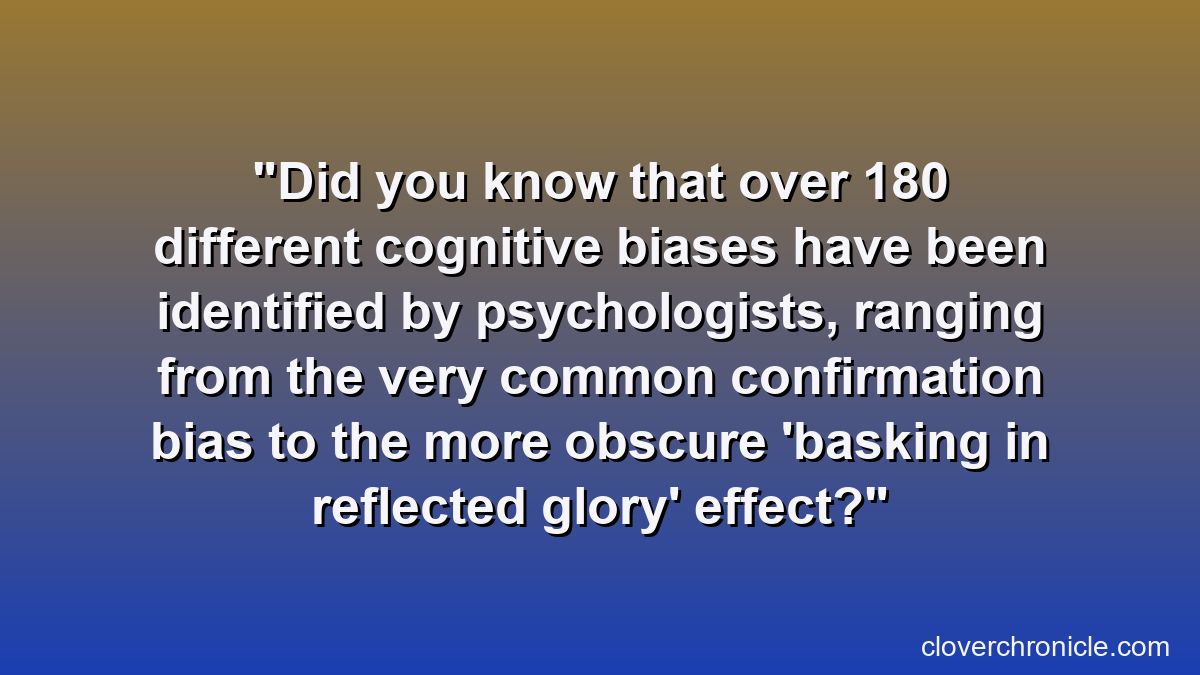
There are dozens of identified cognitive biases, each subtly twisting our perception and influencing our choices. Here, we highlight some prevalent ones that significantly impact how we process information and interact with reality.
🧠 Confirmation Bias
This is perhaps one of the most pervasive biases. Confirmation bias describes our tendency to seek out, interpret, and remember information in a way that confirms our pre-existing beliefs or hypotheses. We give more weight to evidence that supports what we already think and dismiss or downplay evidence that contradicts it.
- ➡️ Example: If you believe a certain politician is corrupt, you’re more likely to notice and remember news stories that highlight their questionable actions, while ignoring positive reports.
- ➡️ Impact: Reinforces existing beliefs, making it difficult to change one’s mind even in the face of contradictory evidence.
💡 Anchoring Bias
Anchoring bias occurs when we rely too heavily on the first piece of information offered (the “anchor”) when making decisions, regardless of whether that information is relevant. Subsequent judgments are then made by adjusting from this anchor, often insufficiently.
- ➡️ Example: When negotiating a price, the initial offer often sets the range for subsequent counter-offers, even if the initial offer was unreasonably high or low.
- ➡️ Impact: Can lead to poor financial decisions or skewed perceptions of value.
📈 Escalation of Commitment Bias
Sometimes referred to as the “sunk cost fallacy,” escalation of commitment bias describes our tendency to continue investing resources (time, money, effort) into a failing endeavor simply because we’ve already invested so much. We often rationalize continued investment rather than cutting our losses.
How Ignite Digital Marketing Boosted Conversions by Overcoming Cognitive Bias
❓The Challenge
Ignite Digital Marketing frequently found their campaigns underperforming, realizing their strategic decisions were often based on internal assumptions and selective market research interpretation rather than true audience needs.
💡The Solution
After studying the principles of cognitive biases, particularly confirmation bias, the agency implemented a mandatory ‘Bias-Aware Data Analysis’ framework. This involved cross-functional reviews and deliberate seeking of disconfirming evidence in all market research and campaign strategy sessions.
🏆The Result
Within two quarters, client campaign conversion rates saw an average uplift of 22%, and client retention improved by 10% due to more accurate audience targeting and messaging.
- ➡️ Example: Continuing to fix an old, constantly breaking car because you’ve already spent thousands on repairs, even though buying a new one would be more economical long-term.
- ➡️ Impact: Can lead to significant resource waste and missed opportunities.
🎲 Illusion of Control Bias
The illusion of control bias is the tendency for people to overestimate their degree of influence over external events, particularly when those events are largely determined by chance. It’s the belief that we have more control than we actually do.
- ➡️ Example: Believing you can influence the outcome of a dice roll by throwing it a certain way, or feeling more confident about a lottery ticket you chose yourself.
- ➡️ Impact: Can lead to excessive risk-taking or an inability to accurately assess real threats.
💖 Rosy Retrospection Bias
This delightful bias, also known as nostalgic memory, is the tendency to remember past events more positively than they actually were. We often downplay negative aspects and exaggerate positive ones, making past experiences seem better in hindsight.
- ➡️ Example: Remembering a past vacation as purely blissful, forgetting the stressful travel or minor mishaps that occurred.
- ➡️ Impact: Can lead to dissatisfaction with the present or an unrealistic view of the past, impacting decision-making.
For a more exhaustive exploration of how various biases distort our thinking, refer to our comprehensive article on Types of Cognitive Bias: Understanding Distortions in Thinking.
The Impact of Brain Biases on Daily Life and Decision-Making
The influence of cognitive biases isn’t confined to abstract psychological concepts; they profoundly impact our everyday lives, from personal choices to societal trends. These biases often play a role in our Decision-Making Biases: A Guide to Smarter Choices.
Personal Decisions
In our personal lives, biases shape our choices about everything from what we buy to who we trust. A knowledge bias, for instance, might make us overestimate the validity of our own insights, while downplaying expert opinions. This can affect health decisions, financial planning, and even relationship dynamics.
- ✅ Consumer Choices: Marketing often exploits biases like anchoring (initial price setting) or framing (how information is presented) to influence purchasing behavior. Consumers might perceive a “limited-time offer” as more valuable due to scarcity bias, even if the actual saving is negligible.
- ✅ Health Behaviors: Optimism bias can lead individuals to underestimate their risk of illness or injury, affecting preventative health measures.
- ✅ Relationship Dynamics: Confirmation bias can lead to relationship conflicts when individuals selectively interpret their partner’s actions to fit pre-conceived notions.
Professional & Societal Ramifications
Beyond the individual, brain biases have significant ramifications for organizations, public policy, and societal well-being. From hiring decisions to judicial rulings, biases can lead to systemic unfairness and suboptimal outcomes. The World Economic Forum highlights how these biases can affect how we see the world, impacting global issues. Learn more about cognitive biases and their global impact.
- ✅ Workplace Decisions: Hiring and promotion decisions can be marred by affinity bias (favoring those similar to us) or halo effect (a positive impression in one area influencing overall judgment).
- ✅ Legal System: Eyewitness testimony can be influenced by memory biases, and jury decisions by confirmation bias or belief perseverance.
- ✅ Political Discourse: Echo chambers and filter bubbles online are exacerbated by confirmation bias, leading to increased polarization and reduced willingness to consider opposing viewpoints.
- ✅ Social Media: Platforms are often designed to leverage biases, creating feedback loops that can impact mental health and perception. For instance, social media algorithms often amplify content that confirms existing beliefs, deepening the impact of confirmation bias. You can read more about this on Humane Tech’s insights on social media and the brain.
Recommended Video
Strategies to Mitigate the Influence of Bias
While we can’t eliminate brain biases entirely—they are, after all, part of our cognitive architecture—we can certainly reduce their negative impact. Awareness is the first critical step, followed by deliberate strategies to counter their influence.
Cultivating Awareness
Recognizing that biases exist and acknowledging our own susceptibility to them is paramount. This metacognitive awareness allows us to pause and reflect before reacting or making judgments. Education about different types of biases can make us more vigilant.
- 💡 Self-Reflection: Regularly question your assumptions and beliefs. Ask yourself: “Why do I believe this? What evidence am I ignoring?”
- 💡 Learn the Biases: Familiarize yourself with common cognitive biases. The more you know, the easier it is to spot them in yourself and others.
- 💡 Perspective-Taking: Actively try to see situations from different viewpoints, especially those that challenge your own.
Employing Critical Thinking
Active and disciplined thinking can help us override our automatic biased responses. This involves moving beyond superficial processing to deeper analysis.
- ✅ Challenge Assumptions: Don’t just accept information at face value. Ask “how?” and “why?”
- ✅ Seek Disconfirming Evidence: Actively look for information that contradicts your initial hypotheses. This directly combats confirmation bias.
- ✅ Consider Alternatives: When making decisions, force yourself to generate multiple options and consider their pros and cons, rather than defaulting to the first one that comes to mind.
- ✅ Use Data and Evidence: Rely on objective data and empirical evidence rather than intuition or anecdotal information, particularly for important decisions.
Seeking Diverse Perspectives
One of the most effective ways to counteract individual biases is to engage with diverse groups of people and sources of information. This expands your frame of reference and exposes you to different ways of thinking.
- ➡️ Diverse Teams: In professional settings, ensure decision-making bodies are composed of individuals with varied backgrounds, experiences, and viewpoints.
- ➡️ Feedback Loops: Solicit feedback from people who are likely to offer different opinions or criticisms.
- ➡️ Multiple Information Sources: Don’t rely on a single news outlet or social media feed. Diversify your information consumption to get a more balanced view.
By consciously implementing these strategies, we can begin to untangle the web of brain bias, enabling clearer thinking and more rational decision-making in an increasingly complex world. Understanding Types of Bias in Psychology: A Complete Guide is a significant step towards mastering your mind.
What is cognitive bias?
Cognitive bias refers to systematic patterns of deviation from norm or rationality in judgment. These are often mental shortcuts the brain uses to process information efficiently, leading to skewed perceptions.
How do biases affect daily life?
Biases can influence everything from what news we believe to who we trust, impacting personal relationships, financial decisions, political views, and even our overall happiness.
Can you truly eliminate brain bias?
While complete elimination of cognitive biases is unlikely, awareness and specific strategies can significantly reduce their impact. By understanding them, we can make more objective and rational choices.
What are common examples of cognitive bias?
Common examples include confirmation bias (seeking information that confirms existing beliefs), anchoring bias (over-relying on the first piece of information), and availability heuristic (overestimating the likelihood of events based on vividness of recall).