

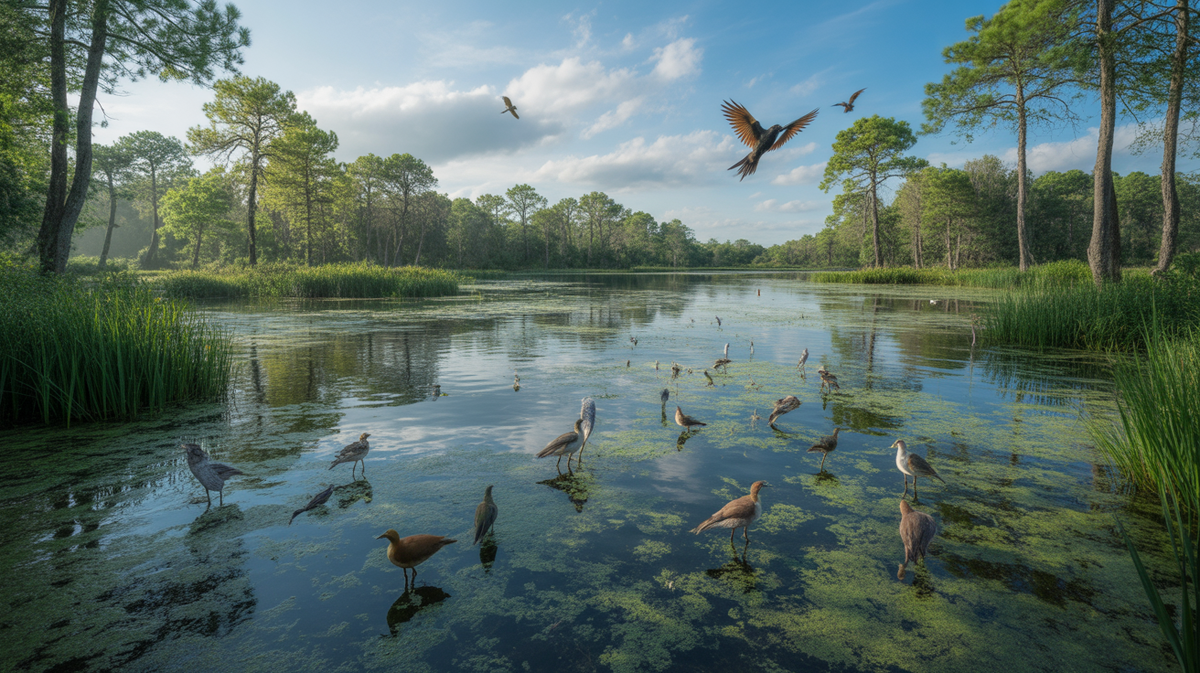
What are Wetlands? Nature’s Vital Water Filters
Wetlands are unique land areas saturated with water, either permanently or seasonally. They stand as a critical interface between terrestrial and aquatic environments, exhibiting characteristics of both. This saturation shapes the soil type (hydric soils) and dictates the types of plants (hydrophytes) and animals that can thrive there.
💡 Key Takeaways
- Wetlands support disproportionately high biodiversity, acting as critical habitats for numerous species.
- They provide essential ecosystem services like natural water filtration, flood control, and carbon sequestration.
- Wetland degradation poses significant threats to global biodiversity and human well-being.
- Conservation and restoration efforts are vital for maintaining the ecological balance and health of our planet.
“From a genetic perspective, wetlands are unparalleled evolutionary laboratories, fostering unique adaptive radiations and preserving invaluable genetic diversity vital for our planet’s future.”
— Julian Aris, PhD, Geneticist & Evolutionary Biologist
Often referred to as the “kidneys of the landscape” or “biological supermarkets,” wetlands play an outsized role in maintaining ecological balance. Their diverse conditions, from freshwater marshes to saltwater swamps, create specific conditions that support an incredible array of life, contributing significantly to global biodiversity. For a deeper understanding of life’s intricate web, explore The Code of Life: Decoding Genetics, Evolution, and Existence.

In This Article
- → What are Wetlands? Nature’s Vital Water Filters
- — 💡 Key Takeaways
- — Understanding Wetland Classification
- → Why are Wetlands Crucial for Biodiversity?
- — ➡️ Key Contributions to Biodiversity:
- → Types of Wetland Ecosystems and Their Unique Biodiversity
- — Coastal Wetland Habitats
- — Freshwater Wetland Habitats
- → Threats to Wetlands and Their Biodiversity
- — Major Threats:
- → The Imperative of Wetland Conservation
- — Key Strategies for Wetland Conservation:
Understanding Wetland Classification
Wetlands are not a monolithic category; they encompass a variety of distinct ecosystems, each with its own defining characteristics:
- ✅ Marshes: Characterized by herbaceous (non-woody) vegetation like grasses, reeds, and sedges. They can be freshwater or saltwater and are often found along rivers, lakes, and coastlines.
- ✅ Swamps: Dominated by woody plants, such as trees and shrubs. Swamps can also be freshwater (e.g., cypress swamps) or saltwater (e.g., mangrove swamps).
- ✅ Bogs: Acidic, nutrient-poor wetlands primarily fed by rainwater. They are characterized by peat accumulation and unique vegetation like sphagnum moss.
- ✅ Fens: Similar to bogs, but fed by groundwater and surface water, making them less acidic and more nutrient-rich. They often support a greater diversity of plant life than bogs.
- ✅ Estuaries: Areas where freshwater rivers meet the ocean, creating brackish water conditions. These are incredibly productive wetland ecosystems, crucial as nurseries for many marine species.
Why are Wetlands Crucial for Biodiversity?
Wetlands are absolute hotspots for biodiversity, supporting disproportionately high numbers of species relative to their global land area. This richness is a primary reason why wetland ecosystems are considered so vital.
Wetlands and Biodiversity: Benefits and Challenges
Pros
- ✔Support exceptional biodiversity, acting as critical habitats.
- ✔Serve as natural water purification and filtration systems.
- ✔Provide essential flood control and storm protection.
- ✔Contribute to climate change mitigation through carbon sequestration.
Cons
- ✖Highly vulnerable to human development, drainage, and pollution.
- ✖Threatened by climate change impacts like sea-level rise and altered rainfall.
- ✖Can be sources of disease vectors (e.g., mosquitoes) under certain conditions.
Their unique hydrological conditions, which fluctuate between wet and dry, create a dynamic environment that prevents any single species from dominating. This constant change fosters adaptation and specialization, leading to a wide variety of plant and animal life. As discussed in Ecosystem Biodiversity: The Vital Link Between Life and Environment, the health of specific habitats directly impacts the overall health of the planet’s living systems.
➡️ Key Contributions to Biodiversity:
- 💡 Habitat Provision: Wetlands provide essential breeding grounds, nurseries, and feeding habitats for countless species. This includes a vast array of amphibians, reptiles, insects, mammals, and especially birds. Many migratory bird species rely entirely on wetland habitats for resting and feeding during their long journeys.
- 💡 High Primary Productivity: Due to ample water and nutrients, wetlands are among the most productive ecosystems on Earth. This high productivity forms the base of complex food webs, supporting a rich diversity of consumers.
- 💡 Genetic Diversity: The isolation and specific environmental pressures within some wetland habitats can lead to the evolution of unique species found nowhere else, contributing significantly to genetic diversity.
- 💡 Water Quality Improvement: Wetlands act as natural filters, trapping pollutants, sediments, and excess nutrients from water runoff. This purification process benefits not only human communities but also aquatic organisms downstream. According to the US EPA, wetlands improve water quality by removing pollutants.
- 💡 Climate Regulation: Peatlands, a type of wetland, store vast amounts of carbon, playing a crucial role in mitigating climate change. Coastal wetland habitats, like mangroves and salt marshes, also protect shorelines from erosion and storm surges.
Types of Wetland Ecosystems and Their Unique Biodiversity
The variety within wetland ecosystems directly correlates with the incredible diversity of life they harbor. Each type of wetland habitat provides a niche for specialized flora and fauna.
EcoSolutions Consulting Secures Vital Wetland Preservation
❓The Challenge
A regional planning commission client faced significant public and regulatory pushback for a development project due to underestimation of a local wetland’s ecological value.
💡The Solution
EcoSolutions leveraged a deep understanding of wetland classification and their critical biodiversity contributions, educating stakeholders on the specific roles of marshes, swamps, and fens within the project area as vital habitats and natural water filters.
🏆The Result
Their comprehensive ecological assessment and public education campaign led to the project being redesigned to preserve 85% of the critical wetland area and secured an additional $1.5 million in regional conservation funding.
Coastal Wetland Habitats
These areas, where land meets sea, are exceptionally productive. Estuaries, salt marshes, and coastal wetland habitats are crucial for marine life. For example, mangroves, which are tropical and subtropical coastal wetlands, serve as vital nurseries for fish, crustaceans, and mollusks, and are home to unique bird and mammal species. Their biodiversity is explored in more detail in Mangrove Biodiversity: Coastal Ecosystems Under Threat.
Freshwater Wetland Habitats
Freshwater marshes, swamps, bogs, and fens support a different, but equally rich, array of species. From beavers and otters to countless species of frogs, turtles, and fish, these wetlands are teeming with life. They are critical for migratory waterfowl and provide vital breeding grounds for amphibians, many of which are facing global population declines.
Ontario Nature highlights that wetlands are biodiversity support systems, emphasizing their role in providing critical habitat for a wide range of species, including many at-risk plants and animals.
Threats to Wetlands and Their Biodiversity
Despite their immense value, wetland ecosystems are among the most threatened habitats globally. Human activities pose significant risks, leading to widespread loss and degradation of these crucial areas.

Major Threats:
- 🚫 Drainage and Conversion: Historically, wetlands have been drained for agriculture, urban development, and infrastructure. This is the single largest cause of wetland loss.
- 🚫 Pollution: Runoff from agricultural fertilizers (leading to eutrophication), industrial discharges, and urban waste contaminates wetland waters, harming sensitive species and disrupting ecological processes.
- 🚫 Invasive Species: Non-native species can outcompete native flora and fauna, alter habitat structure, and disrupt food webs, leading to a decline in native biodiversity.
- 🚫 Climate Change: Rising sea levels threaten coastal wetlands, while altered precipitation patterns and increased temperatures can change hydrological regimes, affecting freshwater wetlands. Increased frequency and intensity of extreme weather events also pose risks.
- 🚫 Over-exploitation: Overfishing, unsustainable harvesting of timber (in swamp forests), and poaching can deplete populations and damage the ecological balance of wetland habitats.
The Imperative of Wetland Conservation
Given the rapid decline of wetland areas and the biodiversity they support, effective wetland conservation strategies are more critical than ever. Protecting these areas is not just an environmental issue; it’s a matter of human well-being and sustainable development.
Key Strategies for Wetland Conservation:
- ✅ Protection and Preservation: Designating wetlands as protected areas (e.g., Ramsar Sites of International Importance) safeguards them from development and degradation.
- ✅ Restoration and Rehabilitation: Actively restoring degraded wetland ecosystems by re-establishing hydrological connections, replanting native vegetation, and removing invasive species. This aligns with broader efforts in Restoring Biodiversity: Key Strategies for Ecosystem Recovery.
- ✅ Sustainable Management: Implementing practices that allow for human use of wetlands (e.g., fishing, resource harvesting) in a manner that does not compromise their ecological integrity.
- ✅ Policy and Legislation: Developing and enforcing strong environmental laws to prevent wetland destruction and pollution, and to promote responsible land use planning.
- ✅ Education and Awareness: Raising public understanding of the value of wetlands and the threats they face fosters greater support for conservation efforts.
The health of our planet’s biodiversity, from the smallest microbes to the largest mammals, is intricately linked to the health of its ecosystems. Wetlands, with their unparalleled ecological services, stand as a testament to this truth, demanding our urgent attention and protection.
Recommended Video
What defines a wetland ecosystem?
Wetlands are areas where water covers the soil, or is present either at or near the surface of the soil all year or for varying periods of time, including during the growing season. They encompass marshes, swamps, bogs, and fens.
Why are wetlands important for biodiversity?
Wetlands support an incredible variety of life, including amphibians, reptiles, birds, fish, and insects, often providing critical breeding grounds, food sources, and refuge for migratory and endangered species.
How do human activities impact wetlands?
Human activities such as drainage for agriculture or urban development, pollution, and the impacts of climate change are primary threats, leading to habitat loss, degradation, and a decline in wetland biodiversity.
What can be done to protect wetlands?
Protection involves implementing strong conservation policies, promoting sustainable land use practices, reducing pollution, and engaging in active restoration projects. Public awareness and advocacy are also crucial.