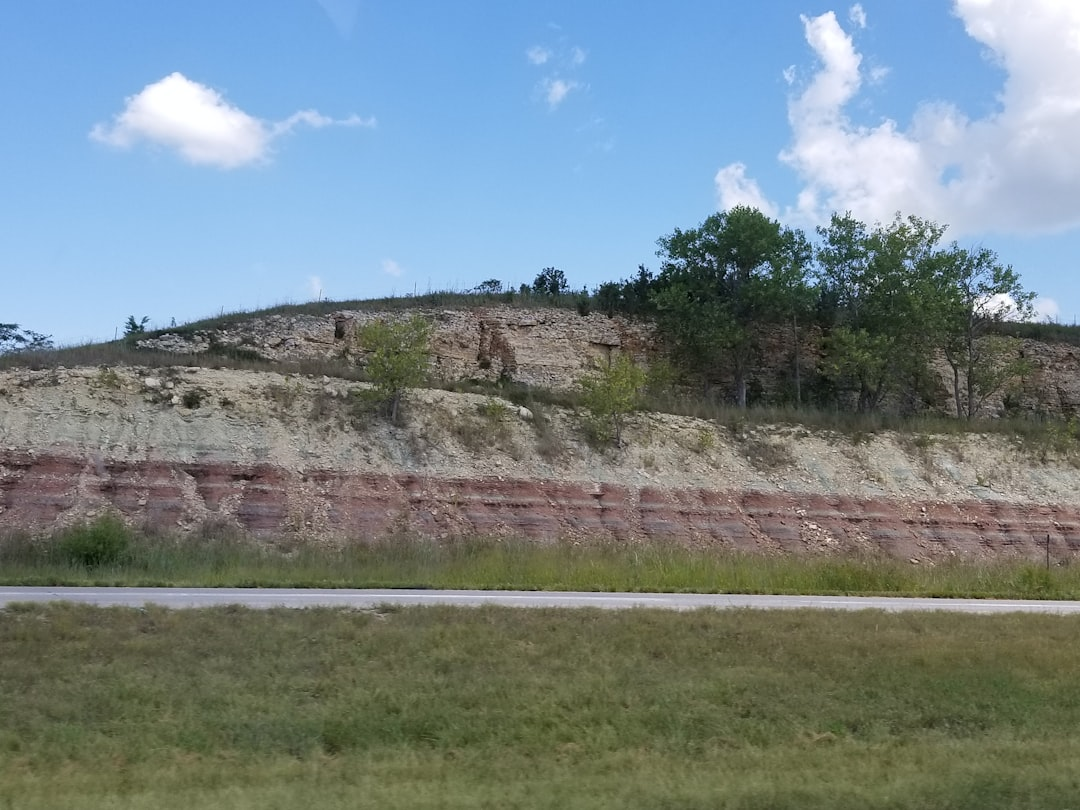
Beneath the vibrant soil, the sprawling cities, and the vast oceans lies Earth’s unyielding foundation: bedrock geology. This fundamental layer of solid rock shapes our planet’s surface, dictates the distribution of resources, and influences nearly every aspect of human life. Understanding bedrock isn’t just for geologists; it’s crucial for architects, engineers, hydrologists, and anyone interested in the deeper dynamics of our world.
💡 Key Takeaways
- Bedrock is the solid, undisturbed rock that lies beneath superficial deposits like soil and sediment.
- Its composition and structure profoundly influence a region’s topography, hydrology, and natural resource distribution.
- Understanding bedrock is crucial for civil engineering, groundwater management, mineral extraction, and assessing geological hazards.
- Different bedrock types (igneous, sedimentary, metamorphic) are formed by diverse geological processes over vast timescales.
“The bedrock beneath our feet isn’t just inert rock; it’s the planet’s enduring memory, dictating everything from resource distribution to seismic activity, and even influencing long-term climate patterns. It’s the silent architect of our world.”
— Dr. Marcus Sterling, PhD, Planetary Geoscientist & Climatologist
This comprehensive guide delves into the hidden realm of bedrock, exploring its formation, its critical roles, and the fascinating methods scientists use to map its unseen complexities. For a broader understanding of how these deep geological processes influence our world, explore Earth’s Unseen Forces: The Hidden Dynamics of Our Planet.
In This Article
- — 💡 Key Takeaways
- → What is Bedrock? Unpacking Earth’s Solid Core
- — ➡️ Bedrock vs. Regolith and Soil
- — 💡 Formation and Types of Bedrock
- → The Indispensable Role of Bedrock in Human Activity
- — 🏗️ Foundation for Infrastructure
- — 💧 Groundwater and Resource Management
- — 🌍 Influencing Landforms and Ecosystems
- → Mapping the Unseen: Techniques in Bedrock Geology
- — 🗺️ Geologic Mapping and Data Collection
- — 💻 Remote Sensing and Advanced Techniques
- → Bedrock and Earth’s Dynamic Processes
- — Tectonic Activity and Deformation
- — Erosion and Weathering
What is Bedrock? Unpacking Earth’s Solid Core
At its core, bedrock refers to the solid, unweathered rock that lies beneath the superficial cover of soil, loose sediment, or water. It’s the stable, continuous mass of rock that forms the Earth’s crust.
➡️ Bedrock vs. Regolith and Soil
- ✅ Bedrock: The solid, foundational rock layer, unaltered by surface processes. It’s the parent material from which soils and sediments are derived.
- ✅ Regolith: A layer of loose, heterogeneous superficial deposits covering solid rock. This includes dust, soil, broken rock, and other materials.
- ✅ Soil: The uppermost layer of the Earth’s surface, composed of organic matter, minerals, gases, liquids, and organisms. Soil develops from the weathering of bedrock and regolith. As the National Science Foundation highlights, “No soils, no life,” underscoring bedrock’s indirect yet vital role in supporting ecosystems. No soils, no life | NSF – National Science Foundation.
💡 Formation and Types of Bedrock
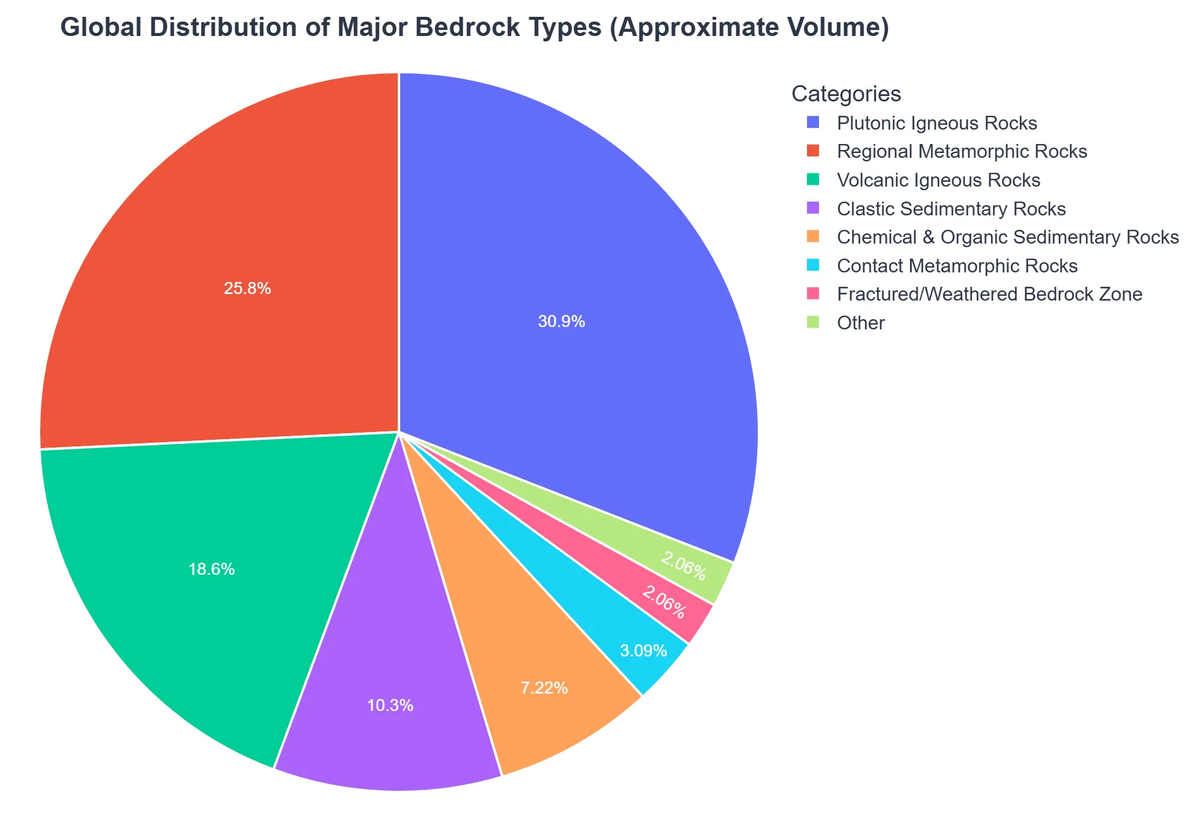
Bedrock forms through various geological processes, resulting in three primary rock types:
Bedrock Geology: Advantages and Challenges
Pros
- ✔Provides stable foundation for infrastructure and construction.
- ✔Crucial for identifying and locating valuable natural resources (e.g., minerals, groundwater).
- ✔Essential for assessing and mitigating geological hazards like landslides and earthquakes.
- ✔Offers vital insights into Earth’s historical processes and evolution.
Cons
- ✖Often buried deep and difficult to directly access or study.
- ✖Complex variability can pose significant engineering and construction challenges.
- ✖Can contribute to or indicate geological hazards (e.g., unstable rock formations, fault lines).
- ✖Requires specialized, often expensive, equipment and expertise for investigation.
- ✅ Igneous Bedrock: Formed from the cooling and solidification of molten magma or lava. Examples include granite (formed underground) and basalt (formed from surface lava flows). These rocks are often very hard and durable.
- ✅ Sedimentary Bedrock: Formed from the accumulation and compaction of sediments (fragments of pre-existing rocks, organic matter, or chemical precipitates). Examples include sandstone, limestone, and shale. These can vary significantly in strength and porosity. For insights into less rigid geological structures, consider our article on Soft Rock Geology: Exploring Earth’s Malleable Foundations.
- ✅ Metamorphic Bedrock: Formed when existing igneous, sedimentary, or other metamorphic rocks are transformed by intense heat, pressure, or chemical alteration. Examples include marble (from limestone) and slate (from shale).
The Indispensable Role of Bedrock in Human Activity
The unseen bedrock plays a profound role in our daily lives, influencing everything from urban development to natural resource availability.
🏗️ Foundation for Infrastructure
When planning any major construction project, from skyscrapers to bridges and tunnels, understanding the underlying bedrock is paramount. Engineers rely on detailed bedrock analyses to ensure stability and safety.
TerraForm Civil Engineering Fortifies Projects with Bedrock Insights
❓The Challenge
TerraForm Civil Engineering frequently faced unforeseen challenges like unstable foundations and costly re-designs in their large-scale infrastructure projects due to inadequate pre-construction geological assessments.
💡The Solution
By deeply integrating advanced bedrock geology analysis—understanding the properties of igneous, sedimentary, and metamorphic bedrock types as detailed in the guide—TerraForm implemented more precise site evaluations and foundation designs, mitigating future risks.
🏆The Result
This strategic shift led to a 25% reduction in project delays related to ground conditions and a 15% decrease in unforeseen foundation remediation costs across their portfolio.
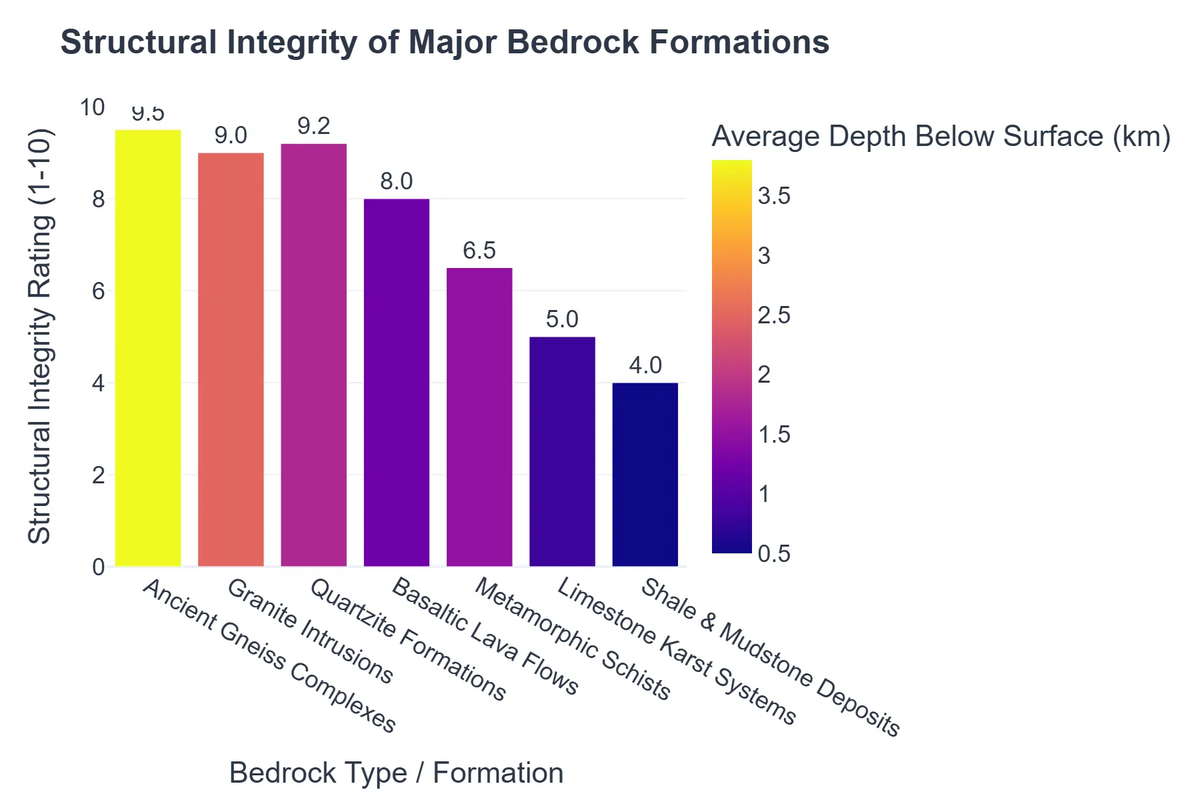
- ➡️ Load Bearing Capacity: Different types of bedrock have varying strengths and can support different loads. Strong, competent bedrock (like granite) is ideal for heavy structures, providing a stable foundation.
- ➡️ Excavation Challenges: The depth and type of bedrock dictate excavation methods and costs. Blasting may be necessary for hard rock, while softer bedrock might allow for easier digging.
- ➡️ Tunneling and Mining: The stability and composition of bedrock are critical for the safe and efficient construction of tunnels and for extracting valuable minerals. For example, the bedrock beneath New York City, particularly the Manhattan Prong, has profoundly influenced its iconic skyline. AMNH | Geology of NYC| Manhattan Prong | Geology of Central Park. Learn more about how the Earth shapes urban environments in Urban Geology: How Earth Shapes Our Cities.
💧 Groundwater and Resource Management
Bedrock structure significantly influences the movement and storage of groundwater, a vital resource.
- ➡️ Aquifers: Fractured bedrock or porous sedimentary bedrock can act as aquifers, natural underground reservoirs for water. Understanding these formations is crucial for sustainable water management.
- ➡️ Mineral Deposits: Many valuable mineral resources, such as metals, coal, and oil, are found within specific bedrock formations. The geological history and composition of bedrock directly control the location and economic viability of these deposits.
🌍 Influencing Landforms and Ecosystems
The resistance and structure of bedrock fundamentally shape the Earth’s surface and the landscapes we see.
- ➡️ Topography: Resistant bedrock often forms high ground, mountains, and ridges, while softer bedrock erodes more easily, creating valleys and lowlands. For instance, the formation of steep cliffs is deeply tied to the underlying bedrock’s resistance to erosion; explore this further in Bluff Geology: Formation and Significance of Steep Cliffs.
- ➡️ Soil Development: As bedrock weathers and breaks down, it contributes minerals and parent material to the overlying soil, influencing soil fertility and type.
Mapping the Unseen: Techniques in Bedrock Geology
Because bedrock is often hidden beneath the surface, geologists employ a variety of sophisticated techniques to map and understand its characteristics.
🗺️ Geologic Mapping and Data Collection
Traditional fieldwork remains a cornerstone of bedrock geology.
- ✅ Outcrop Analysis: Where bedrock is exposed at the surface (outcrops), geologists directly observe and sample rocks, measure their orientation, and identify structures like faults and folds.
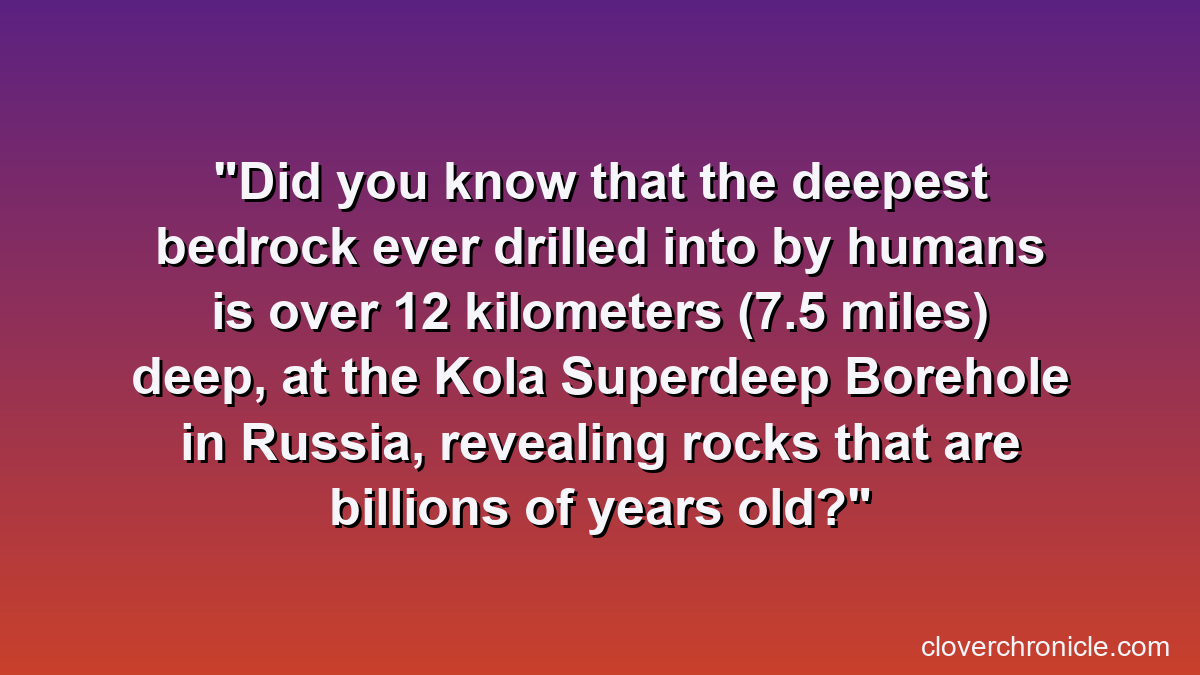
- ✅ Boreholes and Core Sampling: Drilling boreholes allows for direct access to bedrock beneath the surface. Core samples extracted from these holes provide detailed information about rock type, strength, and fractures at depth.
- ✅ Geophysical Surveys: Techniques like seismic reflection, electrical resistivity, and ground-penetrating radar (GPR) use physical properties of the Earth to infer subsurface geology without direct drilling. These methods can reveal layering, fault zones, and variations in rock density. The New Hampshire Department of Environmental Services provides an excellent overview of bedrock geologic mapping techniques. GEO-14: Bedrock Geologic Mapping.
💻 Remote Sensing and Advanced Techniques
Modern technology has greatly enhanced our ability to “see” beneath the surface.
- ✅ Satellite Imagery and Aerial Photography: These provide broad views of surface features that can indicate underlying bedrock structures, such as linear features suggesting faults or distinct patterns related to rock types. The U.S. Geological Survey frequently uses remote sensing for geological studies, including techniques like NDVI (Normalized Difference Vegetation Index) which can indirectly indicate subsurface conditions. NDVI, the Foundation for Remote Sensing Phenology | U.S. ….
- ✅ Magnetics and Gravity Surveys: Variations in Earth’s magnetic and gravitational fields can reveal different rock types and structures at depth, as various rocks have distinct magnetic and density properties.
Bedrock and Earth’s Dynamic Processes
Bedrock is not static; it is constantly shaped by the powerful forces that drive our planet’s evolution.
Tectonic Activity and Deformation
The movement of Earth’s tectonic plates exerts immense pressure on bedrock, leading to its deformation.
- ➡️ Folding: Compressive forces can cause layers of bedrock to bend and buckle into folds, creating mountain ranges and complex subsurface structures.
- ➡️ Faulting: When stress exceeds the rock’s strength, bedrock can fracture and move along planes called faults. These movements are responsible for earthquakes and can displace large sections of the crust. Understanding plate tectonics and the continuous motion of continents, as described in The Wilson Cycle: Understanding Continents’ Constant Motion, is key to grasping these processes.
- ➡️ Volcanism: Molten rock (magma) can intrude into existing bedrock, forming igneous bedrock features, or erupt onto the surface as lava, creating volcanic landscapes. Discover more about these fiery formations in Volcano Geology: Understanding Earth’s Fiery Formations.
Erosion and Weathering
While often seen as unyielding, bedrock is continually subjected to the forces of weathering and erosion, slowly but surely transforming the Earth’s surface.
- ✅ Physical Weathering: Processes like frost wedging, thermal expansion, and abrasion physically break down bedrock into smaller fragments.
- ✅ Chemical Weathering: Chemical reactions, such as dissolution and oxidation, alter the mineral composition of bedrock, weakening it and contributing to soil formation.
- ✅ Erosion: Agents like water, wind, and ice transport weathered bedrock material, shaping valleys, canyons, and coastlines over geological timescales.
Recommended Video
What is bedrock?
Bedrock refers to the solid, unweathered rock that underlies the Earth’s surface, beneath any loose surface material like soil, sand, or gravel. It forms the foundation upon which all surficial geology rests.
Why is bedrock geology important?
Bedrock geology is crucial because it influences topography, groundwater flow, soil development, seismic activity, and the distribution of mineral and energy resources. It’s essential for construction, environmental planning, and understanding Earth’s history.
How do different types of bedrock form?
Bedrock forms through various geological processes: Igneous bedrock forms from cooling magma or lava; Sedimentary bedrock forms from the compaction and cementation of sediments; and Metamorphic bedrock forms when existing rocks are transformed by heat, pressure, or chemical alteration.
Can bedrock be found anywhere on Earth?
Yes, bedrock underlies virtually all land and ocean basins on Earth. Its depth below the surface varies widely, from being exposed at the surface (outcrops) to being buried kilometers deep under layers of sediment and water.