


As a leading authority on Earth’s Unseen Forces: The Hidden Dynamics of Our Planet, we recognize that the delicate balance of life on Earth is one of its most profound, yet often overlooked, dynamics. The intricate web of life, known as biodiversity, underpins every ecosystem and supports human well-being. However, this essential foundation is under unprecedented threat. Recognizing this urgency, various initiatives have emerged to spotlight the crisis and galvanize action. One such crucial initiative is Biodiversity Week.
💡 Key Takeaways
- Biodiversity is the foundation of healthy ecosystems and human well-being.
- Biodiversity Week promotes global awareness and participation in conservation efforts.
- Individual actions, combined with collective efforts, can significantly impact biodiversity loss.
- Protecting biodiversity is crucial for climate resilience and sustainable development.
“Biodiversity is not merely a biological concept; it’s a fundamental pillar of Earth’s complex systems. Preserving it is paramount for maintaining the delicate balance that underpins climate stability and planetary health.”
— Marcus Sterling, Geophysical Explorer & Climate Dynamics Analyst
This comprehensive guide aims to be the definitive resource for understanding Biodiversity Week, its global significance, and, most importantly, how every individual, community, and nation can actively engage in global conservation efforts. From understanding the core concept of biodiversity to exploring practical steps for participation, we’ll delve into the vital role this observance plays in safeguarding our planet’s natural heritage.
In This Article
- — 💡 Key Takeaways
- → What is Biodiversity Week and Why Does it Matter?
- — 💡 The Core Concept of Biodiversity
- — ⚠️ The Urgency of Conservation
- → The Global Significance of Biodiversity Week
- — 🌍 Uniting Efforts Worldwide
- — 📣 Raising Awareness and Educating the Public
- → Key Themes and Objectives of Biodiversity Week
- — 🦋 Protecting Endangered Species
- — 🌳 Restoring Ecosystems and Habitats
- — ♻️ Promoting Sustainable Living
- → How Individuals Can Engage in Biodiversity Week
- — 🤝 Participating in Local Events
- — 💚 Supporting Conservation Organizations
- — 🏡 Adopting Sustainable Practices
- → The Role of Policy and International Cooperation
- — 🏛️ International Agreements and Frameworks
- — 📜 Government Initiatives and Legislation
- → Future of Biodiversity Conservation Beyond the Week
- — 📈 Long-Term Strategies
- — Generation Conservation
- → Conclusion: A Collective Commitment to Life
What is Biodiversity Week and Why Does it Matter?
Biodiversity Week is not a single, universally fixed event but rather a collective term for various observances and initiatives globally that occur around the International Day for Biological Diversity (May 22nd), designated by the United Nations. Its primary purpose is to raise awareness and foster understanding of biodiversity issues.
💡 The Core Concept of Biodiversity
Biodiversity refers to the variety of life on Earth at all its levels, from genes to ecosystems. It encompasses the diversity of:
- ✅ Species: The immense variety of plants, animals, fungi, and microorganisms.
- ✅ Ecosystems: The different habitats, like forests, oceans, deserts, and wetlands, where species interact.
- ✅ Genetics: The variation within individual species, which allows them to adapt to changing environments.
This biological richness provides countless “ecosystem services” that are indispensable for human survival, including clean air and water, fertile soils, pollination of crops, climate regulation, and natural disaster mitigation. For a more in-depth exploration, see our article on Biodiversity Explained: A Comprehensive Guide.
⚠️ The Urgency of Conservation
The planet is currently experiencing an alarming rate of biodiversity loss, primarily due to human activities such as habitat destruction, pollution, climate change, overexploitation of resources, and invasive species. This loss weakens ecosystems, threatens food security, increases the risk of pandemics, and destabilizes the natural systems that support all life.
Biodiversity Week serves as a critical annual reminder of this ongoing crisis and a call to action for conservation and sustainable use of biological diversity. It emphasizes that preserving biodiversity is not just an environmental issue, but a developmental, economic, social, and moral imperative.
The Global Significance of Biodiversity Week

While the challenges are immense, Biodiversity Week plays a pivotal role in unifying efforts and educating the global populace. It’s a period where local actions can contribute to a larger, international impact.
🌍 Uniting Efforts Worldwide
The International Day for Biological Diversity on May 22nd acts as a focal point, encouraging coordinated events and discussions across continents. This global synchronization helps to:
- ➡️ Amplify Messages: A shared theme each year (e.g., “From Agreement to Action: Build Back Biodiversity”) provides a common narrative for advocacy.
- ➡️ Foster Collaboration: It encourages governments, NGOs, scientists, and communities to work together on shared conservation goals. The United Nations and Biodiversity: Global Conservation Efforts exemplify this global cooperation.
- ➡️ Showcase Successes: It offers an opportunity to highlight effective conservation strategies and inspire new initiatives.
📣 Raising Awareness and Educating the Public
A key objective of Biodiversity Week is to shift public perception and increase understanding of biodiversity’s value and the threats it faces. Educational campaigns often highlight:
- 📖 The intrinsic value of nature, beyond its utilitarian benefits.
- 📖 The interconnectedness of all life and how human actions impact distant ecosystems.
- 📖 Simple, actionable steps individuals can take to make a difference.
This awareness is crucial for fostering a collective sense of responsibility and driving behavioral changes towards more sustainable living.
Key Themes and Objectives of Biodiversity Week
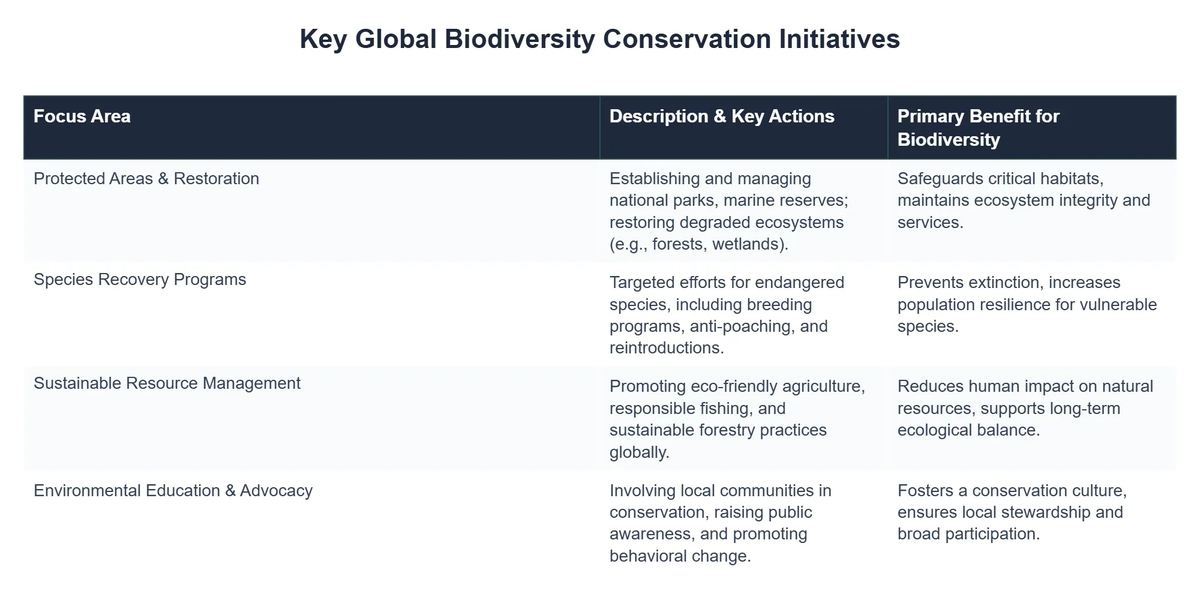
Each year, specific themes guide the discussions and activities during Biodiversity Week, focusing on different facets of the crisis and potential solutions. However, overarching objectives remain constant.
🦋 Protecting Endangered Species
A central tenet of biodiversity conservation is the protection of species at risk of extinction. Events often highlight:
- 🚨 The plight of critically endangered animals and plants.
- 🚨 The importance of habitat preservation for species survival.
- 🚨 Success stories of species recovery through dedicated conservation efforts.
Organizations like the International Union for Conservation of Nature (IUCN) are instrumental in assessing species status and guiding conservation priorities, as highlighted on their official site: iucn.org.
🌳 Restoring Ecosystems and Habitats
Conservation is not just about protecting what remains but actively restoring what has been lost. Themes often touch upon:
- 🌱 Reforestation and afforestation initiatives.
- 🌊 Restoring degraded wetlands and coastal habitats, crucial for Aquatic Biodiversity: Life Beneath the Waves.
- 🌾 Sustainable land management practices to prevent further degradation, especially concerning issues like Deforestation and Biodiversity: The Devastating Link.
♻️ Promoting Sustainable Living
Ultimately, long-term biodiversity preservation requires a fundamental shift in human consumption and production patterns. Biodiversity Week encourages discussions around:
- 🛒 Sustainable consumption and production.
- 💧 Responsible use of natural resources.
- 🔋 Transitioning to renewable energy sources.
- 🗑️ Reducing waste and pollution.
How Individuals Can Engage in Biodiversity Week
Active participation is the cornerstone of Biodiversity Week’s success. Even small, individual actions contribute to the larger global effort. Here’s how you can get involved:
🤝 Participating in Local Events
Many communities organize events during Biodiversity Week. Look out for:
- 🚶♀️ Nature walks and guided tours to learn about local flora and fauna.
- 🌳 Tree planting activities and habitat restoration projects.
- 🧹 Community clean-ups of parks, rivers, and coastlines.
- 🎨 Educational workshops and art competitions for all ages.
💚 Supporting Conservation Organizations
Non-profit organizations are at the forefront of conservation efforts. You can support them by:
- ➡️ Volunteering: Donate your time and skills to local conservation groups.
- ➡️ Donating: Financial contributions help fund vital research, protection, and restoration projects.
- ➡️ Spreading the Word: Share their work on social media and encourage others to get involved.
Organizations like the E.O. Wilson Biodiversity Foundation: Championing Half-Earth are examples of entities making significant strides.
🏡 Adopting Sustainable Practices
Everyday choices have an impact. During Biodiversity Week and beyond, commit to:
- 💡 Reducing Your Footprint: Conserve energy, reduce water usage, and minimize waste.
- 🥗 Conscious Consumption: Choose sustainably sourced products, reduce meat consumption, and avoid products that contribute to habitat destruction (e.g., palm oil from unsustainable sources).
- Plant pollinator-friendly plants in your garden, and learn about the importance of species like bees on observances like World Bee Day.
- Actively advocate for policy changes that protect nature.
The Role of Policy and International Cooperation
While individual actions are crucial, systemic change driven by policy and international collaboration is equally vital for large-scale biodiversity conservation.
🏛️ International Agreements and Frameworks
Global challenges like biodiversity loss require global solutions. Biodiversity Week often highlights the importance of multilateral environmental agreements such as:
- ✅ The Convention on Biological Diversity (CBD), which sets global goals for biodiversity protection.
- ✅ The Ramsar Convention on Wetlands, focusing on the conservation and wise use of wetlands.
- ✅ The Convention on International Trade in Endangered Species of Wild Fauna and Flora (CITES), regulating wildlife trade.
These frameworks guide national policies and foster international cooperation, crucial for protecting Global Biodiversity Hotspots: Critical Regions for Conservation.
📜 Government Initiatives and Legislation
National governments play a critical role through legislation, protected area designations, and funding. Policy discussions during Biodiversity Week can focus on:
- ➡️ Strengthening environmental laws and enforcement.
- ➡️ Establishing and expanding national parks and protected areas.
- ➡️ Implementing nature-based solutions for climate change mitigation and adaptation.
For example, legislative efforts such as those aimed at engaging youth with conservation, as mentioned in a press release from U.S. House of Representatives, underscore the government’s role in fostering future environmental stewardship: Ansari.house.gov.
Future of Biodiversity Conservation Beyond the Week
Biodiversity Week is a significant annual event, but the work of conservation is continuous. The long-term success hinges on sustained commitment and innovative strategies.
📈 Long-Term Strategies
Effective biodiversity conservation requires planning that extends far beyond a single week. Key elements of long-term strategies include:
- 📊 Monitoring and Research: Continuously tracking biodiversity trends and understanding ecological processes.
- 💡 Innovation: Developing new technologies and approaches for conservation, such as remote sensing and genetic banking.
- 🤝 Inclusive Conservation: Ensuring that conservation efforts benefit local communities and integrate traditional ecological knowledge, as discussed in “Inclusive conservation and the Post-2020 Global Biodiversity Framework”: ScienceDirect.com.
Generation Conservation
Engaging younger generations is paramount. Biodiversity Week can serve as a springboard for:
- 🎒 Integrating biodiversity education into school curricula.
- 👩🔬 Creating opportunities for youth involvement in scientific research and citizen science projects.
- 🗣️ Empowering young leaders to advocate for environmental policy changes.
The future of biodiversity rests heavily on the passion and commitment of today’s youth.
Recommended Video
Conclusion: A Collective Commitment to Life
Biodiversity Week serves as a vital global platform, amplifying the critical importance of Earth’s biological diversity and galvanizing action for its preservation. From the smallest individual act of sustainable living to monumental international agreements, every effort contributes to safeguarding the intricate web of life that sustains us all.
As experts in Earth’s Unseen Forces: The Hidden Dynamics of Our Planet, we underscore that biodiversity is not merely a collection of species; it is the very fabric of our planet’s health and resilience. Engaging in Biodiversity Week is more than just observing an event; it is participating in a global movement to protect our shared natural heritage for generations to come. Let this annual observance ignite a year-round commitment to Biodiversity Preservation: Protecting Earth’s Life and a more sustainable future.
Frequently Asked Questions
What is Biodiversity Week?
Biodiversity Week is an international initiative aimed at raising awareness about the importance of biodiversity and promoting actions for its conservation globally.
How can individuals participate in conservation during Biodiversity Week?
Individuals can participate by supporting local conservation projects, reducing their ecological footprint, advocating for sustainable policies, and educating others about biodiversity’s importance.
Why is biodiversity important for the planet?
Biodiversity provides essential ecosystem services like clean air and water, nutrient cycling, pollination, climate regulation, and is vital for food security, medicine, and human health.
What are the biggest threats to global biodiversity?
Major threats include habitat loss and fragmentation, climate change, pollution, overexploitation of natural resources, and the spread of invasive species.