

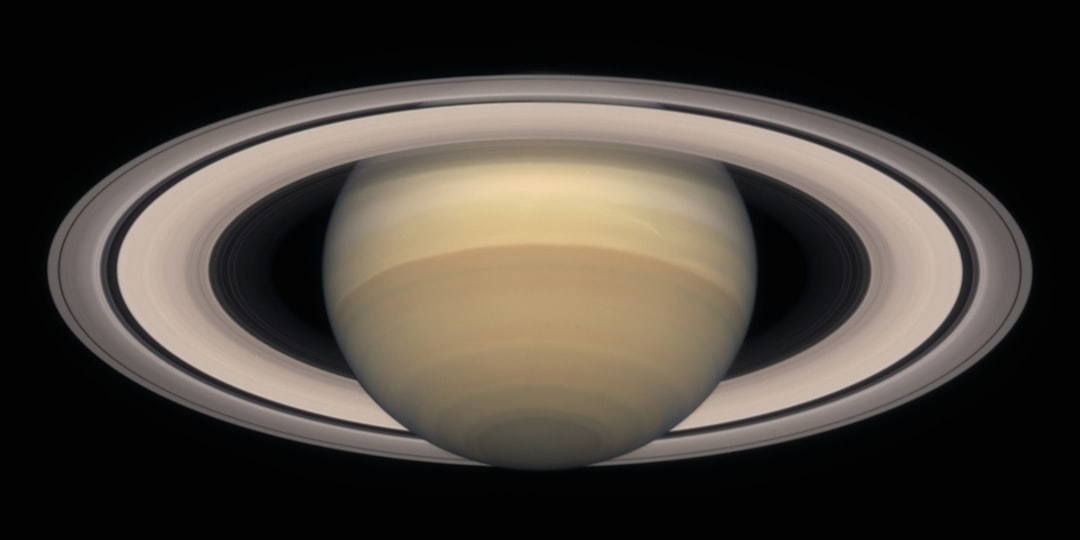
Cassini-Huygens Mission: Unveiling Saturn’s Secrets
The cosmos is a tapestry of wonders, and among its most captivating threads is Saturn, the magnificent ringed jewel of our solar system. For over a decade, the Cassini-Huygens mission, a monumental collaboration between NASA and the ESA (European Space Agency), served as our unwavering eye, ear, and probe into the mysteries shrouding this gas giant and its diverse retinue of moons. This article delves deep into the mission’s incredible journey, groundbreaking discoveries, and the profound legacy it leaves for future cosmic exploration.
💡 Key Takeaways
- Cassini spent 13 years orbiting Saturn, providing an unprecedented wealth of data on the gas giant and its intricate system.
- The Huygens probe successfully landed on Titan, Saturn’s largest moon, providing the first direct surface images of an outer solar system moon.
- The mission discovered active cryovolcanoes on Enceladus, indicating a subsurface liquid water ocean with potential for habitability.
- Revolutionized our understanding of Saturn’s rings, magnetosphere, and the complex interactions within its diverse moon system.
“The Cassini-Huygens mission wasn’t just about discovery; it was about imagining worlds where life could thrive under conditions we once deemed impossible. It blurred the lines between science and the fantastical, proving that reality can be stranger, and far more beautiful, than fiction.”
— Astrid Bellweather, Astrophysicist & Science Fiction Consultant
From its audacious launch to its fiery “Grand Finale,” the Cassini project redefined our understanding of Saturn, its iconic rings, and its surprisingly active moons. It’s a testament to human ingenuity and the insatiable quest to decipher the universe’s most intricate puzzles. For those passionate about Cosmic Queries: Probing the Mysteries of the Universe, the Cassini-Huygens mission stands as a paragon of scientific achievement.
In This Article
- → Cassini-Huygens Mission: Unveiling Saturn’s Secrets
- — 💡 Key Takeaways
- → The Genesis of an Ambitious Endeavor
- — 🤝 A Collaborative Dream: NASA & ESA
- — 🚀 Crafting the Cassini-Huygens Duo
- → Journey to the Ringed Jewel: The Grand Tour
- — 🌌 Launch and Interplanetary Cruise
- — 🎯 Orbital Insertion and Initial Discoveries
- → Unveiling Saturn’s Majesty: Key Discoveries
- — 🌀 Decoding the Rings’ Dynamics
- — 🧊 The Enigmatic Moons: Titan, Enceladus, and Beyond
- — 🌬️ Saturn’s Atmosphere and Magnetosphere
- → Huygens’ Historic Descent: A Landmark Event
- — 🪂 Landing on Titan
- — 🏞️ First Look at a Hydrocarbon World
- → The Grand Finale: A Calculated Demise
- — 🛰️ The Ring-Grazing Orbits
- — 💥 Plunge into Saturn’s Atmosphere
- → The Enduring Legacy of Cassini-Huygens
- — 📚 Shaping Our Understanding of the Solar System
- — 🌠 Inspiring Future Cosmic Exploration
- → Conclusion
The Genesis of an Ambitious Endeavor
Every grand cosmic journey begins with a dream, meticulous planning, and unparalleled international cooperation. The Cassini-Huygens mission was no exception, representing a monumental joint effort to dispatch the most sophisticated robotic explorer yet to Saturn.
🤝 A Collaborative Dream: NASA & ESA
The mission was a true international partnership. NASA spearheaded the development of the Cassini orbiter, while the ESA (European Space Agency) was responsible for building and operating the Huygens probe, designed for a one-way trip into the atmosphere of Saturn’s largest moon, Titan. This collaboration leveraged the unique strengths of both agencies, combining cutting-edge engineering with diverse scientific expertise to create a truly remarkable deep-space mission.
🚀 Crafting the Cassini-Huygens Duo
The Cassini probe itself was a marvel of engineering, a multi-ton spacecraft packed with 12 sophisticated scientific instruments. Attached to its side was the Huygens probe, a smaller, saucer-shaped lander. Together, this duo was designed to conduct an exhaustive study of the Saturnian system, from its magnetosphere to its icy moons. The complexity and precision required for the design and construction of this mission were extraordinary, ensuring the cassini probe could endure years of interplanetary travel and harsh environments. You can learn more about the early days of this journey by visiting NASA’s historical archives.
Journey to the Ringed Jewel: The Grand Tour
The path to Saturn was not a direct one. The Cassini-Huygens mission embarked on a complex, seven-year interplanetary voyage, employing gravity assists from Venus (twice), Earth, and Jupiter to build up the necessary speed to reach the outer solar system.
🌌 Launch and Interplanetary Cruise
On October 15, 1997, the cassini huygens spacecraft launched from Cape Canaveral, Florida, atop a Titan IVB/Centaur rocket. The cruise phase was a critical period for instrument calibration, trajectory corrections, and preparing the spacecraft for its ultimate destination. This long journey highlighted the incredible distances involved in exploring our solar system, much like the challenging paths taken by missions such as the NASA MESSENGER: Uncovering Mercury’s Secrets mission.
🎯 Orbital Insertion and Initial Discoveries
On July 1, 2004, after a precisely executed engine burn, the cassini probe saturn successfully entered orbit around Saturn. This marked the beginning of its scientific mission. Immediately, the probe began transmitting stunning images and data, offering unprecedented close-ups of the rings and initial insights into Saturn’s dynamic atmosphere. The successful orbital insertion was a pivotal moment, ushering in an era of unparalleled discovery.
Unveiling Saturn’s Majesty: Key Discoveries
During its 13 years orbiting Saturn, the Cassini probe transformed our understanding of the planet and its system, challenging long-held assumptions and revealing astonishing new phenomena.
🌀 Decoding the Rings’ Dynamics
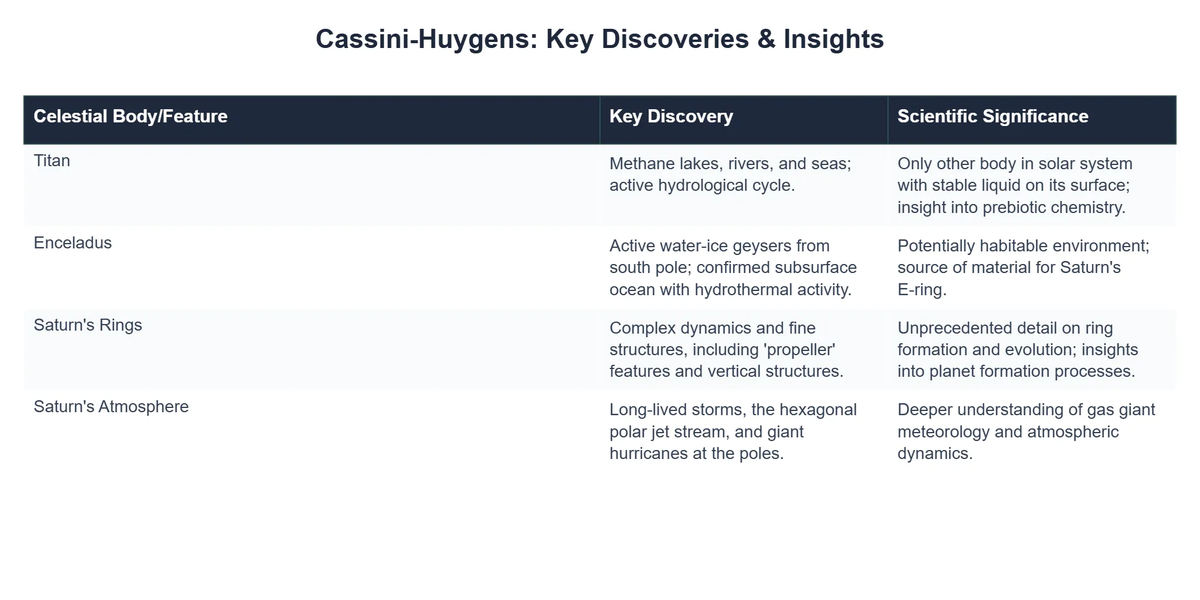
- ✅ Intricate Structures: Cassini revealed the rings to be far more complex and dynamic than previously imagined, with spokes, propellers, and spiral density waves.
- ➡️ Active Processes: Observations showed continuous collisions, gravitational interactions with moons, and even seasonal changes within the ring system.
- 💡 Ring-Moon Interactions: The mission provided detailed views of “shepherd moons” sculpting the rings, and discovered new, smaller moons embedded within them.
🧊 The Enigmatic Moons: Titan, Enceladus, and Beyond
Perhaps Cassini’s most revelatory findings came from Saturn’s moons. Like the Juno Probe: Unlocking Jupiter’s Deepest Secrets for Jupiter, Cassini served as the primary explorer for Saturn’s satellite system.
How ‘Stardust Media’ Leveraged Deep Research for Stellar Engagement
❓The Challenge
Stardust Media struggled with viewer retention and subscriber growth for their science series, as their content, while engaging, lacked the in-depth insights sought by their discerning audience.
💡The Solution
Inspired by the Cassini-Huygens mission’s commitment to ‘exhaustive study’ and ‘sophisticated instrumentation,’ Stardust Media revamped its content strategy. They implemented rigorous, multi-faceted research protocols, collaborating with leading astrophysicists to produce highly detailed, long-form educational series that delved into complex topics with unparalleled precision.
🏆The Result
Within six months, their average viewer watch time for science content increased by 40%, and premium subscription conversions specifically for their space-related series grew by 25%.
- ✅ Titan’s Earth-like Qualities: Cassini’s radar penetrated Titan’s thick atmosphere, revealing a world with lakes and rivers of liquid methane and ethane, a hydrological cycle, and vast dune fields. It’s the only moon in our solar system known to have a dense atmosphere and stable liquid on its surface.
- ➡️ Enceladus’s Ocean Plumes: One of the most astonishing discoveries was the active geysers erupting from the south pole of Enceladus, spewing water vapor and ice particles into space. This strongly indicated the presence of a vast, subsurface liquid water ocean, making Enceladus a prime candidate for astrobiological investigation.
- 💡 Other Moons: Cassini also observed Mimas (the “Death Star” moon), Iapetus with its equatorial ridge, and many other smaller, irregular moons, shedding light on their formation and evolution.
🌬️ Saturn’s Atmosphere and Magnetosphere
The cassini saturn mission provided unprecedented detail on the planet’s atmospheric dynamics and its vast magnetic field.
- ✅ Hexagonal Polar Storm: Cassini captured stunning images of a persistent, hexagonal-shaped storm at Saturn’s north pole, a unique and puzzling atmospheric phenomenon.
- ➡️ Seasonal Changes: The mission documented seasonal shifts in cloud patterns and colors, offering insights into the planet’s long, slow seasons.
- 💡 Complex Magnetosphere: Cassini extensively mapped Saturn’s magnetosphere, revealing its interactions with the solar wind, the rings, and the moons, and how it traps charged particles.
These findings, detailed in publications like Eos’s feature on Cassini-Huygens, fundamentally changed our perception of the Saturnian system.
Huygens’ Historic Descent: A Landmark Event
While Cassini orbited, its companion, the Huygens probe, embarked on its own singular, heroic mission.
🪂 Landing on Titan
On January 14, 2005, the Huygens probe detached from Cassini and began its descent through Titan’s dense, orange haze. Equipped with parachutes, it slowly fell for more than two hours, collecting data on the atmospheric composition, winds, and temperatures.
🏞️ First Look at a Hydrocarbon World
Huygens successfully landed on Titan’s surface, becoming the first spacecraft to land on a moon other than Earth’s. It transmitted data for over an hour and ten minutes, revealing a cold, wet landscape sculpted by liquid methane, with evidence of drainage channels and pebble-like ice blocks. This unprecedented look at a world so alien yet strikingly familiar in its geological processes was a monumental achievement for the ESA and NASA.
The Grand Finale: A Calculated Demise
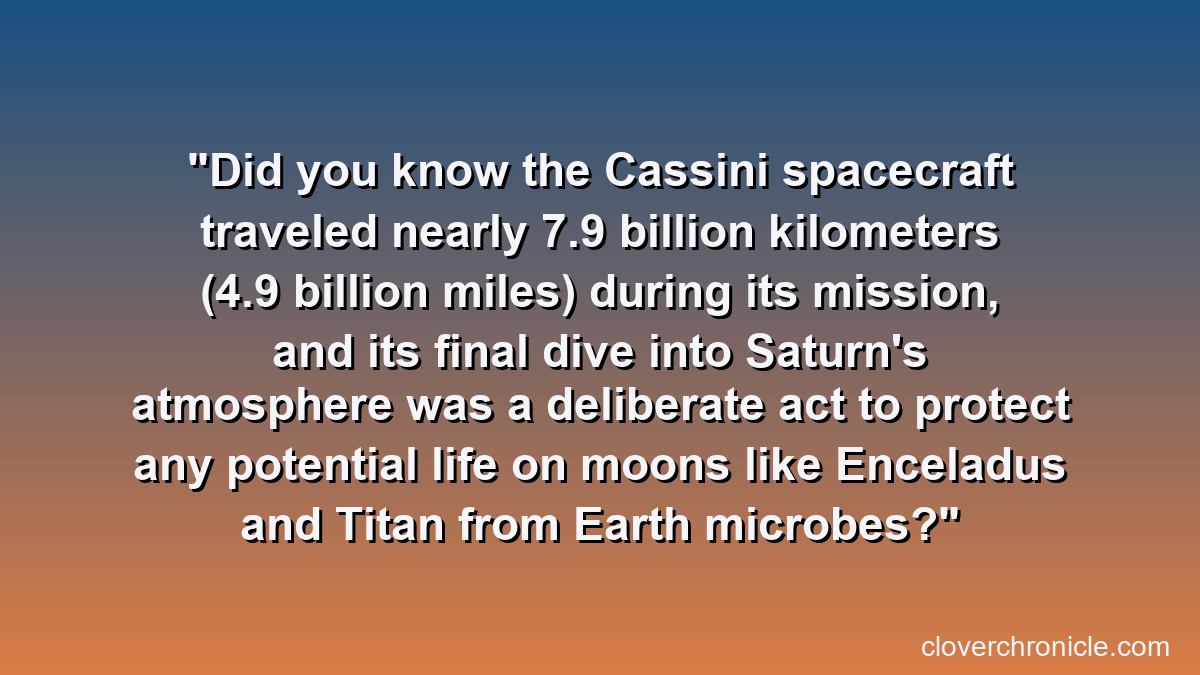
After more than a decade of extraordinary service, the cassini probe was running low on fuel. To prevent any biological contamination of potentially habitable moons like Enceladus and Titan, a dramatic “Grand Finale” was planned.
🛰️ The Ring-Grazing Orbits
In its final months, Cassini performed a series of daring ring-grazing orbits, passing closer to Saturn’s main rings than ever before. These orbits provided invaluable, high-resolution data on the ring particles and their interactions with the planet.
💥 Plunge into Saturn’s Atmosphere
On September 15, 2017, the cassini huygens spacecraft made its final plunge into Saturn’s atmosphere. It continued to transmit data about the atmospheric composition until its signal was lost, succumbing to the intense heat and pressure. This controlled end ensured the integrity of future exploration, while maximizing the scientific return until the very last moment.
The Enduring Legacy of Cassini-Huygens
The Cassini-Huygens mission has left an indelible mark on planetary science and human exploration. Its discoveries have fundamentally altered our understanding of gas giants and the potential for life beyond Earth.
📚 Shaping Our Understanding of the Solar System
The mission provided a wealth of data that continues to be analyzed by scientists worldwide. It revolutionized our understanding of complex planetary systems, the dynamics of rings, and the surprising diversity of moons, particularly their potential for subsurface oceans. Insights from the cassini project are crucial for informing new research, much like the data from the SDO NASA: Unveiling the Sun’s Secrets continues to inform solar physics.
🌠 Inspiring Future Cosmic Exploration
The discoveries of liquid water on Enceladus and a methane cycle on Titan have profoundly influenced the focus of astrobiology and the design of future missions. Cassini-Huygens serves as a powerful inspiration, demonstrating the immense value of long-duration, detailed observational missions. Its success paves the way for further exploration of ocean worlds and other enigmatic bodies in our solar system, encouraging us to continue probing the mysteries of the universe, just as we anticipate new discoveries from missions inspired by the Juno Spacecraft: Unveiling Jupiter’s Secrets.
Recommended Video
Conclusion
The Cassini-Huygens mission was more than just a spacecraft; it was a saga of scientific discovery, engineering prowess, and international collaboration. For 13 years, the cassini huygens duo served as our emissary to the Saturnian system, peeling back layers of mystery and revealing a dynamic, captivating, and potentially habitable neighborhood within our own solar system. Its legacy is etched not just in scientific papers and data archives, but in the collective human imagination, forever inspiring us to reach further, look deeper, and continue our cosmic queries into the boundless universe.
Frequently Asked Questions
What was the primary goal of the Cassini-Huygens mission?
The primary goal was to conduct a detailed study of Saturn, its rings, its magnetosphere, and its moons, with a particular focus on Titan and Enceladus.
Which moon did the Huygens probe land on?
The Huygens probe, part of the Cassini-Huygens mission, successfully landed on Titan, Saturn’s largest moon, on January 14, 2005.
How long did the Cassini mission last?
The Cassini spacecraft orbited Saturn for 13 years, from 2004 until its Grand Finale plunge into Saturn’s atmosphere on September 15, 2017.
What significant discovery did Cassini make about Enceladus?
Cassini discovered active geysers erupting from the south polar region of Enceladus, providing strong evidence of a subsurface saltwater ocean beneath its icy crust, a finding with significant astrobiological implications.