
Understanding the Core: What are Metaphysics and Epistemology?
In the vast landscape of philosophy, two branches stand as foundational pillars, seeking to unravel the most profound questions about existence and knowledge: metaphysics and epistemology. These disciplines are not merely academic curiosities; they are the bedrock upon which our understanding of the universe, ourselves, and how we come to know anything at all, is built.
💡 Key Takeaways
- Metaphysics explores the fundamental nature of reality, including existence, time, and causation.
- Epistemology investigates the nature of knowledge, belief, and justification.
- These two philosophical branches are intertwined, providing frameworks for understanding both what is and how we know it.
- Studying them enhances critical thinking and offers profound insights into human experience.
“To truly grasp reality, we must first confront its fundamental nature through metaphysics, then critically examine how we acquire and validate our understanding of it via epistemology. They are the twin pillars of rational inquiry.”
— Isolde Farrow, PhD, Philosopher of Science & Logic Theorist
Before diving deeper, it’s crucial to grasp their distinct yet interconnected roles. Metaphysics probes the fundamental nature of reality, exploring what exists and what it means to exist. Epistemology, on the other hand, is the systematic study of knowledge itself, questioning its nature, origin, scope, and limits.
In This Article
- → Understanding the Core: What are Metaphysics and Epistemology?
- — 💡 Key Takeaways
- → Metaphysics: Exploring the Nature of Reality
- → Epistemology: The Quest for Knowledge
- — 🔍 What is Knowledge?
- → The Interplay: How Metaphysics and Epistemology Connect
- — 💡 Bridging Reality and Understanding
- → Practical Implications: Why These Philosophical Branches Matter
Metaphysics: Exploring the Nature of Reality
Metaphysics is arguably the oldest branch of philosophy, grappling with concepts that transcend the physical world as perceived by our senses. It asks fundamental questions like:
- 🤔 What is the ultimate nature of reality? Is it purely material, or is there a non-physical dimension?
- 🕰️ Do time and space truly exist independently, or are they constructs of our minds?
- 👤 Do we possess free will, or are our actions predetermined?
- 🧠 What is the relationship between the mind and the body? Are they distinct entities or two sides of the same coin?
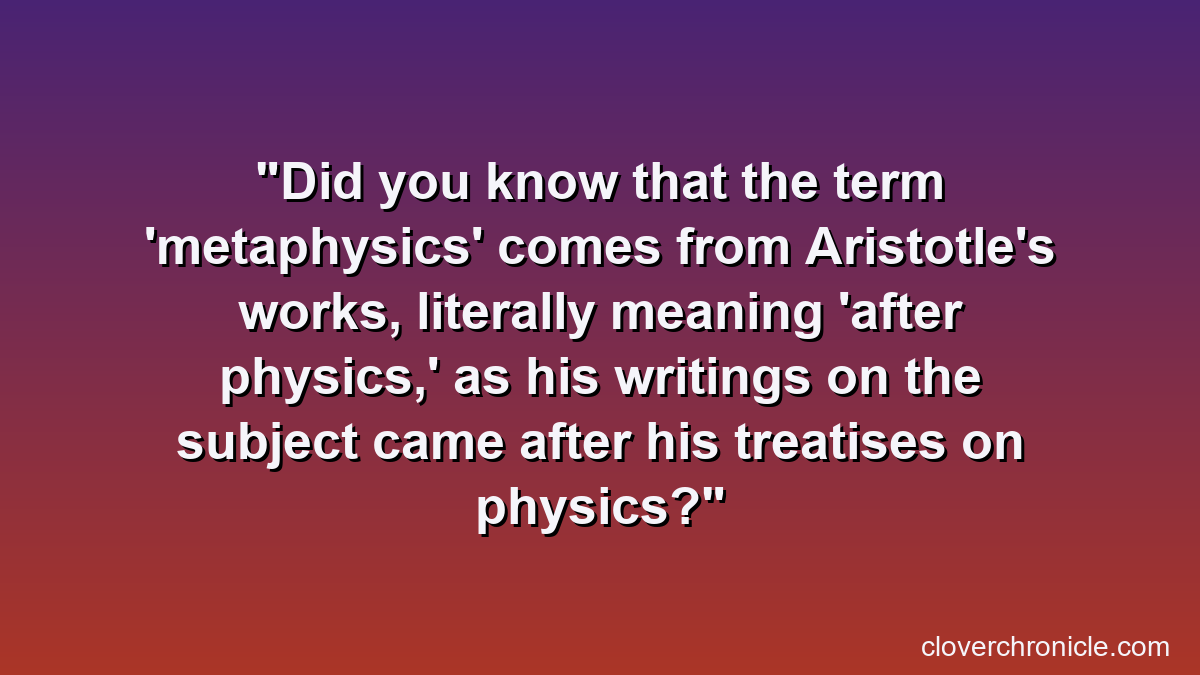
The term “metaphysics” originates from Aristotle’s works, referring to what came “after the physics.” It delves into areas such as:
- ✅ Ontology: The study of being and existence. What categories of things exist? What does it mean for something to “be”? For an in-depth exploration, see Number Analytics’ guide on Unlocking Ontology’s Secrets.
- ➡️ Cosmology: The study of the universe as a whole, its origin, structure, and evolution.
- 💡 Philosophy of Mind: Investigating the nature of consciousness, thought, perception, and emotion.
- ⚙️ Causality: The relationship between cause and effect.
From Plato’s Forms to Aristotle’s substance, from Descartes’ dualism to Spinoza’s monism, philosophers have proposed myriad answers to these profound questions. Understanding metaphysics helps us appreciate the depth of inquiry into existence, shedding light on why some paradoxes, such as those related to identity or infinity, challenge our intuitive grasp of reality. For more on these profound inquiries, consider our article on Deepest Metaphysical Questions: Probing Reality and Existence.

Epistemology: The Quest for Knowledge
🔍 What is Knowledge?
Epistemology, often referred to as the theory of knowledge, scrutinizes how we acquire, justify, and evaluate what we claim to know. It asks: “How do we know what we know?” and “Can we truly know anything at all?”
Core concepts in epistemology include:
- ✅ Belief: A mental acceptance that something is true.
- ➡️ Truth: A correspondence between a belief and reality.
- 💡 Justification: The reasons or evidence supporting a belief, making it rational to hold. This is often the hardest part, as philosophers of epistemology debate what constitutes valid justification.
Historically, two primary schools of thought dominate the discussion on the sources of knowledge:
- Rationalism: Proponents like René Descartes and Baruch Spinoza argue that reason is the primary source of knowledge, often through innate ideas or logical deduction. They believe that certain truths can be known independently of sensory experience.
- Empiricism: Thinkers such as John Locke, George Berkeley, and David Hume assert that sensory experience is the ultimate source of all knowledge. We learn about the world through observation and interaction.
The tension between these two perspectives highlights the challenges in establishing undeniable knowledge, leading to discussions about skepticism – the doubt concerning our ability to achieve certainty. Parmenides, an ancient Greek philosopher, provided early metaphysical and epistemological arguments focusing on the unchangeable nature of being, which had profound implications for how knowledge could be acquired, as explored by the Internet Encyclopedia of Philosophy.
Epistemology also explores the limits of human understanding and how biases or fallacies can distort our pursuit of truth. Cultivating Critical Thinking Skills is essential in navigating these complexities and discerning valid knowledge from misinformation.
The Interplay: How Metaphysics and Epistemology Connect
💡 Bridging Reality and Understanding
While distinct, metaphysics and epistemology are deeply intertwined. Our understanding of reality (metaphysics) profoundly influences how we believe we can acquire knowledge (epistemology), and conversely, our theory of knowledge shapes what we accept as real.
- 🤔 Metaphysics informs Epistemology: If you believe reality is fundamentally spiritual or non-material (a metaphysical stance), then your methods of gaining knowledge might include introspection, revelation, or intuition, rather than solely empirical observation. Conversely, if you hold a purely materialist metaphysical view, you might rely exclusively on scientific experimentation.
- 🔍 Epistemology informs Metaphysics: If, epistemologically, you conclude that all knowledge must come from sensory experience, you might then be inclined to reject metaphysical claims about non-observable entities (like souls or abstract universals) as unknowable or even non-existent. For instance, the scientific method, an epistemological framework, shapes the current scientific understanding of reality.
Consider the concept of objective truth. A metaphysical commitment to an objective reality “out there” often aligns with an epistemological quest for objective knowledge. However, if reality is seen as entirely subjective or socially constructed, then knowledge itself might be viewed as relative. This intricate relationship is at the heart of many Abstract Philosophical Questions: Exploring Life’s Biggest Mysteries.
Practical Implications: Why These Philosophical Branches Matter
Far from being confined to academic ivory towers, metaphysics and epistemology have tangible implications for our daily lives and the broader world. They provide frameworks for understanding, evaluating, and challenging the information we encounter, which is especially critical in an age rife with misinformation.
- ✅ In Science and Technology: Scientific theories are built upon metaphysical assumptions about the universe’s orderliness and the knowability of natural laws. Epistemology guides the scientific method, ensuring that experiments are valid and conclusions are justified. Debates in AI, like the nature of consciousness in machines, are inherently metaphysical, while questions about what AI “knows” are epistemological.
- ➡️ In Ethics and Morality: Our metaphysical views on human nature (e.g., whether humans are inherently good or self-interested) influence our ethical theories. Epistemology helps us determine how we can know what is right or wrong, and whether moral truths exist objectively.
- 💡 In Personal Worldviews: Everyone holds implicit metaphysical and epistemological beliefs, whether consciously or not. Understanding these branches helps us articulate our own worldviews, evaluate the beliefs of others, and engage in more thoughtful discussions. It empowers us to question assumptions and seek deeper understanding.
- ⚙️ Navigating Complex Information: In a world where information is abundant and often contradictory, a basic grasp of epistemology helps us discern credible sources from unreliable ones, identify logical fallacies, and recognize biases. This skill is vital for Debunking Myths: A Guide to Spotting Misinformation and navigating the challenges presented by Paradoxes & Puzzles: Challenges to Logic and Reality.
Recommended Video
By engaging with these profound philosophical areas, we develop a more sophisticated way of thinking, equipped to challenge assumptions, explore complex ideas, and ultimately, unlock some of reality’s deepest mysteries.
What is the main difference between metaphysics and epistemology?
Metaphysics deals with the nature of reality (what exists), while epistemology deals with the nature of knowledge (how we know what exists).
Why are metaphysics and epistemology considered foundational to philosophy?
They address the most basic questions about existence and knowledge, forming the bedrock upon which other philosophical disciplines are built.
How do these fields relate to modern science?
While distinct, they provide the conceptual frameworks and critical tools for scientists to interpret findings and question the underlying assumptions of scientific inquiry.