


Unveiling CRISPR-SHERLOCK: A Diagnostic Revolution
The landscape of molecular diagnostics is undergoing a transformative shift, driven by innovations rooted in the very mechanisms that govern life. At the forefront of this revolution is CRISPR-SHERLOCK, a groundbreaking technology poised to redefine how we detect diseases, pathogens, and genetic markers with unparalleled speed and accuracy. Unlike its more widely known application in gene editing, the CRISPR system in SHERLOCK is repurposed for highly sensitive and specific nucleic acid detection, offering a beacon of hope for rapid, point-of-care diagnostics.
💡 Key Takeaways
- CRISPR-SHERLOCK leverages CRISPR technology for highly sensitive and specific detection of pathogens and genetic markers.
- It offers a portable, cost-effective solution, enabling rapid point-of-care diagnostics even in low-resource settings.
- This innovative platform holds immense potential for early disease detection, pandemic preparedness, and personalized medicine.
- SHERLOCK’s ability to differentiate between similar genetic sequences enhances diagnostic accuracy, reducing false positives.
“CRISPR-SHERLOCK represents a pivotal leap, allowing us to not just identify genetic signatures with unprecedented speed, but to understand the evolutionary trajectories of pathogens in real-time. It’s a game-changer for public health surveillance.”
— Julian Aris, PhD, Geneticist & Evolutionary Biologist
While traditional diagnostic methods often require complex laboratory equipment and extensive processing times, CRISPR-SHERLOCK offers a paradigm shift. It leverages the precision of CRISPR (Clustered Regularly Interspaced Short Palindromic Repeats) enzymes, not to alter DNA, but to identify and signal the presence of specific genetic material, whether it’s from a virus, bacteria, or a genetic mutation. This innovation is critical for public health, enabling quick responses to outbreaks, early disease detection, and personalized treatment strategies.
To fully grasp the potential of this technology, it’s essential to understand its core principles. For those new to the broader concept, a comprehensive overview can be found in our guide on CRISPR Explained: A Revolutionary Gene Editing Technology. This foundational knowledge helps contextualize how such a powerful molecular tool can be adapted for diagnostic purposes, moving beyond its gene-editing capabilities into the realm of ultra-sensitive detection.
In This Article
⚙️ The Core Mechanism: How SHERLOCK Leverages CRISPR
The brilliance of SHERLOCK (Specific High-sensitivity Enzymatic Reporter unLOCKing) lies in its clever adaptation of CRISPR-associated enzymes. While gene editing often employs Cas9 to precisely cut DNA, SHERLOCK primarily utilizes different Cas enzymes, such as Cas13 or Cas12a, which exhibit a unique “collateral cleavage” activity crucial for diagnostics. This means that once they identify their specific target, they don’t just cut that target; they also indiscriminately cleave other nearby RNA or DNA molecules.
- ✅ Target Recognition: The process begins with a specially designed guide RNA (gRNA) that is complementary to a specific sequence of the target nucleic acid (e.g., viral RNA, bacterial DNA).
- ➡️ Cas Enzyme Activation: When the gRNA successfully binds to its target, it triggers a conformational change in the associated Cas enzyme (e.g., Cas13 for RNA targets, Cas12a for DNA targets).
- 💡 Collateral Cleavage: This activation unleashes the Cas enzyme’s non-specific nuclease activity. It begins to cleave any nearby single-stranded nucleic acids.
- 🔬 Reporter Molecule Cleavage: Scientists design a synthetic reporter molecule, typically a short RNA or DNA strand, that is tagged with both a fluorescent dye and a quencher molecule. When intact, the quencher mutes the fluorescent signal.
- 🌈 Signal Generation: The activated Cas enzyme cleaves these reporter molecules, separating the fluorescent dye from the quencher. This separation leads to the emission of a detectable fluorescent signal, indicating the presence of the target. For more on the intricate mechanisms of CRISPR, including related concepts like the PAM Sequence in CRISPR: A Key to Precision Editing, delve into our detailed resources.
Often, a pre-amplification step like Recombinase Polymerase Amplification (RPA) or Loop-mediated Isothermal Amplification (LAMP) is used to increase the amount of target nucleic acid, enhancing the sensitivity of the detection system to picomolar or even attomolar concentrations. This combination makes SHERLOCK incredibly powerful for detecting even trace amounts of a target molecule.
Key Advantages of CRISPR-SHERLOCK for Rapid Detection
The adoption of CRISPR-SHERLOCK in diagnostic settings is driven by a suite of compelling advantages that address many limitations of traditional methods. Its unique capabilities position it as a frontrunner for the future of rapid, accurate, and accessible diagnostics.
CRISPR-SHERLOCK: Rapid Diagnostics – Pros & Cons
Pros
- ✔High sensitivity and specificity for accurate detection.
- ✔Rapid results, enabling quick diagnosis and intervention.
- ✔Potential for low-cost, portable, point-of-care diagnostics.
- ✔Versatile platform applicable to various pathogens and genetic markers.
Cons
- ✖Requires specialized reagents and protocols for each target.
- ✖Challenges in scalability and mass production for widespread deployment.
- ✖Need for rigorous validation and regulatory approval for clinical use.
- ✖Potential for false positives/negatives if not meticulously optimized.
- ✅ Exceptional Sensitivity and Specificity: SHERLOCK can detect incredibly low concentrations of target molecules, often down to single-molecule detection. Its reliance on highly specific guide RNAs ensures minimal false positives, distinguishing target sequences even among closely related strains.
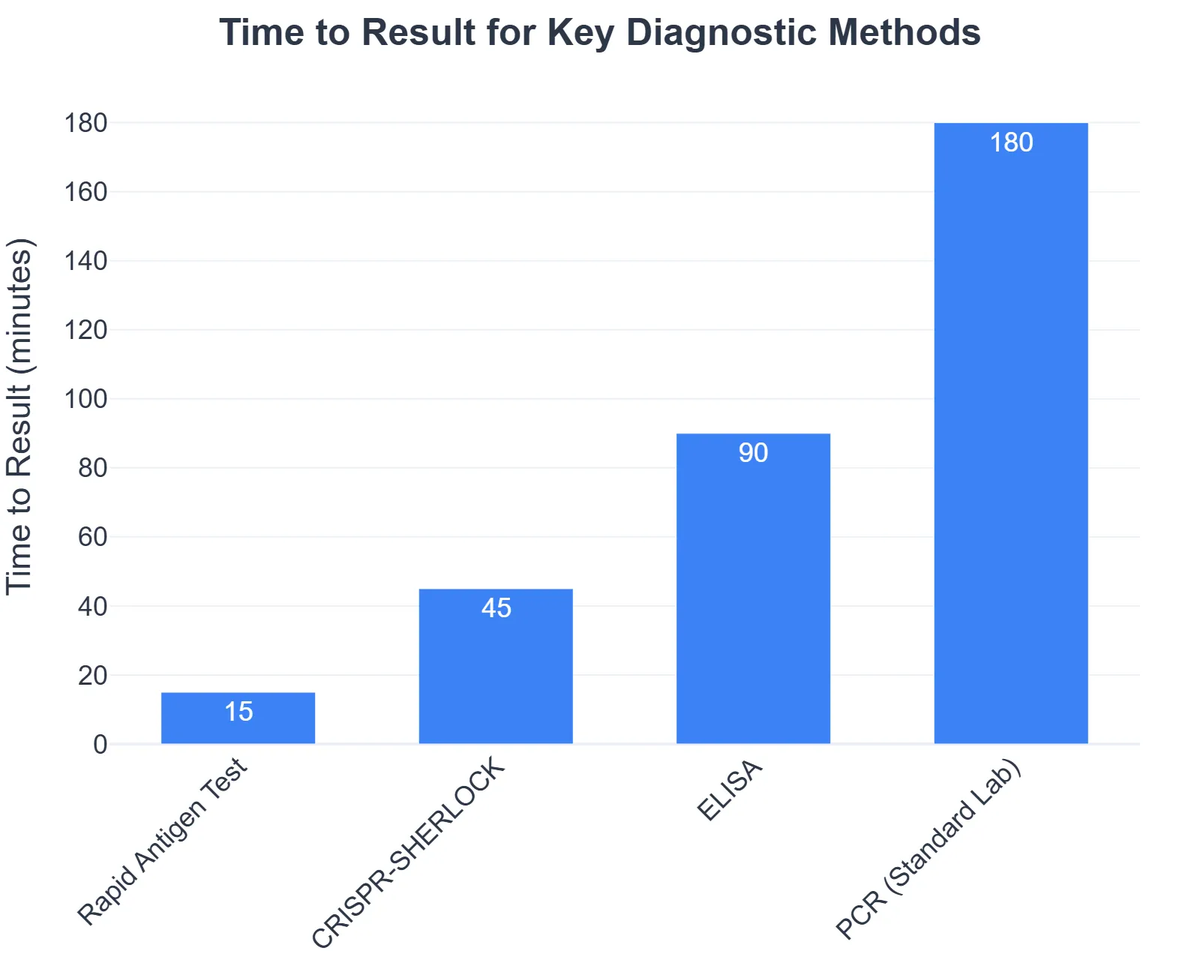
- ➡️ Rapid Turnaround Time: The entire detection process, from sample input to result, can often be completed within an hour, significantly faster than many conventional PCR-based tests that require thermal cycling. This speed is crucial for emergency diagnostics and outbreak management.
- 💡 Portability and Point-of-Care Potential: SHERLOCK systems can be designed to be simple, portable, and low-cost, requiring minimal specialized equipment. This makes them ideal for use in resource-limited settings, remote clinics, or even home testing, effectively democratizing advanced molecular diagnostics.
- 💰 Cost-Effectiveness: With its minimal equipment requirements and relatively inexpensive reagents, SHERLOCK offers a cost-effective solution for large-scale testing and routine screening, potentially lowering the barrier to access for molecular diagnostics globally.
- 🦠 Versatility Across Targets: Whether it’s detecting RNA viruses like SARS-CoV-2, DNA bacteria like Mycobacterium tuberculosis, or specific genetic mutations indicative of cancer, SHERLOCK’s adaptable design allows it to be tailored to a vast array of nucleic acid targets.
- 🧪 Simplicity of Operation: The visual readout, often through fluorescence or a simple paper strip test (like a pregnancy test), eliminates the need for highly trained personnel or complex data interpretation, making it accessible to a wider user base.
These advantages are a testament to the ingenuity of repurposing biological mechanisms for practical, real-world applications. The company Sherlock Biosciences has been instrumental in advancing this technology for commercial use, as highlighted on their official website.
Applications Across Industries: Where SHERLOCK Shines
The versatility and efficacy of CRISPR-SHERLOCK extend its utility far beyond the initial scope of infectious disease detection. Its potential to rapidly and accurately identify specific genetic sequences makes it invaluable across diverse sectors, promising to revolutionize diagnostic capabilities in numerous fields.
- 🏥 Clinical Diagnostics:
- ✅ Pathogen Detection: Rapid identification of viruses (e.g., influenza, Zika, HIV, SARS-CoV-2), bacteria (e.g., antibiotic-resistant strains), and parasites. Crucial for guiding immediate treatment and preventing outbreaks.
- ➡️ Oncology: Detecting cancer-associated mutations in liquid biopsies (e.g., circulating tumor DNA), enabling early diagnosis, monitoring treatment response, and identifying residual disease.
- 💡 Genetic Disorders: Screening for specific genetic variations or mutations associated with inherited diseases, facilitating early intervention and genetic counseling.
- 🌍 Public Health & Epidemiology:
- 🔬 Outbreak Surveillance: Real-time monitoring of disease spread in communities, allowing for quicker implementation of public health measures.
- 📊 Antimicrobial Resistance (AMR): Rapid detection of genes conferring antibiotic resistance, informing appropriate treatment choices and reducing the spread of superbugs.
- 🌽 Food Safety & Agriculture:
- 🍎 Foodborne Pathogen Detection: Identifying harmful bacteria (e.g., Salmonella, E. coli) or viruses in food products, preventing contamination and ensuring consumer safety.
- 🌱 Crop Disease Detection: Early identification of plant pathogens in the field, safeguarding agricultural yields and food security.
- 🧬 GMO Detection: Verifying the presence or absence of genetically modified organisms in crops. For more insights into CRISPR’s role in this area, see our article on CRISPR and Food: Shaping the Future of Agriculture.
- 💧 Environmental Monitoring:
- 🌊 Water Quality Testing: Detecting microbial contaminants or pollutants in water sources to ensure public safety and environmental health.
- 🌳 Biodiversity Monitoring: Identifying specific species or invasive organisms in environmental samples.
This wide array of applications underscores the transformative power of CRISPR-SHERLOCK, positioning it as a pivotal technology for improving global health, safety, and sustainability. For a broader perspective on how biotechnology is impacting various industries, consider exploring Top Biotech Companies: Innovators Shaping Our Future.
Recommended Video
Challenges and The Road Ahead for CRISPR-SHERLOCK
While the promise of CRISPR-SHERLOCK is immense, its journey from groundbreaking research to widespread adoption is not without hurdles. Addressing these challenges is crucial for realizing its full potential as a standard diagnostic tool across various sectors.
- ⚖️ Regulatory Approval: Like any novel diagnostic technology, SHERLOCK systems must undergo rigorous testing and secure approvals from regulatory bodies (e.g., FDA in the US, EMA in Europe). This process can be lengthy and complex, requiring extensive clinical validation.
- 🏭 Scalability and Manufacturing: Translating laboratory-scale production into mass manufacturing for global distribution presents significant logistical and technical challenges. Ensuring consistent quality and cost-effectiveness at scale is paramount.
- 🧪 Integration into Existing Healthcare Infrastructure: Seamlessly integrating these new diagnostic tools into diverse healthcare systems, especially in resource-limited settings, requires careful planning, training, and robust supply chains.
- 💡 Educating Users: For point-of-care diagnostics, ensuring that non-specialized personnel can accurately perform tests and interpret results is essential. This necessitates intuitive design and comprehensive training materials.
- 🌍 Addressing Equity and Access: While SHERLOCK has the potential to democratize diagnostics, ensuring equitable access globally, particularly in low-income countries, will require strategic partnerships and affordable pricing models.
- 🔬 Expanding Detection Capabilities: Ongoing research aims to further enhance sensitivity, broaden the range of detectable targets, and develop multiplexed assays that can detect multiple pathogens or markers simultaneously from a single sample.
Despite these challenges, the trajectory for CRISPR-based diagnostics like SHERLOCK is overwhelmingly positive. Continuous innovation, collaborative efforts between academia and industry, and increased investment are driving rapid progress. As detailed in recent research, the implications for rapid and accessible diagnostics are profound, promising a future where advanced molecular testing is no longer confined to specialized laboratories but available wherever it’s needed (e.g., CRISPR‑based diagnostic approaches: Implications for rapid…).
The evolution of CRISPR-SHERLOCK exemplifies the dynamic nature of The Code of Life: Decoding Genetics, Evolution, and Existence itself – a testament to how our deepening understanding of molecular biology can yield practical tools with far-reaching impacts on human health and beyond. The future of rapid diagnostics is undoubtedly brighter with SHERLOCK leading the way.
What is CRISPR-SHERLOCK?
CRISPR-SHERLOCK (Specific High-sensitivity Enzymatic Reporter unLOCKing) is a diagnostic platform that uses CRISPR-Cas systems to detect specific DNA or RNA sequences, indicating the presence of pathogens or genetic mutations.
How does it differ from traditional diagnostic tests?
Unlike traditional methods that can be slow and require specialized lab equipment, SHERLOCK offers rapid, highly sensitive detection without complex purification steps, making it suitable for point-of-care use.
What diseases can CRISPR-SHERLOCK detect?
It has been successfully applied to detect viruses like Zika, Dengue, and COVID-19, bacterial infections, and genetic markers for cancer, demonstrating broad applicability in molecular diagnostics.