

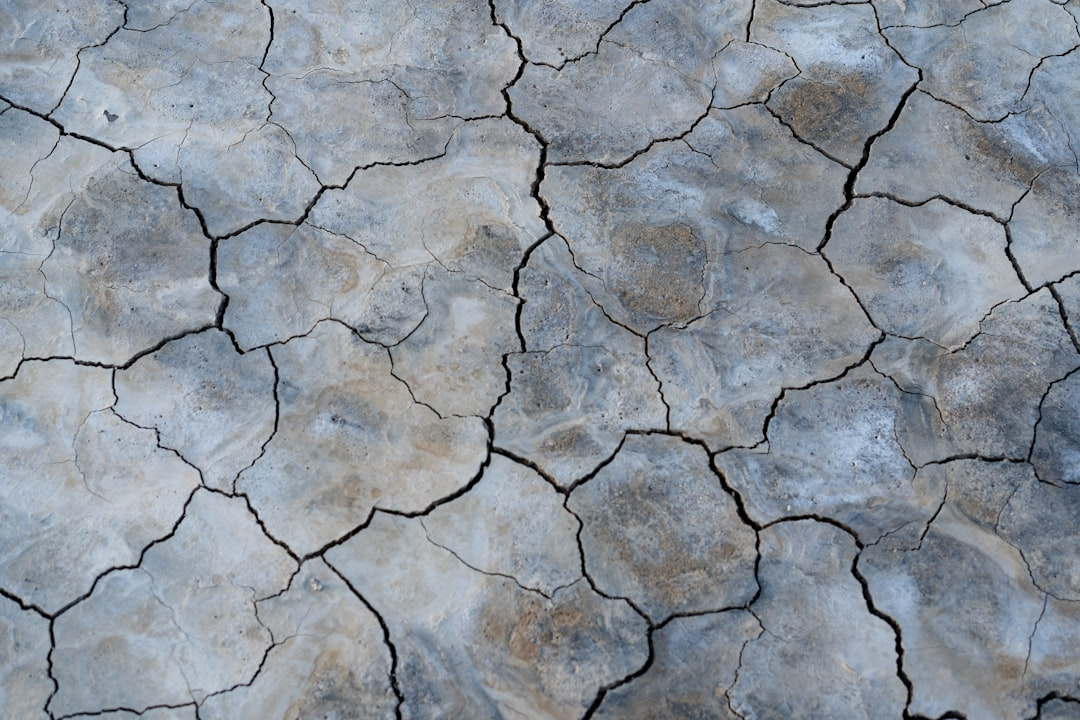
Geological Fissures: Cracks in Earth’s Crust
Beneath the stable ground we walk on lies a dynamic, ever-changing planet, shaped by forces immense and ancient. Among the most visible manifestations of these hidden dynamics are geological fissures – profound cracks and fractures in the Earth’s crust. These aren’t just minor surface cracks; they are often deep, extensive features that reveal the immense stresses and movements occurring within our planet.
💡 Key Takeaways
- Geological fissures are natural breaks or cracks in the Earth’s crust, primarily caused by tectonic forces.
- They play a crucial role in shaping landforms, influencing groundwater flow, and affecting seismic activity.
- Understanding fissure formation helps predict geological hazards and comprehend planetary dynamics.
- Fissures range from microscopic cracks to massive canyons, reflecting various geological stresses.
“Geological fissures are more than just cracks; they are Earth’s living scars, continuously revealing the dynamic ballet of tectonic forces and whispering tales of past and future planetary shifts.”
— Marcus Sterling, Geophysical Explorer & Climate Dynamics Analyst
Understanding these fissures is crucial for deciphering Earth’s past, predicting future geological events, and mitigating potential hazards. From the slow creep of tectonic plates to sudden seismic events, these geological features are silent witnesses to the Earth’s ongoing evolution. They influence everything from volcanic activity to groundwater flow, making them a vital subject for anyone interested in Earth’s Unseen Forces: The Hidden Dynamics of Our Planet.
In This Article
- → Geological Fissures: Cracks in Earth’s Crust
- — 💡 Key Takeaways
- → What Exactly Are Geological Fissures?
- — 📚 Defining the Cracks
- — 📏 Beyond Simple Cracks: Scale and Depth
- → The Tectonic Symphony: How Fissures Form
- — 🌍 Plate Tectonics: The Primary Driver
- — 💥 Stress, Strain, and Rupture
- — 💧 Role of Water and Subsidence
- → Types of Geological Fissures
- — ↔️ Tensional Fissures (Rifts)
- — ➡️ Shear Fissures (Faults)
- — 🌋 Volcanic Fissures
- — ⬇️ Subsidence Fissures
- → The Dynamic Impact of Fissures on Our Planet
- — quake Seismic Activity and Earthquakes
- — 🔥 Volcanic Eruptions and Lava Flows
- — 💧 Groundwater Dynamics
- — ⛰️ Landslides and Geohazards
- → Detecting and Monitoring Earth’s Cracks
- — 🛰️ Remote Sensing Technologies
- — 🚧 Ground-Based Monitoring
- — 🗺️ Geological Mapping
- → Fissures in Human Context: Risks and Resources
- — 🏗️ Infrastructure Challenges
- — 💡 Geothermal Energy and Mineral Deposits
- — 🛡️ Protecting Communities
- → Conclusion
What Exactly Are Geological Fissures?

At its core, a geological fissure is a deep, narrow opening or crack in a rock mass or the Earth’s surface. Unlike simple surface cracks caused by erosion or drying, fissures extend significant depths, often indicating underlying geological processes. They are a direct result of the immense pressures and stresses that build up within the Earth’s crust.
📚 Defining the Cracks
- ✅ Fractures in Rock: Geologically, a fissure is a linear feature of considerable extent where rock has separated. This separation can be due to tension (pulling apart), shear (sliding past each other), or compression (pushing together, though tension and shear are more common for open cracks).
- ➡️ Distinct from Faults: While related, a fissure is not always a fault. A fault is a fracture along which there has been significant displacement of the rock masses on either side. Fissures can be opening fractures without substantial movement parallel to the fracture plane, though they can evolve into or be associated with faults.
- 💡 Common Occurrence: Fissures can occur in various geological settings, from stable continental interiors to active plate boundaries, though their scale and origin will vary significantly.
📏 Beyond Simple Cracks: Scale and Depth
The scale of geological fissures can range from a few meters long and shallow, to many kilometers in length and hundreds of meters deep. Their depth is particularly important as it indicates their connection to deeper geological processes.
- ✅ Surface Manifestations: Many fissures are visible at the surface, appearing as long, linear cracks that can be a few inches to many feet wide.
- ➡️ Underground Networks: Others may exist entirely underground, forming complex networks that influence groundwater flow or act as conduits for magma in volcanic regions.
- 💡 Indicators of Stress: The presence and orientation of fissures provide geologists with critical clues about the stress fields acting on the crust in a particular region.
The Tectonic Symphony: How Fissures Form
The primary mechanism behind the formation of most large-scale geological fissures is the relentless movement of Earth’s tectonic plates. These colossal slabs of lithosphere are constantly interacting, creating zones of immense stress and strain that eventually cause the crust to crack.
🌍 Plate Tectonics: The Primary Driver
Our planet’s outer shell is broken into several large and small plates that are constantly moving, driven by convection currents in the underlying mantle. This movement leads to three main types of plate boundaries, each capable of generating fissures:
- ✅ Divergent Boundaries: Where plates pull apart, tension dominates. This stretching causes the crust to thin, fracture, and subside, forming rift valleys and mid-ocean ridges. These are prime locations for large tensional fissures.
- ➡️ Convergent Boundaries: Where plates collide, compression and subduction occur. While often associated with mountain building and earthquakes, the intense forces can also lead to fracturing and faulting, sometimes creating fissures as rocks are uplifted and stretched.
- 💡 Transform Boundaries: Where plates slide past each other horizontally, shear forces are immense. This grinding motion creates strike-slip faults, which are essentially large-scale shear fissures.
Learn more about how these geological processes affect different rock types by exploring our guide on Black Metamorphic Rock: A Comprehensive Guide.
💥 Stress, Strain, and Rupture
Geological fissures form when the stress (force applied per unit area) on a rock exceeds its strength. This process involves:
- Elastic Deformation: Initially, rocks deform elastically, meaning they can return to their original shape once the stress is removed.
- Ductile Deformation: If stress continues to increase, rocks may deform plastically or ductilely, bending and folding without fracturing. This is common at higher temperatures and pressures deeper within the Earth.
- Brittle Fracture: When stress surpasses the rock’s yield strength, especially in cooler, shallower parts of the crust, it breaks, resulting in a fissure or fault. This sudden release of accumulated energy often causes seismic events.
💧 Role of Water and Subsidence
While tectonic forces are the primary drivers, other factors can exacerbate or induce fissure formation:
- ✅ Groundwater Withdrawal: Excessive pumping of groundwater can lead to land subsidence, where the ground sinks. This can cause significant tension and cracking at the surface, creating subsidence-induced fissures. This phenomenon is particularly well-documented in regions like Arizona, as highlighted by the Arizona Geological Survey.
- ➡️ Hydrothermal Activity: Water heated by geological processes can interact with rock, altering its strength and contributing to fracturing.
- 💡 Karst Topography: In areas with soluble bedrock (like limestone), the dissolution of rock by groundwater creates underground caverns. Collapse of these caverns can lead to sinkholes and surface fissures.
Types of Geological Fissures
Geological fissures manifest in various forms, each indicative of the specific forces and geological contexts that created them. Understanding these types helps in interpreting the Earth’s dynamic history.
↔️ Tensional Fissures (Rifts)
These are perhaps the most archetypal fissures, formed when the Earth’s crust is pulled apart. They are characteristic of divergent plate boundaries and areas experiencing regional extension.
- ✅ Appearance: Often long, linear cracks that can be relatively wide at the surface and taper with depth.
- ➡️ Examples: The East African Rift Valley is a colossal example of tensional fissuring on a continental scale, where the African plate is slowly splitting apart.
➡️ Shear Fissures (Faults)
While all faults are fractures, some manifest as clear fissures or zones of intense fracturing where rock masses slide past each other. These are common at transform plate boundaries.
- ✅ Appearance: Can appear as linear depressions or scarps at the surface, or as zones of crushed rock.
- ➡️ Examples: The San Andreas Fault in California is a famous example of a shear zone where the Pacific and North American plates grind past each other.
🌋 Volcanic Fissures
These are cracks that extend from magma chambers to the surface, allowing lava to erupt directly from the ground rather than from a central vent. They are common in areas of active volcanism.
- ✅ Role in Eruptions: Fissure eruptions can produce vast lava flows, such as those that formed the Columbia River Basalt Group or the extensive lava fields in Iceland.
- ➡️ Relationship to Plate Tectonics: Often associated with divergent plate boundaries (like mid-ocean ridges) or hot spots, where the crust is thin and under tension. For more, see the National Geographic article on Plate Tectonics and Volcanic Activity.
⬇️ Subsidence Fissures
These fissures form due to the sinking or collapse of the ground, often triggered by human activities or natural processes like karst formation.
- ✅ Causes: Over-pumping of groundwater, oil and gas extraction, or the dissolution of soluble rocks underground.
- ➡️ Impact: Can cause significant damage to infrastructure and pose hazards to communities built on susceptible land.
The Dynamic Impact of Fissures on Our Planet
Geological fissures are not merely static cracks; they are active components of Earth’s dynamic systems, influencing various natural phenomena and processes.

quake Seismic Activity and Earthquakes
Many of the world’s most powerful earthquakes originate along geological fissures and faults. When stress accumulates beyond the rock’s capacity to deform, it ruptures, releasing energy in the form of seismic waves.
- ✅ Fault Movement: Earthquakes occur when there is sudden movement along a fault plane, which is essentially a large, active fissure.
- ➡️ Seismic Hazards: Understanding the location and activity of major fissures is critical for assessing seismic hazard risks in populated areas.
🔥 Volcanic Eruptions and Lava Flows
Volcanic fissures serve as conduits for magma to rise from the mantle to the surface. These can lead to effusive eruptions, where molten rock flows steadily from the ground, shaping vast landscapes.
- ✅ Magma Pathways: Fissures provide the easiest path for low-viscosity magma to reach the surface, often leading to shield volcanoes or extensive basaltic plains.
- ➡️ Geological Evolution: Over geological timescales, fissure eruptions have played a significant role in forming new crust and altering atmospheric composition.
💧 Groundwater Dynamics
Fissures act as preferential pathways for water infiltration and movement within the subsurface. They can connect surface water bodies to deep aquifers or even alter existing groundwater flow paths.
- ✅ Aquifer Recharge: In some regions, fissures are vital for recharging underground water reserves.
- ➡️ Contaminant Transport: Conversely, fissures can facilitate the rapid spread of pollutants through groundwater systems, posing environmental challenges.
⛰️ Landslides and Geohazards
Fissures can weaken rock masses, making them more susceptible to landslides and other mass wasting events, especially when combined with factors like heavy rainfall or seismic shaking.
- ✅ Slope Instability: Fractured rock is less stable, increasing the risk of slope failure.
- ➡️ Infrastructure Threat: These hazards pose direct threats to human settlements, roads, and other critical infrastructure.
The intricate web of geological forces also impacts marine ecosystems, as seen in the fascinating structures that support life, like those explored in Coral Reef Ecology: A Deep Dive into Animal Life and Ecosystems.
Detecting and Monitoring Earth’s Cracks
Given their significant impact, geologists and engineers employ various techniques to detect, map, and monitor geological fissures, both for scientific understanding and hazard mitigation.
🛰️ Remote Sensing Technologies
Satellite imagery, aerial photography, and drone technology are invaluable for identifying fissures, especially those that are extensive or occur in remote areas.
- ✅ Satellite Imagery: High-resolution satellite images can reveal linear features indicative of fissures that might be hard to spot on the ground.
- ➡️ Lidar and Radar: Light Detection and Ranging (Lidar) and Radar techniques can create detailed topographic maps, highlighting subtle changes in elevation that point to fissures.
🚧 Ground-Based Monitoring
For active fissures, direct ground-based measurements provide precise data on their movement and behavior.
- ✅ GPS and InSAR: Global Positioning System (GPS) receivers and Interferometric Synthetic Aperture Radar (InSAR) use satellite signals to detect minute ground deformation over time, indicating fissure movement.
- ➡️ Extensometers: Instruments placed across fissures can measure their opening or closing rates.
- 💡 Acoustic Monitoring: Scientists are even listening to the “sounds” of Earth’s crust as it cracks and shifts, providing insights into fissure activity, as explored by MIT News.
🗺️ Geological Mapping
Fieldwork remains fundamental. Geologists directly observe, measure, and map fissures on the ground, gathering data on their orientation, length, depth, and associated rock types.
- ✅ Direct Observation: Essential for verifying remote sensing data and understanding the local geological context.
- ➡️ Hazard Assessment: Mapping helps in delineating hazard zones and informing land-use planning.
Fissures in Human Context: Risks and Resources
The presence of geological fissures has direct implications for human society, presenting both challenges and opportunities.
🏗️ Infrastructure Challenges
Fissures can pose significant risks to infrastructure, leading to costly damage and safety concerns.
- ✅ Building Foundations: Structures built over active fissures can suffer severe cracking, differential settling, and structural failure.
- ➡️ Pipelines and Roads: Linear infrastructure like pipelines, roads, and railways are particularly vulnerable to disruption by fissure movement.
- 💡 Water Management: Fissures can lead to water loss from canals and reservoirs or create unexpected flooding by altering drainage patterns.
💡 Geothermal Energy and Mineral Deposits
While posing risks, fissures can also be pathways for valuable resources.
- ✅ Geothermal Energy: Fissures and faults allow superheated water and steam from deep within the Earth to rise closer to the surface, making areas viable for geothermal power generation.
- ➡️ Mineral Concentration: Hydrothermal fluids circulating through fissures can deposit valuable minerals, forming economically significant ore deposits.
🛡️ Protecting Communities
Effective management of fissure-related hazards requires a multi-faceted approach.
- ✅ Hazard Mapping: Identifying and mapping active fissure zones is the first step in land-use planning and building codes.
- ➡️ Engineering Solutions: For unavoidable crossings, engineers design flexible infrastructure or employ specialized construction techniques to accommodate ground movement.
- 💡 Public Awareness: Educating communities about the risks and how to respond is crucial for safety.
Recommended Video
Conclusion
Geological fissures are much more than mere cracks in the ground; they are dynamic features reflecting the powerful, unseen forces constantly reshaping our planet. From their origins in the colossal movements of tectonic plates to their profound impact on seismic activity, volcanic eruptions, and even human infrastructure, fissures underscore the Earth’s restless nature. By continuously studying and monitoring these fascinating features, we gain a deeper understanding of our planet’s hidden dynamics and can better prepare for its future transformations. Their presence is a constant reminder of the intricate and interconnected systems that make up Earth’s Unseen Forces: The Hidden Dynamics of Our Planet.
Frequently Asked Questions
What causes geological fissures?
Geological fissures are primarily caused by the tensional and compressional forces of plate tectonics, leading to the stretching, breaking, or shearing of the Earth’s crust.
Are all geological fissures dangerous?
Not all fissures are dangerous. While some can indicate seismic risk or ground instability, many are natural, stable features essential to geological processes like water flow and mineral deposition.
How do fissures differ from faults?
A fissure is a crack or opening in the rock, whereas a fault is a fracture along which there has been significant displacement or movement of the rock masses on either side.
Can human activity create fissures?
Yes, activities like excessive groundwater extraction, mining, and large-scale construction can induce or reactivate fissures, especially in unstable geological areas.