


The Foundations of Heredity: What Are Genetics?
Understanding how characteristics pass from one generation to the next is fundamental to comprehending life itself. This field of study is known as genetics, and it unravels the intricate mechanisms by which biological information is transmitted.
💡 Key Takeaways
- Genes are the fundamental units of heredity, carrying instructions for building and maintaining an organism.
- Heredity is the process by which traits are passed from parents to their offspring.
- DNA is the molecule that contains the genetic code, determining an individual’s unique characteristics.
- Understanding dominant and recessive alleles helps explain how certain traits are expressed or masked.
“Our DNA is a living historical record, detailing not just who we are, but the evolutionary journey that brought us here. Understanding its legacy is key to comprehending life itself.”
— Julian Aris, PhD, Geneticist & Evolutionary Biologist
At its core, heredity is the process by which parents pass on biological traits to their offspring. From eye color and hair texture to predispositions for certain health conditions, nearly every aspect of our physical makeup and even some behavioral tendencies have a genetic component. This incredible flow of information is orchestrated by the blueprints found within our cells.
In This Article
- → The Foundations of Heredity: What Are Genetics?
- — 💡 Key Takeaways
- — 🔍 What Exactly Are Genes and Traits?
- → How Traits Are Passed Down: Mendel’s Principles
- — 🌱 Dominant and Recessive Inheritance
- — 🧬 Genotype vs. Phenotype
- → Beyond Simple Inheritance: Complex Patterns
- — 🔗 Understanding Different Inheritance Patterns
- — 💖 The Role of Environment and Epigenetics
- → The Molecular Basis: DNA, Genes, and Chromosomes
- — 🔬 From DNA to Chromosomes
- → Why Understanding Heredity Matters
🔍 What Exactly Are Genes and Traits?
- ✅ Genes: These are the fundamental units of heredity. Genes are specific segments of DNA Structure and Function: A Simple Explanation that contain the instructions for building and maintaining an organism. Think of them as individual recipes in a vast cookbook.
- ✅ Traits: These are the observable characteristics or features of an organism. Traits can be physical (like height or blood type), biochemical (like enzyme production), or even behavioral. Traits are the “dishes” prepared from the genetic “recipes.”
- ✅ Alleles: For many genes, there are different versions or variations. These variations are called alleles. For example, the gene for eye color has alleles for blue, brown, green, and other colors.
How Traits Are Passed Down: Mendel’s Principles
Much of our foundational understanding of heredity comes from the pioneering work of Gregor Mendel, an Austrian monk who conducted experiments with pea plants in the 19th century. His meticulous observations led to the formulation of what are now known as Mendel’s Laws of Inheritance.
🌱 Dominant and Recessive Inheritance
Mendel discovered that traits are not simply blended, but rather inherited as distinct units. He identified two primary types of alleles:
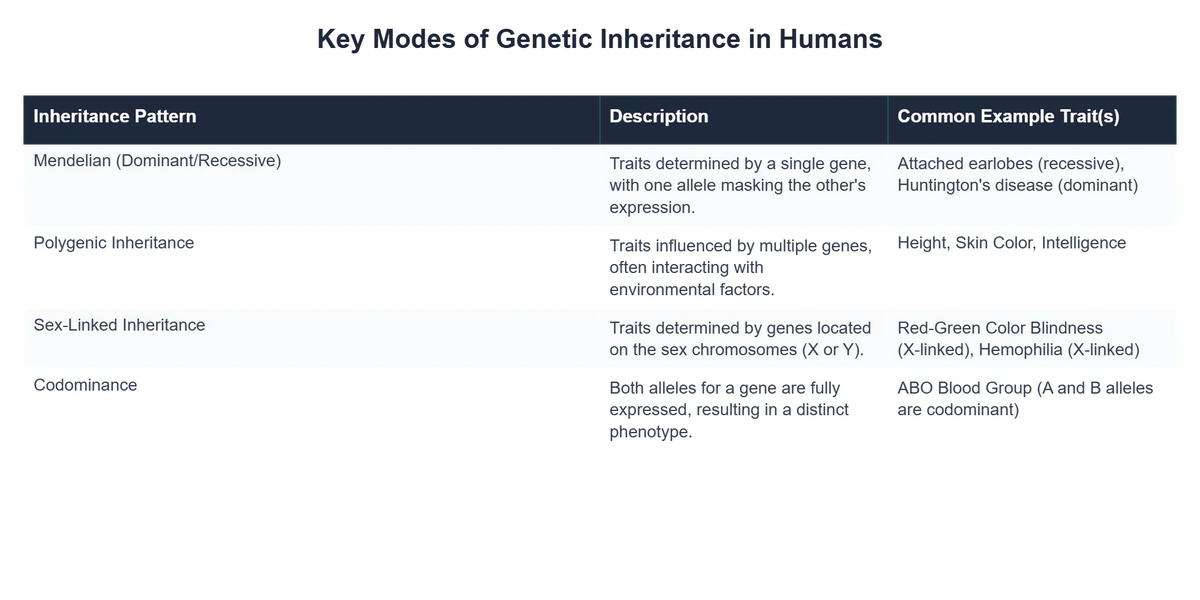
- ➡️ Dominant Alleles: A dominant allele expresses its associated trait even if only one copy is present. If you inherit a dominant allele for a trait, that trait will typically be expressed.
- ➡️ Recessive Alleles: A recessive allele only expresses its associated trait if two copies are present (one from each parent). If a dominant allele is also present, the recessive trait will be masked.
A classic example is human dimples. While a common belief, MedlinePlus Genetics clarifies that while genetic, the inheritance pattern of dimples is not as simple as purely dominant/recessive, but it serves as a good illustrative concept for basic understanding. Are facial dimples determined by genetics?
🧬 Genotype vs. Phenotype
To fully grasp inheritance, it’s crucial to distinguish between an organism’s genetic makeup and its observable characteristics:
- 💡 Genotype: This refers to the specific combination of alleles an individual possesses for a particular gene. It’s the genetic code, the “recipe” itself.
- 💡 Phenotype: This is the observable expression of the genotype. It’s the physical manifestation of the traits – what you can actually see or measure. For instance, having brown eyes is a phenotype, while the specific alleles you carry for eye color constitute your genotype.
Beyond Simple Inheritance: Complex Patterns
While Mendel’s principles laid the groundwork, many traits exhibit more complex inheritance patterns than simple dominant-recessive relationships. Human inheritance, in particular, is often multi-faceted.
🔗 Understanding Different Inheritance Patterns
Genetic conditions and traits can be inherited in various ways. These include:
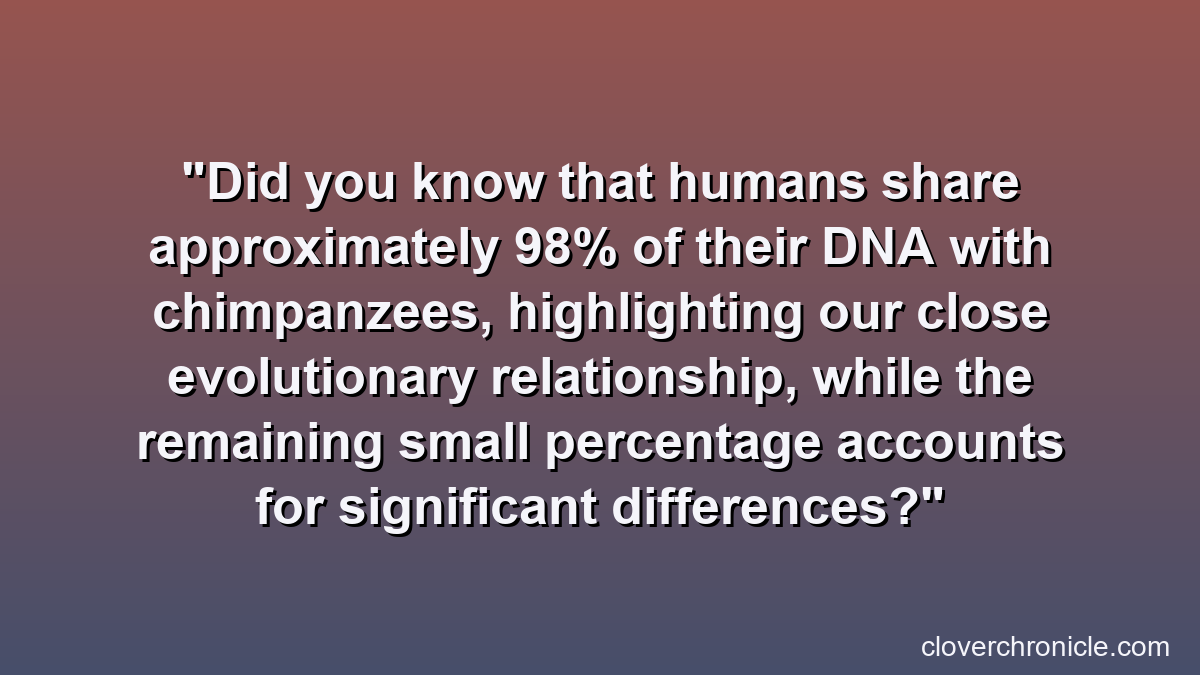
- ✅ Autosomal Dominant: Only one copy of a mutated gene on a non-sex chromosome is needed for the condition to manifest.
- ✅ Autosomal Recessive: Two copies of a mutated gene (one from each parent) are required for the condition to appear. Individuals with one copy are carriers.
- ✅ X-linked Dominant/Recessive: These patterns involve genes located on the X chromosome, leading to different inheritance patterns between males and females.
- ✅ Mitochondrial Inheritance: Traits are passed down solely from the mother, as mitochondria (and their DNA) are inherited only from the egg cell.
- ✅ Polygenic Inheritance: Many traits, like height, skin color, or intelligence, are influenced by multiple genes acting together, often with environmental factors. This is a common and complex form of inheritance.
For a detailed breakdown of different genetic inheritance patterns, the National Library of Medicine provides excellent resources.
💖 The Role of Environment and Epigenetics
It’s important to remember that genetics isn’t the sole determinant of a trait. Environmental factors, lifestyle choices, and even epigenetic modifications can influence how genes are expressed.
- ➡️ Epigenetics: This emerging field studies how external or environmental factors can switch genes “on” or “off” and affect how cells read genes, without altering the underlying Nucleic Acids Explained: A Comprehensive Guide to DNA and RNA sequence.
The Molecular Basis: DNA, Genes, and Chromosomes
At the microscopic level, the instructions for heredity are encoded in DNA. This remarkable molecule is the blueprint of life.
🔬 From DNA to Chromosomes
The journey from a single strand of DNA to a complete organism is orchestrated by several organizational levels:
- 1. DNA: The double-helix structure carrying genetic information. It’s composed of nucleotides.
- 2. Genes: Specific segments of DNA that carry instructions for building proteins or controlling cellular functions.
- 3. Chromosomes: Tightly coiled structures made of DNA and proteins (histones). Humans typically have 23 pairs of chromosomes (46 total) in each cell, with one set inherited from each parent.
The precise replication and segregation of these chromosomes during cell division (mitosis and meiosis) ensure that genetic information is accurately passed from cell to cell and from generation to generation.
Why Understanding Heredity Matters
The study of genetics and heredity is not merely academic; it has profound implications for our daily lives and the future of humanity.
- 💡 Health and Disease: Understanding inheritance patterns is crucial for diagnosing, treating, and even preventing genetic disorders. It informs genetic counseling, personalized medicine, and the development of new therapies.
- 💡 Agriculture: Genetic principles are applied to improve crop yields, disease resistance, and nutritional value in plants, leading to innovations like Crop Genetic Modification: Revolutionizing Agriculture.
- 💡 Evolution and Biodiversity: Heredity is the engine of evolution. Genetic variation, passed down through generations, allows populations to adapt to changing environments, which is vital for Saving Biodiversity: Why It Matters and How to Help and understanding the vast diversity of life on Earth.
- 💡 Forensics and Identity: DNA fingerprinting, a direct application of genetics, is indispensable in criminal investigations and paternity testing.
- 💡 Ethical Considerations: Advances in genetics, such as techniques discussed in Cloning Explained: Science, Ethics & The Future or GMO: Understanding Genetically Modified Organisms, raise important ethical and societal questions that require careful consideration.
Delving into these fascinating concepts provides a richer appreciation for The Code of Life: Decoding Genetics, Evolution, and Existence and our place within it.
Recommended Video
What is the basic difference between genetics and heredity?
Genetics is the scientific study of genes and heredity, while heredity is the actual process by which genetic information and traits are passed from parents to their children.
How do dominant and recessive genes influence traits?
Dominant genes express their trait even if only one copy is present, masking the effect of a recessive gene. Recessive genes only express their trait when two copies are inherited, one from each parent.
Can inherited traits skip a generation?
Yes, traits can appear to skip generations, particularly if they are recessive. An individual might carry the recessive gene without expressing the trait, but can pass it on to their offspring, who may express it if they inherit another recessive gene.
What role does DNA play in heredity?
DNA (deoxyribonucleic acid) is the molecule that carries all the genetic instructions for the development, functioning, growth, and reproduction of all known organisms and many viruses. It’s the blueprint of life passed down through generations.