


In the vast tapestry of Earth’s history, few subjects offer such a profound glimpse into the interplay between geological processes and human evolution as the study of lithics in geology. From the earliest hominins shaping rudimentary choppers to more advanced societies crafting intricate projectile points, stone tools – or lithics – represent the enduring fingerprints of our ancestors on the planet. This field stands at a unique crossroads, bridging the deep time of geology with the rich narrative of archaeology, helping us understand not just how tools were made, but why specific materials were chosen, how ancient landscapes were perceived, and the very dynamics of human settlement and resource utilization.
💡 Key Takeaways
- Lithics are the geological remnants used to craft stone tools, offering a direct link to ancient human activity.
- The material composition of lithics provides insights into local geology and resource availability for prehistoric societies.
- Analyzing stone tools helps reconstruct ancient landscapes, climate patterns, and human migration routes.
- Understanding lithics is crucial for both archaeological interpretation and geological context.
“From a geophysical perspective, lithics are not just artifacts; they are geological time capsules. Their presence, distribution, and composition offer invaluable proxy data for understanding ancient fault lines, sedimentation rates, and even paleo-climatic shifts that shaped human civilization.”
— Marcus Sterling, Geophysical Explorer & Climate Dynamics Analyst
Understanding lithics isn’t just about identifying a sharpened stone; it’s about decoding ancient economies, migrations, technological advancements, and the complex relationship between early humans and their environment. It’s a testament to the ingenuity of our forebears and a critical component of understanding Earth’s Unseen Forces: The Hidden Dynamics of Our Planet, revealing how human activity has long been a significant geological agent.
In This Article
- — 💡 Key Takeaways
- → What Are Lithics and Why Do They Matter?
- — Defining Lithics in a Geological Context
- — The Intersection of Geology and Archaeology
- → The Raw Materials of Ancient Tools: A Geological Perspective
- — Ideal Rock Types for Stone Tool Production
- — Sourcing and Provenance: Tracing Ancient Journeys
- → From Rock to Tool: The Basics of Lithic Production
- — Core Concepts of Flintknapping
- — Common Tool Types and Their Functions
- → Lithic Analysis: Unearthing Clues to Human History
- — Macroscopic vs. Microscopic Examination
- — Residue Analysis and Use-Wear Studies
- — Dating Methods and Contextual Archaeology
- → Lithic Landscapes: How Ancient Humans Shaped Their Environments
- — Quarries and Resource Exploitation
- — The Impact on Geological Formations
- → The Future of Lithic Studies: Technology and Collaboration
- — Digital Archaeology and 3D Modeling
- — Interdisciplinary Approaches
- → Conclusion
What Are Lithics and Why Do They Matter?
At its core, the term “lithics” refers to stone artifacts, specifically those that have been modified by human activity for use as tools or weapons. While seemingly simple, these objects are complex archives of information, offering unparalleled insights into past cultures and environments.
Defining Lithics in a Geological Context
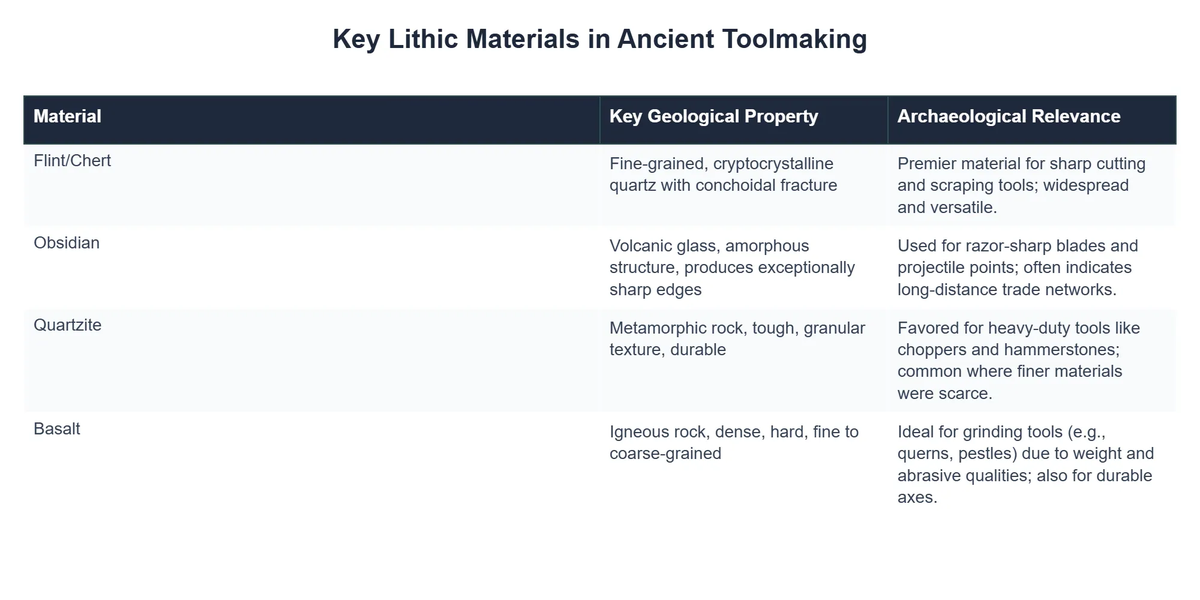
- ✅ Raw Materials: Lithics are fundamentally geological specimens – rocks and minerals chosen for their specific physical properties. Geologists help identify the composition, origin, and formation of these raw materials.
- ➡️ Modification: The defining characteristic of a lithic is intentional modification, usually through a process known as flintknapping, which exploits the conchoidal fracture properties of certain stones.
- 💡 Archaeological Record: Once modified, these stones become part of the archaeological record, serving as direct evidence of ancient human behavior, technology, and subsistence strategies.
The Intersection of Geology and Archaeology
The study of lithics is inherently interdisciplinary. Archaeologists rely on geological principles to understand the source of raw materials, the weathering processes affecting artifacts, and the geological context of sites. Conversely, geologists gain an understanding of how ancient humans interacted with and even altered geological features through quarrying and resource exploitation.
- 🌍 Paleoenvironmental Reconstruction: The types of stone available and used can inform us about past environmental conditions and geological formations in a region.
- 🗺️ Mobility Patterns: Tracing the geological origin of exotic stone tools helps reconstruct ancient trade networks, migration routes, and territorial ranges.
- ⛏️ Resource Management: Lithic studies reveal how early humans identified, accessed, and managed geological resources, often with sophisticated knowledge of local geology.
The Raw Materials of Ancient Tools: A Geological Perspective
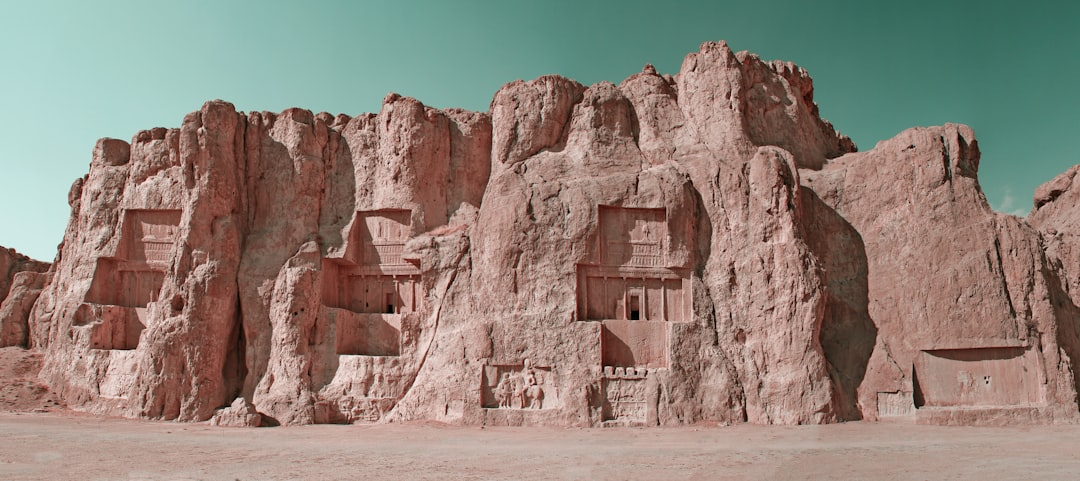
Not all rocks are created equal when it comes to making effective stone tools. Ancient toolmakers possessed an intimate knowledge of geological materials, selecting those with properties ideal for shaping and durability.
Ideal Rock Types for Stone Tool Production
The most desirable lithic raw materials exhibit a property called conchoidal fracture, meaning they break with smooth, curved surfaces resembling the inside of a seashell. This allows for predictable flaking and the creation of sharp edges.
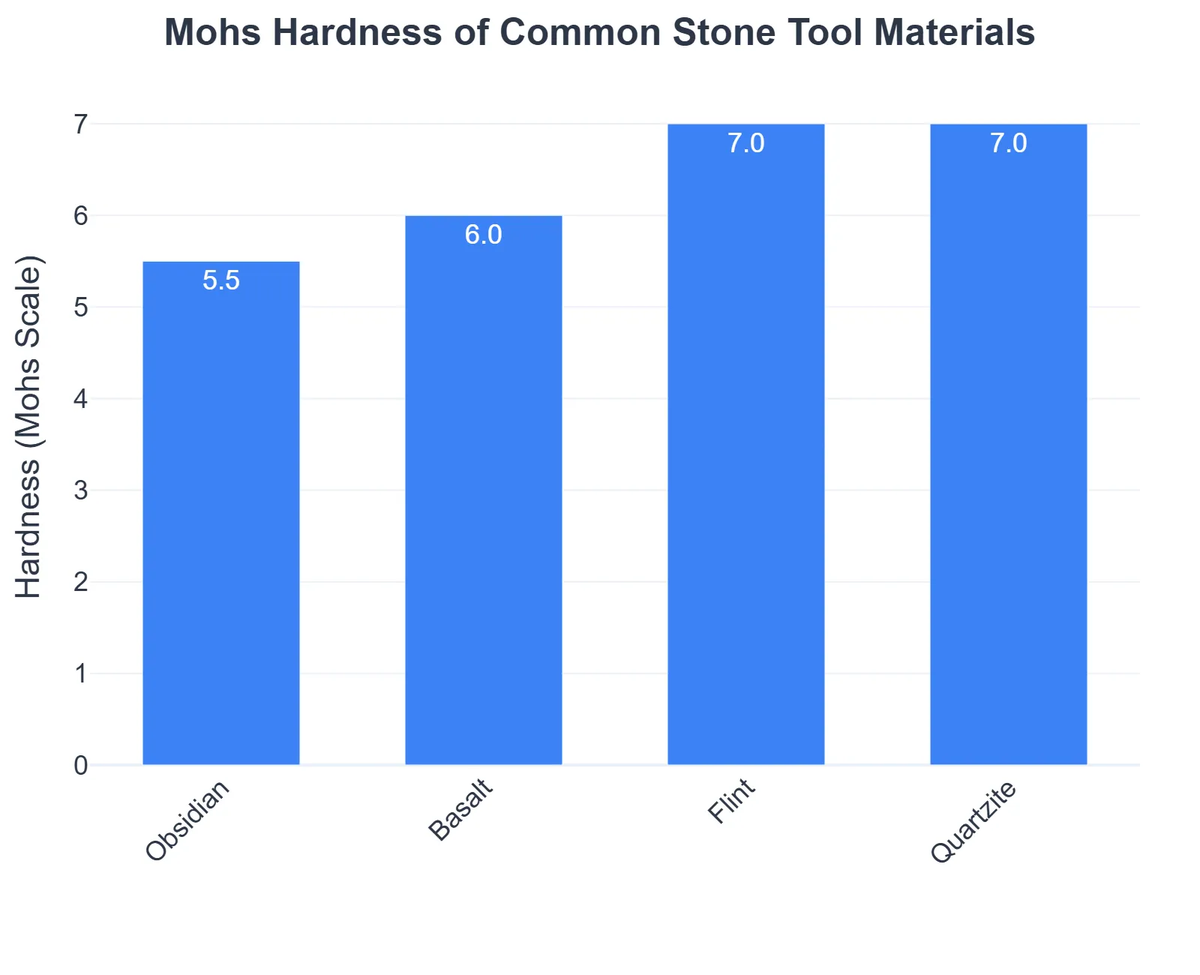
- 🔪 Flint and Chert: These microcrystalline quartz varieties are among the most prized materials due to their excellent conchoidal fracture, hardness, and widespread availability. They are often found in sedimentary deposits, sometimes associated with Concretions in Geology: Unraveling Earth’s Mineral Formations.
- 🌋 Obsidian: A volcanic glass, obsidian offers an exceptionally sharp edge, making it highly valued. Its distinct geological origin makes it particularly useful for sourcing studies. For a deeper look at volcanic processes, consider our article on Mylonite Geology: Understanding Rocks Formed by Extreme Shear, although obsidian forms differently.
- 💎 Quartzite: A metamorphic rock primarily composed of quartz, quartzite can also exhibit good conchoidal fracture and was widely used, especially where flint or obsidian were scarce.
- ⛰️ Basalt and Other Igneous Rocks: While not always exhibiting perfect conchoidal fracture, fine-grained basalt or rhyolite were sometimes used, particularly for heavy-duty tools like choppers or grinding stones.
- 🌿 Hornfels: A fine-grained, tough metamorphic rock, hornfels was utilized in various regions, and its sourcing provides valuable data on ancient procurement strategies (Sourcing hornfels artefacts in eastern Tasmania: Understanding …, ScienceDirect).
Sourcing and Provenance: Tracing Ancient Journeys
A crucial aspect of lithic studies involves determining the geological origin (provenance) of the raw material. This process is akin to geological detective work and requires a strong understanding of regional geology, as explored in comprehensive Archaeological field guides.
- 🔍 Geochemical Analysis: Techniques like X-ray fluorescence (XRF) or neutron activation analysis (NAA) can identify trace elements in artifacts, creating a “fingerprint” that can be matched to geological outcrops.
- ➡️ Petrographic Analysis: Microscopic examination of thin sections of the stone can reveal mineral composition and textural characteristics unique to specific geological formations.
- 🚶 Landscape Archaeology: Combining geological mapping with archaeological survey helps identify potential source areas and reconstruct ancient procurement strategies. This can involve identifying ancient quarries or examining how material was transported from natural exposures, much like understanding Talus in Geology: Understanding Scree Slopes and Rockfalls for rockfall accumulation.
From Rock to Tool: The Basics of Lithic Production
The process of transforming raw stone into a functional tool is known as flintknapping, a skilled craft that requires an understanding of material properties, force dynamics, and tool design.
Core Concepts of Flintknapping
Flintknapping relies on striking a stone with another object (a hammerstone or billet) or pressing with a pointed tool (a pressure flaker) to detach flakes in a controlled manner.
Benefits and Challenges of Lithics Research in Geology
Pros
- ✔Provides direct evidence of ancient human behavior and technology.
- ✔Aids in reconstructing past landscapes, resource availability, and paleoenvironments.
- ✔Offers insights into human migration patterns and cultural interactions.
- ✔Contributes to understanding hominin evolution and cognitive development.
Cons
- ✖Requires highly specialized interdisciplinary knowledge for accurate analysis.
- ✖Interpretation can be subjective, especially distinguishing tools from natural breaks.
- ✖Preservation depends on geological processes, potentially losing contextual information.
- ✖Provides limited direct information on non-lithic technologies or social structures.
- 🔨 Percussion Flaking: Involves striking the stone to remove larger flakes. This can be direct (striking directly with a hammerstone) or indirect (using a punch).
- 🤏 Pressure Flaking: Applies precise pressure to remove small, thin flakes, used for refining edges, sharpening, and intricate shaping.
- 📐 Core and Flake: Tool production begins with a “core” stone from which “flakes” are detached. Both cores and flakes can be further modified into tools.
Common Tool Types and Their Functions
The vast array of stone tools reflects the diverse needs and innovations of ancient human societies.
- 🪓 Choppers/Handaxes: Among the earliest tools, often multi-purpose for chopping, digging, and processing.
- 🔪 Scrapers: Used for processing hides, wood, or plant material.
- 🎯 Projectile Points: Arrowheads, spear points, and dart points, designed for hunting and defense.
- 🔪 Blades: Long, narrow flakes with parallel sides, often used as knives or for hafting.
- 🌾 Grinding Stones: Used for processing plant foods, pigments, or minerals, typically made from coarser-grained rocks like Sandstone Geology: Decoding the Story in Sedimentary Rocks.
Lithic Analysis: Unearthing Clues to Human History
Once excavated, lithic artifacts undergo rigorous analysis to extract the maximum amount of information about their creation, use, and the behavior of the people who made them.
Macroscopic vs. Microscopic Examination
- 📏 Macroscopic Analysis: Involves visually inspecting the tool’s form, size, raw material type, presence of cortex (original stone surface), and obvious signs of modification or use. This is often the first step using standard archaeological field guides.
- 🔬 Microscopic Analysis: Utilizes high-powered microscopes to identify minute details like striations, polish, and microscopic fractures that reveal how a tool was used (e.g., cutting meat, scraping wood, processing plants).
Residue Analysis and Use-Wear Studies
Beyond the form of the tool, what it was used for can be determined by analyzing residues left on its surface or characteristic wear patterns.
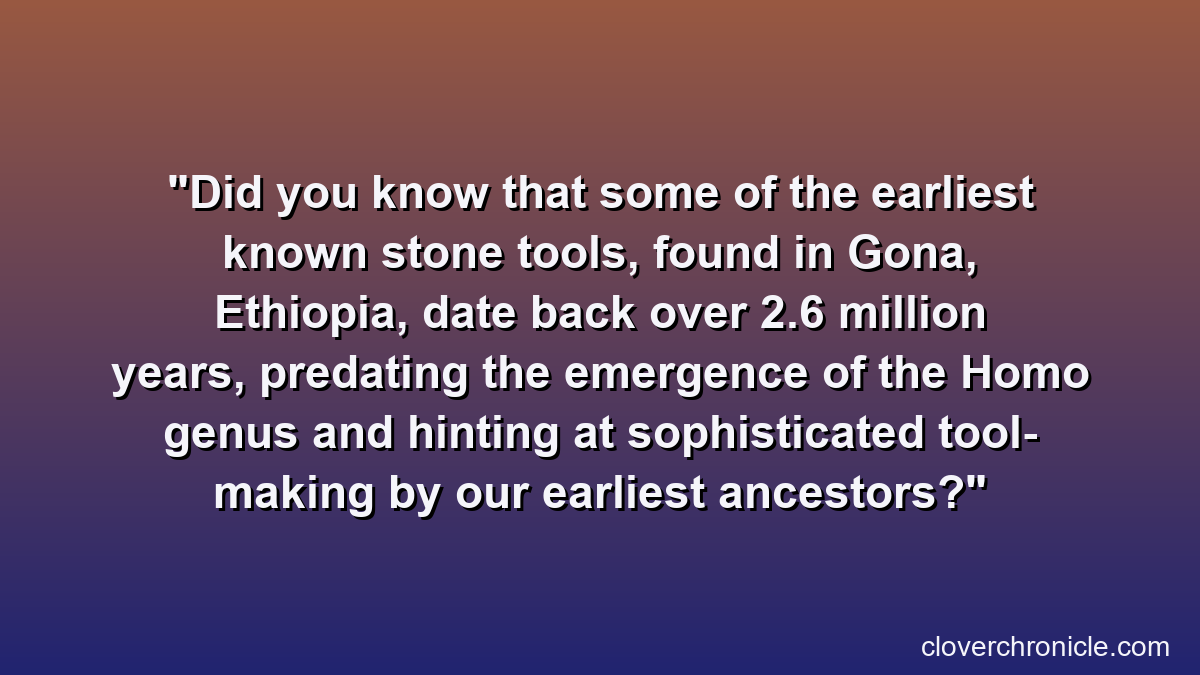
- 🩸 Residue Analysis: Involves examining microscopic organic remains (blood, plant fibers, starches) trapped on tool surfaces, providing direct evidence of their function.
- ✨ Use-Wear Studies: Based on the principle that different activities (e.g., cutting, scraping, drilling) leave distinct microscopic wear patterns (polish, striations, edge damage) on a tool’s edge.
Dating Methods and Contextual Archaeology
Lithics themselves are rarely directly datable, but their association with datable materials (e.g., charcoal for radiocarbon dating) or their position within a geological stratigraphy allows for chronological placement. Understanding sedimentary layers and their formation, as discussed in Lamination in Geology: Decoding Sedimentary Layers, is crucial for accurate dating.
Lithic Landscapes: How Ancient Humans Shaped Their Environments
The distribution of lithic materials and their production sites across a landscape is not random; it reflects deliberate choices and significant human impacts on the environment over millennia.
Quarries and Resource Exploitation
Archaeological quarry sites, where ancient populations extracted raw materials, are profound examples of human-geological interaction. These “lithic landscapes” show systematic, large-scale exploitation of specific geological formations (Lithic Landscapes: Early Human Impact from Stone Tool Production …, PLOS One).
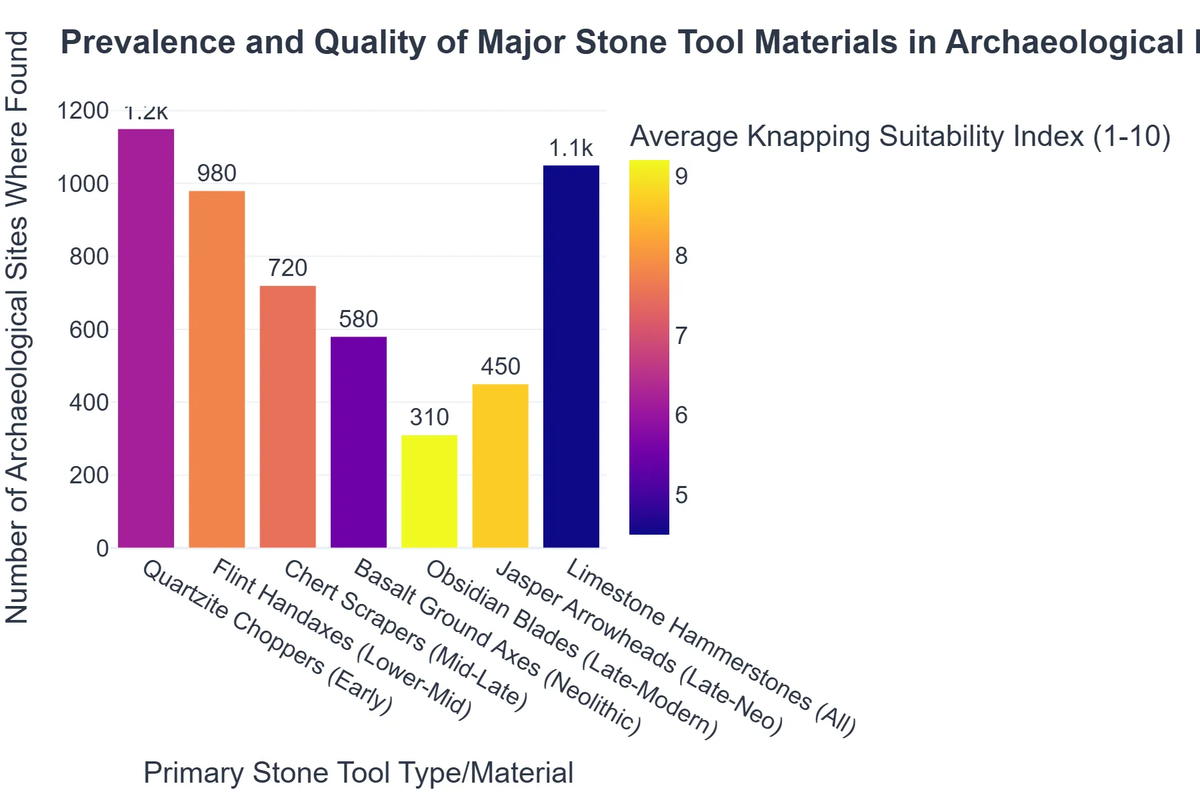
- ⛏️ Extraction Methods: Evidence suggests ancient miners used a variety of techniques, from simple surface collection to complex underground mining shafts.
- 📈 Scale of Impact: Some ancient quarries span many acres, demonstrating significant alteration of the natural landscape for resource extraction, leaving “human fingerprints on an ancient landscape” (NASA Earth Observatory).
The Impact on Geological Formations
The selection and procurement of lithic raw materials directly influenced how ancient populations interacted with and perceived geological features. Volcanic regions, for example, were often prime locations for obsidian or basalt sources, influencing settlement patterns and travel routes (The Volcanic Landscapes of the Ancient Hunter-Gatherers of the …, Frontiers in Earth Science).
- 🔗 Connectivity: The movement of stone tools and raw materials highlights ancient human connectivity across diverse geological zones.
- ♻️ Waste Piles: Production of stone tools generates vast amounts of debitage (waste flakes), which form distinct archaeological features that can persist for millennia, contributing to the geological record.
The Future of Lithic Studies: Technology and Collaboration
The field of lithic studies continues to evolve, incorporating new technologies and fostering greater interdisciplinary collaboration to unlock even more secrets from ancient stone.
Digital Archaeology and 3D Modeling
- 💻 3D Scanning: High-resolution 3D models of lithic artifacts allow for detailed analysis, measurement, and comparison that was previously impossible. They also facilitate virtual sharing and public access.
- 🌐 Geographic Information Systems (GIS): GIS is increasingly used to map raw material sources, artifact distribution, and ancient landscapes, revealing spatial patterns in human behavior.
Interdisciplinary Approaches
The most fruitful advancements often come from combining expertise from various fields.
- 🔬 Materials Science: Applying advanced material characterization techniques to understand the properties of ancient stone tools.
- 🧪 Geoarchaeology: A direct fusion of geology and archaeology, essential for understanding the formation processes of archaeological sites and the geological context of lithic remains.
- 🤖 AI and Machine Learning: Emerging applications for classifying lithic artifacts, identifying patterns in large datasets, and even simulating flintknapping processes.
Recommended Video
Conclusion
The study of lithics in geology offers a compelling narrative of human ingenuity, adaptation, and our enduring relationship with Earth’s materials. From the most basic choppers to exquisitely crafted projectile points, these silent witnesses to human history provide invaluable data on ancient technologies, economies, and the intricate ways in which our ancestors navigated and transformed the landscapes around them. By integrating geological principles with archaeological methods, we continue to unearth the profound stories embedded within these stones, deepening our understanding of human origins and the long-term impact of human activity on our dynamic planet.
Frequently Asked Questions
How do stone tools help us understand ancient landscapes?
By analyzing the types of stone used, where it originated, and how far it traveled, archaeologists can reconstruct ancient trade routes, resource availability, and even the geological stability of past environments.
What is the difference between lithics and petrology?
Petrology is the general study of rocks, including their formation, composition, and structure. Lithics specifically focuses on rocks and minerals used by humans, often in an archaeological or anthropological context, to understand human-environment interactions.
Can lithic analysis inform us about climate change?
Yes, indirectly. Changes in available raw materials, the types of tools made, and settlement patterns derived from lithic studies can correlate with major climatic shifts, indicating adaptations to altered environments.