


In the realm of biotechnology, few advancements have captured the imagination and offered as much revolutionary potential as CRISPR. Short for Clustered Regularly Interspaced Short Palindromic Repeats, this groundbreaking technology has rapidly moved from a scientific curiosity to a powerful tool capable of precisely altering DNA sequences. The advent of crispr dna editing has opened unprecedented avenues for understanding, treating, and potentially curing a vast array of genetic diseases, fundamentally revolutionizing the field of gene therapy.
💡 Key Takeaways
- CRISPR allows for precise and efficient modification of DNA sequences.
- It holds immense promise for treating a wide range of genetic disorders, from cystic fibrosis to sickle cell anemia.
- Ethical considerations and regulatory frameworks are crucial as CRISPR technology advances.
- Ongoing research continues to expand CRISPR’s applications beyond gene therapy, including agriculture and diagnostics.
“CRISPR represents a pivotal moment in our understanding and manipulation of life’s fundamental code. It’s not just a tool; it’s an evolutionary leap in how we approach disease and potentially, our own biological destiny.”
— Julian Aris, Evolutionary Biologist & Geneticist
Once considered the stuff of science fiction, the ability to edit the very blueprint of life is now a tangible reality. This article delves into how CRISPR is transforming medicine, exploring its mechanisms, current applications, ongoing human trials, and the ethical considerations that accompany such a profound power. We’ll examine the immense promise of CRISPR in tackling conditions ranging from inherited disorders to complex diseases like cancer and autoimmune conditions, offering a comprehensive look at how this gene-editing marvel is reshaping our approach to health and existence.
In This Article
- — 💡 Key Takeaways
- → 🔬 What is CRISPR-Cas9 and How Does It Work?
- — 🦠 The Bacterial Defense System: A Natural Origin
- — ✂️ The Mechanism Explained: Precision DNA Editing
- → 🏥 The Promise of CRISPR in Gene Therapy
- — 🧬 Addressing Genetic Disorders
- — 🛡️ Fighting Cancer with Precision
- — 🦠 Tackling Infectious Diseases
- → 🚶 CRISPR Gene Editing in Humans: Current Trials and Progress
- — 📈 Ex Vivo vs. In Vivo Approaches
- — 🏆 Success Stories and Ongoing Research
- → ⚠️ Challenges and Ethical Considerations
- — 🛠️ Off-Target Edits and Delivery Issues
- — 🤔 Ethical Debates: Germline Editing and Designer Babies
- → 🚀 The Future Landscape of CRISPR Technology
- — ✨ Next-Generation CRISPR Systems
- — 🌎 Expanding Therapeutic Applications
- → Conclusion: A New Era in Medicine
🔬 What is CRISPR-Cas9 and How Does It Work?
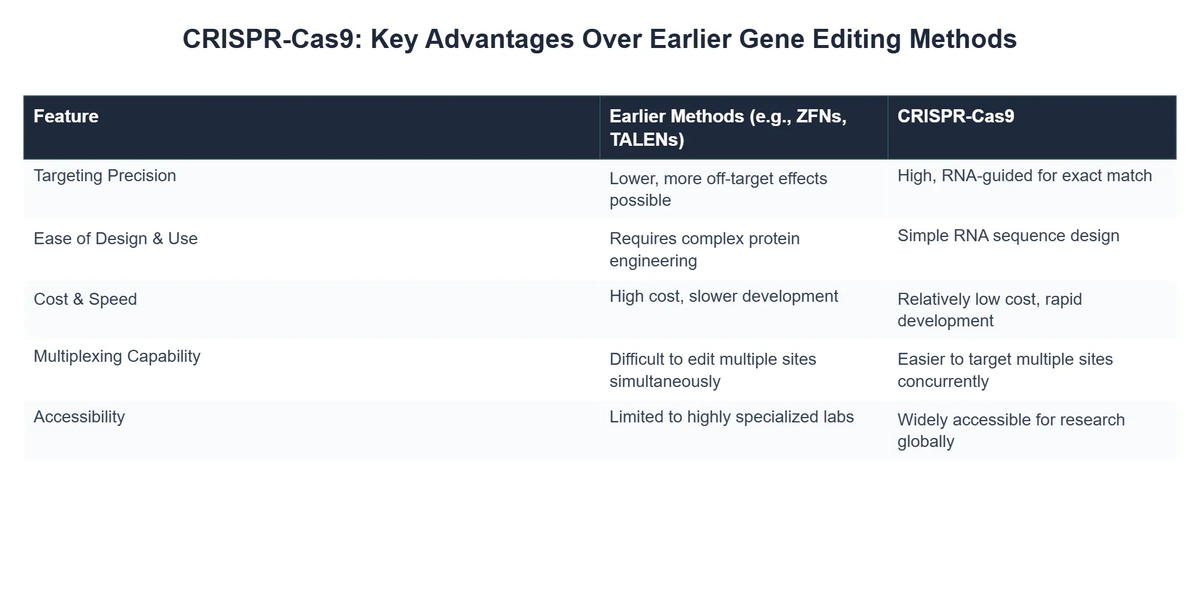
At its core, CRISPR-Cas9 is a sophisticated molecular scissor system derived from a natural bacterial defense mechanism. Bacteria use it to detect and destroy viral DNA, acting as an adaptive immune system. Scientists have repurposed this elegant system for targeted gene editing in virtually any organism, including humans.
🦠 The Bacterial Defense System: A Natural Origin
- ✅ CRISPR arrays: These are segments of bacterial DNA containing short, repeated sequences separated by “spacer” DNA. These spacers are actually fragments of DNA from past viral invaders.
- ✅ Cas (CRISPR-associated) proteins: These enzymes, particularly Cas9, are guided by the CRISPR array to locate and cut foreign DNA.
When a bacterium encounters a virus it has seen before, it transcribes the corresponding spacer into a guide RNA (gRNA). This gRNA then directs the Cas protein to the matching viral DNA sequence, which is then cut and neutralized. This ingenious system inspired the gene-editing tool we know today.
✂️ The Mechanism Explained: Precision DNA Editing
For gene editing, the bacterial system is streamlined:
- ➡️ Guide RNA (gRNA): Scientists design a synthetic gRNA that is complementary to the specific DNA sequence they want to target in a cell. This gRNA acts as a GPS, leading the Cas9 enzyme to the precise location on the genome.
- ➡️ Cas9 Enzyme: Once guided to the target DNA, the Cas9 protein acts like a pair of molecular scissors, creating a double-strand break in the DNA helix.
- ➡️ Cellular Repair Mechanisms: After the DNA is cut, the cell’s natural repair machinery kicks in. Scientists can leverage these repair pathways to achieve different outcomes:
- 💡 Non-Homologous End Joining (NHEJ): This “quick and dirty” repair often introduces small insertions or deletions (indels) at the cut site, effectively inactivating a gene.
- 💡 Homology-Directed Repair (HDR): If a DNA template is provided along with the CRISPR components, the cell can use it to precisely insert, delete, or replace a specific DNA sequence. This is the preferred method for correcting faulty genes.
Understanding the exact sequence requirements, such as the PAM Sequence in CRISPR: A Key to Precision Editing, is crucial for the specificity and efficiency of the Cas9 enzyme.
🏥 The Promise of CRISPR in Gene Therapy

The ability to precisely edit DNA offers unparalleled opportunities for treating diseases rooted in genetic errors. CRISPR gene therapy holds immense promise across various medical fields.
🧬 Addressing Genetic Disorders
Many debilitating diseases are caused by single-gene mutations or larger chromosomal abnormalities. CRISPR offers a pathway to correct these errors at their source.
- ✅ Sickle Cell Disease & Beta-Thalassemia: These blood disorders are high-profile targets. Clinical trials are showing success by editing patient’s own bone marrow stem cells (ex vivo) to produce healthy hemoglobin.
- ✅ Cystic Fibrosis: Researchers are exploring ways to correct the faulty CFTR gene responsible for this lung disease.
- ✅ Huntington’s Disease: Efforts are underway to silence or correct the expanded CAG repeat responsible for this neurodegenerative condition.
- ✅ Inherited Blindness (e.g., Leber Congenital Amaurosis): Early clinical trials for direct injection of CRISPR components into the eye have shown encouraging results.
🛡️ Fighting Cancer with Precision
CRISPR is also a powerful ally in the fight against cancer, enhancing existing immunotherapies and developing new ones.
- ➡️ CAR T-cell Therapy Enhancement: By using CRISPR to modify T-cells, scientists can make them more effective at recognizing and destroying cancer cells, potentially reducing side effects and improving persistence. For more details on this, explore how CRISPR Genome Editing: Unlocking Life’s Blueprint plays a role.
- ➡️ Immune Checkpoint Blockade: CRISPR can be used to knock out genes in immune cells that cancer cells exploit to evade detection, making tumors vulnerable to the body’s natural defenses.
🦠 Tackling Infectious Diseases
Beyond genetic disorders and cancer, CRISPR shows potential in combating persistent infections.
- 💡 HIV: Researchers are investigating CRISPR’s ability to excise the HIV provirus from infected cells, potentially leading to a functional cure.
- 💡 Hepatitis B: Similar strategies are being explored to eliminate the Hepatitis B virus from liver cells.
🚶 CRISPR Gene Editing in Humans: Current Trials and Progress
The translation of CRISPR from lab bench to bedside is accelerating, with numerous clinical trials underway globally. The focus on crispr gene editing in humans is rapidly expanding, showcasing a promising future for patients with previously untreatable conditions.
📈 Ex Vivo vs. In Vivo Approaches
Gene therapy approaches with CRISPR broadly fall into two categories:
- ✅ Ex Vivo Editing: Cells are removed from the patient, edited in a laboratory setting, and then re-infused into the patient. This approach allows for precise control over the editing process and quality control before reintroduction. It’s commonly used for blood disorders (e.g., sickle cell, thalassemia) where hematopoietic stem cells can be easily accessed and modified.
- ✅ In Vivo Editing: The CRISPR components are delivered directly into the patient’s body to edit cells within their native environment. This method is more challenging due to delivery logistics and potential off-target effects but is necessary for tissues that cannot be easily removed and re-implanted (e.g., brain, liver, eye). This revolutionary approach is detailed further in this authoritative article: Revolutionizing in vivo therapy with CRISPR/Cas genome editing.
🏆 Success Stories and Ongoing Research
Several landmark trials have demonstrated the therapeutic potential of CRISPR:
- ➡️ Sickle Cell Disease (Exa-cel): One of the most advanced CRISPR therapies, Exa-cel (developed by Vertex Pharmaceuticals and CRISPR Therapeutics), involves ex vivo editing of hematopoietic stem cells to produce fetal hemoglobin. This therapy has shown remarkable success in clinical trials, leading to significant improvements for patients and marking a potential cure.
- ➡️ Transfusion-Dependent Beta-Thalassemia: Similar to sickle cell, CRISPR-edited cells are showing positive results in reducing or eliminating the need for transfusions.
- ➡️ CRISPR Cas9 In Vivo Gene Editing for Transthyretin Amyloidosis: This condition, caused by misfolded TTR protein, has seen pioneering in vivo trials where CRISPR is delivered directly to the liver to reduce the production of the faulty protein. Early results have been very encouraging, showcasing the viability of systemic in vivo gene editing.
- ➡️ Autoimmune Diseases: Research is rapidly advancing, with CRISPR being explored to modulate immune responses and potentially ‘reset’ the immune system in conditions like Type 1 Diabetes and Multiple Sclerosis. The promise of this approach is highlighted by initiatives discussed at the Revolutionizing T Cell Research using CRISPR/Cas9.
The progress in clinical trials underscores the immense impact of crispr technology gene editing in human health.
⚠️ Challenges and Ethical Considerations
Despite its revolutionary potential, CRISPR technology is not without its hurdles and complex ethical debates.
🛠️ Off-Target Edits and Delivery Issues
- ⛔ Off-Target Edits: One of the primary technical challenges is ensuring that Cas9 only cuts at the intended DNA sequence and not at other, similar sequences elsewhere in the genome. Unintended edits can have unforeseen and potentially harmful consequences.
- ⛔ Delivery: Efficiently and safely delivering CRISPR components (gRNA and Cas9) to the correct cells and tissues within the body remains a significant challenge, especially for in vivo applications. Viral vectors (like AAVs) are commonly used but come with their own limitations, including immune responses and payload capacity.
- ⛔ Immune Response: The human body can develop an immune response to the bacterial Cas9 protein, potentially limiting the effectiveness of repeated treatments.
🤔 Ethical Debates: Germline Editing and Designer Babies
The ethical implications of CRISPR are profound, particularly concerning germline editing.
- 🗣️ Somatic vs. Germline Editing:
- Somatic Cell Editing: Edits are made to non-reproductive cells and are not passed on to future generations. This is the focus of most current therapeutic research.
- Germline Editing: Edits are made to reproductive cells (sperm, egg) or early embryos. These changes would be heritable, meaning they would be passed down to subsequent generations. This raises significant ethical concerns about unintended long-term effects on the human gene pool, consent, and the potential for “designer babies.”
- ⚖️ Societal Implications: Debates center on issues of equity (who gets access to these therapies?), the definition of “disease” versus “enhancement,” and the potential for exacerbating social inequalities. For a broader understanding of genetics and existence, consider exploring The Code of Life: Decoding Genetics, Evolution, and Existence.
🚀 The Future Landscape of CRISPR Technology
The field of crispr cas genome editing technology is constantly evolving, with new discoveries and applications emerging at a rapid pace.
✨ Next-Generation CRISPR Systems
Beyond Cas9, new CRISPR systems are being developed that offer even greater precision and versatility:
- 💡 Base Editing: Allows for direct conversion of one DNA base to another without creating a double-strand break, reducing off-target effects and avoiding the need for homology-directed repair.
- 💡 Prime Editing: Dubbed “search and replace,” this technique can make targeted insertions, deletions, and all 12 possible base-to-base changes, offering even greater versatility and precision for a wider range of genetic corrections.
- 💡 Cas12, Cas13, etc.: Other Cas proteins are being explored for different functionalities, including RNA editing (Cas13) and diagnostic applications.
These innovations address many of the limitations of the original Cas9 system, promising safer and more effective therapies.
🌎 Expanding Therapeutic Applications
The scope of CRISPR’s therapeutic potential is expanding rapidly:
- ➡️ Epigenetic Editing: Developing tools to modify gene expression without changing the underlying DNA sequence.
- ➡️ Infectious Disease Surveillance and Diagnostics: CRISPR-based tools like SHERLOCK and DETECTR are revolutionizing rapid and accurate pathogen detection.
- ➡️ Gene Drive Technology: While controversial, this could potentially be used to control disease vectors like mosquitos by altering their reproductive traits.
- ➡️ Agriculture and Food: CRISPR is already being used to develop more resilient, nutritious, and sustainable crops, as discussed in detail in CRISPR and Food: Shaping the Future of Agriculture.
Recommended Video
Conclusion: A New Era in Medicine
CRISPR DNA editing stands as a monumental scientific achievement, fundamentally reshaping our ability to interact with and modify the very essence of life. From correcting debilitating genetic disorders to enhancing cancer immunotherapies and developing new defenses against infectious diseases, its impact on gene therapy is nothing short of revolutionary.
While challenges related to delivery, off-target effects, and profound ethical questions remain, the rapid pace of innovation in CRISPR technology, including the development of next-generation editing tools, promises a future where precision medicine is not just a concept but a widespread reality. The journey of CRISPR is a testament to human ingenuity, offering hope for millions and ushering in an exciting new era in health and medicine.
Frequently Asked Questions
What is CRISPR DNA editing?
CRISPR (Clustered Regularly Interspaced Short Palindromic Repeats) is a revolutionary gene-editing tool that allows scientists to precisely cut and modify DNA sequences.
How does CRISPR revolutionize gene therapy?
CRISPR enables the direct correction of faulty genes responsible for genetic diseases, offering a more efficient and targeted approach compared to traditional gene therapy methods.
What are some ethical concerns regarding CRISPR?
Key ethical concerns include the potential for ‘designer babies,’ unforeseen off-target effects, and equitable access to this advanced technology.
What diseases can CRISPR potentially treat?
CRISPR is being investigated for treating a variety of genetic conditions, including sickle cell disease, Huntington’s disease, cystic fibrosis, and certain cancers.