

Humanity’s fascination with Mars dates back centuries, but it’s only in recent decades that our aspirations have translated into tangible missions. Among the most ambitious and successful endeavors in recent history is Tianwen-1, China’s groundbreaking Mars Mission. This integrated mission marked a significant leap for the Chinese space program, demonstrating sophisticated capabilities in interplanetary exploration and securing China’s place among the elite nations capable of reaching and operating on the Red Planet.
💡 Key Takeaways
- Tianwen-1 was China’s first independent mission to Mars, successfully achieving orbit, landing, and roving capabilities.
- The mission comprised an orbiter, a lander, and the Zhurong rover, showcasing a comprehensive approach to Martian exploration.
- Primary objectives included mapping Martian geology, studying atmospheric conditions, and searching for water ice.
- Tianwen-1’s success signifies China’s rapidly advancing capabilities and growing prominence in global space exploration.
“Tianwen-1 isn’t just about rocks and dust; it’s a testament to humanity’s unyielding drive to explore, a real-world precursor to the interstellar journeys we once only imagined in stories. Its success redefines the landscape of space exploration, reminding us that the universe is still brimming with frontiers.”
— Astrid Bellweather, Astrophysicist & Science Fiction Consultant
This article delves deep into Tianwen-1, exploring its components, journey, scientific achievements, and its profound impact on our understanding of Mars and the future of space exploration. Prepare to unravel the mysteries of this remarkable mission.
In This Article
- — 💡 Key Takeaways
- → What is Tianwen-1? Understanding China’s Integrated Mars Mission
- — ➡️ A Multifaceted Approach to Mars
- — 💡 Key Objectives of the Mission
- → The Journey to the Red Planet: Launch and Trajectory
- — 🚀 The Long March 5 Rocket
- — 🛰️ Interplanetary Cruise and Orbital Insertion
- → Zhurong Rover: China’s Pioneer on Martian Soil
- — 📍 Landing Site and Scientific Instruments
- — 🔬 Key Discoveries and Contributions
- → Unpacking the Scientific Goals of Tianwen-1
- — 🏔️ Martian Geology and Composition
- — 🧊 Water-Ice Distribution and Climate Studies
- — 👽 Future Implications for Human Exploration
- → Tianwen-1 in the Context of Global Mars Exploration
- — 🇨🇳 A New Era for the Chinese Space Program
- — 🤝 Collaborative Opportunities and Challenges
- → Conclusion: Tianwen-1’s Enduring Legacy
What is Tianwen-1? Understanding China’s Integrated Mars Mission
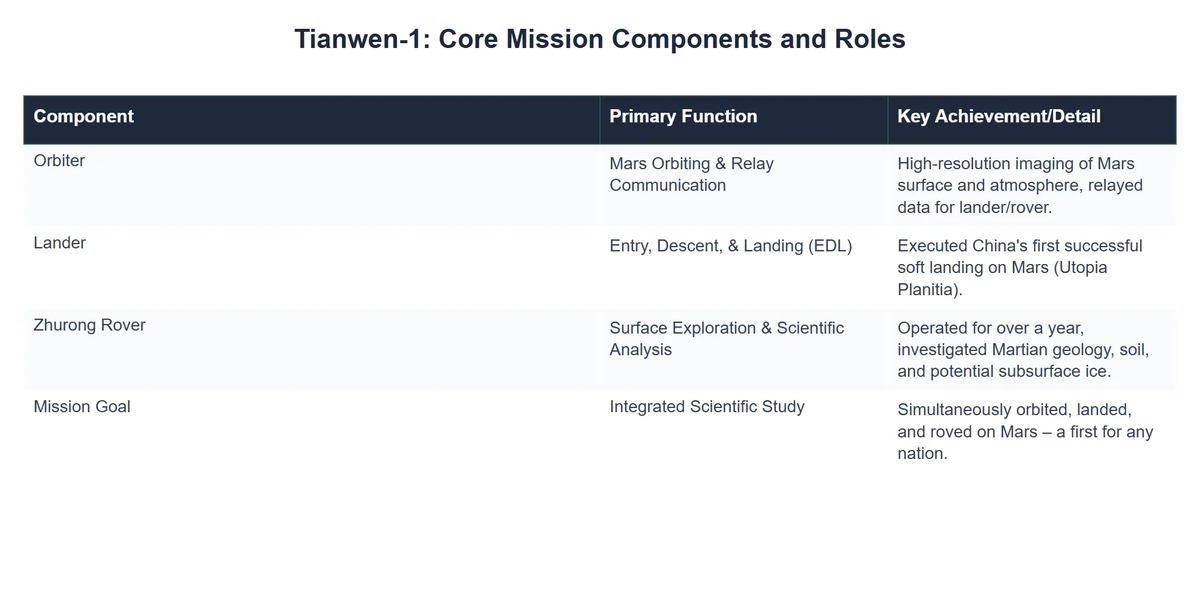
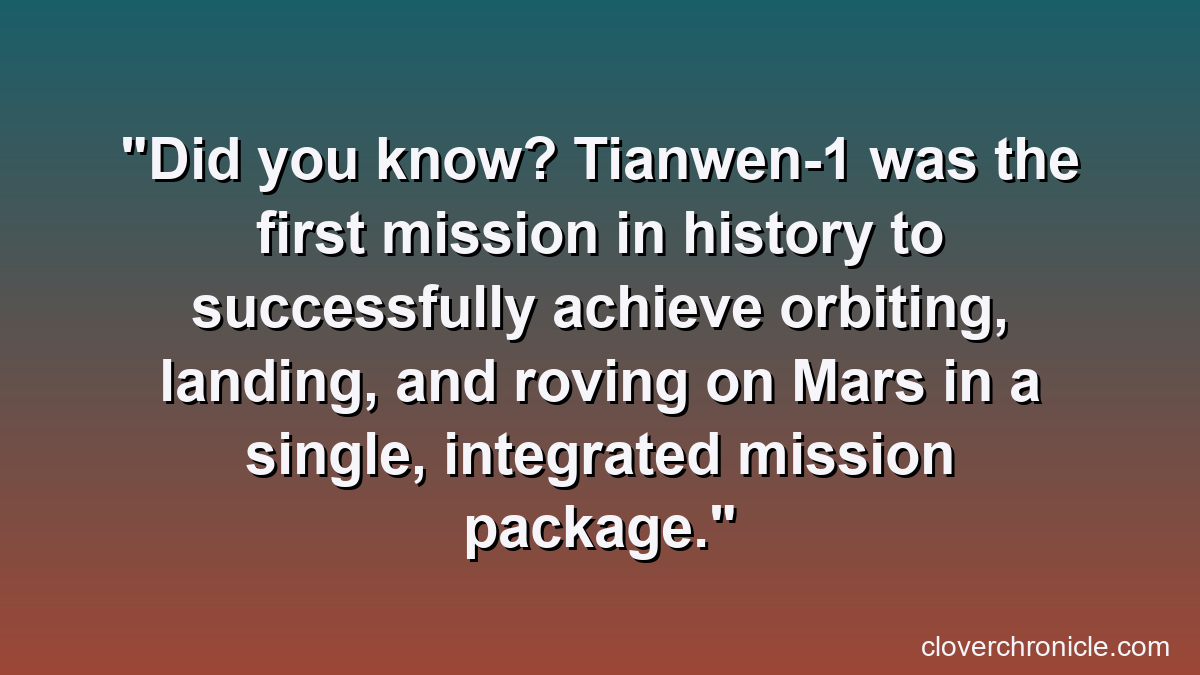
Launched in July 2020, Tianwen-1 (meaning “Questions to Heaven”) isn’t just a single spacecraft but a comprehensive, three-in-one mission package. It consists of an orbiter, a lander, and a rover, designed to achieve simultaneous orbiting, landing, and roving on Mars during a single mission. This integrated approach was a first in the history of Mars exploration, showcasing China’s engineering prowess and long-term vision.
➡️ A Multifaceted Approach to Mars
- ✅ The Orbiter: Designed for long-term mapping, atmospheric analysis, and relaying communications from the rover. It provides crucial context for the surface operations and conducts its own scientific investigations.
- ✅ The Lander: Safely transported the Zhurong rover to the Martian surface, executing a precise and challenging descent.
- ✅ The Zhurong Rover: The mobile laboratory on wheels, tasked with exploring the landing site and conducting detailed surface science.
💡 Key Objectives of the Mission
The primary goals of the Tianwen-1 mission were multifaceted, aiming to:
- 🗺️ Conduct a global survey of Mars from orbit.
- 🔬 Analyze Martian surface morphology and geological structure.
- 💧 Search for water ice distribution, particularly beneath the surface.
- 🌬️ Study the Martian soil characteristics and atmospheric composition.
- 🔌 Test technologies crucial for future deep-space missions, including entry, descent, and landing (EDL).
The Journey to the Red Planet: Launch and Trajectory
The journey to Mars is fraught with peril, requiring immense precision and powerful launch vehicles. Tianwen-1’s successful journey was a testament to years of preparation and technological advancement by the Chinese space program.
🚀 The Long March 5 Rocket
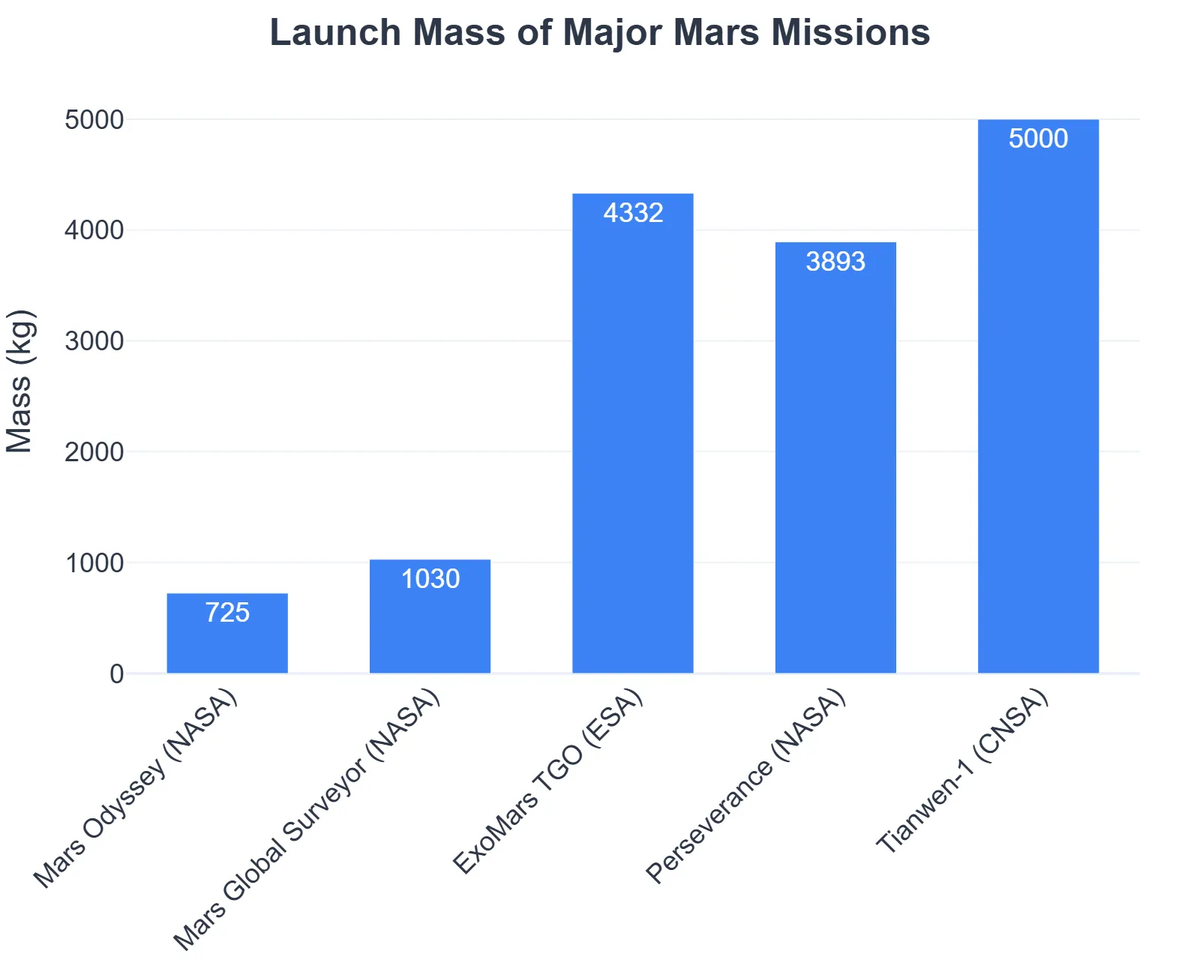
Tianwen-1 lifted off on July 23, 2020, aboard China’s largest and most powerful rocket, the Long March 5, from the Wenchang Spacecraft Launch Site. This heavy-lift launch vehicle has been instrumental in China’s ambitious space endeavors, including its space station construction. The launch itself was a critical first step, propelling the spacecraft on its complex, seven-month trajectory to Mars.
For more insights into the launch phase, you can refer to authoritative sources such as Space.com’s coverage of China’s Tianwen-1 launch.
🛰️ Interplanetary Cruise and Orbital Insertion
After a precise interplanetary cruise phase, Tianwen-1 successfully entered Mars orbit on February 10, 2021. This orbital insertion was a delicate maneuver, requiring the spacecraft to fire its engines at a precise moment to be captured by Mars’ gravity without overshooting or crashing. The orbiter then spent several months surveying potential landing sites before the lander and rover separated for their daring descent.
Zhurong Rover: China’s Pioneer on Martian Soil
The successful deployment of the Zhurong rover on May 15, 2021, marked a historic moment, making China the second nation to successfully land and operate a rover on Mars. Named after the god of fire in ancient Chinese mythology, Zhurong embarked on its mission to explore Utopia Planitia, a vast plain in Mars’ northern hemisphere.
📍 Landing Site and Scientific Instruments
The chosen landing site in Utopia Planitia was carefully selected for its scientific potential, particularly the possibility of subsurface water ice. Zhurong, weighing approximately 240 kilograms (530 pounds), is equipped with a suite of six scientific instruments:
- 📷 Navigation and Topography Cameras (NaTeCam)
- 📡 Mars Surface Composition Detector (MarSCoDe)
- 🧲 Mars Magnetic Field Detector (MMFD)
- 🌬️ Mars Climate Station (MCS)
- ⚡ Mars Rover Subsurface Penetrating Radar (GPR)
- 🧪 Multi-spectrum Camera (MSCam)
These instruments allow Zhurong to investigate the Martian surface, atmosphere, and even peer beneath the surface using its ground-penetrating radar. For those interested in the details of the mission, many excellent space exploration books provide in-depth analyses of rover technologies and discoveries.
🔬 Key Discoveries and Contributions
The Zhurong rover has already delivered significant scientific data. Its ground-penetrating radar has provided insights into the subsurface layers, potentially revealing ancient geological features and evidence of past water activity. The rover’s instruments are also collecting data on Martian weather patterns and the distribution of various elements on the surface. These findings contribute valuable pieces to the puzzle of Mars’ geological and climatic history.
Unpacking the Scientific Goals of Tianwen-1
Beyond the impressive engineering feat, Tianwen-1’s core purpose is scientific discovery. The data collected by the orbiter and the Zhurong rover are contributing to several critical areas of planetary science.
🏔️ Martian Geology and Composition
The mission aims to map the mineralogical composition and geological structures of Mars on a global scale using the orbiter, and in fine detail at the landing site with the rover. Understanding these aspects helps scientists piece together the planet’s evolutionary history, including volcanic activity, tectonic forces, and the formation of surface features. This work provides valuable context for understanding processes like Solar System Formation: Key Theories and Evolution on a broader scale.
🧊 Water-Ice Distribution and Climate Studies
One of the most exciting aspects of Tianwen-1 is its focus on water. Detecting subsurface water ice is crucial for understanding Mars’ past habitability and for planning future human missions. The orbiter’s remote sensing capabilities and Zhurong’s ground-penetrating radar are specifically designed to look for these reserves. Additionally, the mission is monitoring current Martian weather and climate patterns, offering insights into atmospheric dynamics and seasonal changes. This contributes to our broader understanding of planetary atmospheres, similar to how we analyze distant worlds like WASP-39b: Decoding the Atmosphere of a Distant Exoplanet.
👽 Future Implications for Human Exploration
The data from Tianwen-1 is invaluable for future human missions to Mars. Information on radiation environment, dust conditions, and potential resource locations (like water ice) will inform mission planners and help mitigate risks for astronauts. The success of the EDL system also paves the way for heavier landers and more complex missions in the future.
Tianwen-1 in the Context of Global Mars Exploration
Tianwen-1’s success firmly establishes China as a major player in the field of deep-space and interplanetary exploration, joining the ranks of the United States and the European Space Agency.
🇨🇳 A New Era for the Chinese Space Program
The achievement represents a significant milestone for the Chinese space program, showcasing its growing capabilities from independent launches to complex robotic missions beyond Earth orbit. It’s part of a broader strategy that includes a permanent space station (Tiangong) and future lunar missions. China’s systematic approach to space has garnered global attention and respect.
You can find more detailed information on The Planetary Society’s page about Tianwen-1 and Zhurong, China’s Mars orbiter and rover.
🤝 Collaborative Opportunities and Challenges
While space exploration has historically involved intense competition, there’s also a growing recognition of the benefits of international collaboration. Missions like Tianwen-1 contribute to a collective pool of knowledge about Mars, benefiting the entire scientific community. As more nations embark on complex missions, understanding the challenges and triumphs of programs like Tianwen-1 becomes crucial for planning future endeavors, such as the Europa Clipper Mission: Searching for Life on Jupiter’s Moon.
The successful operation of Tianwen-1 serves as an inspiration for enthusiasts and future engineers. For those eager to delve deeper into the mechanics and design of such complex spacecraft, exploring various Mars mission models can provide a tangible connection to these extraordinary feats of engineering.
Recommended Video
Conclusion: Tianwen-1’s Enduring Legacy
The Tianwen-1 mission represents a monumental achievement for China and a significant contribution to humanity’s ongoing quest to understand Mars. By combining an orbiter, lander, and rover into a single, highly effective mission, China has demonstrated its advanced capabilities in interplanetary exploration and cemented its role as a leading force in space science.
The scientific data flowing back from the Zhurong rover and the orbiter continues to deepen our knowledge of the Red Planet’s geology, atmosphere, and potential for past or present water. As the chinese space program continues its ambitious trajectory, Tianwen-1 stands as a powerful testament to human ingenuity and our collective drive to probe the mysteries of the universe. To explore more about humanity’s profound journey into the cosmos, visit our main pillar page: Cosmic Queries: Probing the Mysteries of the Universe.
Frequently Asked Questions
What was the primary goal of the Tianwen-1 mission?
The Tianwen-1 mission’s primary goal was to explore Mars, achieving orbit, landing, and roving capabilities to study the planet’s geology, morphology, soil characteristics, and atmospheric environment, as well as search for water ice.
What components did Tianwen-1 consist of?
Tianwen-1 consisted of three main components: an orbiter that circled Mars, a lander that successfully touched down on the surface, and the Zhurong rover that explored the landing site.
When did Tianwen-1 reach Mars?
Tianwen-1 successfully entered Mars’s orbit on February 10, 2021, and its lander with the Zhurong rover touched down on the Martian surface on May 15, 2021.
What is the significance of the Zhurong rover?
The Zhurong rover was China’s first Martian rover and made China the second nation to successfully land and operate a rover on Mars. It conducted scientific investigations of the Martian surface at its landing site in Utopia Planitia.