


In the rapidly evolving landscape of distributed ledger technologies, the Neo blockchain stands out as a pioneering platform with a clear vision: to realize the “Smart Economy.” Far beyond just a cryptocurrency, Neo aims to digitize assets, identities, and contracts, creating a robust infrastructure for the next generation of decentralized applications. As we chart the course of tomorrow’s technology, understanding platforms like Neo is crucial to grasping the full potential of blockchain beyond speculative trading. This comprehensive guide will unlock the intricacies of Neo, exploring its foundational principles, technological advancements, and the vibrant ecosystem it supports.
💡 Key Takeaways
- Neo’s goal is to create a ‘Smart Economy’ through digitized assets and smart contracts.
- It utilizes a unique dual-token model with NEO for governance and GAS for network fees.
- Neo offers developer-friendly features, supporting multiple programming languages for smart contract development.
- Its vision extends to decentralized identity, cross-chain interoperability, and a robust dApp ecosystem.
“Neo’s evolution toward a smart economy, integrating digital identity with blockchain, offers a fascinating glimpse into a future where AI and decentralized systems harmoniously coexist, reshaping our digital ethics.”
— Kira Chen, Futurist & AI Ethics Advocate
If you’re eager to explore the foundational technologies driving our digital future, you’ll find immense value in our pillar page: Future Perfect?: Charting the Course of Tomorrow’s Technology.
In This Article
- — 💡 Key Takeaways
- → What is Neo Blockchain? A Digital Economy Vision
- — 🕰️ From Antshares to Neo: A Brief History
- — 💡 The Vision of the Neo Smart Economy
- → Key Features and Technological Innovations
- — 💰 Dual-Token Model (NEO and GAS)
- — 🛡️ Delegated Byzantine Fault Tolerance (dBFT) Consensus
- — ⚙️ Smart Contracts and Developer Friendliness
- — 🔗 Cross-Chain Interoperability
- → Neo N3: The Next Evolution
- — 🚀 Enhanced Performance and Scalability
- — 🗳️ Improved Governance and Decentralization
- — 📡 Native Oracle and Decentralized Storage
- → Use Cases and Applications on Neo
- — 💹 Decentralized Finance (DeFi)
- — 🖼️ Non-Fungible Tokens (NFTs)
- — 🎮 Gaming and Metaverse
- — 🏢 Enterprise Solutions
- → Developing on Neo: Tools and Resources
- — 🛠️ Popular SDKs and Wallets
- — 🤝 Community and Developer Support
- → The Future Outlook for Neo Blockchain
- — 🚧 Challenges and Opportunities
- — 📈 Driving the Neo Smart Economy Forward
What is Neo Blockchain? A Digital Economy Vision
The Neo blockchain, often referred to as “China’s Ethereum,” emerged with a distinct philosophy focused on regulatory compliance and the integration of digital and physical assets. Its core mission is to build a “Smart Economy” by combining digital assets, digital identities, and smart contracts, thereby creating a truly decentralized and intelligent network for the future.
🕰️ From Antshares to Neo: A Brief History
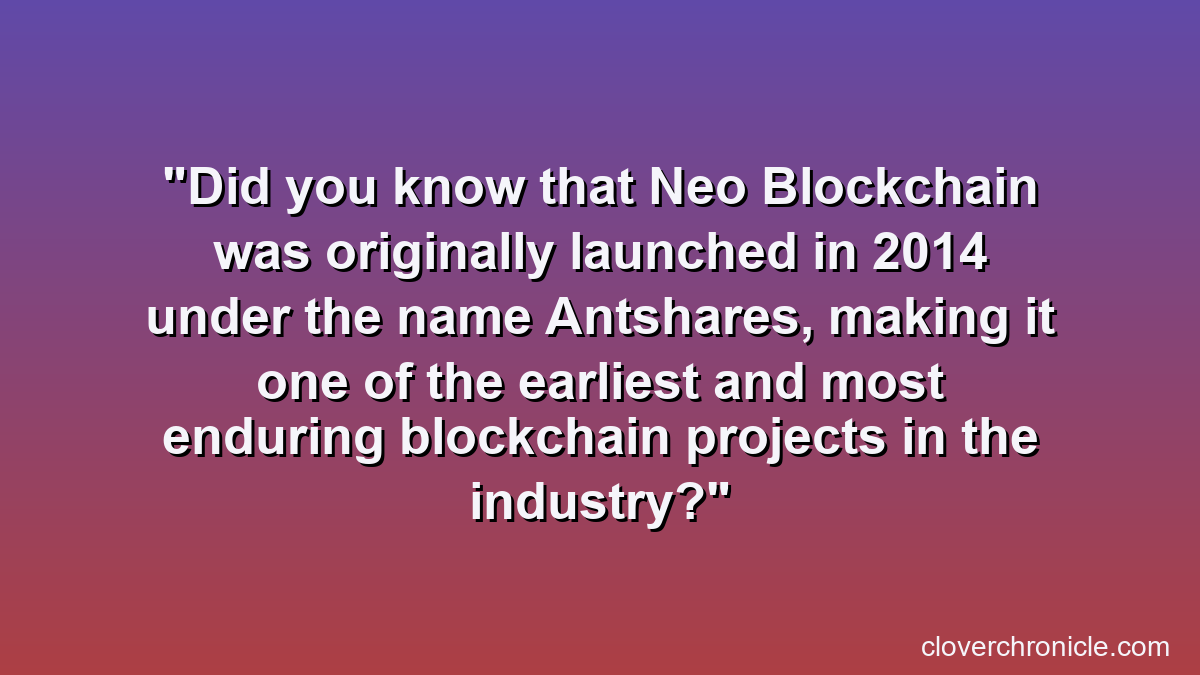
Originally launched in 2014 under the name Antshares, the project was rebranded to Neo in 2017, signifying its ambition to become the foundational layer for a new digital economy. This rebranding marked a pivotal shift, emphasizing its enterprise-friendly approach and its commitment to fostering a developer-centric ecosystem capable of building real-world applications.
💡 The Vision of the Neo Smart Economy
At the heart of Neo’s mission is the concept of the Neo Smart Economy, a three-pronged framework designed to bridge the gap between traditional finance and the decentralized world:
- ✅ Digital Assets: Neo enables the digitization of real-world assets, allowing them to be registered, issued, and circulated on the blockchain. This includes everything from stocks and real estate to intellectual property.
- ✅ Digital Identity: To ensure regulatory compliance and trust, Neo integrates digital identity mechanisms. This allows for verifiable identities for individuals, organizations, and assets on the blockchain, essential for large-scale adoption and security.
- ✅ Smart Contracts: As with other prominent blockchains, Neo supports powerful smart contracts, which are self-executing agreements whose terms are directly written into code. These contracts automate processes, reduce intermediaries, and enhance transparency across various applications.
Key Features and Technological Innovations

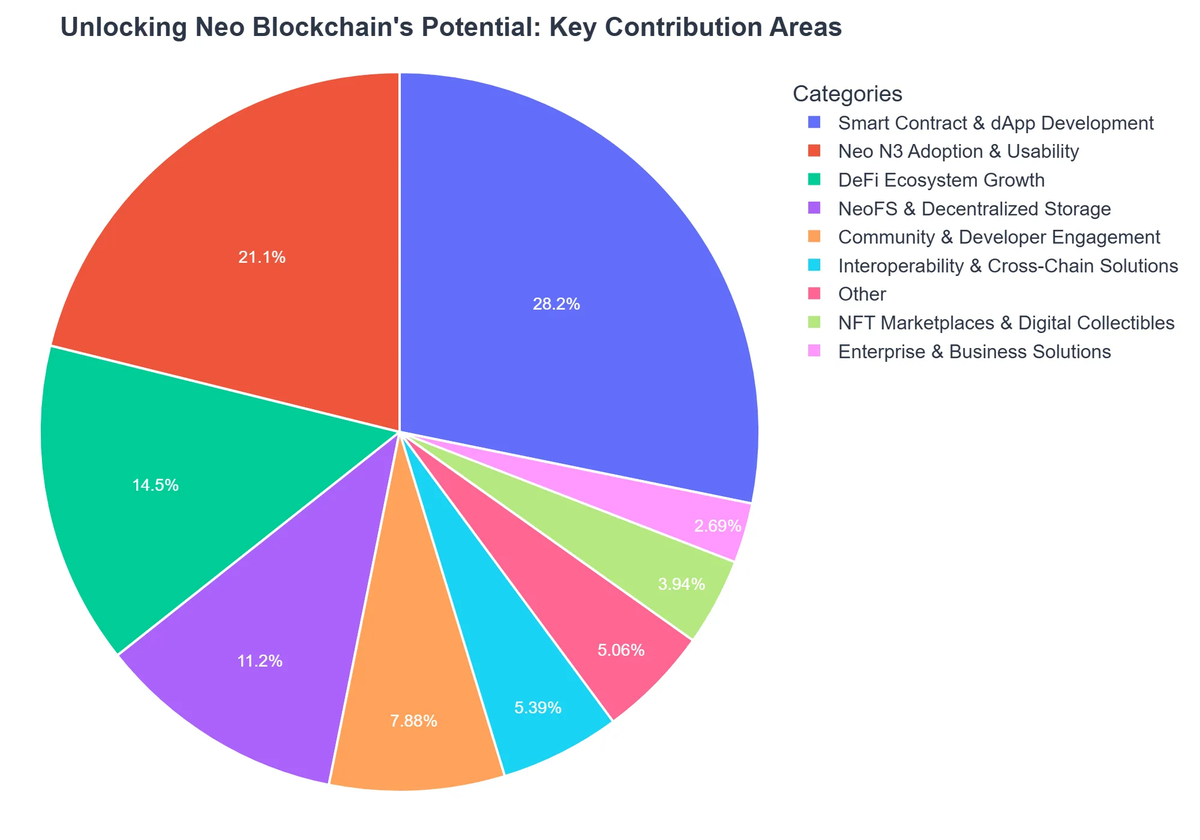
Neo differentiates itself through several unique technological features that enhance its performance, security, and developer experience. These innovations underpin its ambition to be a leading platform for decentralized application development.
💰 Dual-Token Model (NEO and GAS)
Unlike many single-token blockchains, Neo operates with a dual-token model:
- ➡️ NEO: This is the governance token, representing ownership shares in the Neo network. Holders of NEO have voting rights on network changes and are entitled to claim GAS. NEO is indivisible, meaning you can only hold whole units.
- ➡️ GAS: This is the utility token, used to pay for transaction fees, smart contract deployments, and other computational costs on the network. GAS is generated by holding NEO and is divisible, making it suitable for micro-transactions. This model separates governance from utility, providing a stable fee structure and encouraging long-term holding of NEO.
🛡️ Delegated Byzantine Fault Tolerance (dBFT) Consensus
Neo utilizes a unique consensus mechanism called Delegated Byzantine Fault Tolerance (dBFT). This algorithm provides high transaction throughput and near-instant finality, which are crucial for real-world business applications. In dBFT, NEO holders vote for “consensus nodes” (equivalent to block producers). These elected nodes then validate transactions and maintain the network, ensuring high performance while maintaining a degree of decentralization. For a broader understanding of how different blockchains process transactions, consider exploring our article on Mempool Explained: Understanding Blockchain Transaction Processing.
⚙️ Smart Contracts and Developer Friendliness
Neo is highly appealing to developers due to its support for popular programming languages such as C#, Java, Python, and JavaScript. This multi-language support significantly lowers the barrier to entry for traditional developers looking to build on blockchain. The Neo ecosystem provides comprehensive tools and SDKs, such as Neon-js, making it easier to create decentralized applications (dApps). The ease of development is a key factor in attracting talent and fostering innovation on the platform.
🔗 Cross-Chain Interoperability
With the rise of multiple blockchain networks, cross-chain communication is becoming increasingly vital. Neo has actively pursued interoperability solutions to allow assets and data to seamlessly flow between different blockchains. This focus positions Neo as a potential hub in a multi-chain future, enhancing liquidity and expanding the utility of assets on its network.
Neo N3: The Next Evolution
Neo N3 represents the latest and most significant iteration of the Neo blockchain. It is a complete re-architecture designed to overcome previous limitations and introduce advanced features that position Neo for mainstream adoption and enterprise-level solutions.
🚀 Enhanced Performance and Scalability
N3 brings substantial improvements in throughput and transaction processing capabilities. Its optimized architecture allows for more complex dApps and higher transaction volumes, addressing the scalability challenges that often plague blockchain networks. For instance, while platforms like Sui Blockchain Explained: A Deep Dive into its Architecture are also designed for high performance, N3 takes a different approach with its modularity and integrated features.
Neo Blockchain: Advantages and Disadvantages
Pros
- ✔Supports multiple programming languages (e.g., C#, Java, Python), making it developer-friendly.
- ✔Dual-token model (NEO for governance, GAS for network fees) provides clear economic separation.
- ✔Focus on regulatory compliance and digital identity for enterprise adoption.
- ✔High transaction throughput and rapid finality via dBFT consensus mechanism.
Cons
- ✖Concerns about centralization due to a relatively small number of consensus nodes in its dBFT mechanism.
- ✖Faces intense competition from more widely adopted smart contract platforms like Ethereum.
- ✖Developer community and ecosystem growth are smaller compared to top rivals.
- ✖Transaction fees (GAS) can be volatile, impacting dApp operational costs.
🗳️ Improved Governance and Decentralization
Neo N3 introduces a more robust and decentralized governance model. It empowers NEO holders with greater control over network parameters and decision-making through an on-chain voting system. This move towards increased decentralization aims to make the network more resilient and community-driven.
📡 Native Oracle and Decentralized Storage
One of N3’s standout features is its native oracle, allowing smart contracts to securely access off-chain data. This is critical for real-world applications that require external information (e.g., weather data for insurance, market prices for DeFi). Additionally, N3 integrates decentralized storage solutions, offering developers robust and censorship-resistant options for storing large amounts of data directly within the Neo ecosystem.
Use Cases and Applications on Neo
The flexibility and robust feature set of the Neo blockchain make it suitable for a wide array of applications across various industries.
💹 Decentralized Finance (DeFi)
Neo provides a fertile ground for DeFi protocols, leveraging its high transaction finality and native oracle capabilities. From decentralized exchanges (DEXs) to lending platforms and stablecoins, Neo’s infrastructure supports the creation of transparent and efficient financial services. The dual-token model also offers unique advantages for DeFi projects on the platform.
🖼️ Non-Fungible Tokens (NFTs)
The booming NFT market finds a natural home on Neo, with its robust smart contract capabilities and support for various asset types. Artists, creators, and gaming platforms can mint, trade, and manage unique digital assets, from digital art to collectibles and in-game items.
🎮 Gaming and Metaverse
Neo’s performance and developer-friendly environment are ideal for blockchain-based gaming and nascent metaverse projects. Its ability to handle complex logic within smart contracts and manage digital assets makes it an attractive platform for building immersive and interactive virtual worlds where users truly own their in-game items and experiences.
🏢 Enterprise Solutions
Neo’s focus on digital identity, compliance, and high throughput makes it a strong contender for enterprise-level blockchain solutions. Businesses can leverage Neo to build private consortia chains that integrate with the public Neo network, enabling secure and efficient data exchange and supply chain management. For a broader view of enterprise blockchain, consider our guide on ConsenSys Quorum: Understanding Enterprise Blockchain or Corda Blockchain: Tailored DLT for Finance.
Developing on Neo: Tools and Resources
Neo’s commitment to its developer community is evident in the comprehensive suite of tools and resources available. The Neo Foundation actively supports development, providing an environment conducive to innovation.
🛠️ Popular SDKs and Wallets
- ✅ Neo-CLI & Neo-GUI: Command-line and graphical user interface tools for interacting with the Neo blockchain.
- ✅ Neon Wallet: A popular desktop wallet for managing NEO and GAS, and interacting with dApps.
- ✅ Neo N3 SDKs: Software Development Kits available in multiple languages (Python, C#, TypeScript/JavaScript) to facilitate smart contract and dApp development.
- ✅ Neo Debugger: Tools for debugging smart contracts, essential for robust development.
For those looking for secure cold storage options for their digital assets, including NEO and GAS, exploring platforms like SecuX Hardware Wallets can provide peace of mind.
🤝 Community and Developer Support
The Neo ecosystem thrives on an active global community. Developers can find extensive documentation, tutorials, and support through forums, Discord channels, and community-led initiatives. The Neo Foundation also hosts hackathons and grant programs to incentivize and fund innovative projects built on the platform.
The Future Outlook for Neo Blockchain
As the blockchain space continues to mature, Neo is strategically positioned to capitalize on the increasing demand for compliant, high-performance, and developer-friendly platforms. Its evolution with Neo N3 addresses many of the challenges faced by earlier blockchain iterations, paving the way for broader adoption.
🚧 Challenges and Opportunities
Like all blockchain projects, Neo faces competition and the ongoing challenge of achieving mass adoption. However, its strong technological foundation, commitment to regulatory compliance, and focus on developer experience present significant opportunities for growth in enterprise blockchain, DeFi, and the emerging metaverse. The emphasis on the Neo Smart Economy continues to differentiate it in a crowded market.
📈 Driving the Neo Smart Economy Forward
Neo’s vision extends beyond mere technological prowess. It aims to integrate blockchain into our daily lives by enabling the seamless flow of digital assets and identities. With ongoing development, strategic partnerships, and a dedicated community, Neo is poised to play a significant role in shaping the decentralized future, truly unlocking its potential for a smart, digital economy.
Recommended Video
Frequently Asked Questions
What is Neo Blockchain?
Neo is an open-source, community-driven blockchain platform designed to build a ‘Smart Economy’ by digitizing assets and identity through smart contracts.
What is the difference between NEO and GAS tokens?
NEO is the governance token, representing ownership and voting rights within the Neo network, while GAS is the utility token used for transaction fees, smart contract deployment, and network resources.
What are Neo’s key features?
Key features include a dual-token model, delegated Byzantine Fault Tolerance (dBFT) consensus mechanism, built-in smart contract functionality, and support for multiple programming languages to foster developer adoption.
How does Neo aim to achieve a ‘Smart Economy’?
Neo aims to achieve a Smart Economy by combining digital assets, digital identity, and smart contracts, enabling efficient, transparent, and trustworthy digital interactions and governance structures.