

Plate Tectonics Explained: A Comprehensive Guide to Earth’s Moving Surface
Our planet is a living, breathing entity, constantly reshaping itself through incredibly powerful, unseen forces. At the heart of this dynamic process lies plate tectonics, a fundamental geological theory that explains how Earth’s surface moves and evolves. This comprehensive guide will demystify the science behind these planetary dynamics, exploring everything from the immense forces at play to the dramatic landscapes they create.
💡 Key Takeaways
- Understand the fundamental forces and mechanisms driving Earth’s lithospheric plates.
- Learn how plate movements lead to major geological events like earthquakes, volcanic eruptions, and mountain building.
- Explore the historical context and evidence supporting the theory of plate tectonics.
- Discover the global impact of plate tectonics on climate, biodiversity, and resource distribution.
“Plate tectonics isn’t just about rocks moving; it’s the very heartbeat of our planet, constantly reshaping landscapes and influencing everything from climate patterns to the distribution of life.”
— Marcus Sterling, Geophysical Explorer & Climate Dynamics Analyst
In This Article
- → Plate Tectonics Explained: A Comprehensive Guide to Earth’s Moving Surface
- — 💡 Key Takeaways
- → What is Plate Tectonics? A Core Concept
- — Defining Earth’s Lithosphere
- — The Driving Force: Convection Currents
- → The Dynamic History of Plate Tectonics: From Pangea to Present
- — Alfred Wegener and Continental Drift
- — Seafloor Spreading: The Missing Piece
- — The Supercontinent Cycle
- → Types of Plate Boundaries: Where Earth’s Power Unfolds
- — Convergent Boundaries (Collision Zones)
- — Divergent Boundaries (Spreading Centers)
- — Transform Boundaries (Sliding Past Each Other)
- → Evidence Supporting Plate Tectonics: A Geological Detective Story
- — Geological and Fossil Matches
- — Paleomagnetism and Seafloor Age
- — Volcanic Activity and Earthquakes
- — Hot Spots
- → The Global Impact of Plate Tectonics: Shaping Our World
- — Mountain Building (Orogenesis)
- — Volcanism and Geothermal Activity
- — Earthquakes and Tsunamis
- — Climate and Ocean Circulation
- → Studying Plate Tectonics: Resources and Research
- — Leading Institutions and Data
- — Continuous Evolution of Understanding
- → Conclusion: Earth’s Ever-Changing Canvas
What is Plate Tectonics? A Core Concept
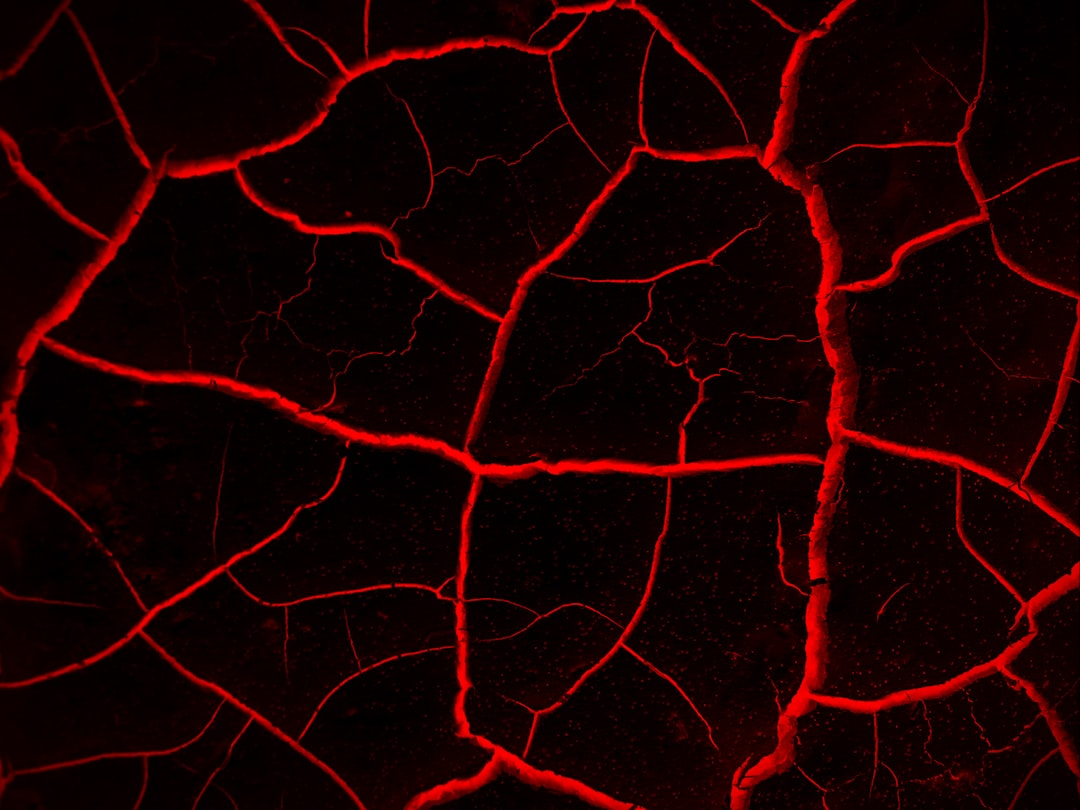
At its simplest, plate tectonics is the scientific theory that describes the large-scale motion of Earth’s lithosphere. Our planet’s outer shell isn’t a single, solid piece, but rather a mosaic of gigantic, rigid plates that are constantly, albeit slowly, moving.
Defining Earth’s Lithosphere
The Earth’s surface and upper mantle form the lithosphere, which is broken into these massive pieces known as tectonic plates. These plates include both continental and oceanic crust, along with the uppermost part of the mantle. They float on the semi-fluid, ductile layer beneath them, called the asthenosphere. This understanding is crucial for any explanation of plate tectonics.
The Driving Force: Convection Currents
- 🔥 Heat from the Core: The primary engine behind plate movement is the immense heat generated within Earth’s core.
- ⬆️ Rising Magma: This heat causes the semi-molten material in the mantle to rise, cool, and then sink in a continuous cycle, much like boiling water in a pot.
- 🔄 Mantle Convection: These slow-moving currents, known as mantle convection, drag the overlying tectonic plates along with them. This is the core mechanism behind convection plate tectonics.
Understanding these fundamental processes is key to grasping the essence of Earth Science Essentials: Understanding Plate Tectonics and how our planet continually remakes itself.
The Dynamic History of Plate Tectonics: From Pangea to Present
While the concept of continents moving may seem relatively new, the journey to the widely accepted theory of plate tectonics was long and fascinating.
Alfred Wegener and Continental Drift
- 🇩🇪 Pioneer: In the early 20th century, German meteorologist Alfred Wegener proposed the theory of continental drift.
- 🧩 Puzzle Pieces: He observed that the continents seemed to fit together like puzzle pieces (e.g., South America and Africa).
- 🌱 Fossil and Rock Evidence: Wegener also found matching fossil records and similar rock formations across continents now separated by vast oceans, suggesting they were once joined. He even hypothesized the existence of a supercontinent he called Pangea.
- 🚧 Initial Skepticism: Despite his compelling evidence, Wegener couldn’t explain how the continents moved, leading to widespread skepticism from the scientific community.
Seafloor Spreading: The Missing Piece
It wasn’t until the mid-20th century, with advancements in oceanographic research, that the crucial mechanism was discovered: seafloor spreading. Scientists found evidence of new oceanic crust being formed at mid-ocean ridges and then spreading outwards, pushing the continents apart. This discovery provided the “how” that Wegener’s theory lacked, ultimately leading to the comprehensive theory of modern geology plate tectonics.
The Supercontinent Cycle
The concept of Pangea plate tectonics is not a one-off event. Geologists now understand that Earth has undergone multiple cycles of supercontinent formation and breakup throughout its history. This continuous process of continents coming together and drifting apart is known as the <a a="" constant="" continents'="" cycle:="" dynamic_link].
Types of Plate Boundaries: Where Earth’s Power Unfolds
The interactions between tectonic plates primarily occur at their boundaries, leading to most of Earth’s dramatic geological activity. There are three main types of plate boundaries, each with distinct characteristics and associated phenomena.
Convergent Boundaries (Collision Zones)
At convergent boundaries, two plates move towards each other, resulting in a collision. The outcome depends on the type of crust involved:
- Oceanic-Continental Convergence:
- 🌊 ➡️ ⛰️ When denser oceanic crust collides with lighter continental crust, the oceanic plate is forced to sink beneath the continental plate in a process called subduction.
- 🔥 Volcanic Arcs: This creates deep ocean trenches and chains of volcanoes on the continental plate, like the Andes Mountains in South America.
- Oceanic-Oceanic Convergence:
- 🌊 ➡️ 🌊 When two oceanic plates collide, one subducts beneath the other, forming deep ocean trenches and chains of volcanic islands (island arcs), such as the Mariana Trench and the Aleutian Islands.
- Continental-Continental Convergence:
- ⛰️ ➡️ ⛰️ When two continental plates collide, neither can subduct significantly because they are too buoyant. Instead, the immense pressure causes the crust to fold, fault, and thicken, leading to the formation of towering mountain ranges.
- 🌍 Major Mountain Ranges: A prime example is the Himalayas, formed by the collision of the Indian and Eurasian plates.
Divergent Boundaries (Spreading Centers)
At divergent boundaries, plates move away from each other, allowing magma from the mantle to rise and create new crust. This process is called seafloor spreading.
- ➡️ ⬅️ Mid-Ocean Ridges: Most divergent boundaries are found in the ocean, forming vast underwater mountain ranges called mid-ocean ridges (e.g., the Mid-Atlantic Ridge).
- 🌋 Volcanic Activity: These areas are characterized by frequent volcanic eruptions and shallow earthquakes.
- 🏞️ Rift Valleys: On continents, divergent boundaries can create rift valleys, like the East African Rift Valley, which could eventually become new ocean basins.
Transform Boundaries (Sliding Past Each Other)
At transform boundaries, plates slide horizontally past each other, neither creating nor destroying crust.

- ↔️ Shearing Forces: These boundaries are marked by powerful shearing forces, leading to frequent and often strong earthquakes.
- 🌉 San Andreas Fault: The most famous example is the San Andreas Fault in California, where the Pacific Plate slides past the North American Plate.
- ⛔ No Volcanism: Unlike convergent and divergent boundaries, transform boundaries typically do not have significant volcanic activity.
Evidence Supporting Plate Tectonics: A Geological Detective Story
The theory of plate tectonics is supported by a vast array of geological evidence, meticulously gathered over decades.
Geological and Fossil Matches
- 🌎 Continental Fit: The striking fit of continents, especially across the Atlantic.
- 🌿 Fossil Distribution: Identical fossil species found on continents now widely separated (e.g., Glossopteris fern across Gondwana continents).
- ⛰️ Rock Formations: Matching mountain ranges and rock types on different continents (e.g., Appalachian Mountains in North America and Caledonian Mountains in Europe).
Paleomagnetism and Seafloor Age
- 🧲 Magnetic Stripes: Rocks on the seafloor show alternating stripes of normal and reversed magnetic polarity, mirroring Earth’s magnetic field reversals. These stripes are symmetrical on either side of mid-ocean ridges.
- 🕰️ Age of Seafloor: Dating of seafloor rocks confirms that they are progressively older the further they are from mid-ocean ridges, directly supporting seafloor spreading.
Volcanic Activity and Earthquakes
- 🌋 Concentrated Activity: The vast majority of the world’s volcanoes and earthquakes occur along plate boundaries, providing direct evidence of their interaction.
- 📊 Data from USGS: Organizations like the USGS (United States Geological Survey) constantly monitor and collect vast amounts of seismic and volcanic data, which consistently align with plate tectonic models. This data is invaluable for understanding active plate movements.
- 📏 Depth Patterns: Earthquakes at convergent boundaries deepen with distance from the trench, indicating the angle of the subducting plate.
Hot Spots
Hot spots are areas of volcanic activity that are not located on plate boundaries. They are believed to be caused by stationary plumes of magma rising from deep within the mantle. As a plate moves over a hot spot, it leaves a trail of volcanoes, forming a chain like the Hawaiian Islands, providing compelling evidence of plate motion.
The Global Impact of Plate Tectonics: Shaping Our World
The processes driven by plate tectonics description are responsible for shaping nearly every major geological feature on Earth.
Mountain Building (Orogenesis)
The collision of continental plates at convergent boundaries is the primary mechanism for the formation of Earth’s most majestic mountain ranges. The folding and faulting of crust due to immense compressional forces sculpts these colossal structures. For more on this, consider reading about Orogenesis Explained: A Comprehensive Guide.
Volcanism and Geothermal Activity
Volcanoes are direct manifestations of plate interactions, particularly at divergent and convergent boundaries. They release heat, gases, and molten rock, contributing to the planet’s atmosphere and surface composition. This is closely related to the formation of <a a="" and="" dynamic_link].
Earthquakes and Tsunamis
The sudden release of built-up stress along fault lines at plate boundaries causes earthquakes. When these powerful seismic events occur beneath the ocean, they can displace massive amounts of water, leading to devastating tsunamis.
Climate and Ocean Circulation
Over geological timescales, the movement of continents profoundly impacts global climate and ocean circulation patterns. The opening and closing of ocean basins, the uplift of mountain ranges, and changes in landmass distribution alter atmospheric and oceanic currents, influencing temperature, precipitation, and the distribution of life.
Studying Plate Tectonics: Resources and Research
Understanding plate tectonics examples and their implications is an ongoing scientific endeavor. Researchers around the world continue to refine our models and deepen our knowledge of Earth’s dynamic processes.
Leading Institutions and Data
- 📚 Educational Resources: Organizations like National Geographic provide excellent educational resources, maps, and articles that make complex geological concepts accessible to a broad audience. Their contributions are invaluable for anyone studying Earth sciences.
- 📈 Real-time Data: The USGS offers real-time data on earthquakes, volcanoes, and other geological hazards, allowing scientists and the public to monitor Earth’s activity closely. Their extensive databases are critical for research and public safety.
Continuous Evolution of Understanding
While the core principles of plate tectonics are well-established, ongoing research utilizes advanced satellite technology, seismic imaging, and deep-sea exploration to uncover new details. Scientists are constantly working to understand the nuances of mantle convection, the exact forces driving plate motion, and the long-term predictions of Earth’s geological future. This field is a cornerstone of Earth’s Unseen Forces: The Hidden Dynamics of Our Planet.
Recommended Video
Frequently Asked Questions
What is plate tectonics?
Plate tectonics is the scientific theory describing the large-scale motion of Earth’s lithosphere. It explains geological phenomena like earthquakes, volcanoes, and mountain ranges by postulating that the outer rigid layer of the Earth (lithosphere) is divided into a number of plates that move across the softer underlying material (asthenosphere).
How many major tectonic plates are there?
There are typically identified to be seven or eight major tectonic plates: the African, Antarctic, Eurasian, Indo-Australian, North American, Pacific, and South American plates. Some models separate the Indo-Australian into two distinct plates: the Indian and Australian plates.
What causes tectonic plates to move?
The primary driving force behind plate movement is believed to be mantle convection, a process where heat from Earth’s core causes molten rock in the mantle to rise and sink, creating convection currents that drag the plates along. Other contributing factors include ridge push (gravity sliding away from mid-ocean ridges) and slab pull (the weight of a subducting plate pulling the rest of the plate down).
How does plate tectonics impact climate?
Plate tectonics significantly impacts global climate over geological timescales by altering ocean currents, creating mountain ranges that influence wind and precipitation patterns, and through volcanic activity that releases greenhouse gases. These changes can lead to long-term warming or cooling trends and shifts in biodiversity.