

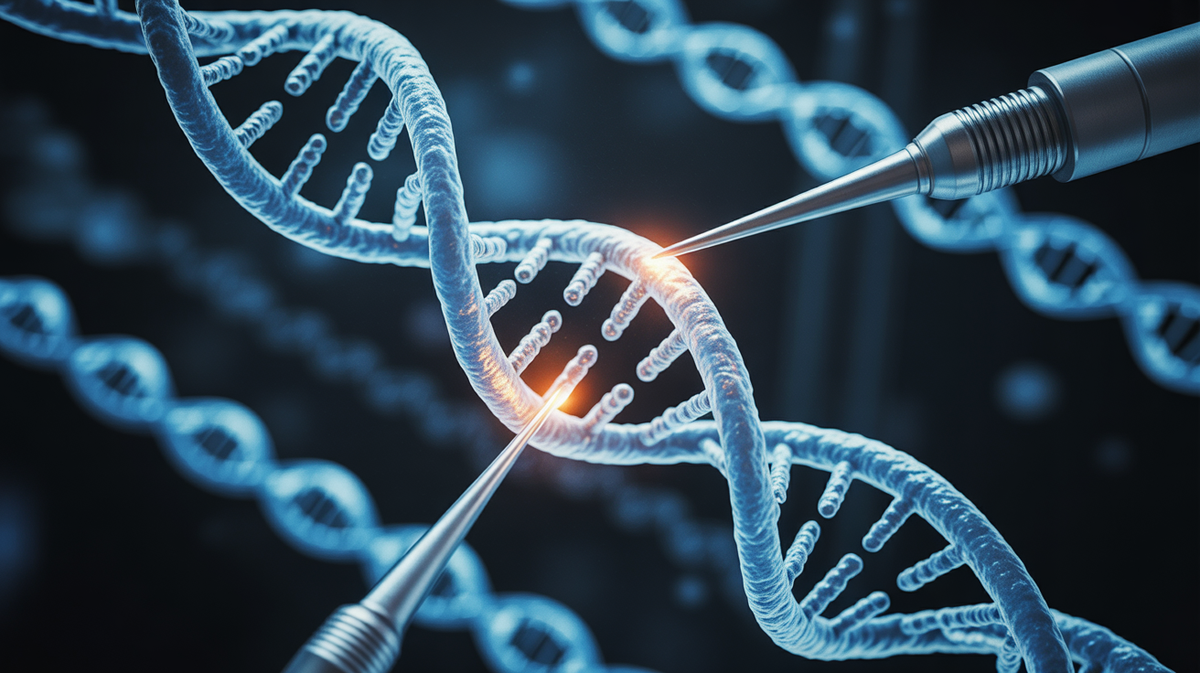
Understanding Molecular Biotechnology: The Core Concepts
In the rapidly evolving landscape of life sciences, molecular biotechnology stands as a pivotal discipline, merging the principles of molecular biology with advanced technological applications. It’s the engine driving many of the most significant breakthroughs in medicine, agriculture, industry, and environmental science. At its heart, this field is about manipulating life at its most fundamental level: the molecules that make up living organisms, particularly DNA, RNA, and proteins.
💡 Key Takeaways
- Molecular biotechnology leverages DNA manipulation for diverse applications in medicine, agriculture, and industry.
- Gene editing tools like CRISPR-Cas9 offer unprecedented precision for modifying genetic material to treat diseases and research gene functions.
- Recombinant DNA technology enables the creation of organisms with new traits and the production of vital proteins like insulin and vaccines.
- The field constantly evolves, posing exciting opportunities and complex ethical considerations for the future of life sciences.
“Molecular biotechnology, particularly gene editing, represents a pivotal moment, allowing us to not just observe evolution but to directly participate in its orchestration, albeit with profound responsibility.”
— Julian Aris, PhD, Geneticist & Evolutionary Biologist
This powerful scientific domain enables us to understand, modify, and utilize biological systems for specific purposes, from developing new vaccines to engineering crops that resist disease. It’s an intricate dance between scientific discovery and practical application, constantly pushing the boundaries of what’s possible in the realm of biological innovation.
In This Article
- → Understanding Molecular Biotechnology: The Core Concepts
- — 💡 Key Takeaways
- — ⚙️ What Defines Molecular Biotechnology?
- → The Art of Recombinant DNA: Building New Life Forms
- — 🔬 The Steps of Recombinant DNA Technology
- — 💡 Why is Recombinant DNA So Powerful?
- → Precision Engineering: Delving into Gene Editing Technologies
- — 🛠️ The Rise of Gene Editing Tools
- — ✨ CRISPR-Cas9: A Revolution in Molecular Biology
- → Applications and Impact: Where Molecular Biotechnology Shines
- — 💊 Healthcare and Medicine (Red Biotechnology)
- — 🌾 Agriculture and Food (Green Biotechnology)
- — ♻️ Industrial and Environmental (White & Grey Biotechnology)
- → The Future Frontier: Challenges and Ethical Considerations
- — 🚧 Current Challenges in Molecular Biotechnology
- — 🤔 Ethical and Societal Considerations
⚙️ What Defines Molecular Biotechnology?
Molecular biotechnology encompasses a broad spectrum of techniques and applications. It leverages a deep understanding of cellular and molecular processes to create products or solve problems. Key pillars include:
- ✅ Genetic Engineering: The direct manipulation of an organism’s genes. This is a core capability that allows scientists to add, remove, or modify genetic material.
- ✅ Recombinant DNA Technology: A specific set of techniques used to combine genetic material from different sources, creating new DNA sequences.
- ✅ Protein Engineering: Modifying or designing proteins to alter their structure or function for specific uses.
- ✅ Bioinformatics: The application of computational tools to analyze large biological datasets, crucial for understanding genetic information.
For a comprehensive overview of the foundational principles, exploring The Code of Life: Decoding Genetics, Evolution, and Existence is highly recommended.
The Art of Recombinant DNA: Building New Life Forms
Recombinant DNA (rDNA) technology is arguably the cornerstone of modern molecular biotechnology. It’s the process of cutting and pasting DNA fragments from different organisms, or even synthesizing new ones, to create novel combinations that would not naturally occur. This “molecular cloning” has revolutionized everything from basic biological research to pharmaceutical production.
🔬 The Steps of Recombinant DNA Technology
Creating recombinant DNA involves a precise sequence of steps:
- ➡️ Isolation of Genetic Material: Extracting the desired gene (or DNA fragment) from the donor organism.
- ➡️ Cutting the DNA: Using specific enzymes called restriction endonucleases (molecular scissors) to cut DNA at precise recognition sites, creating “sticky ends.”
- ➡️ Vector Selection and Cutting: Choosing a suitable vector (e.g., a plasmid or virus) – a DNA molecule that can carry the foreign gene into a host cell. The vector is then cut with the same restriction enzyme, ensuring complementary sticky ends.
- ➡️ Ligation: Joining the foreign DNA fragment with the vector DNA using an enzyme called DNA ligase (molecular glue). This creates the recombinant DNA molecule.
- ➡️ Transformation/Transfection: Introducing the recombinant DNA into a suitable host organism (e.g., bacteria, yeast, or mammalian cells).
- ➡️ Selection and Screening: Identifying and isolating host cells that have successfully taken up and express the recombinant DNA.
Mastering this process is fundamental for anyone looking to delve into advanced Genetic Engineering: What It Is and How It’s Revolutionizing Science. For more in-depth knowledge on the intricacies of this process, consider exploring resources on Mastering Recombinant DNA Technology.
BioPharma Breakthrough: Engineering a Cost-Effective Therapeutic Protein
❓The Challenge
Apex BioTherapeutics faced immense challenges in the scalable and cost-effective production of a novel therapeutic protein crucial for a rare autoimmune disease, with traditional methods yielding low purity and high expense.
💡The Solution
Leveraging the principles of molecular biotechnology, specifically advanced recombinant DNA technology, Apex BioTherapeutics engineered a highly efficient microbial expression system. They meticulously isolated, cut, and inserted the human gene for the therapeutic protein into a bacterial plasmid, creating a robust ‘molecular factory’.
🏆The Result
This innovative approach led to a 400% increase in therapeutic protein yield and a 60% reduction in production costs, accelerating their drug development timeline by 12 months.
💡 Why is Recombinant DNA So Powerful?
The ability to create rDNA opens up a world of possibilities:
- ✅ Production of Therapeutic Proteins: Manufacturing human insulin, growth hormone, and clotting factors in large quantities by introducing their genes into bacteria or yeast.
- ✅ Vaccine Development: Creating subunit vaccines (e.g., Hepatitis B vaccine) using only a specific protein from the pathogen, produced via rDNA technology.
- ✅ Agricultural Improvement: Developing genetically modified crops with enhanced traits like pest resistance, herbicide tolerance, or improved nutritional value.
- ✅ Gene Therapy: Delivering healthy genes to replace or supplement defective ones in patients with genetic disorders.
Precision Engineering: Delving into Gene Editing Technologies
While recombinant DNA allows for the insertion of foreign genes, gene editing takes precision to a new level, enabling highly targeted modifications directly within an organism’s existing genome. This field has exploded with the advent of revolutionary tools, chief among them CRISPR-Cas9.
🛠️ The Rise of Gene Editing Tools
Early gene editing methods were cumbersome and inefficient. However, the development of sequence-specific nucleases transformed the field:
- ➡️ Zinc Finger Nucleases (ZFNs): Early gene editing tools that use custom-designed DNA-binding proteins fused to a DNA-cleaving enzyme.
- ➡️ Transcription Activator-Like Effector Nucleases (TALENs): Similar to ZFNs, but offering more straightforward design principles for targeting specific DNA sequences.
- ➡️ CRISPR-Cas9: The breakthrough technology that has democratized gene editing. It uses a guide RNA molecule to direct the Cas9 enzyme to a specific DNA sequence, where it can then cut the DNA.
✨ CRISPR-Cas9: A Revolution in Molecular Biology
CRISPR (Clustered Regularly Interspaced Short Palindromic Repeats) and its associated protein, Cas9, represent a natural bacterial defense system repurposed for gene editing. Its simplicity, efficiency, and versatility have made it the go-to tool for researchers worldwide.
How it works:
- ➡️ Guide RNA (gRNA): A synthetic RNA molecule is designed to match a specific 20-nucleotide DNA sequence adjacent to a PAM (Protospacer Adjacent Motif) site in the target gene.
- ➡️ Cas9 Enzyme: The gRNA forms a complex with the Cas9 nuclease.
- ➡️ Target Recognition: The gRNA guides the Cas9 enzyme to the complementary DNA sequence in the genome.
- ➡️ DNA Cleavage: Cas9 makes a precise double-strand break at the target site.
- ➡️ Repair Mechanisms: The cell’s natural DNA repair mechanisms kick in:
- ✅ Non-Homologous End Joining (NHEJ): Often leads to small insertions or deletions (indels), disrupting the gene and effectively “knocking it out.”
- ✅ Homology-Directed Repair (HDR): If a template DNA is provided, the cell can use it to precisely insert, delete, or modify specific sequences. This allows for targeted gene correction or insertion.
The implications of CRISPR are vast, offering unprecedented control over an organism’s genetic blueprint. This powerful tool is reshaping how we approach disease, agriculture, and fundamental biological research. Delving into Genetic Engineering: Reshaping Life’s Code provides further insights into these groundbreaking capabilities.
Applications and Impact: Where Molecular Biotechnology Shines
The applications of molecular biotechnology are pervasive, touching nearly every aspect of our lives and promising solutions to some of humanity’s greatest challenges. Its impact spans multiple sectors, continuously fostering innovation.
💊 Healthcare and Medicine (Red Biotechnology)
This is arguably where molecular biotechnology has had its most profound impact. It’s driving advancements in:
- ✅ Drug Development: Production of biopharmaceuticals (e.g., insulin, growth hormones, monoclonal antibodies) using genetically engineered microorganisms or cell lines.
- ✅ Gene Therapy: Correcting genetic defects responsible for diseases like cystic fibrosis, sickle cell anemia, and certain cancers.
- ✅ Diagnostics: Developing highly sensitive and specific diagnostic tests for infectious diseases, genetic disorders, and cancer (e.g., PCR-based tests).
- ✅ Vaccine Production: Engineering vaccines that are safer and more effective, including mRNA vaccines and recombinant protein vaccines.
- ✅ Regenerative Medicine: Using molecular techniques to grow tissues and organs or manipulate stem cells for therapeutic purposes.
To explore more about this crucial area, refer to our article on Red Biotechnology: Advancing Healthcare with Medical Innovations.
🌾 Agriculture and Food (Green Biotechnology)
Molecular biotechnology is transforming agriculture, contributing to food security and sustainable practices:
- ✅ Genetically Modified Organisms (GMOs): Developing crops with enhanced traits like pest resistance (e.g., Bt cotton), herbicide tolerance, increased nutritional value (e.g., Golden Rice), and improved shelf-life.
- ✅ Disease Resistance: Engineering crops that are resistant to common plant diseases, reducing reliance on pesticides.
- ✅ Stress Tolerance: Creating crops that can withstand adverse environmental conditions such as drought, salinity, or extreme temperatures.
- ✅ Biofortification: Enhancing the nutrient content of staple crops to combat malnutrition.
♻️ Industrial and Environmental (White & Grey Biotechnology)
Beyond health and food, molecular biotechnology is making strides in industrial processes and environmental protection:
- ✅ Biofuels: Engineering microorganisms to produce biofuels from renewable resources.
- ✅ Bioremediation: Using genetically engineered microbes to clean up pollutants, oil spills, and hazardous waste.
- ✅ Enzyme Production: Producing industrial enzymes for detergents, textiles, food processing, and chemical synthesis.
- ✅ Sustainable Manufacturing: Developing bio-based materials and processes that reduce reliance on petrochemicals.
Recommended Video
The Future Frontier: Challenges and Ethical Considerations
As molecular biotechnology continues its rapid ascent, pushing the boundaries of what’s scientifically possible, it also brings forth a host of ethical, societal, and regulatory challenges. Navigating this future requires careful consideration and robust public discourse.
🚧 Current Challenges in Molecular Biotechnology
Despite its immense promise, the field faces several hurdles:
- ✅ Off-Target Effects: Especially with gene editing, ensuring that modifications only occur at the desired location and do not cause unintended changes elsewhere in the genome remains a technical challenge.
- ✅ Delivery Mechanisms: Effectively and safely delivering gene editing tools or recombinant DNA into specific cells or tissues within a complex organism is still an area of active research.
- ✅ Immune Responses: The body’s immune system can sometimes reject therapeutic genes or the delivery vectors, limiting treatment efficacy.
- ✅ Cost and Accessibility: Many advanced biotechnological treatments are prohibitively expensive, raising concerns about equitable access.
- ✅ Scale-Up and Manufacturing: Translating lab-scale discoveries into large-scale, cost-effective industrial production (as discussed in Biotechnology and Bioprocess Engineering: From Lab to Production) is a significant challenge.
🤔 Ethical and Societal Considerations
The power to manipulate life at its core raises profound ethical questions:
- ✅ Germline Editing: Modifying genes in eggs, sperm, or embryos, which would result in heritable changes passed down to future generations. This raises concerns about unintended consequences and “designer babies.”
- ✅ Human Enhancement: The potential to use gene editing not just to cure disease but to enhance human traits like intelligence, strength, or appearance.
- ✅ Environmental Impact: Releasing genetically modified organisms into the environment, especially for agricultural or bioremediation purposes, requires careful assessment of potential ecological impacts and gene flow to wild populations.
- ✅ Patentability and Ownership: Debates surrounding who owns genetically modified life forms or therapeutic genes.
- ✅ Social Equity: Ensuring that the benefits of biotechnology are distributed fairly and do not exacerbate existing inequalities.
Addressing these challenges and ethical dilemmas responsibly is crucial for the continued, ethical advancement of molecular biotechnology. It requires a collaborative effort involving scientists, ethicists, policymakers, and the public to shape a future where these powerful tools benefit all of humanity.
What is molecular biotechnology?
Molecular biotechnology applies molecular biology techniques to develop products and solutions, primarily focusing on manipulating genetic material to address challenges in medicine, agriculture, and industry.
How does gene editing work?
Gene editing involves using specialized tools like CRISPR-Cas9 to make precise, targeted changes to DNA sequences, allowing for the insertion, deletion, or modification of genes to correct or alter genetic traits.
What is recombinant DNA?
Recombinant DNA (rDNA) is a DNA molecule formed by combining genetic material from different sources through laboratory techniques. This technology is fundamental for producing new traits in organisms or synthesizing proteins like insulin.
What are the main applications of molecular biotechnology?
Key applications include developing novel therapies and vaccines, improving crop resilience and yield, creating diagnostic tools, producing industrial enzymes, and advancing fundamental biological research.