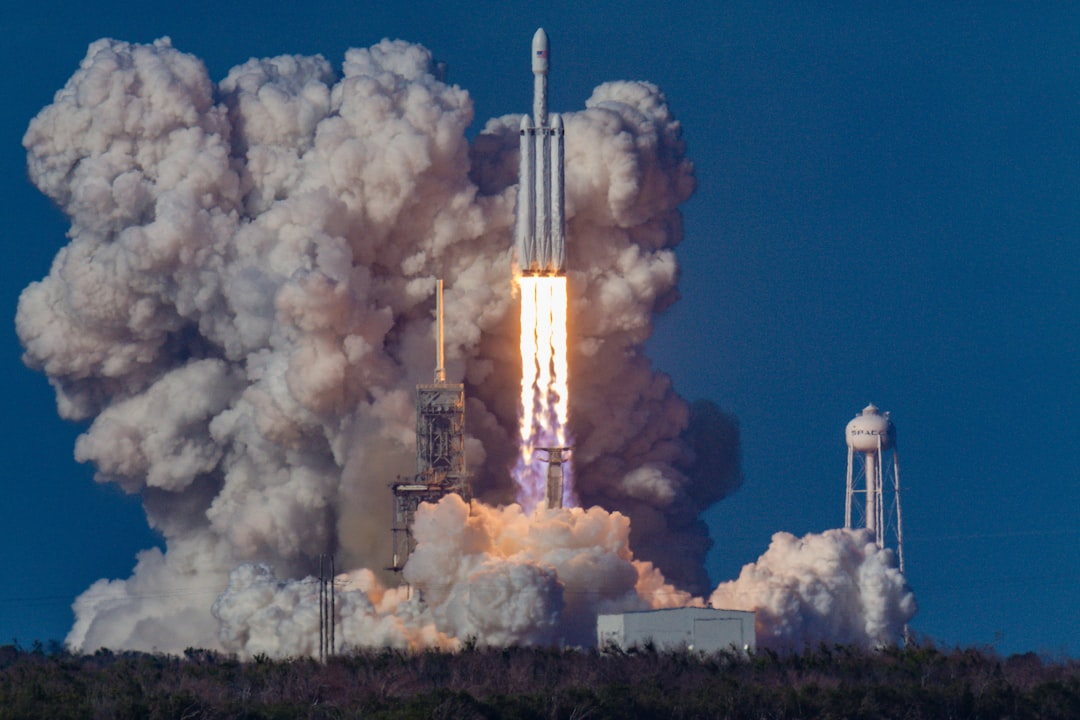
The cosmos, once the exclusive domain of government agencies and highly trained astronauts, is now opening its doors to a new era. We stand on the precipice of a revolution, driven by visionary entrepreneurs and groundbreaking technology, where the dream of venturing beyond Earth is becoming a tangible reality for more than just a select few. This paradigm shift is being spearheaded by private space travel companies, carving out commercial pathways to the stars.
💡 Key Takeaways
- Private companies are democratizing access to space, making it more accessible to civilians.
- Suborbital and orbital flights are now viable options for commercial passengers.
- The burgeoning space tourism industry offers unique, once-in-a-lifetime experiences.
- Innovations driven by private sector competition are accelerating aerospace advancements.
“The shift to private space travel isn’t just about rockets; it’s about expanding humanity’s narrative, turning science fiction into tangible experience, and redefining our place in the cosmos.”
— Astrid Bellweather, Astrophysicist & Science Fiction Consultant
From breathtaking suborbital hops to extended stays aboard orbital outposts, the landscape of private space travel is rapidly evolving. These companies are not just offering rides; they are innovating entire ecosystems, from advanced propulsion systems to reusable rockets, fundamentally changing how humanity interacts with space. For those captivated by the mysteries of the universe and yearning to experience it firsthand, understanding these pioneers is your first step towards the ultimate journey.
In This Article
- — 💡 Key Takeaways
- → The Dawn of Commercial Spaceflight: A New Frontier
- → Suborbital vs. Orbital: Understanding Your Space Journey Options
- — 🚀 Suborbital Travel: The “Edge of Space” Experience
- — 🌌 Orbital Travel: Beyond the Boundary
- → Leading the Charge: Key Private Space Travel Companies
- — 🌠 SpaceX: Redefining Space Access and Ambition
- — 🔵 Blue Origin: From Suborbital Hops to Lunar Visions
- — ✈️ Virgin Galactic: The Suborbital Tourism Pioneer
- — 🛰️ Emerging Players and Commercial Space Stations
- → The Future of Private Space Travel: Beyond Tourism
- → Navigating the Challenges and Considerations
- → Your Gateway to the Cosmos: A Future Within Reach
The Dawn of Commercial Spaceflight: A New Frontier
For decades, space exploration was primarily a government-led endeavor, fueled by Cold War ambitions and scientific curiosity. Agencies like NASA, Roscosmos, and ESA pushed the boundaries of human achievement. However, the early 21st century witnessed a pivotal shift. Entrepreneurial spirits, armed with venture capital and audacious goals, began to challenge the traditional model, aiming to reduce costs, increase access, and foster innovation at an unprecedented pace.
- 🚀 Reducing Costs: By focusing on reusability and mass production, private companies have drastically cut the expense per launch, making space more accessible.
- 📈 Accelerating Innovation: Commercial competition fosters rapid development, pushing technological boundaries faster than ever before.
- 🌌 Expanding Access: The goal is to move beyond government-sponsored missions, opening up opportunities for private citizens, researchers, and commercial enterprises.
This new frontier represents not just a technological leap but a fundamental reimagining of humanity’s relationship with space, moving from purely governmental ventures to a dynamic commercial marketplace.
Suborbital vs. Orbital: Understanding Your Space Journey Options
When considering private space travel, it’s crucial to understand the two primary types of journeys available or under development: suborbital and orbital.
🚀 Suborbital Travel: The “Edge of Space” Experience
Suborbital flights take you to the very edge of space, typically above the Kármán line (100 km or 62 miles above Earth’s mean sea level), but without achieving the velocity required to orbit the Earth. Think of it as a high-altitude jump that brings you back down after a few minutes.
Private Space Travel Companies: Pros and Cons
Pros
- ✔Expands access to space for civilians and private research.
- ✔Drives rapid innovation and technological advancements.
- ✔Potential for lower launch costs and increased frequency.
- ✔Fosters new industries and economic opportunities.
Cons
- ✖Extremely high costs limit accessibility to the ultra-wealthy.
- ✖Significant safety risks due to nascent technology and operations.
- ✖Potential for increased space debris and environmental impact.
- ✖Raises ethical and regulatory concerns regarding space commercialization.
- ✅ Experience: Passengers experience several minutes of weightlessness and witness the curvature of the Earth against the blackness of space.
- ⏳ Duration: These trips are relatively short, often lasting between 10-20 minutes from liftoff to landing.
- ➡️ Profile: The spacecraft goes up, reaches its apogee, and then descends along a ballistic trajectory.
- 💡 Key Players: Blue Origin Space Flight: A Journey to the Edge of Space with its New Shepard vehicle and Virgin Galactic with SpaceShipTwo are the primary providers of suborbital space tourism.
🌌 Orbital Travel: Beyond the Boundary
Orbital flights are significantly more complex and resource-intensive. To achieve orbit, a spacecraft must not only reach a high altitude but also attain a very high horizontal velocity (around 17,500 mph or 28,000 km/h) to continuously fall around the Earth rather than back down.
- ✅ Experience: Passengers stay in space for extended periods, from days to months, circling the Earth multiple times. This allows for prolonged weightlessness, stunning views, and the opportunity for research or even docking with space stations.
- ⏳ Duration: Typically ranges from a few days for tourist missions to months for professional astronauts or researchers.
- ➡️ Profile: The spacecraft enters a stable orbit around Earth, allowing for extended time in microgravity and panoramic views.
- 💡 Key Players: SpaceX is currently the dominant force in orbital private space flight, with others like Axiom Space (partnering with SpaceX) offering future orbital missions.
Leading the Charge: Key Private Space Travel Companies
Several companies are at the forefront of the private space travel revolution, each with unique approaches and ambitious goals.
🌠 SpaceX: Redefining Space Access and Ambition
Founded by Elon Musk, SpaceX has undeniably revolutionized the space industry. Known for its Falcon 9 and Falcon Heavy rockets, and the Crew Dragon spacecraft, SpaceX has made significant strides in reducing launch costs through reusability.
- ✅ Crew Dragon: SpaceX’s Crew Dragon spacecraft is certified by NASA for human spaceflight, regularly ferrying astronauts to and from the International Space Station (ISS). This capability also extends to private missions.
- ➡️ Inspiration4 & Polaris Program: SpaceX successfully launched Inspiration4, the first all-civilian orbital mission, showcasing the potential for independent orbital space tourism and research. The Polaris Program aims to push these boundaries further, including future spacewalks for private citizens.
- 💡 Starship: The company’s ambitious Starship system, currently under development, promises fully reusable transportation to the Moon, Mars, and beyond, significantly impacting future space travel costs and capabilities. For a deeper dive into their missions, explore SpaceX Flights: Shaping the Future of Space Travel. The advancements in Space Exploration Technologies are largely propelled by companies like SpaceX.
- 🌍 Impact: SpaceX’s innovations, including their work on SpaceX private space flight, have dramatically lowered the barrier to orbital access, setting the stage for a new commercial space economy.
🔵 Blue Origin: From Suborbital Hops to Lunar Visions
Jeff Bezos’s Blue Origin aims for “millions of people living and working in space.” The company’s primary human spaceflight vehicle is New Shepard, designed for suborbital tourism.
- ✅ New Shepard: This reusable suborbital rocket system takes passengers past the Kármán line for a few minutes of weightlessness before returning to Earth. New Shepard has successfully carried numerous private citizens and celebrities to space.
- ➡️ New Glenn: Blue Origin is also developing New Glenn, a much larger orbital rocket designed for heavy-lift missions, including satellite launches and potential future human spaceflight to orbit and beyond.
- 💡 Lunar Landers: The company is deeply involved in lunar exploration, developing landers like Blue Moon for NASA’s Artemis program, aiming to return humans to the Moon. For more on their specific flights, see Blue Origin Space Flight: A Journey to the Edge of Space.
✈️ Virgin Galactic: The Suborbital Tourism Pioneer
Virgin Galactic, founded by Sir Richard Branson, has long been synonymous with space tourism. Their unique SpaceShipTwo system, VSS Unity, is designed for suborbital flights.
- ✅ Unique Launch System: Unlike vertical rockets, SpaceShipTwo is carried to launch altitude by a carrier aircraft (VMS Eve) before being released and firing its rocket engine to reach space.
- ➡️ Passenger Experience: Flights offer passengers spectacular views of Earth and a few minutes of microgravity before gliding back for a runway landing.
- 💡 Commercial Operations: After years of development and test flights, Virgin Galactic has commenced commercial suborbital spaceflight operations, taking private citizens to space.
🛰️ Emerging Players and Commercial Space Stations
The private space sector extends beyond just launch providers. Companies like Axiom Space are building the foundation for future orbital habitats and commercial space stations, providing modules that will attach to the ISS and eventually operate independently. These ventures aim to create permanent commercial infrastructure in low Earth orbit for research, manufacturing, and tourism, paving the way for even more extensive Space Travel: Suborbital to Intergalactic Journeys.

The Future of Private Space Travel: Beyond Tourism
While space tourism captures headlines, the ambitions of private space companies extend far beyond joyrides to the Kármán line. The future promises a broad spectrum of commercial activities in space.
- 🔬 In-Space Manufacturing and Research: The microgravity environment offers unique opportunities for advanced materials science, pharmaceuticals, and 3D printing that cannot be replicated on Earth. Private space stations will become orbiting laboratories and factories.
- 🌍 Point-to-Point Travel: Imagine traveling from New York to Sydney in under an hour by hopping through space. Companies are actively exploring this hypersonic suborbital transport for rapid global travel.
- 🌕 Lunar and Martian Habitation: The long-term vision includes sustainable bases on the Moon and eventually human settlements on Mars, leveraging private capabilities for exploration, resource extraction, and colonization.
- 📡 Satellite Megaconstellations: Beyond traditional satellites, companies are deploying vast networks for global internet access (e.g., Starlink by SpaceX), Earth observation, and climate monitoring, transforming global connectivity.
The drive to innovate and commercialize is rapidly accelerating, pushing humanity further into the solar system. This growth will undoubtedly intertwine with global efforts like those outlined in NASA’s Artemis Accords, shaping the governance and cooperative frameworks for future space activities.
Recommended Video
Navigating the Challenges and Considerations
Despite the immense progress, the private space travel industry faces significant challenges that require careful consideration.
- 💰 Cost: While prices are decreasing, space travel remains prohibitively expensive for the average individual. Making it accessible to a broader demographic is a long-term goal.
- 🛡️ Safety: Space travel, whether commercial or governmental, carries inherent risks. Ensuring passenger safety is paramount, requiring rigorous testing, redundant systems, and robust emergency protocols.
- ⚖️ Regulation and Policy: As more private entities venture into space, the need for clear international and national regulations regarding orbital debris, space traffic management, resource utilization, and liability becomes increasingly critical.
- 🌱 Environmental Impact: The environmental footprint of increased rocket launches, including emissions and potential space debris, is a growing concern that requires sustainable solutions.
- 🧠 Ethical Considerations: Questions surrounding space equity, the commercialization of celestial bodies, and the impact of human presence on pristine extraterrestrial environments will become more prominent.
Addressing these challenges is vital for the sustainable and responsible growth of the private space sector, ensuring that its benefits can be realized by all of humanity.
Your Gateway to the Cosmos: A Future Within Reach
The rise of private space travel companies marks a profound turning point in human history. No longer confined to the realms of science fiction, the opportunity to venture into space is transitioning from a distant dream to an increasingly accessible reality. Companies like SpaceX, Blue Origin, and Virgin Galactic are not just building rockets; they are building a bridge to humanity’s future in the cosmos, unlocking new frontiers for exploration, commerce, and ultimately, human expansion.
While the journey has just begun, with challenges yet to overcome, the trajectory is clear: private enterprise will continue to drive innovation, reduce costs, and broaden access to space, making the universe a little less mysterious and a lot more reachable for future generations. For a comprehensive understanding of humanity’s quest to explore beyond our planet, delve into Cosmic Queries: Probing the Mysteries of the Universe.
Frequently Asked Questions
What defines a private space travel company?
Private space travel companies are privately funded entities, distinct from government space agencies, that offer commercial services such as space tourism, satellite launches, and cargo transport to space.
Is private space travel safe?
While inherently risky, private space companies adhere to rigorous safety protocols and are subject to regulatory oversight to ensure the highest possible standards for passenger and mission safety.
How much does a trip to space cost with a private company?
Costs vary significantly. Suborbital flights can range from $125,000 to $450,000, while orbital journeys or stays on private space stations can cost millions, depending on the duration and amenities.
What types of experiences do private space companies offer?
Experiences range from brief suborbital trips offering a few minutes of weightlessness and views of Earth, to multi-day orbital missions for longer periods in microgravity and unique perspectives of our planet.