Biodiversity Footprint: Measuring Your Environmental Impact
In an era increasingly defined by environmental consciousness, terms like “carbon footprint” have become commonplace. Yet, there’s another, equally critical metric that often flies under the radar: the biodiversity footprint. This concept transcends mere emissions, delving into the broader impact human activities have on the intricate web of life on Earth. Understanding and measuring your environmental impact on biodiversity is not just an academic exercise; it’s a vital step towards fostering sustainable living and preserving the planet’s ecological balance for future generations.
💡 Key Takeaways
- A biodiversity footprint quantifies your impact on Earth’s living systems, including species and habitats.
- Individual choices, from diet to consumption, significantly affect global biodiversity through resource use and pollution.
- Reducing your footprint involves conscious choices, supporting sustainable practices, and advocating for conservation.
- Measuring your impact is the first step towards effective environmental stewardship and promoting planetary health.
“Our planet’s delicate ecosystems are a complex web, and understanding our biodiversity footprint is akin to reading Earth’s vital signs. It reveals how profoundly human activity reshapes landscapes and life itself, urging us towards immediate, data-driven conservation.”
— Marcus Sterling, Geophysical Explorer & Climate Dynamics Analyst
This comprehensive guide will unpack what a biodiversity footprint entails, why it matters, how it’s measured, and most importantly, what practical steps you can take to reduce your own. As we explore the hidden dynamics of our planet, it becomes clear that our actions, big or small, ripple through ecosystems, influencing the very Earth’s Unseen Forces: The Hidden Dynamics of Our Planet that sustain life.
In This Article
- → Biodiversity Footprint: Measuring Your Environmental Impact
- — 💡 Key Takeaways
- → What Exactly is a Biodiversity Footprint?
- — Defining Biodiversity
- — From Ecological Footprint to Biodiversity Impact
- → Why Measuring Your Biodiversity Footprint Matters
- — Understanding Human Impact on Biodiversity
- — Driving Sustainable Living Choices
- → How is a Biodiversity Footprint Measured?
- — Individual vs. Corporate Measurement
- — Key Metrics and Indicators
- — Tools and Calculators
- → Practical Steps to Reduce Your Biodiversity Footprint
- — At Home and in Your Lifestyle
- — Consumer Choices and Supply Chains
- — Advocacy and Support
- → The Future of Biodiversity Footprint Measurement
- — Evolving Metrics and Technologies
- — Global Collaboration and Policy
- → Conclusion
What Exactly is a Biodiversity Footprint?
While often discussed alongside concepts like the ecological footprint or carbon footprint, the biodiversity footprint offers a distinct and crucial lens through which to view our environmental impact. It quantifies the effect of human activities—from consumption patterns to land use—on the variety of life on Earth.
Defining Biodiversity
Biodiversity refers to the variety of life on Earth at all its levels, from genes to ecosystems. It encompasses:

- ✅ The diversity of species (plants, animals, fungi, microorganisms).
- ✅ Genetic diversity within species.
- ✅ The diversity of ecosystems (forests, oceans, wetlands, deserts).
This intricate web provides essential ecosystem services, such as clean air and water, pollination of crops, climate regulation, and soil formation. When we impact biodiversity, we compromise these foundational services.
From Ecological Footprint to Biodiversity Impact
The ecological footprint primarily measures the demand on natural resources and waste absorption capacity in terms of biologically productive land and sea area. The carbon footprint focuses specifically on greenhouse gas emissions. The biodiversity footprint, however, takes a more direct look at the impact on species and habitats. It considers factors like:
- ➡️ Land Use Change: Conversion of natural habitats for agriculture, urbanization, or infrastructure.
- ➡️ Pollution: Release of contaminants into air, water, and soil, harming species and ecosystems. (For a deeper dive, read our article on Pollution’s Impact on Biodiversity: Threats to Ecosystems).
- ➡️ Resource Overexploitation: Unsustainable fishing, logging, or hunting.
- ➡️ Climate Change: Altering habitats and disrupting ecological processes.
- ➡️ Invasive Species: Introduction of non-native species that outcompete or prey on native ones.
Why Measuring Your Biodiversity Footprint Matters
Understanding your human impact on biodiversity is more than an abstract environmental concern; it’s a pathway to informed decision-making and genuine change. Measurement provides clarity and accountability, helping us move from awareness to action.
Understanding Human Impact on Biodiversity
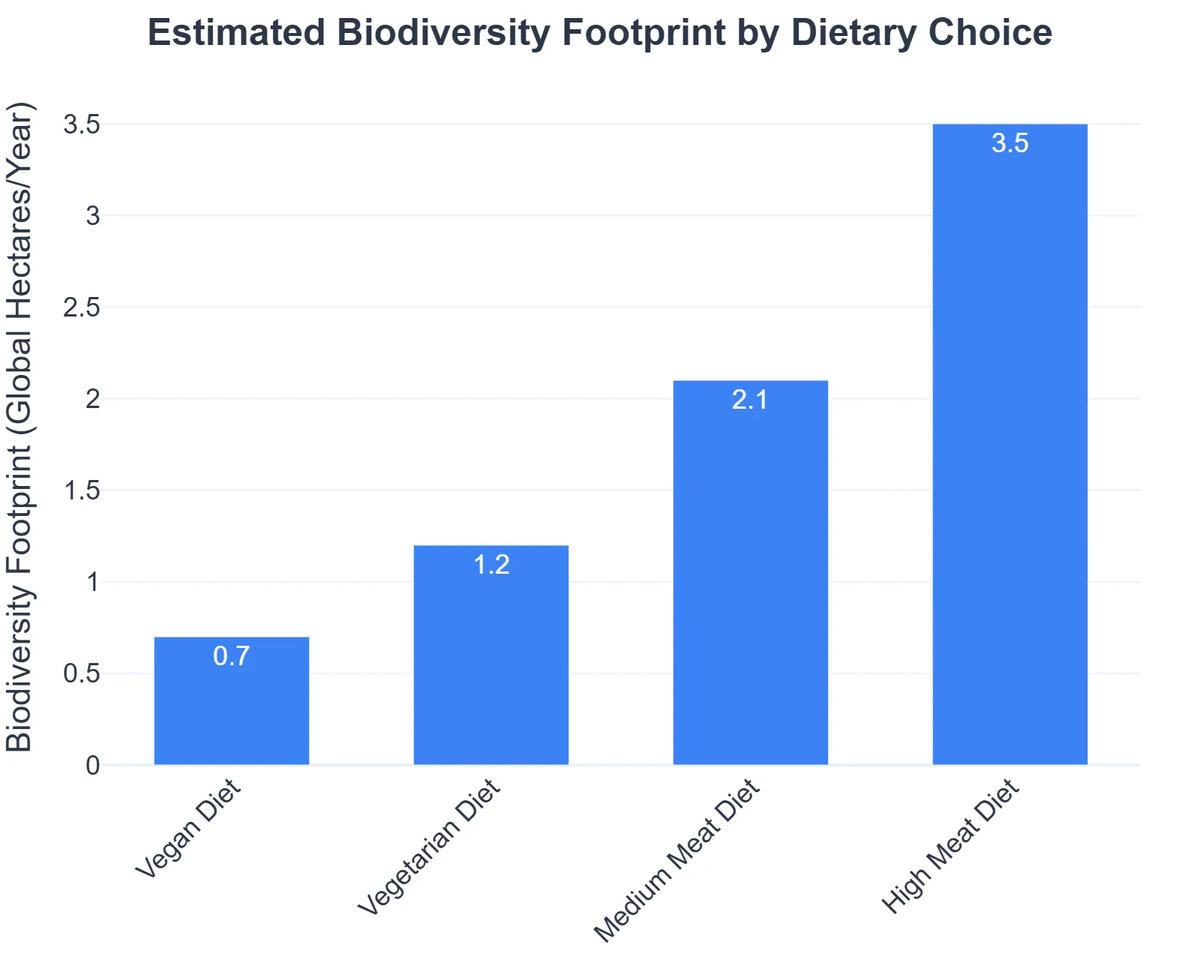
Our daily choices, often seemingly small, collectively contribute to significant environmental pressure. A high biodiversity footprint indicates that our lifestyle or business operations are disproportionately consuming resources, polluting environments, or converting natural habitats, thereby accelerating species loss and ecosystem degradation. For instance, the demand for certain products can drive deforestation in Biodiversity Hotspots: Understanding Biodiversity Nodes, leading to direct habitat destruction.
Driving Sustainable Living Choices
Measurement provides a baseline. Once you know your impact, you can identify the most significant contributors and focus your efforts. This empowers individuals, communities, and corporations to adopt more sustainable living practices. It transforms a vague sense of responsibility into actionable steps, leading to changes that genuinely reduce environmental harm.
- 💡 Awareness: Quantifying impact makes it tangible.
- 💡 Prioritization: Pinpointing the biggest contributors to your footprint.
- 💡 Action: Guiding choices towards more sustainable alternatives.
- 💡 Advocacy: Providing data to support policy changes and corporate accountability.
How is a Biodiversity Footprint Measured?
Measuring a biodiversity footprint is complex, as it involves tracking impacts across various ecosystems and species. Unlike carbon, which has a relatively straightforward metric (CO2 equivalent), biodiversity requires a more nuanced approach.
Individual vs. Corporate Measurement
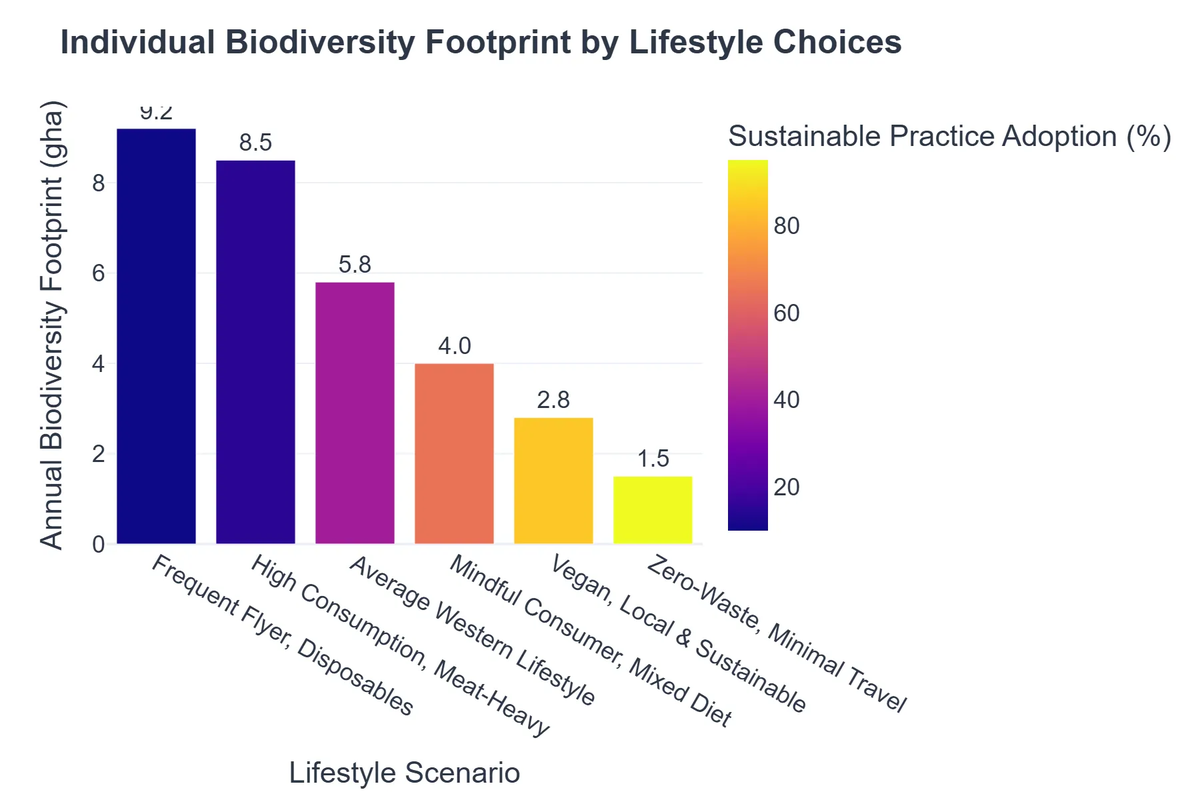
Measuring an individual’s biodiversity footprint typically involves assessing lifestyle choices that indirectly lead to biodiversity loss. This includes consumption of goods, energy use, food choices, and travel habits. For companies, the measurement is far more intricate, encompassing supply chain impacts, land use for operations, waste generation, and even financial investments.
- 🏡 Individual: Focuses on personal consumption and lifestyle choices.
- 🏢 Corporate: Analyzes direct operations, supply chains, product life cycles, and investment portfolios.
Key Metrics and Indicators
There isn’t one universal metric for a biodiversity footprint, but common indicators include:
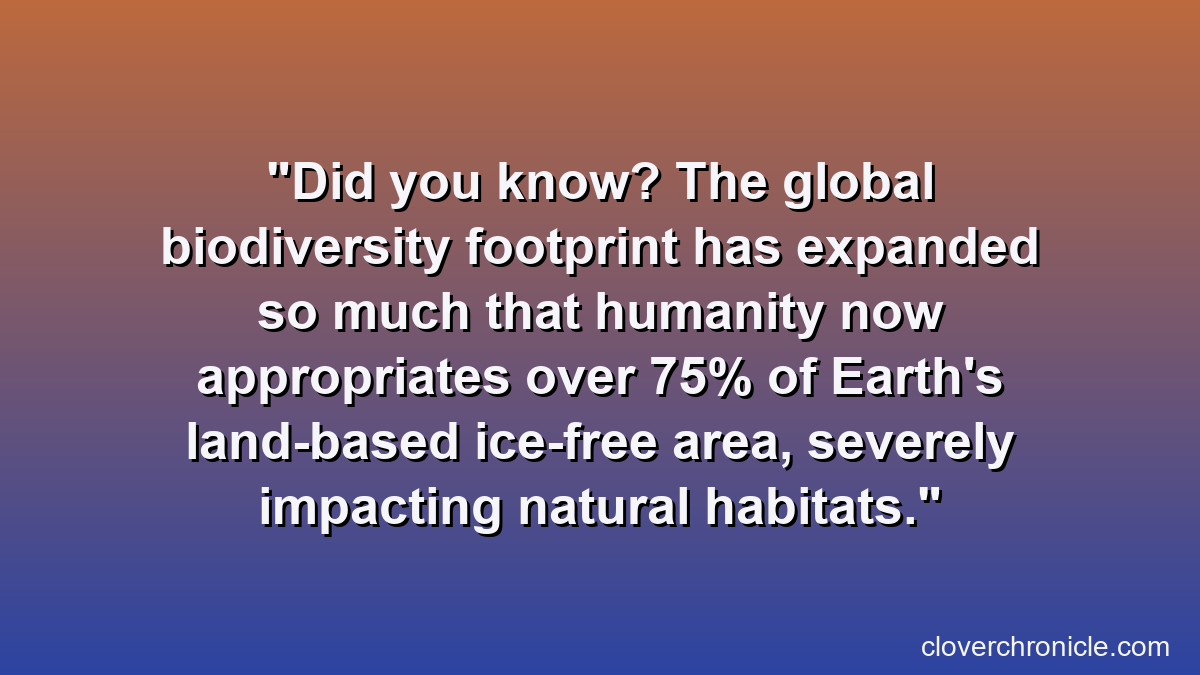
- Land Use & Land Use Change: Measured in hectares of land transformed or impacted, often expressed in terms of Mean Species Abundance (MSA) or Potentially Disappeared Fraction of species (PDF) due to habitat loss.
- Water Footprint: The volume of fresh water used directly and indirectly, especially considering its impact on aquatic ecosystems.
- Material Footprint: The total amount of raw materials extracted to meet consumption demands, linking back to extraction impacts.
- Pollution Load: Quantifying the release of pollutants (e.g., nitrogen, phosphorus, heavy metals) that impact ecosystems.
- Ecosystem Services Impact: Assessing the degradation of services like pollination, water purification, or carbon sequestration.
These metrics are often integrated into complex models that attempt to provide a holistic view of impact.
Tools and Calculators
While a definitive, universally recognized “biodiversity footprint calculator” for individuals is still evolving due to the complexity of the metric, several tools help approximate your broader environmental impact, which inherently links to biodiversity:
- 🌐 Ecological Footprint Calculators: Tools like the Global Footprint Network’s Ecological Footprint Calculator provide a good proxy by assessing your demand on Earth’s resources.
- 📊 Corporate Assessment Tools: Companies often employ specialized consultants or platforms (e.g., those mentioned by EcoAct) that use methodologies like the Global Biodiversity Score (GBS) or the Biodiversity Impact Metric (BIM) to quantify their impacts across supply chains.
These tools, while not always focusing solely on “biodiversity,” provide valuable insights into the underlying drivers of biodiversity loss.
Practical Steps to Reduce Your Biodiversity Footprint
Reducing your biodiversity footprint is an active process that involves conscious choices and a commitment to sustainable living. Every action, no matter how small, contributes to a larger positive shift.
At Home and in Your Lifestyle
- 🥦 Rethink Your Diet:
- ✅ Prioritize plant-based meals: Livestock farming is a major driver of deforestation and habitat loss.
- ✅ Choose local and seasonal produce: Reduces transportation emissions and supports local ecosystems.
- ✅ Opt for sustainably sourced seafood: Look for certifications like MSC (Marine Stewardship Council).
- ⚡ Conserve Energy:
- ✅ Reduce electricity consumption: Turn off lights, unplug devices, use energy-efficient appliances.
- ✅ Improve home insulation: Less reliance on heating/cooling.
- ✅ Switch to renewable energy sources: Support green energy providers.
- 💧 Manage Water Wisely:
- ✅ Shorten showers, fix leaks, use water-saving appliances.
- ✅ Be mindful of virtual water in products (water used in production).
- ♻️ Reduce, Reuse, Recycle:
- ✅ Minimize waste generation, especially single-use plastics.
- ✅ Repair items instead of replacing them.
- ✅ Proper recycling reduces demand for new raw materials.
Consumer Choices and Supply Chains
- 🛍️ Buy Sustainable Products:
- ✅ Look for certifications (e.g., FSC for wood products, Fairtrade for food).
- ✅ Research company practices: Support brands committed to ethical sourcing and environmental protection.
- ✈️ Travel Responsibly:
- ✅ Choose eco-friendly transportation options (trains over planes for shorter distances).
- ✅ Support eco-tourism that benefits local conservation efforts.
- 🌳 Support Land Conservation:
- ✅ Donate to organizations that protect critical habitats.
- ✅ Participate in local rewilding or tree-planting initiatives.
Advocacy and Support
- 🗣️ Speak Up: Advocate for stronger environmental policies and corporate accountability.
- 🤝 Support Conservation: Engage with and contribute to organizations working on biodiversity protection. Initiatives like Biodiversity Week: Engaging in Global Conservation offer excellent opportunities for involvement.
- 🗳️ Vote Green: Support political leaders who prioritize environmental protection and sustainable development.
The Future of Biodiversity Footprint Measurement
The field of biodiversity footprint measurement is rapidly evolving, driven by increasing awareness, technological advancements, and the urgent need for comprehensive environmental accounting.
Evolving Metrics and Technologies
Researchers and organizations are continually refining methodologies to more accurately quantify biodiversity impacts. This includes the development of:
- 📈 Improved Data Collection: Utilizing remote sensing, AI, and big data to monitor land use change, habitat degradation, and species distribution more effectively.
- 🧪 Standardized Metrics: Efforts to create globally recognized metrics that allow for consistent measurement and comparison across different sectors and geographies.
- 🔗 Supply Chain Transparency: Technologies like blockchain are being explored to track products from origin to consumer, ensuring ethical and sustainable sourcing.
Global Collaboration and Policy
International cooperation is crucial for addressing biodiversity loss, which is a global challenge. Forums like COP (Conference of the Parties) meetings are pivotal in setting global targets and frameworks for biodiversity conservation. Future policies are likely to include:
- ⚖️ Mandatory Reporting: Requiring companies to report on their biodiversity impacts, similar to carbon reporting.
- 💰 Nature-Positive Investments: Shifting financial flows towards activities that enhance, rather than degrade, nature.
- 🌍 Integrated Planetary Boundaries Approach: Considering biodiversity alongside other planetary limits (climate change, nutrient cycles) to ensure holistic sustainability.
Recommended Video
Conclusion
The biodiversity footprint serves as a critical indicator of our collective impact on the planet’s most invaluable asset: its rich and diverse tapestry of life. By understanding and actively working to reduce our footprint, we contribute not only to the conservation of species and ecosystems but also to the health and resilience of the entire planet.
Measuring your environmental impact, whether individually or as an organization, is the first step. The subsequent commitment to sustainable living, informed consumption, and active advocacy forms the bedrock of a truly nature-positive future. Our world, with its unseen forces and intricate dynamics, depends on our conscious stewardship. Let us all strive to leave a lighter, more harmonious footprint for generations to come.
Frequently Asked Questions
What is a biodiversity footprint?
A biodiversity footprint measures the impact of human activities, products, or services on biological diversity, including habitat loss, species extinction, and ecosystem degradation.
How does my daily life affect biodiversity?
Everyday choices, such as food consumption, energy use, transportation, and purchasing habits, contribute to your biodiversity footprint through resource extraction, pollution, and land use changes.
Can individuals truly make a difference in reducing biodiversity loss?
Absolutely. Collective individual actions, from sustainable consumption to advocating for conservation policies, play a crucial role in mitigating biodiversity loss and fostering ecological resilience.
Where can I learn more about my biodiversity footprint?
Several online calculators and frameworks exist, often provided by environmental organizations, which can help estimate your footprint based on lifestyle choices and provide tips for reduction.