


Milgram Experiment & Obedience: Unveiling the Power of Authority
In the annals of psychology, few studies resonate with the same profound impact and controversy as the Milgram experiment. Conducted by Yale University psychologist Stanley Milgram in the 1960s, this groundbreaking series of investigations aimed to understand the alarming extent to which ordinary individuals would obey an authority figure, even when commanded to perform actions that conflicted with their personal conscience. It was a direct response to the horrors of the Holocaust, seeking to explain how seemingly normal people could participate in atrocities under orders.
💡 Key Takeaways
- The Milgram Experiment demonstrated a surprising willingness among participants to obey orders from an authority figure, even when those orders conflicted with their personal conscience.
- Situational factors and perceived legitimacy of authority can profoundly influence individual behavior, often overriding moral considerations.
- The study sparked critical ethical debates in psychology, leading to stricter guidelines for human subject research.
- Understanding the principles of obedience is crucial for recognizing and challenging potential abuses of power in various contexts.
“Milgram’s work transcends simple obedience; it highlights the profound cognitive dissonance and moral negotiation that occur when our internal compass clashes with external authoritative demands. It’s a vivid demonstration of how context shapes our neural and behavioral responses.”
— Eleanor Vance, Neuroscience Communicator & Cognitive Psychologist
The lessons gleaned from the Stanley Milgram obedience study continue to shape our understanding of human behavior, social influence, and the pervasive power of authority. This article will dissect the experiment’s design, its shocking results, the profound implications, and its enduring legacy on both psychological research and our perception of human nature.
In This Article
- → Milgram Experiment & Obedience: Unveiling the Power of Authority
- — 💡 Key Takeaways
- → The Genesis of a Groundbreaking Study: Why Milgram Conducted His Experiment
- — 💡 Historical Context: The Shadows of WWII
- — 🎯 The Core Question: How Far Will We Go?
- → ⚙️ Designing the Milgram Experiment: A Closer Look at the Methodology
- — The Participants: Ordinary People, Extraordinary Circumstances
- — The Setup: Teacher, Learner, and Experimenter
- — The “Shock” Apparatus and Verbal Prods
- → The Shocking Results: What the Milgram Experiment Revealed About Obedience
- — 📈 The Obedience Rate: A Disturbing Reality
- — Variations and Their Impact
- → Key Takeaways: Profound Lessons on Authority and Human Behavior
- — The Power of Situational Factors Over Personality
- — The Concept of Agentic State
- — The Gradual Escalation of Commitment
- → Ethical Debates and Lasting Legacy of Milgram’s Study
- — ⚖️ The Ethical Dilemma: Deception and Distress
- — Enduring Impact on Psychology Research
- → Applying Milgram’s Lessons: Understanding Obedience in Modern Contexts
- — In Workplaces and Organizations
- — Social and Political Compliance
- — Cultivating Critical Thinking and Disobedience
- → Conclusion
The Genesis of a Groundbreaking Study: Why Milgram Conducted His Experiment
💡 Historical Context: The Shadows of WWII
The mid-20th century was profoundly shaped by World War II and the Holocaust. Questions loomed large about how millions of people could be systematically persecuted and murdered. Was it simply the inherent evil of a few, or was there a more insidious mechanism at play – the power of obedience to a hierarchical authority structure? Stanley Milgram, born to Jewish parents, was deeply affected by these questions, leading him to design an experiment that would test the limits of human conscience against the demands of authority.
🎯 The Core Question: How Far Will We Go?
Milgram’s primary hypothesis was straightforward yet unsettling: How far would a person go in obeying an instruction if it involved harming another person? He wanted to test the “Germans are different” hypothesis, which suggested that there was something unique about German culture that led to such extreme obedience. His findings, however, would suggest a universal human susceptibility.
⚙️ Designing the Milgram Experiment: A Closer Look at the Methodology
The classic Stanley Milgram experiment on obedience was meticulously designed to create a compelling, albeit deceptive, scenario that would test participants’ willingness to administer increasingly painful electric shocks to another person.
The Participants: Ordinary People, Extraordinary Circumstances
- ✅ Recruitment: Participants were recruited through newspaper ads, primarily men from various walks of life, ostensibly for a study on “memory and learning.” They were paid a small fee for their participation.
- ✅ Roles: Upon arrival, participants were introduced to two other individuals: a stern-looking “experimenter” (an actor in a lab coat, representing authority) and a friendly “learner” (another actor, the confederate).
- ✅ The “Rigged” Draw: The drawing of roles was rigged so that the true participant always became the “teacher” and the confederate became the “learner.”
The Setup: Teacher, Learner, and Experimenter
The “learner” was strapped into a chair in an adjacent room, visible or audible to the “teacher,” and electrodes were attached to his arm. The “teacher” was seated in front of a “shock generator” machine with a series of 30 switches, clearly labeled from 15 volts (“Slight Shock”) up to 450 volts (“XXX – Danger: Severe Shock”).
The “Shock” Apparatus and Verbal Prods
The teacher’s task was to administer a shock to the learner every time he made a mistake on a word-pair memory test. With each subsequent mistake, the voltage was to be increased. Crucially, the “learner” was not actually receiving shocks, but instead followed a pre-recorded script of increasingly distressed grunts, screams, and protests, eventually falling silent as if unconscious or dead. When the “teacher” hesitated or refused, the experimenter delivered a series of firm, escalating verbal prods:
- ➡️ “Please continue.”
- ➡️ “The experiment requires that you continue.”
- ➡️ “It is absolutely essential that you continue.”
- ➡️ “You have no other choice, you must go on.”
For more insights into how psychological experiments like Milgram’s reveal fundamental aspects of human behavior, consider our article on Obedience in Psychology: Exploring Social Influence.
The Shocking Results: What the Milgram Experiment Revealed About Obedience
📈 The Obedience Rate: A Disturbing Reality
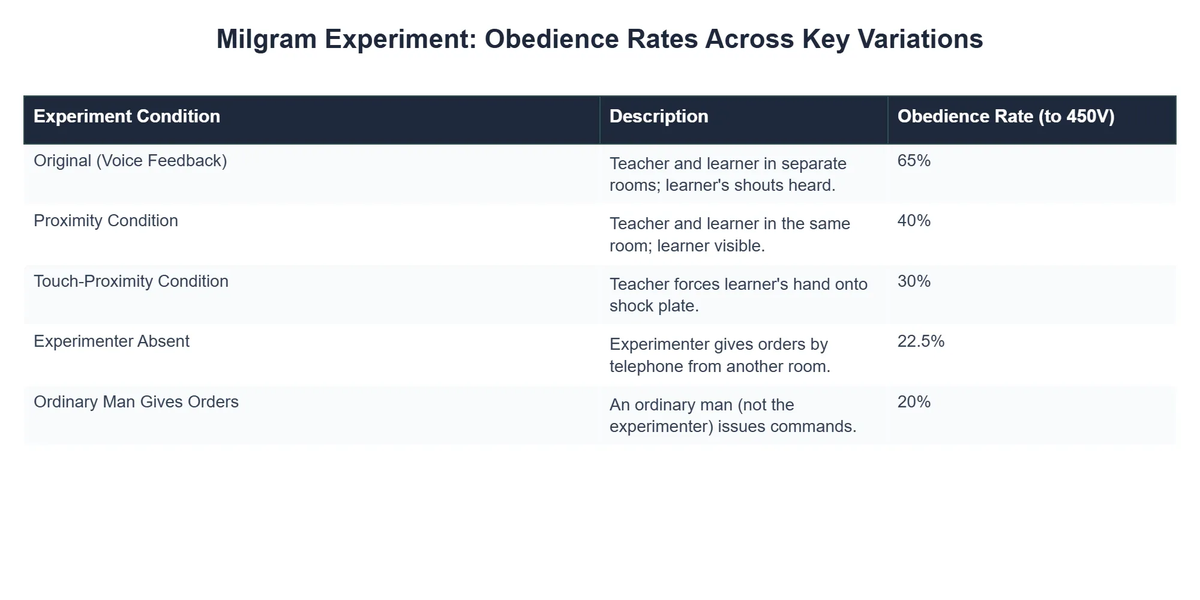
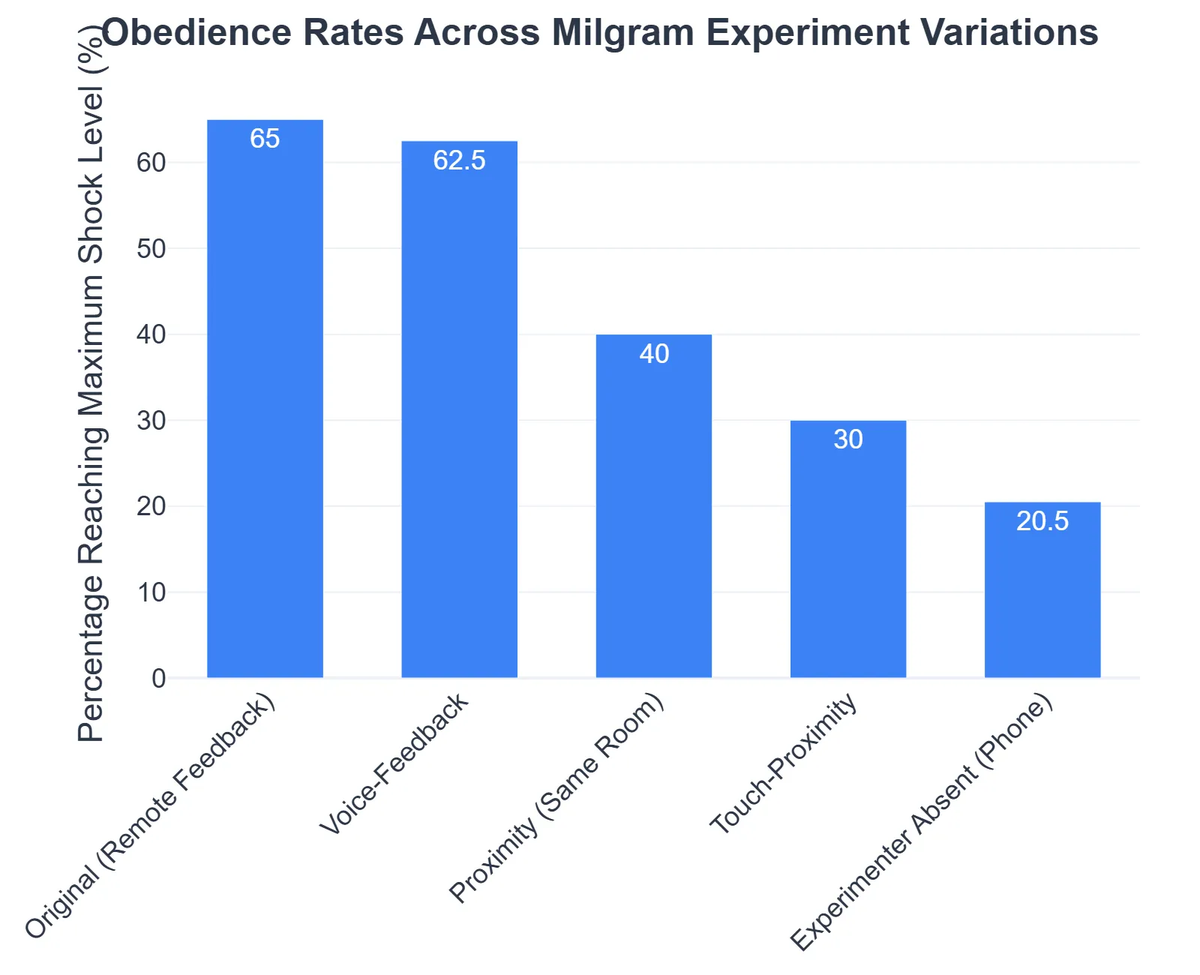
Milgram’s initial prediction, shared by psychiatrists surveyed beforehand, was that very few, if any, participants would administer the maximum 450-volt shock. The actual results were profoundly unsettling. In the initial series of experiments, 65% of participants continued to the maximum 450-volt shock level, despite the learner’s screams and eventual silence. All participants continued to at least 300 volts.
This outcome challenged prevailing beliefs about individual autonomy and moral judgment, suggesting that under certain conditions, situational pressures can override deeply held ethical convictions. For a detailed breakdown of the original findings, you can explore external resources like Simply Psychology’s Milgram Shock Experiment summary.
Variations and Their Impact
Milgram conducted numerous variations of the experiment to identify factors influencing obedience:
- ✅ Proximity of Learner: When the teacher could see or touch the learner, obedience decreased.
- ✅ Proximity of Experimenter: When the experimenter was not in the same room (e.g., giving instructions by phone), obedience dropped significantly.
- ✅ Legitimacy of Authority: If the experiment took place in a less prestigious setting (e.g., a downtown office building rather than Yale University), obedience decreased.
- ✅ Group Influence: When other “teachers” (confederates) openly defied the experimenter, obedience dropped dramatically.
Key Takeaways: Profound Lessons on Authority and Human Behavior
The Power of Situational Factors Over Personality
One of the most crucial lessons from the Milgram study is that the situation we find ourselves in often dictates our behavior more powerfully than our inherent personality traits or moral compass. Ordinary, well-meaning individuals can be compelled to act in ways they would never typically consider, simply by being placed within a powerful authority structure.
The Concept of Agentic State
Milgram proposed the concept of an “agentic state,” where an individual views themselves as an agent for carrying out another person’s wishes, thereby feeling no personal responsibility for their actions. They essentially defer moral judgment to the authority figure.
The Gradual Escalation of Commitment
The incremental nature of the shocks (starting small and increasing gradually) played a key role. It’s much easier to take a small step than a giant leap. Once participants had delivered a 15-volt shock, it was psychologically harder to refuse the next 30-volt increment, and so on. This “foot-in-the-door” technique is a powerful driver of compliance.
This phenomenon is also observed in other classic psychology experiments, such as the Stanford Prison Experiment: Power, Roles, and Human Behavior, which further illuminates how roles and situations can shape individual behavior.
Ethical Debates and Lasting Legacy of Milgram’s Study
⚖️ The Ethical Dilemma: Deception and Distress
The Milgram experiment is one of the most ethically controversial studies in psychological history. Critics argued that:
- 🚫 Deception: Participants were heavily deceived about the true nature of the experiment and the reality of the shocks.
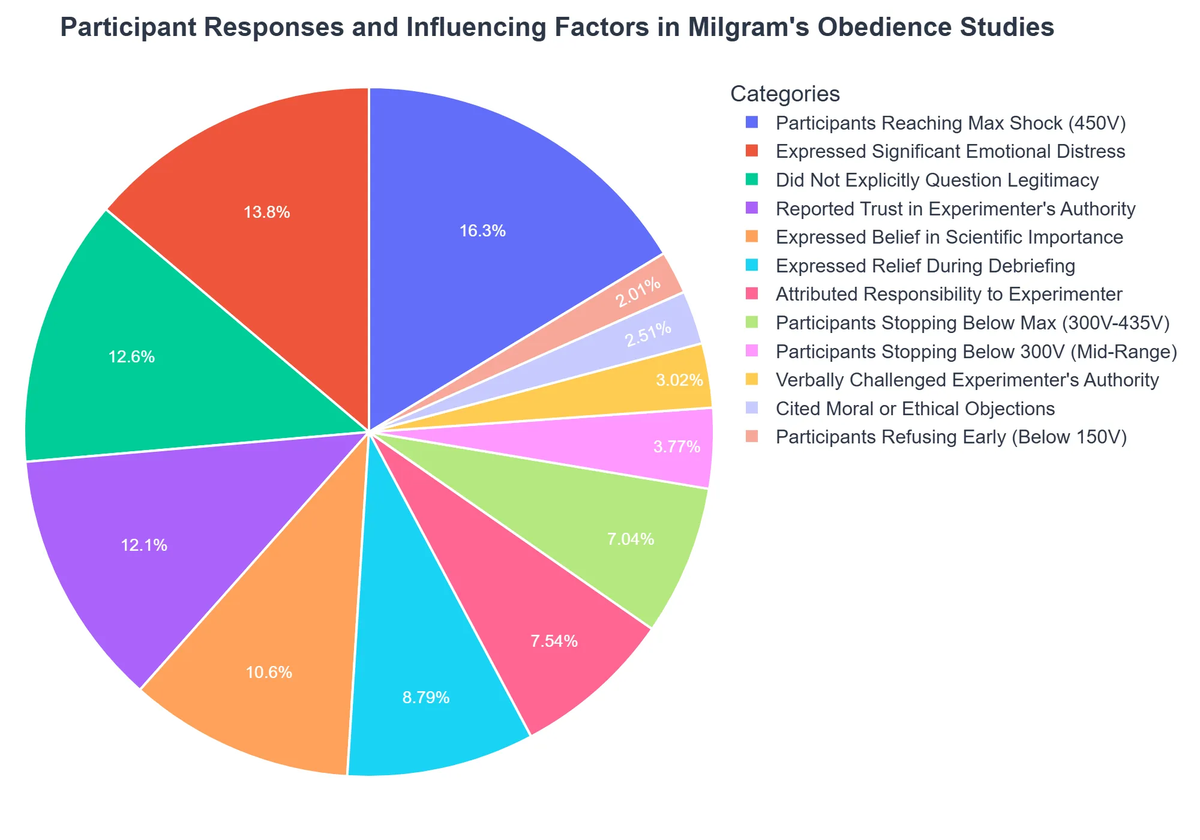
- 🚫 Distress: Many participants experienced significant psychological distress, anxiety, and moral conflict during the experiment.
- 🚫 Right to Withdraw: Although participants were technically free to withdraw, the verbal prods made it difficult to do so.
Milgram defended his work by stating that participants were debriefed thoroughly, and follow-up surveys showed that most were glad they participated and understood the value of the research. However, the study led to significant reforms in ethical guidelines for psychological research, emphasizing informed consent and protection from harm.
Enduring Impact on Psychology Research
Despite the ethical debates, the Milgram experiment fundamentally altered our understanding of obedience and authority. It demonstrated the immense power of situational forces and illuminated the psychological mechanisms that can lead ordinary people to commit extraordinary acts. It remains a foundational study for understanding social influence, group dynamics, and the critical importance of individual moral courage. For a broader exploration of the intricate connections between our mind, body, and the external world, delve into our pillar content: The Human Enigma: Unlocking the Secrets of Our Body and Mind.
Recommended Video
Applying Milgram’s Lessons: Understanding Obedience in Modern Contexts
The insights from Milgram’s work are not confined to academic discussions; they offer crucial lessons for navigating our complex modern world.
In Workplaces and Organizations
Understanding the dynamics of obedience helps us comprehend issues like:
- ➡️ Whistleblowing: Why it’s so difficult for employees to challenge unethical practices, even when they know they are wrong.
- ➡️ Groupthink: How strong leaders or hierarchical structures can lead to collective poor decision-making.
- ➡️ Compliance: The ease with which rules and procedures, even questionable ones, are followed within a corporate structure.
Social and Political Compliance
Milgram’s findings are vital for understanding phenomena such as:
- ➡️ Cult Behavior: The powerful influence charismatic leaders can exert over followers.
- ➡️ Authoritarian Regimes: How populations can comply with oppressive state directives.
- ➡️ Social Engineering: The psychological tactics used to manipulate individuals into specific actions, often online.
Cultivating Critical Thinking and Disobedience
Perhaps the most important contemporary lesson from Milgram is the need to foster critical thinking and the courage to engage in “disobedience to authority” when that authority demands actions that violate fundamental moral principles. Recognizing the subtle pressures that lead to compliance is the first step toward making autonomous, ethical decisions. Effectiviology offers a compelling perspective on the authority bias and its lessons from the Milgram experiment.
Conclusion
The Milgram experiment serves as a stark, enduring reminder of the profound power of authority and the intricate psychological mechanisms that can lead individuals to override their moral compass. While ethically controversial, its revelations forced psychology and society to confront uncomfortable truths about human susceptibility to situational pressures. The legacy of Stanley Milgram’s obedience studies continues to underscore the critical importance of individual responsibility, critical thought, and the courage to question authority, even when faced with compelling external pressures. Its lessons are as relevant today as they were over half a century ago, urging us to remain vigilant against the blind forces of unquestioning obedience.
Frequently Asked Questions
What was the main purpose of the Milgram Experiment?
The Milgram Experiment aimed to understand the extent to which ordinary people would obey orders from an authority figure, even if those orders involved harming another person.
What were the key findings of the experiment?
Milgram found that a significant majority of participants (65% in the original study) were willing to administer the highest level of electric shocks when instructed by an authority figure, despite their visible distress.
How did the Milgram Experiment impact ethical guidelines in research?
The experiment was highly controversial due to its deception and potential psychological distress to participants. It led to the development of much stricter ethical guidelines for research involving human subjects, emphasizing informed consent and protection from harm.
What modern lessons can be drawn from Milgram’s study?
The Milgram Experiment continues to offer lessons on the power of situational factors, the dangers of blind obedience, and the importance of critical thinking in challenging authority, especially in contexts like groupthink or authoritarian regimes.