


💡 Key Takeaways
- The human lineage spans millions of years, marked by diverse hominid species.
- Key evolutionary milestones include bipedalism, increasing brain size, and tool use.
- Different hominid species coexisted and sometimes interacted across various periods.
- Understanding the hominid timeline provides crucial insights into modern human biology and behavior.
“Tracing our hominid lineage isn’t just about fossils; it’s about understanding the deep roots of our cognitive architecture and social behaviors, revealing how millions of years of adaptation shaped the very minds we inhabit today.”
— Eleanor Vance, Neuroscience Communicator & Cognitive Psychologist
From the first upright steps on ancient savannas to the complex societies of today, the story of human evolution is one of remarkable adaptation, innovation, and perseverance. This comprehensive guide aims to be the definitive resource for understanding our ancient ancestors, the key evolutionary milestones, and the fascinating journey that led to Homo sapiens.
In This Article
- — 💡 Key Takeaways
- → What Defines a Hominid? Unraveling the Nomenclature
- → The Earliest Ancestors: Dawn of Bipedalism (Approx. 7 to 4 Million Years Ago)
- — 🌳 Sahelanthropus Tchadensis (Approx. 7-6 Million Years Ago)
- — 🚶 Orrorin Tugenensis (Approx. 6 Million Years Ago)
- — 🌿 Ardipithecus (Approx. 5.8 to 4.4 Million Years Ago)
- → The Australopithecines: Diversification and Adaptation (Approx. 4 to 2 Million Years Ago)
- — 🌍 Australopithecus Afarensis (Approx. 3.9 to 2.9 Million Years Ago)
- — 🇿🇦 Australopithecus Africanus (Approx. 3.3 to 2.1 Million Years Ago)
- — 💪 Paranthropus: The “Robust” Hominids (Approx. 2.7 to 1.2 Million Years Ago)
- → The Emergence of Homo: Tools, Fire, and Migration (Approx. 2.8 Million to 500,000 Years Ago)
- — 🔨 Homo Habilis: The “Handy Man” (Approx. 2.4 to 1.4 Million Years Ago)
- — 🔥 Homo Erectus: The Pioneer (Approx. 1.9 Million to 100,000 Years Ago)
- — 🧠 Homo Heidelbergensis (Approx. 700,000 to 200,000 Years Ago)
- → The Rise of Modern Humans and Our Cousins (Approx. 500,000 Years Ago to Present)
- — ❄️ Homo Neanderthalensis: The Ice Age Adaptors (Approx. 400,000 to 40,000 Years Ago)
- — 🎨 Homo Sapiens: The Global Conquerors (Approx. 300,000 Years Ago to Present)
- — ❓ Denisovans (Approx. 400,000 to 30,000 Years Ago)
- → ⚙️ Key Milestones in the Hominid Technological Timeline
- → Conclusion: The Ongoing Journey of Human Evolution
What Defines a Hominid? Unraveling the Nomenclature
Before we dive into the chronological sequence, it’s crucial to understand what distinguishes a hominid. In scientific classification, the term “hominid” broadly refers to the group consisting of all modern and extinct Great Apes (that is, modern humans, chimpanzees, gorillas, and orangutans, plus all their immediate ancestors).
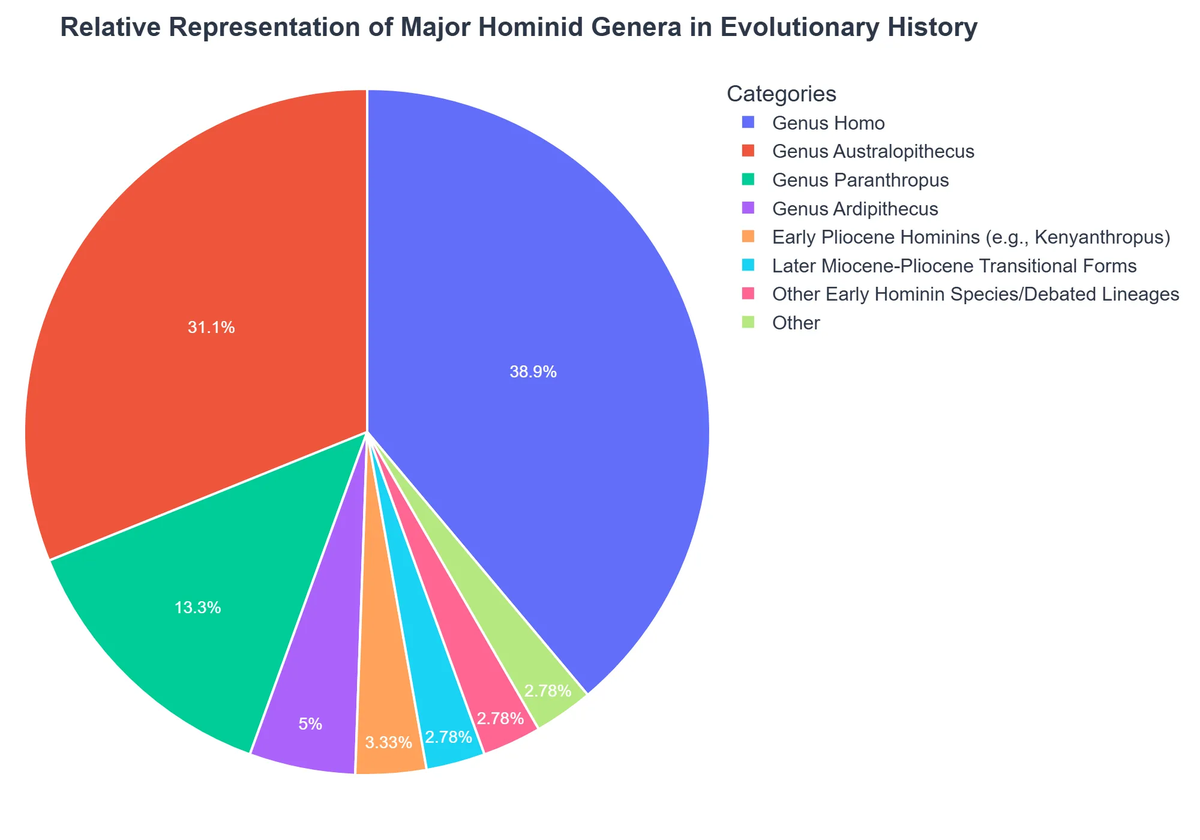
However, when discussing the direct lineage leading to humans, the term “hominin” is often used more specifically. Hominins include modern humans, extinct human species, and all our immediate ancestors (including members of the genera Homo, Australopithecus, Paranthropus, and Ardipithecus)—essentially, all species more closely related to humans than to chimpanzees. For the purpose of this comprehensive hominid timeline, we will use “hominid” in its broader, more commonly understood sense to encompass the lineage leading to modern humans, acknowledging the more precise “hominin” where appropriate.
- ✅ Bipedalism: Walking upright on two legs is the most defining characteristic, emerging long before significant brain expansion or complex tool use.
- ✅ Dental Structure: Changes in teeth, particularly canine size and enamel thickness.
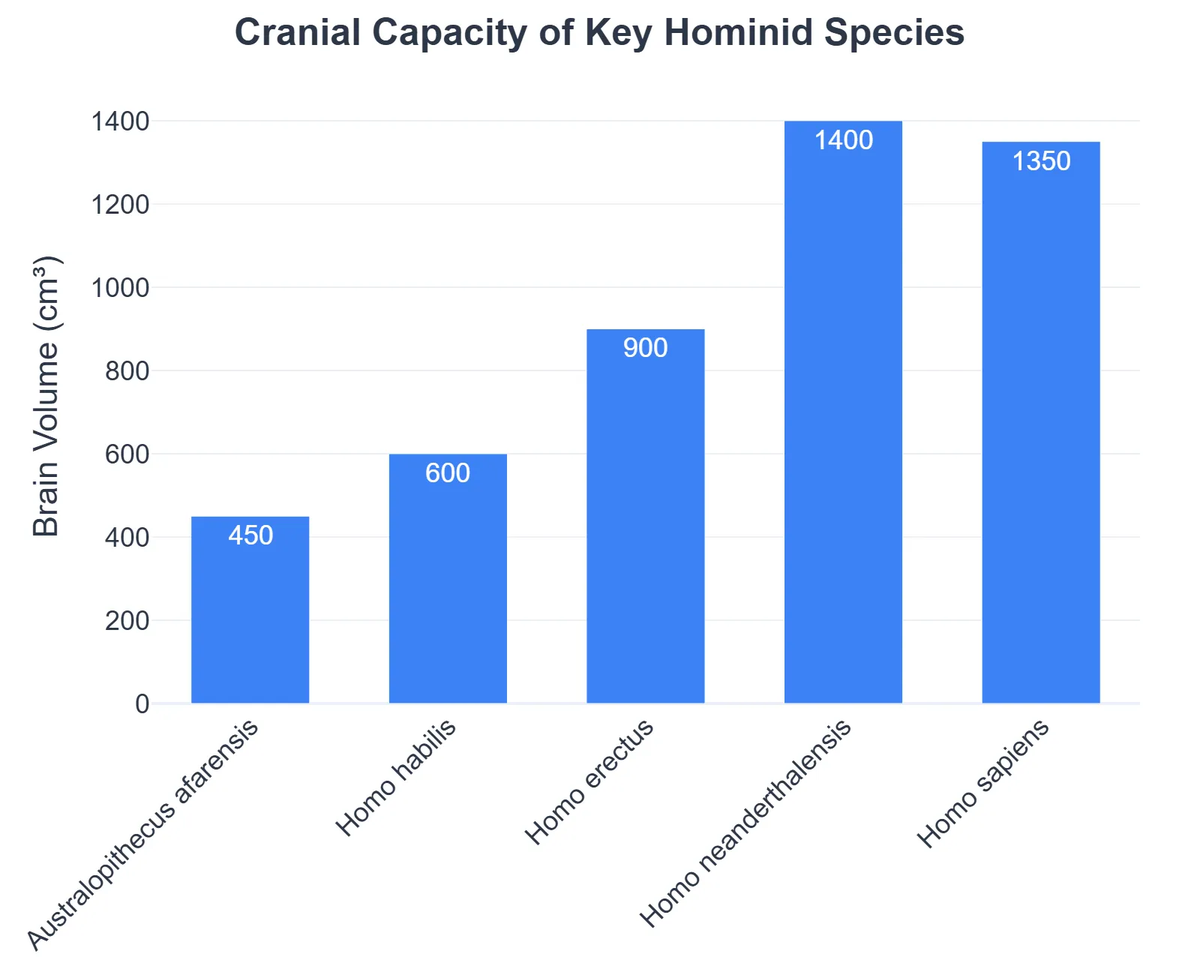
- ✅ Brain Size: A gradual, but significant, increase in brain size relative to body size over millions of years.
- ✅ Tool Use: The development and refinement of tools, initially simple stone implements, evolving into complex technologies.
The Earliest Ancestors: Dawn of Bipedalism (Approx. 7 to 4 Million Years Ago)
Our story begins in the dense forests of Africa, where the earliest known potential hominids took their first tentative steps towards an upright posture. This period marks the crucial divergence from our last common ancestor with chimpanzees. For a broader perspective on this divergence, explore our article on .
🌳 Sahelanthropus Tchadensis (Approx. 7-6 Million Years Ago)
Discovered in Chad, Sahelanthropus is one of the oldest known potential hominids. Its skull features suggest an upright posture, making it a pivotal figure in the very early stages of our human evolution.
🚶 Orrorin Tugenensis (Approx. 6 Million Years Ago)
Found in Kenya, fragments of thigh bones from Orrorin also provide strong evidence of bipedalism, further cementing the idea that walking upright was a primary evolutionary driver in the early hominid lineage.
🌿 Ardipithecus (Approx. 5.8 to 4.4 Million Years Ago)
Represented by species like Ardipithecus kadabba and Ardipithecus ramidus (famously “Ardi”), these hominids inhabited wooded environments in Ethiopia. While still spending time in trees, their skeletal structure, particularly the pelvis and foot bones, indicates a clear adaptation for bipedal walking on the ground. This transitional stage highlights the complex interplay between arboreal and terrestrial life.
The Australopithecines: Diversification and Adaptation (Approx. 4 to 2 Million Years Ago)
This period saw a significant diversification of hominid species, many of whom are grouped under the genus Australopithecus. They were fully bipedal but still retained some ape-like features, such as relatively small brains compared to later Homo species.
🌍 Australopithecus Afarensis (Approx. 3.9 to 2.9 Million Years Ago)
Perhaps the most famous australopithecine, thanks to “Lucy,” discovered in Ethiopia. Australopithecus afarensis possessed clear adaptations for bipedalism, evidenced by their pelvis and leg bones, as well as fossilized footprints (Laetoli). They thrived in diverse environments, from woodlands to open grasslands.
🇿🇦 Australopithecus Africanus (Approx. 3.3 to 2.1 Million Years Ago)
Found exclusively in South Africa, Australopithecus africanus shared many similarities with A. afarensis, including bipedal locomotion. However, they exhibited slight differences in skull and dental features, suggesting a distinct evolutionary path.
💪 Paranthropus: The “Robust” Hominids (Approx. 2.7 to 1.2 Million Years Ago)
Species like Paranthropus robustus, P. boisei, and P. aethiopicus are often called “robust” australopithecines due to their massive jaws, large teeth, and strong chewing muscles, adapted for grinding tough, fibrous plant material. While coexisting with early Homo species, they eventually went extinct, representing a side branch of the hominid family tree.
The Emergence of Homo: Tools, Fire, and Migration (Approx. 2.8 Million to 500,000 Years Ago)
This epoch marks a pivotal shift, with the appearance of the genus Homo, characterized by larger brains, more sophisticated tool use, and increasingly complex behaviors. This is where the true technological timeline of humanity begins to accelerate.
🔨 Homo Habilis: The “Handy Man” (Approx. 2.4 to 1.4 Million Years Ago)
Often considered the first species of the genus Homo, Homo habilis (“handy man”) is associated with the earliest known stone tools, the Oldowan industry. These simple choppers and flakes, though rudimentary, represent a monumental leap in cognitive ability and problem-solving, marking the true beginning of our species’ technical prowess. Learn more about our deep origins in .
🔥 Homo Erectus: The Pioneer (Approx. 1.9 Million to 100,000 Years Ago)
A highly successful and enduring species, Homo erectus was the first hominid to migrate out of Africa, spreading across Asia and Europe. Key advancements include:
- ➡️ Control of Fire: A transformative innovation providing warmth, protection from predators, and the ability to cook food, leading to dietary changes and potentially brain development.
- ➡️ Advanced Tools: Development of the Acheulean hand-axe, a more symmetrical and sophisticated tool than the Oldowan choppers.
- ➡️ Hunting and Social Structures: Evidence suggests more coordinated hunting and potentially early forms of complex social organization.
🧠 Homo Heidelbergensis (Approx. 700,000 to 200,000 Years Ago)
Considered a common ancestor to both Neanderthals and modern humans, Homo heidelbergensis had a larger brain than H. erectus and made more varied stone tools. They were adept hunters and are associated with early forms of shelter construction.
The Rise of Modern Humans and Our Cousins (Approx. 500,000 Years Ago to Present)
This period sees the emergence and global dispersal of modern humans, as well as the flourishing and eventual disappearance of other closely related hominid species.
❄️ Homo Neanderthalensis: The Ice Age Adaptors (Approx. 400,000 to 40,000 Years Ago)
Neanderthals were robust, powerfully built hominids adapted to cold, glacial environments primarily in Europe and Asia. They possessed sophisticated tool kits (Mousterian industry), buried their dead, likely had symbolic thought, and cared for their sick and elderly. For a comprehensive overview of humanity’s journey, see our .
Tracing Our Ancestry: A Comprehensive Hominid Timeline Review
Pros
- ✔Provides a clear, structured understanding of human evolutionary history.
- ✔Integrates diverse scientific data (fossils, genetics) into a coherent narrative.
- ✔Highlights key milestones and adaptations in hominid development.
- ✔Offers profound insights into humanity’s place in the natural world.
Cons
- ✖Subject to frequent updates and revisions as new discoveries emerge.
- ✖Can be complex and overwhelming for non-specialists due to scientific terminology.
- ✖Relies on an incomplete fossil record, leading to speculative gaps.
- ✖Interpretations can vary among scientists, leading to ongoing debates.
- 💡 Cultural Complexity: Evidence of personal adornment, suggesting symbolic behavior.
- 💡 Coexistence with Sapiens: Neanderthals coexisted and even interbred with early modern humans for thousands of years.
🎨 Homo Sapiens: The Global Conquerors (Approx. 300,000 Years Ago to Present)
Originating in Africa, Homo sapiens embarked on multiple waves of migration, eventually colonizing every continent. Our species is characterized by:
- ✅ Advanced Cognition: Highly developed symbolic thought, language, abstract reasoning, and creativity, leading to complex art, music, and ritual.
- ✅ Sophisticated Technology: Development of blade tools, composite tools, hunting technologies (atlatls, bows), and eventually agriculture and industrialization, fundamentally shaping our hominin timeline.
- ✅ Adaptability: Unparalleled ability to adapt to diverse environments, not just biologically but through culture and technology.
❓ Denisovans (Approx. 400,000 to 30,000 Years Ago)
Known primarily from DNA evidence extracted from bone fragments found in Siberia and Tibet, Denisovans represent another branch of archaic humans that coexisted and interbred with both Neanderthals and Homo sapiens. Their full story is still being uncovered.
⚙️ Key Milestones in the Hominid Technological Timeline
The progression of human technology is a mirror reflecting our cognitive development and adaptability. From simple stones to global networks, the tech timeline of our ancestors is truly remarkable. As cited by the Natural History Museum, “Technology has played a crucial role in human evolution, from the development of stone tools to the invention of agriculture.” (The origin of our species | Natural History Museum)
- ✅ Oldowan Tools (Approx. 2.6 to 1.7 Million Years Ago): The earliest stone tools, simple choppers and flakes, made by striking one stone with another. Attributed primarily to Homo habilis.
- ✅ Acheulean Tools (Approx. 1.7 Million to 250,000 Years Ago): Characterized by the bifacial hand-axe, a more refined and versatile tool. Developed by Homo erectus and later hominids.
- ✅ Control of Fire (Approx. 1.5 Million Years Ago onwards): While the exact timing is debated, evidence suggests systematic control of fire by Homo erectus.
- ✅ Mousterian Tools (Approx. 300,000 to 30,000 Years Ago): Associated with Neanderthals and early Homo sapiens, these tools involved more complex flaking techniques, allowing for a wider variety of specialized tools.
- ✅ Upper Paleolithic Tools & Art (Approx. 50,000 to 10,000 Years Ago): A burst of innovation by Homo sapiens, including blade tools, bone and antler tools, composite tools (spear throwers, bows and arrows), and symbolic artifacts like cave paintings and figurines.
- ✅ Agriculture and Sedentary Life (Approx. 12,000 Years Ago): The Neolithic Revolution, shifting from nomadic hunter-gatherer lifestyles to settled agricultural communities, laying the foundation for civilizations.
As Britannica notes, “the mastery of fire, the development of tools, and the emergence of agriculture represent key technological breakthroughs that fundamentally altered the course of human history.” (Human evolution | History, Stages, Timeline, Tree, Chart, & Facts …)
Recommended Video
Conclusion: The Ongoing Journey of Human Evolution
Tracing our ancestry through the comprehensive hominid timeline is an awe-inspiring endeavor. From the first bipedal steps of Sahelanthropus to the global dominance of Homo sapiens, our journey is a testament to the power of natural selection, adaptability, and an ever-evolving capacity for innovation.
This intricate tapestry of evolution underscores our deep connection to the natural world and the remarkable resilience of life. The story of human evolution is far from over; it continues to unfold, driven by both biological and cultural forces. Understanding our past is crucial for envisioning our future within the grand narrative of life on Earth.
Frequently Asked Questions
What defines a hominid?
In the context of human evolution, hominids refer to modern humans and all our immediate ancestors, including species from genera like Homo, Australopithecus, Paranthropus, and Ardipithecus. A key defining characteristic is bipedalism.
When did the first hominids appear?
The earliest known hominids appeared approximately 6 to 7 million years ago in Africa, with species like Sahelanthropus tchadensis and Orrorin tugenensis showing early signs of bipedalism.
What are some key milestones in hominid evolution?
Major milestones include the emergence of habitual bipedalism, the development of stone tool technology, significant increase in brain size, the control of fire, and the origin of complex language and symbolic thought.
How does the fossil record inform our understanding of hominids?
The fossil record provides direct evidence of past life, allowing paleoanthropologists to reconstruct the physical characteristics, diet, locomotion, and even social behaviors of extinct hominid species, thereby piecing together the evolutionary story.