

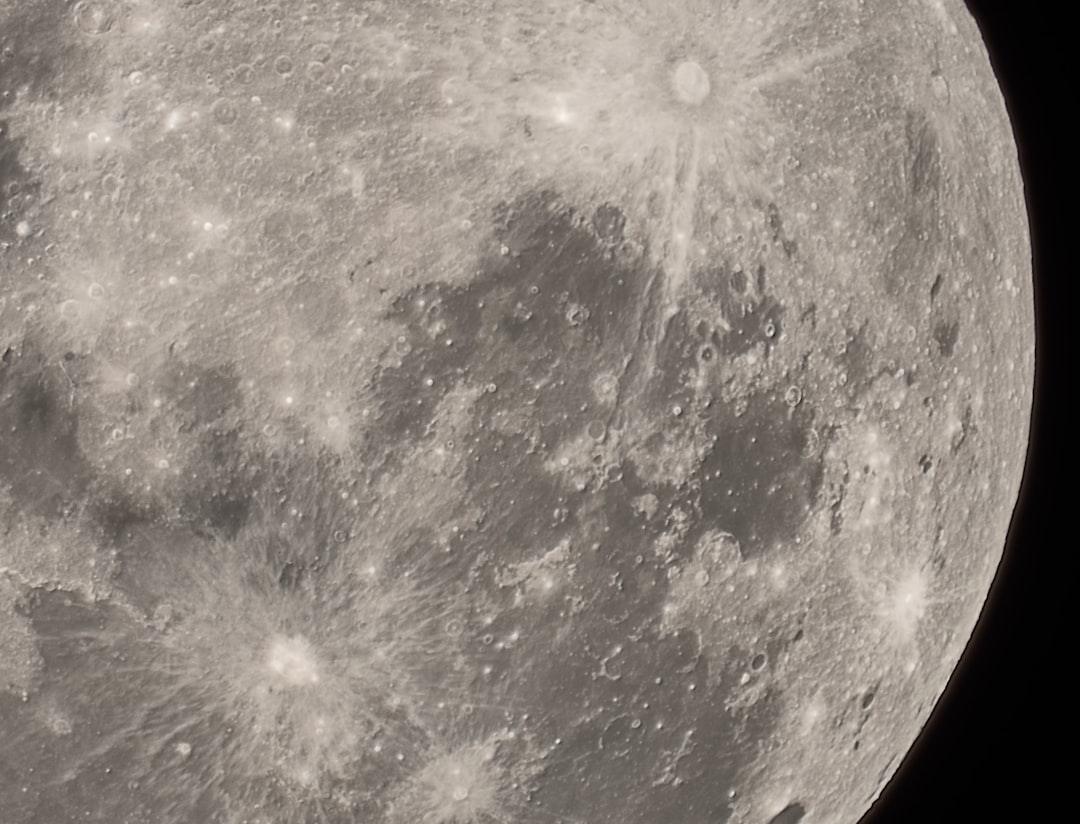
Beyond Earth’s immediate embrace lies our celestial neighbor, a silent witness to cosmic history: the Moon. Far from being a mere rock in the sky, its surface tells a compelling story of formation, cataclysmic impacts, and ancient volcanism. Understanding the lunar geology is not just about studying another world; it’s about piecing together the violent origins of our own solar system and perhaps, the very conditions that allowed life to flourish on Earth.
💡 Key Takeaways
- Lunar geology is key to understanding the Moon’s violent formation and subsequent evolution.
- Studying lunar rocks and surface features reveals secrets about early solar system dynamics.
- The Moon’s interior structure offers clues about its thermal history and core composition.
- Future lunar missions aim to resolve remaining mysteries about its origin and resource potential.
“The Moon’s geological record is a pristine time capsule, offering unparalleled insights into the early Earth-Moon system and the broader dynamics of planetary accretion. It’s a cornerstone for understanding our cosmic neighborhood.”
— Marcus Sterling, Geophysical Explorer & Climate Dynamics Analyst
As experts in Earth’s Unseen Forces: The Hidden Dynamics of Our Planet, we recognize that the Moon’s geological narrative offers unparalleled insights into planetary evolution. From its pockmarked face to its vast, dark plains, every feature holds clues about the forces that shaped it. In this comprehensive guide, we’ll delve into the fascinating world of lunar geology, unraveling its formation theories, distinctive features, and the groundbreaking discoveries that continue to redefine our understanding of the cosmos.
In This Article
- — 💡 Key Takeaways
- → Unveiling Lunar Geology: An Overview
- — Why Study the Moon’s Geology?
- → The Leading Theory: How the Moon Formed
- — The Giant Impact Hypothesis
- → Key Features of Lunar Geology: Highlands and Maria
- — The Lunar Highlands (Terrae)
- — The Lunar Maria (Lowlands)
- → The Impact of Cratering on the Moon’s Surface
- — How Craters Form and Evolve
- → Volcanic Activity and Lunar Plains
- — Basaltic Flows and Mare Formation
- → Unraveling Lunar History Through Samples and Data
- — The Legacy of the Apollo Missions
- — Contributions of Robotic Missions
- → The Future of Lunar Geological Exploration
- → Conclusion: The Moon’s Enduring Story
Unveiling Lunar Geology: An Overview
Lunar geology is the study of the Moon’s origin, evolution, composition, and surface features. Unlike Earth, which is constantly reshaped by plate tectonics, erosion, and volcanism, the Moon’s surface preserves a much older record of its history. This makes it an invaluable laboratory for planetary scientists.
Why Study the Moon’s Geology?
- 💡 Early Solar System Record: The Moon’s lack of atmosphere and geological activity means its surface preserves impacts from billions of years ago, offering a direct look at the early bombardment phase of the solar system.
- 🔬 Planetary Formation Insights: Understanding how the Moon formed provides critical data points for theories about the formation of other terrestrial planets.
- ➡️ Resource Potential: Future lunar missions may seek resources like water ice and helium-3, making geological mapping essential for identifying viable locations.
- 🔭 Comparative Planetology: Comparing lunar geological processes with those on Earth and Mars helps us understand universal principles of planetary evolution.
The Leading Theory: How the Moon Formed
The origin of the Moon has long been one of the greatest mysteries in planetary science. While several hypotheses have been proposed over the centuries, one theory currently dominates due to its ability to explain a wide range of observational evidence.
The Giant Impact Hypothesis
The prevailing scientific consensus is the Giant Impact Hypothesis. This theory suggests that the Moon formed approximately 4.5 billion years ago, shortly after Earth’s formation, from the debris of a massive collision between the proto-Earth and a Mars-sized celestial body, often referred to as “Theia.”
- 💥 Cataclysmic Collision: The impact was so powerful that it vaporized a significant portion of both objects, ejecting a vast amount of molten rock and debris into orbit around the Earth. For more on Earth’s violent past, explore Catastrophism in Geology: Earth’s Violent Past.
- 🔄 Accretion Disk: This orbiting debris coalesced over time, forming a molten proto-Moon.
- 🧊 Cooling and Solidification: As the molten Moon gradually cooled and solidified, its distinct layers—crust, mantle, and core—began to form.
Evidence supporting this hypothesis includes the Moon’s remarkably similar oxygen isotope ratios to Earth’s, suggesting a common origin, and its relatively small iron core, consistent with the impact scenario where most of Theia’s core merged with Earth.
Key Features of Lunar Geology: Highlands and Maria
The Moon’s surface is famously divided into two primary geological terrains, each with unique characteristics and formation histories.
The Lunar Highlands (Terrae)
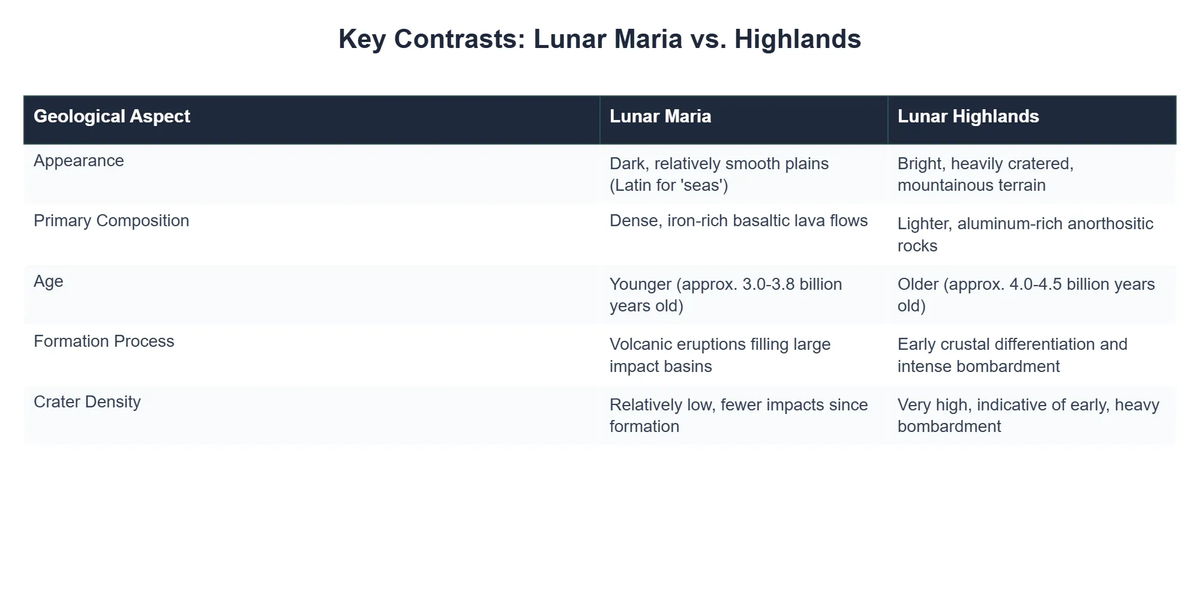
The lunar highlands are the bright, heavily cratered regions that dominate the Moon’s far side and much of its near side. These areas represent the Moon’s original crust.
- 🏔️ Ancient Crust: Primarily composed of anorthosite, a light-colored, feldspar-rich igneous rock. Its presence suggests early global melting and differentiation.
- 💥 Impact Scars: Heavily scarred by countless craters and basin impacts, remnants from the “Late Heavy Bombardment” phase of the early solar system.
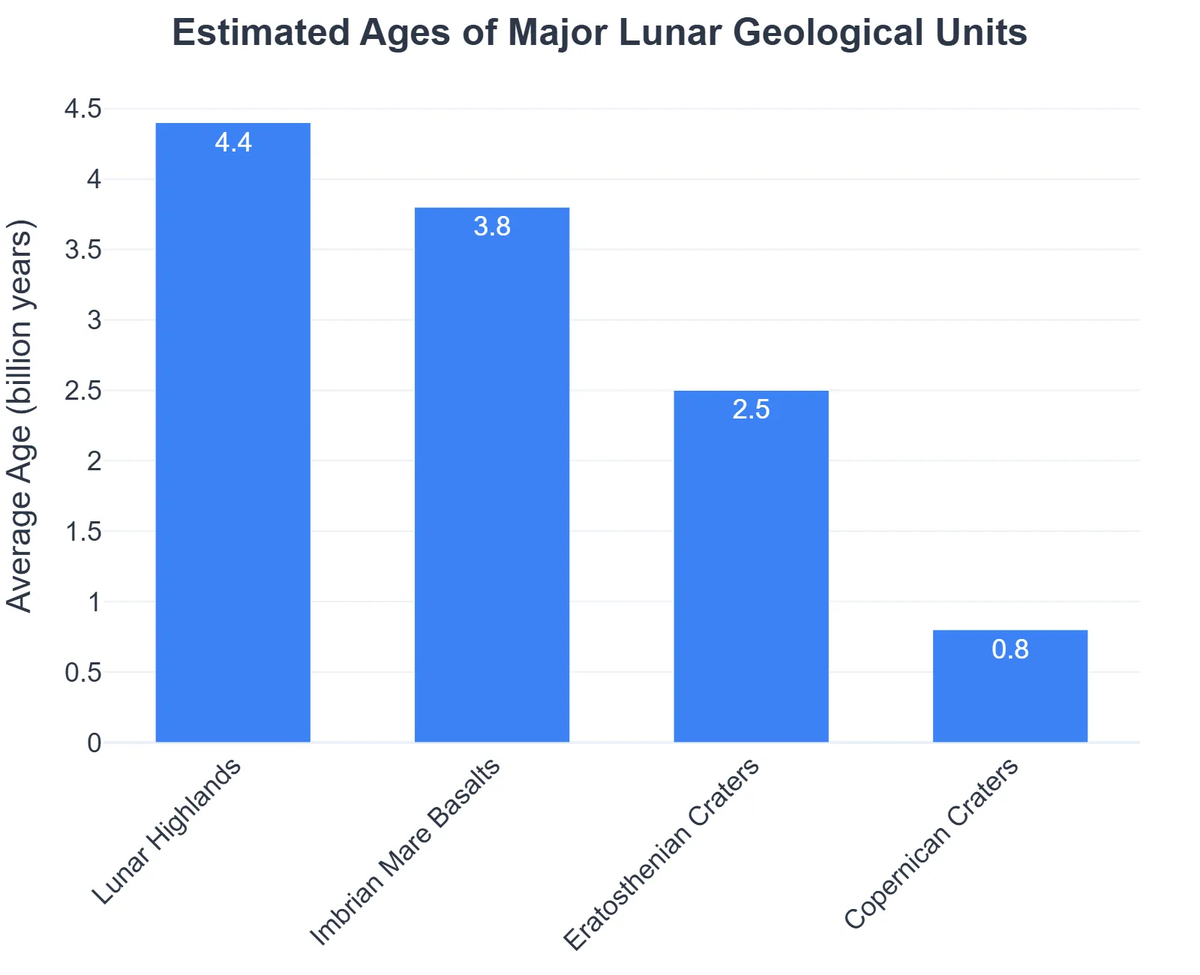
- ⏱️ Older Terrain: Radiometric dating of Apollo samples indicates that the highland rocks are generally 4.0 to 4.5 billion years old, making them the oldest rocks on the Moon.
The Lunar Maria (Lowlands)
The lunar maria (Latin for “seas”) are the dark, relatively smooth plains that are visible to the naked eye from Earth. Despite their name, they are not bodies of water but vast basins filled with solidified lava.
- 🌊 Volcanic Plains: Composed primarily of basalt, a dark, iron-rich volcanic rock similar to terrestrial basalts found in oceanic crust or flood basalt provinces.
- ⏱️ Younger Ages: Generally younger than the highlands, with ages typically ranging from 3.1 to 3.8 billion years.
- 🌋 Formation: These plains formed when large impact basins fractured the Moon’s crust, allowing magma from the interior to well up and flood the depressions.
The Impact of Cratering on the Moon’s Surface
Impact craters are the most dominant geological feature on the Moon, providing a visual record of its intense bombardment history. They range in size from microscopic pits to vast basins hundreds of kilometers in diameter.
How Craters Form and Evolve
- ☄️ High-Velocity Impacts: Craters are formed when asteroids, comets, or meteoroids strike the lunar surface at incredibly high speeds.
- 💥 Shockwave and Ejecta: The impact generates a massive shockwave that excavates material, creating a bowl-shaped depression. Debris, known as ejecta, is thrown out around the crater, forming rays and secondary craters.
- ⏳ Preservation: Due to minimal erosion (lack of atmosphere and water), craters remain largely preserved for billions of years. This allows scientists to use crater density as a method for relative age dating of lunar surfaces.
The study of lunar craters has been significantly advanced by data from the Lunar Reconnaissance Orbiter data, which provides high-resolution images and topographical maps, allowing for detailed analysis of crater morphology and distribution.
Volcanic Activity and Lunar Plains
While the Moon is geologically quiet today, it was volcanically active for billions of years, particularly during the period when the maria formed.
Basaltic Flows and Mare Formation
- 🔥 Internal Heat: Early in its history, the Moon had enough internal heat from radioactive decay and residual accretion energy to melt its interior.
- 🌋 Magma Ascent: Magma, less dense than the surrounding rock, rose through fractures in the crust, often exploiting weaknesses created by large impact basins.
- ➡️ Flood Basalts: These effusive eruptions led to widespread flood basalts, filling the vast basins and creating the smooth, dark plains we observe as maria. Understanding such large-scale volcanic events can be compared to terrestrial processes, such as the formation of Tuff in Geology: Understanding Volcanic Ash Rock Formations on Earth, though on a different scale and context.
Evidence of this past volcanism includes sinuous rilles (collapsed lava tubes), shield volcanoes (though much smaller than Earth’s), and volcanic domes.
Unraveling Lunar History Through Samples and Data
Our understanding of lunar geology has been revolutionized by direct exploration and sample return missions.
The Legacy of the Apollo Missions
The Apollo missions data (1969-1972) are arguably the most significant contributions to lunar geology. Astronauts brought back 382 kilograms (842 pounds) of lunar rocks, core samples, pebbles, dust, and soil from six different landing sites.
- 🧪 Radiometric Dating: Analysis of these samples provided the first definitive ages for lunar surfaces, confirming the ancient nature of the highlands and the younger ages of the maria.
- 🧪 Compositional Analysis: The samples revealed the precise chemical and mineralogical composition of the Moon, confirming the presence of basalt in the maria and anorthosite in the highlands. This compositional data helped solidify the Giant Impact Hypothesis.
- 🧪 Regolith Study: The missions also provided extensive data on lunar regolith, the layer of loose, fragmented material covering the bedrock, formed by billions of years of micrometeorite impacts.
These samples continue to be studied today, yielding new insights into lunar evolution. For instance, recent research continues to unravel mysteries in Moon rocks, as highlighted by scientists at Rutgers University. (Source)
Contributions of Robotic Missions
While Apollo provided invaluable direct samples, numerous robotic missions have expanded our understanding of the entire lunar surface.
- 🛰️ Lunar Reconnaissance Orbiter (LRO): Launched by NASA in 2009, the LRO has provided an unprecedented amount of data, including high-resolution images, detailed topography, and temperature maps. Its data has been crucial for mapping potential water ice deposits in polar craters and identifying future landing sites.
- 🌍 Global Mapping: Missions like LRO, Chandrayaan-1, Kaguya, and Chang’e have provided global coverage, revealing details about the far side of the Moon and confirming theories about its asymmetric crustal thickness.
- 🧊 Water Ice Detection: Data from these orbiters, including LRO, provided strong evidence for the presence of water ice in permanently shadowed regions of polar craters, a discovery with profound implications for future human exploration.
- 📡 Radar Studies: Radar data from orbiters has been instrumental in characterizing subsurface features and the properties of lunar regolith, further unraveling the mysteries of lunar anomalous craters. (Source)
The Future of Lunar Geological Exploration
With renewed interest in lunar exploration, driven by programs like NASA’s Artemis, the next era promises even deeper insights into the Moon’s geology.
- 🚀 Human Return to the Moon: The Artemis program aims to land humans on the Moon again, with a focus on the lunar South Pole, where water ice is abundant. This will allow for new sample collection from previously unexplored regions.
- 🤖 Advanced Robotic Landers and Rovers: Future robotic missions will deploy more sophisticated instruments capable of drilling deeper, analyzing materials in situ, and exploring challenging terrains like lava tubes and polar craters.
- 🔬 Lunar Observatories: Establishing permanent bases or observatories on the Moon could facilitate long-term geological monitoring and seismic studies, providing insights into the Moon’s interior structure and ongoing moonquakes.
Recommended Video
Conclusion: The Moon’s Enduring Story
The study of lunar geology offers a captivating journey through cosmic time, from the chaotic birth of our solar system to the relatively quiet present day. From the compelling Giant Impact Hypothesis to the rugged highlands and vast basaltic maria, every feature on the Moon’s surface is a chapter in its ancient story.
Thanks to the pioneering efforts of the Apollo missions and the continuous stream of data from robotic orbiters like the Lunar Reconnaissance Orbiter, our understanding of this celestial body has grown exponentially. As humanity prepares to return to the Moon, the next generation of explorers and scientists stands ready to uncover even more of its hidden dynamics, ensuring that the Moon remains a vibrant frontier for geological discovery for centuries to come.
Frequently Asked Questions
How did the Moon form according to the leading theory?
The most widely accepted theory is the Giant Impact Hypothesis, suggesting the Moon formed from debris ejected after a Mars-sized body collided with early Earth.
What are the main geological features of the Moon?
Key features include maria (dark volcanic plains), highlands (bright, cratered regions), impact craters, rilles (channels), and domes.
Why is studying lunar geology important?
It helps us understand the formation and evolution of terrestrial planets, the history of impacts in the inner solar system, and potentially the origins of water and life on Earth.
Have humans ever brought back Moon rocks?
Yes, the Apollo missions (1969-1972) brought back 382 kg (842 lbs) of lunar rocks, core samples, pebbles, dust, and soil from six landing sites.