

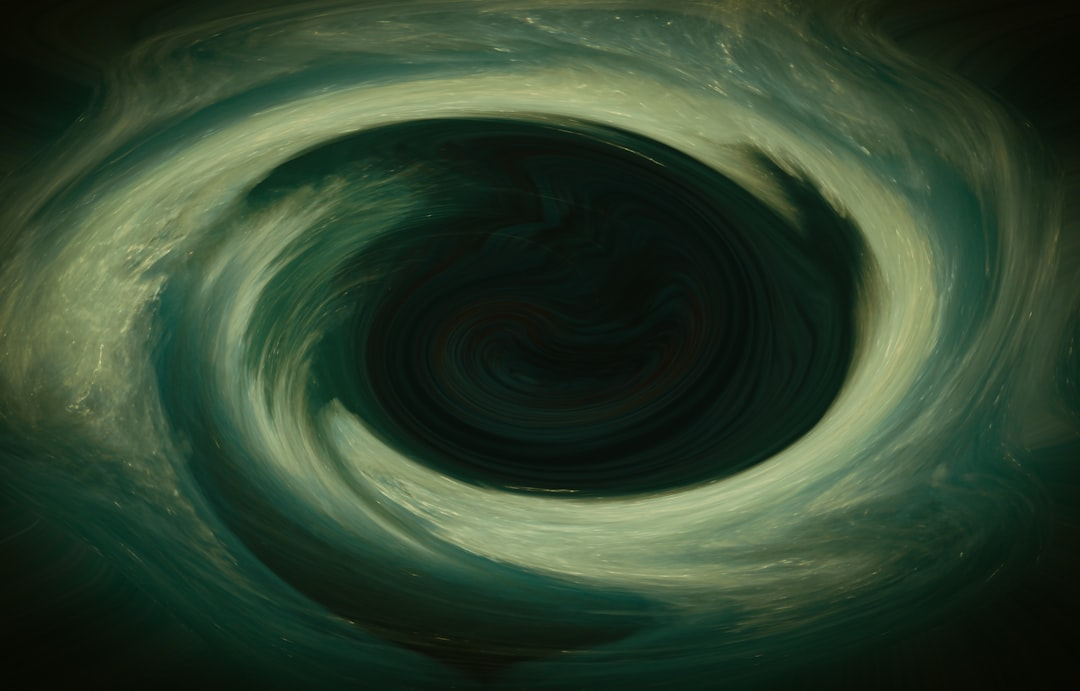
The cosmos is a realm of profound mysteries, and few phenomena captivate the imagination quite like black holes. While often depicted as static cosmic vacuum cleaners, the reality is far more dynamic. Most black holes in our universe are not merely massive, they are also spinning at incredible speeds. Understanding these rotating black holes is crucial to unraveling some of the most powerful and enigmatic processes in the cosmos.
💡 Key Takeaways
- Rotating black holes, or Kerr black holes, are defined by both mass and angular momentum, unlike non-rotating ones.
- Their immense spin creates a region called the ergosphere, where spacetime itself is dragged along with the black hole.
- The Penrose process within the ergosphere theoretically allows for energy extraction from a rotating black hole.
- Rotating black holes play a crucial role in galaxy formation, the powering of active galactic nuclei, and the emission of powerful jets.
“Rotating black holes are not just cosmic vacuum cleaners; they are incredible engines of the universe, shaping galaxies and providing tantalizing hints at exotic physics that even science fiction struggles to fully capture.”
— Astrid Bellweather, Astrophysicist & Science Fiction Consultant
From warping spacetime in unprecedented ways to influencing the evolution of entire galaxies, the spin of a black hole is a fundamental property with far-reaching consequences. This article will delve into the physics of these cosmic whirlwinds, exploring concepts like Kerr spacetime, frame-dragging, and their profound impact on the universe.
In This Article
- — 💡 Key Takeaways
- → What is a Rotating Black Hole?
- — From Schwarzschild to Kerr: The Evolution of Black Hole Models
- → The Phenomenon of Frame-Dragging
- — Understanding the Ergosphere
- → Gravitational Waves from Spinning Black Holes
- — Detecting Cosmic Ripples: The LIGO Breakthrough
- → Cosmic Influence: Jets, Accretion Disks, and Galaxy Evolution
- — Powering Quasars and Active Galactic Nuclei
- → The Challenge of Measuring Black Hole Spin
- — Observational Techniques
- → Future Frontiers in Rotating Black Hole Research
- — New Discoveries and Theoretical Advances
- → Conclusion
What is a Rotating Black Hole?
Unlike their simpler, non-rotating counterparts (Schwarzschild black holes), rotating black holes possess angular momentum, meaning they spin. This added complexity profoundly alters the spacetime around them, leading to unique characteristics and behaviors.
From Schwarzschild to Kerr: The Evolution of Black Hole Models
- ✅ Schwarzschild Black Holes: These are the simplest type, characterized only by their mass. They are non-rotating and perfectly spherical, representing a theoretical ideal often used as a starting point for understanding black hole physics.
- ➡️ Kerr Black Holes: Named after physicist Roy Kerr, these black holes are defined by both their mass and their angular momentum (spin). The vast majority of real black holes, from stellar-mass remnants to supermassive giants at galactic centers, are believed to be Kerr black holes. The spacetime geometry around them is described by the Kerr metric, which accounts for their rotation.
The rotation causes the event horizon—the point of no return—to become oblate (flattened at the poles and bulging at the equator), similar to a spinning planet. However, the most fascinating effect of this rotation lies in the region immediately outside the event horizon.
The Phenomenon of Frame-Dragging
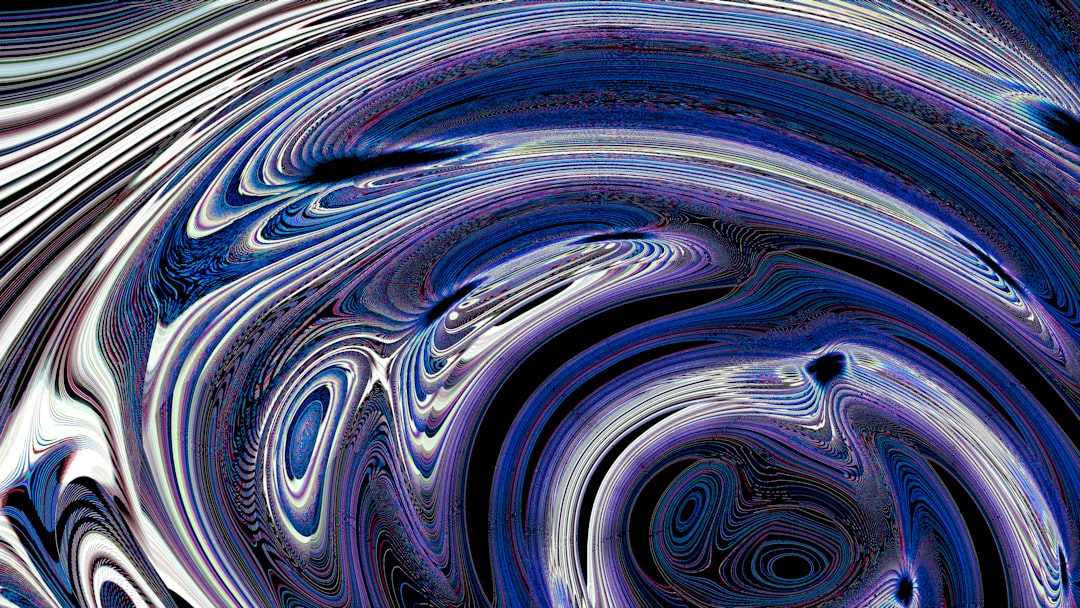
One of the most mind-bending predictions of Einstein’s theory of general relativity, uniquely evident around a rotating black hole, is frame-dragging (also known as the Lense-Thirring effect). This phenomenon describes how a massive, rotating object twists or “drags” the very fabric of spacetime around it.
Rotating Black Holes: Cosmic Influence and Research Insights
Pros
- ✔Offers unique insights into spacetime warping (frame-dragging).
- ✔Potential source of immense energy through processes like Penrose.
- ✔Key to understanding high-energy cosmic phenomena (e.g., jets, quasars).
- ✔Strong sources of gravitational waves, enabling new cosmic observations.
Cons
- ✖Theoretical description (Kerr metric) is mathematically complex.
- ✖Direct observation and measurement of their properties are extremely challenging.
- ✖Understanding physics near their singularity remains a major theoretical hurdle.
- ✖Requires advanced concepts in general relativity and astrophysics.
Understanding the Ergosphere
- 💡 Definition: The ergosphere is an ellipsoid-shaped region located outside the event horizon but inside the static limit, where spacetime itself is forced to co-rotate with the black hole.
- ➡️ Mandatory Rotation: Within the ergosphere, it’s impossible to remain stationary relative to a distant observer; anything entering this region is compelled to rotate with the black hole’s spin.
- ✅ Energy Extraction (Penrose Process): The ergosphere is theorized to be a source of immense energy. Particles entering this region can, under specific conditions, split, with one part falling into the black hole and the other escaping with more energy than it initially had, powered by the black hole’s rotational energy. This mechanism, known as the Penrose process, offers a potential explanation for the immense power observed in active galactic nuclei.
To learn more about how black holes influence the very structure of space and time, explore our article on Black Hole Spacetime: Navigating Gravity’s Ultimate Warp.
Gravitational Waves from Spinning Black Holes
The most compelling evidence for the existence of rotating black holes and the profound effects of their spin comes from the detection of gravitational waves. These ripples in spacetime are generated by the acceleration of massive objects, and some of the most powerful sources are merging black holes.
Detecting Cosmic Ripples: The LIGO Breakthrough
- 🚀 Mergers and Gravitational Waves: When two black holes, especially if they are spinning, spiral inward and merge, they create a colossal burst of gravitational waves. The signature of these waves, including their amplitude and frequency, carries crucial information about the mass, distance, and, critically, the spin of the original black holes and the resulting merged entity.
- 🔬 LIGO’s Role: Observatories like LIGO (Laser Interferometer Gravitational-Wave Observatory) and Virgo have revolutionized our understanding by directly detecting these waves. The precise waveforms observed by LIGO often show characteristics consistent with the merger of two spinning black holes, providing direct empirical proof of their rotational nature.
- 📊 Unveiling Spin: The spin of the individual black holes prior to a merger, and the spin of the final remnant black hole, significantly impacts the waveform of the emitted gravitational waves. This allows scientists to infer these properties from the detected signals.
For an in-depth look at how these cosmic signals are detected, read our guide on LIGO and Black Holes: Detecting Gravitational Waves. The study of black hole mergers is one of the most active frontiers in astrophysics.
Cosmic Influence: Jets, Accretion Disks, and Galaxy Evolution
The influence of rotating black holes extends far beyond their immediate vicinity. Their spin plays a pivotal role in some of the most energetic phenomena in the universe, shaping the evolution of galaxies themselves.
Powering Quasars and Active Galactic Nuclei
- 🌪️ Accretion Disks: Many supermassive black holes at the centers of galaxies are surrounded by immense disks of gas and dust called accretion disks. As matter spirals inward, it heats up to extreme temperatures, emitting vast amounts of radiation across the electromagnetic spectrum. The properties of these disks are strongly influenced by the central black hole’s spin.
- ⚡ Relativistic Jets: One of the most spectacular manifestations of a spinning black hole’s influence is the formation of relativistic jets. These are collimated beams of plasma ejected at near-light speeds from the poles of the black hole. While the exact mechanism is still under intense research, it is widely believed that the black hole’s spin, combined with strong magnetic fields, plays a crucial role in launching and collimating these jets. These jets can extend for millions of light-years, impacting the interstellar medium and regulating star formation in their host galaxies.
- 🌌 Galaxy Evolution: The energy output from active galactic nuclei (AGN), powered by rotating black holes, can profoundly affect their host galaxies. These powerful outflows can quench star formation by heating and expelling gas, or in some cases, even trigger it. This intricate feedback loop between the central black hole and its galaxy is a cornerstone of modern galaxy evolution theories.
Astronomers have even successfully measured the spin of supermassive black holes, providing direct evidence of their rotational power. For instance, recent breakthroughs have allowed scientists to quantify the spin of black holes in distant galaxies, confirming their role in driving cosmic phenomena. You can read more about these fascinating discoveries in articles like Astronomers measure a supermassive black hole’s spin.
Explore more about this incredible cosmic energy in our article: Black Hole Power: Energy, Jets, and Cosmic Influence.
The Challenge of Measuring Black Hole Spin
While the theoretical framework for Kerr spacetime is well-established, actually measuring the spin of a black hole is incredibly challenging. Unlike mass, which can be inferred from orbital dynamics, spin requires more indirect and sophisticated techniques.
Observational Techniques
- 🔬 X-ray Spectroscopy: One primary method involves observing the X-ray emissions from accretion disks around supermassive black holes. The extreme gravity and rapid rotation of the black hole distort the spectral lines emitted by iron atoms in the disk. By analyzing the shape and broadening of these lines, astronomers can infer the black hole’s spin rate.
- 📊 Gravitational Wave Astronomy: As mentioned, the waveforms of gravitational waves produced during black hole mergers are highly sensitive to the spins of the colliding black holes. Analyzing these waveforms, particularly the “ringdown” phase after the merger, provides a powerful way to measure the spin of the newly formed black hole.
- 🔭 Quasar Variability: The flickering and variability of quasars (supermassive black holes actively accreting matter) can also hold clues to the central black hole’s spin, although this method is less direct and more prone to other astrophysical factors.
Future Frontiers in Rotating Black Hole Research
The study of rotating black holes remains a vibrant and rapidly evolving field. New observatories and theoretical advancements promise to deepen our understanding of these enigmatic objects and their far-reaching cosmic influence.
New Discoveries and Theoretical Advances
- 🛰️ Next-Generation Gravitational Wave Detectors: Future detectors, both ground-based (like Cosmic Explorer and Einstein Telescope) and space-based (like LISA), will provide even greater sensitivity to gravitational waves, allowing for more precise measurements of black hole spins across a wider range of masses and distances.
- 🌌 Event Horizon Telescope (EHT): While the EHT has already delivered groundbreaking images of black hole shadows, future enhancements will allow for more detailed mapping of the regions very close to the event horizon, potentially revealing direct signatures of spacetime frame-dragging and spin.
- 🧪 Theoretical Exploration: Researchers continue to explore exotic possibilities related to spinning black holes, such as their potential role in producing cosmic strings or their interactions with dark matter. Such theoretical work pushes the boundaries of our understanding of gravity and the universe’s fundamental constituents. For instance, some theories propose that spinning black holes might act as cosmic string factories under certain conditions.
The journey into understanding the universe’s deepest secrets is ongoing, and rotating black holes are at the very heart of these investigations. For more insights into the grand tapestry of the cosmos, delve into Cosmic Queries: Probing the Mysteries of the Universe.
Recommended Video
Conclusion
Rotating black holes are far more than mere gravitational wells; they are dynamic cosmic engines that shape the very structure and evolution of the universe. From twisting spacetime through frame-dragging and powering gargantuan relativistic jets to generating the very gravitational waves that allow us to “hear” the universe, their spin is a fundamental property with profound consequences.
The ongoing research into Kerr spacetime and the observational efforts to measure black hole spins are continually pushing the boundaries of our knowledge, offering unprecedented insights into the extreme physics governing our cosmos. As we continue to probe these cosmic mysteries, the rotating black hole stands as a testament to the universe’s incredible complexity and power.
Frequently Asked Questions
What makes a black hole ‘rotating’?
A black hole becomes ‘rotating’ (a Kerr black hole) when the star from which it formed possessed angular momentum before its gravitational collapse, causing the resulting black hole to spin.
What is the ergosphere of a rotating black hole?
The ergosphere is a region outside a rotating black hole’s event horizon where spacetime is dragged along with the black hole’s spin, making it impossible for anything, even light, to remain stationary relative to a distant observer.
How do rotating black holes influence galaxies?
Supermassive rotating black holes are at the centers of most large galaxies, influencing star formation, galaxy evolution, and powering phenomena like quasars through their powerful jets and accretion disk emissions.
Can energy be extracted from a rotating black hole?
Theoretically, yes. Through processes like the Penrose process, it’s possible to extract rotational energy from the ergosphere of a rotating black hole, though this remains an active area of research.