


Humans and Monkeys: Shared Evolutionary Heritage
The question of whether humans “descended from monkeys” is a common one, often leading to misconceptions about our evolutionary journey. As experts in The Human Enigma: Unlocking the Secrets of Our Body and Mind, we aim to provide clarity. The truth is, modern humans and monkeys share a common ancestor, but neither evolved directly from the other. This article will delve into the compelling evidence of our shared evolutionary heritage, explore the fascinating paths our lineages took, and highlight why understanding this connection is vital for grasping the full scope of human evolution.
💡 Key Takeaways
- Humans and monkeys share a common ancestor, not a direct descendant relationship.
- Significant genetic similarities exist between humans and various monkey species.
- Behavioral and cognitive parallels in primates offer insights into human development.
- Studying our primate relatives enhances our understanding of human origins and evolution.
“The intricate dance of neural circuits in a monkey’s brain often mirrors the fundamental processes underlying our own cognition. Understanding these shared mechanisms provides a profound lens into the conserved building blocks of intelligence and emotion across primate lineages.”
— Eleanor Vance, Neuroscience Communicator & Cognitive Psychologist
From genetic blueprints to complex social structures, the ties that bind us to our primate relatives are profound. Let’s unpack the secrets.
In This Article
- → Humans and Monkeys: Shared Evolutionary Heritage
- — 💡 Key Takeaways
- → Dispelling the Myth: Do Humans Come From Monkeys?
- — 🌳 Understanding Common Ancestry
- — 🕰️ The Last Common Ancestor (LCA)
- → Unpacking Our Primate Lineage: What We Share
- — 🧬 Genetic Similarities
- — 🐒 Behavioral and Physical Parallels
- → The Evolutionary Divergence: Paths Taken
- — 🌳 Key Evolutionary Branches
- — 🚶 Defining Hominin Traits
- → Evidence from the Past: How We Know
- — 🦴 Fossil Records
- — 🔬 Genetic Analysis
- — 💪 Comparative Anatomy
- → Beyond Genetics: Behavioral & Social Similarities
- — 🤝 Social Structures and Learning
- — 🗣️ Communication and Problem-Solving
- → Why Understanding This Heritage Matters
- — ⚕️ Insights into Human Biology and Health
- — 🌍 Conservation Efforts
- — 🌐 Our Place in the Natural World
- → Conclusion: A Shared Journey
Dispelling the Myth: Do Humans Come From Monkeys?
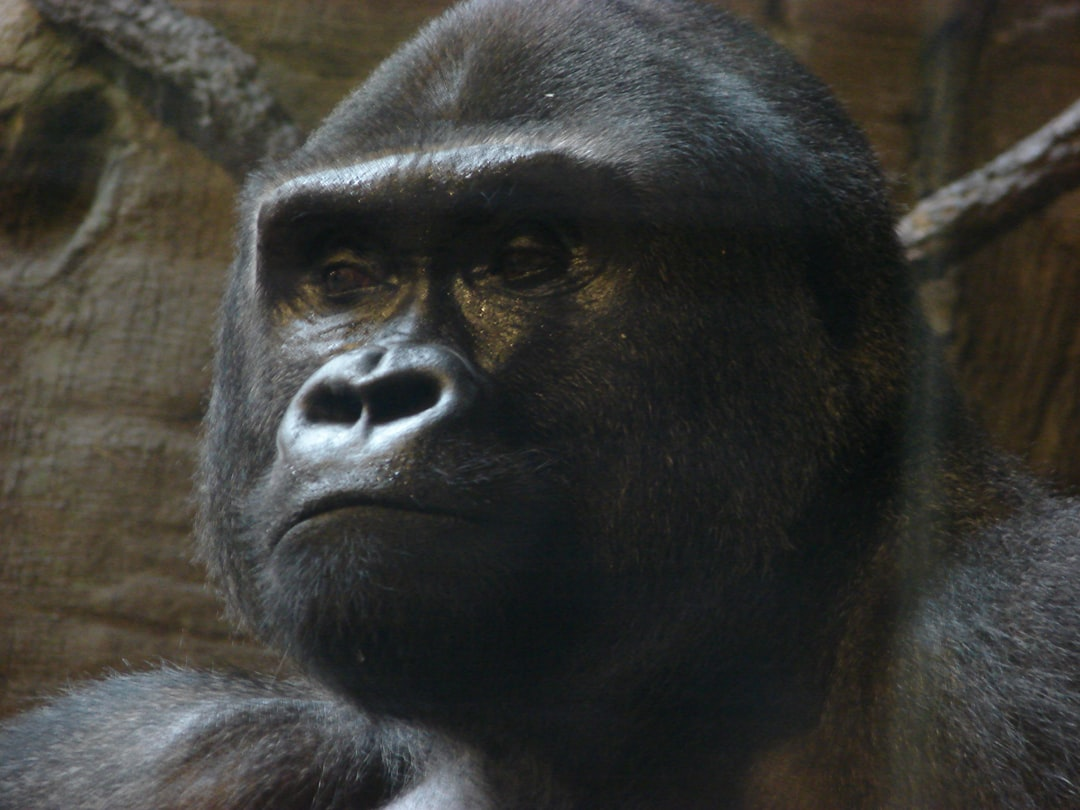
The popular notion that humans from monkeys is a direct linear progression is a significant oversimplification of evolutionary science. Evolution doesn’t work in a straight line, but rather like a vast, branching tree.
🌳 Understanding Common Ancestry
- ✅ Our evolutionary journey isn’t about one species directly “turning into” another. Instead, it’s about common ancestors. Imagine a family tree: you and your cousin share grandparents, but neither of you evolved from the other.
- ✅ Similarly, humans and modern monkeys (like baboons or macaques) both descended from a single ancestral primate species that lived millions of years ago. This ancestor was neither human nor a modern monkey, but a form from which both lineages later diverged.
- ✅ This shared ancestry is a cornerstone of understanding primate evolution, including our own. For a deeper dive into our early lineage, explore Human Evolution: Tracing Our Evolutionary Roots.
🕰️ The Last Common Ancestor (LCA)
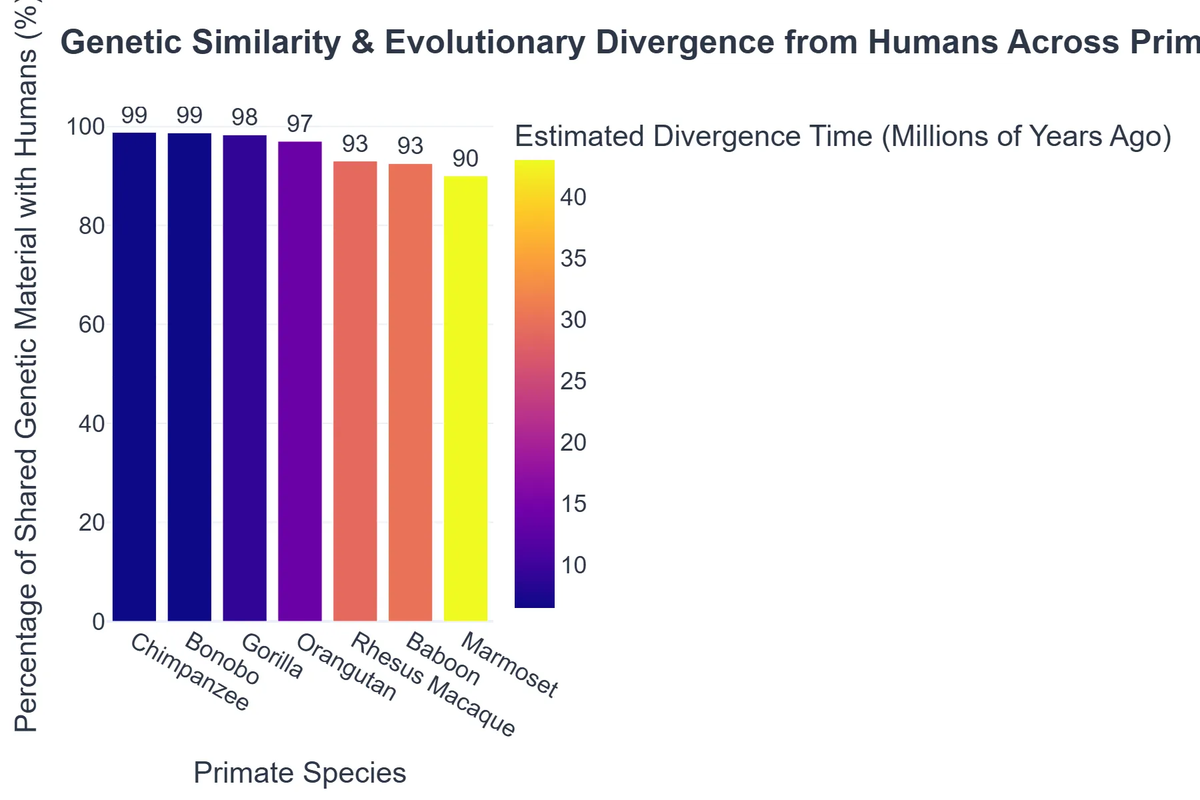
The scientific consensus, supported by extensive fossil and genetic evidence, points to a Last Common Ancestor (LCA) for all Old World monkeys, apes, and humans. This primate lived approximately 25-30 million years ago. From this LCA, different groups branched off, adapting to various environments and leading to the incredible diversity of primates we see today.
Unpacking Our Primate Lineage: What We Share
Despite our distinct evolutionary paths, the shared heritage between humans and monkeys is evident in a multitude of ways, from our DNA to our behaviors.
🧬 Genetic Similarities
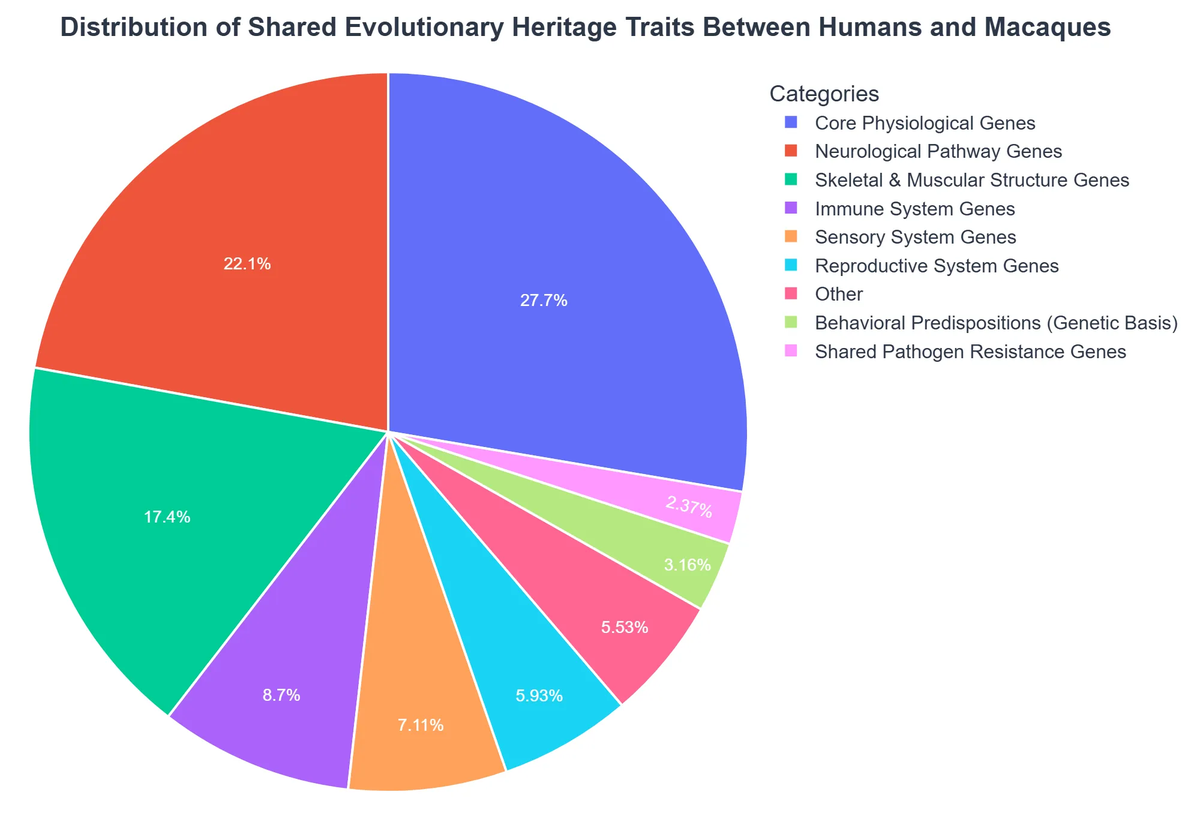
Perhaps the most compelling evidence of our shared ancestry lies in our genetics. Humans share a significant portion of their DNA with all primates, including monkeys. While our closest living relatives are the great apes (chimpanzees and bonobos), the genetic overlap with monkeys still highlights our common evolutionary origins.
- ➡️ DNA Overlap: The fundamental building blocks of our genetic code are remarkably similar, allowing scientists to trace evolutionary relationships back through time.
- ➡️ Shared Genes: Many genes responsible for basic biological functions, organ development, and even some cognitive processes are present in both humans and monkeys, albeit with variations.
🐒 Behavioral and Physical Parallels
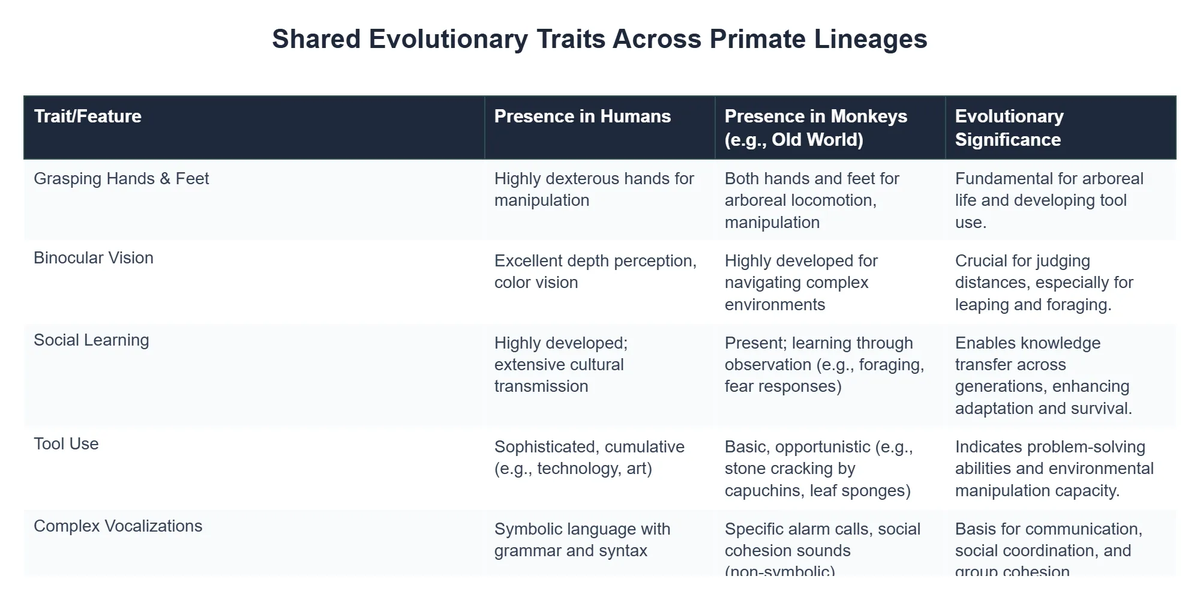
Beyond genetics, many physical and behavioral traits persist across various primate lineages, showcasing our shared evolutionary legacy. The American Museum of Natural History offers valuable insights into what primates, including humans, have in common: What Do Primates Have in Common? Humans & Our Cousins.
- 💡 Grasping Hands and Feet: Both humans and monkeys possess highly dexterous hands (and often feet) with opposable thumbs, crucial for manipulating objects and climbing.
- 💡 Stereoscopic Vision: Forward-facing eyes provide depth perception, essential for navigating complex environments and judging distances, a trait shared by most primates.
- 💡 Complex Social Structures: Many monkey species live in intricate social groups with hierarchies, alliances, and cooperative behaviors, mirroring aspects of human societies.
- 💡 Learning and Adaptation: Primates, including monkeys, demonstrate remarkable capacities for observational learning, problem-solving, and adapting to new challenges in their environments.
The Evolutionary Divergence: Paths Taken
While the commonalities are strong, the story of human evolution is also one of divergence, as our lineage took unique turns that eventually led to modern humans.
🌳 Key Evolutionary Branches
The primate tree branched considerably over millions of years. The line that led to modern humans (the hominin lineage) separated from the lineage leading to chimpanzees and bonobos approximately 6-8 million years ago. The divergence from the common ancestor with monkeys occurred much earlier, as mentioned.
- ✅ Old World vs. New World Monkeys: Even among monkeys, there are significant evolutionary distinctions. Old World monkeys (Africa, Asia) and New World monkeys (Americas) diverged much earlier, demonstrating the vastness of primate evolution.
- ✅ Hominin Lineage: Our specific branch, the hominins, embarked on a journey characterized by key adaptations that set us apart from other primates. Discover more about this journey in Human Evolution Timeline: A Definitive Guide to History and Key Milestones.
🚶 Defining Hominin Traits
The defining characteristics of the hominin lineage include:
- ✅ Bipedalism: Walking upright on two legs is one of the earliest and most fundamental adaptations of our ancestors, freeing the hands for other tasks.
- ✅ Brain Expansion: Over millions of years, the human brain underwent significant enlargement and reorganization, leading to enhanced cognitive abilities.
- ✅ Tool-Making: The consistent and sophisticated creation and use of tools became a hallmark of early hominins.
- ✅ Complex Language: While other primates have communication systems, the development of complex, symbolic language is unique to humans.
Evidence from the Past: How We Know
Our understanding of the shared evolutionary heritage between humans and monkeys isn’t based on speculation, but on a vast body of scientific evidence meticulously gathered and analyzed over centuries.
🦴 Fossil Records
Paleoanthropologists unearth and study fossilized remains of ancient hominins and other primates. These fossils provide a chronological record of anatomical changes, showing transitional forms and the emergence of new traits over millions of years.
- ➡️ Dating Techniques: Advanced dating methods allow scientists to determine the age of fossils with remarkable precision.
- ➡️ Anatomical Clues: The structure of bones (e.g., pelvis, skull, teeth) reveals insights into diet, locomotion, and brain size.
🔬 Genetic Analysis
The field of comparative genomics allows scientists to compare the DNA sequences of different species. The more similar the DNA, the more recently two species shared a common ancestor. This powerful tool precisely maps out evolutionary relationships and divergence times.
- ➡️ Molecular Clocks: By estimating the rate of genetic mutations, scientists can calculate how long ago two lineages diverged.
- ➡️ Shared Genetic Markers: Specific genetic sequences or markers found in both humans and other primates confirm their shared lineage.
💪 Comparative Anatomy
By comparing the anatomical structures of different species, scientists can identify homologous structures (structures with similar origins but different functions, like the human arm and a monkey’s limb) and vestigial structures (remnants of organs that were functional in ancestors). These similarities underscore common evolutionary blueprints.
Beyond Genetics: Behavioral & Social Similarities
While physical and genetic links are crucial, observing the behaviors of monkeys and other primates provides fascinating insights into the foundations of human sociality and learning.
🤝 Social Structures and Learning
Many monkey species exhibit complex social dynamics that resonate with human behavior:
- ✅ Hierarchy and Dominance: Primate groups often have clear social hierarchies, with individuals vying for status and resources.
- ✅ Cooperation and Alliances: Monkeys engage in reciprocal altruism, forming alliances for mutual benefit, much like humans.
- ✅ Observational Learning: Young monkeys learn vital survival skills by observing their elders, a fundamental form of cultural transmission.
- ✅ Maternal Care: Strong, prolonged maternal bonds are common across many primate species, crucial for the development of offspring.
- ✅ Hand Preference: Studies even show that brain anatomy predicts hand preference in baby baboons, indicating shared neurological foundations for complex behaviors (Source: EurekAlert: Baby baboon brain anatomy predicts which hand they will use to…).
🗣️ Communication and Problem-Solving
While not as complex as human language, primate communication systems are sophisticated and serve crucial social functions:
- 💡 Vocalizations: Monkeys use a wide range of calls to convey information about food, predators, and social status.
- 💡 Gestures and Facial Expressions: Non-verbal cues play a significant role in primate communication, expressing emotions and intentions.
- 💡 Tool Use: While more prevalent in great apes, some monkey species have been observed using simple tools or modifying objects to achieve goals.
Recommended Video
Why Understanding This Heritage Matters
Grasping the shared evolutionary heritage of humans and monkeys is not just an academic exercise; it has profound implications for how we view ourselves and our place in the world.
⚕️ Insights into Human Biology and Health
Studying our primate relatives provides invaluable models for understanding human biology, diseases, and behaviors. Research on primate physiology and genetics can shed light on everything from immune system function to neurological disorders.
🌍 Conservation Efforts
Recognizing our close ties to other primates strengthens the ethical imperative to protect them. Many monkey species face threats from habitat loss and poaching. Understanding our shared lineage underscores the importance of conserving biodiversity and the ecosystems that sustain all life.
🌐 Our Place in the Natural World
Acknowledging that we are part of a larger evolutionary story, intricately linked to other species, fosters a deeper appreciation for the interconnectedness of all life. It reminds us that while we are unique, we are not separate from the natural world but rather a product of its vast, unfolding history.
Conclusion: A Shared Journey
The relationship between humans and monkeys is one of shared heritage, not direct descent. We are not descendants of modern monkeys, but rather cousins who embarked on separate evolutionary journeys from a common ancestral primate. The evidence from genetics, fossils, and comparative behavior paints a clear picture of this incredible shared story.
Understanding this intricate web of life enriches our perception of ourselves, connecting us not just to our earliest ancestors but to the vibrant diversity of the primate world. It’s a testament to the power of evolution and the remarkable journey of life on Earth.
Frequently Asked Questions
Do humans directly descend from monkeys?
No, humans and modern monkeys share a common ancestor that lived millions of years ago, but humans did not evolve directly from monkeys.
How genetically similar are humans to monkeys?
Humans share significant genetic similarities with many monkey species, often over 90% of their DNA, reflecting our shared evolutionary history.
What common traits do humans and monkeys share?
Beyond physical similarities, humans and monkeys exhibit shared cognitive traits like problem-solving, social learning, tool use, and complex communication skills.
Why is studying monkeys important for understanding human evolution?
Studying monkeys provides crucial insights into the evolutionary pressures, behaviors, and anatomical changes that shaped our common ancestors, helping us piece together the human story.