


The cosmos beckons. For centuries, humanity has gazed at the stars, dreaming of journeys beyond our solar system. The ultimate frontier? Reaching those distant suns within a human lifetime. This ambitious goal hinges on one profound challenge: developing light speed spacecraft capable of bridging the vast cosmic distances. While true light-speed travel remains firmly in the realm of science fiction, the quest for near-light or even faster-than-light (FTL) solutions drives some of the most cutting-edge theoretical physics and engineering concepts.
💡 Key Takeaways
- Achieving light speed for interstellar travel faces immense challenges, primarily due to the laws of physics and engineering limitations.
- Concepts like warp drives (Alcubierre drive) and wormholes offer theoretical pathways to faster-than-light travel, though their practical feasibility remains unproven.
- Current propulsion technologies are far too slow for practical interstellar journeys, necessitating revolutionary breakthroughs.
- The quest for light-speed travel drives significant innovation in physics, engineering, and material science, even if direct application is decades away.
“The pursuit of light-speed travel isn’t just about speed; it’s about re-imagining our relationship with cosmic distances. The science fiction dream pushes us to explore the very edges of what physics allows, inspiring the next generation of engineers and astrophysicists to break those barriers.”
— Astrid Bellweather, Astrophysicist & Science Fiction Consultant
In this comprehensive guide, we’ll delve into the incredible hurdles, mind-bending theories, and inspiring projects that define humanity’s enduring quest for interstellar travel. Join us as we explore the cosmic speed limit, assess current propulsion technologies, and peer into the future of humanity’s expansion into the galaxy.
In This Article
- — 💡 Key Takeaways
- → The Cosmic Speed Limit: Why Light Speed is So Challenging
- — 🌌 Einstein’s Relativity and Mass
- — ⚡ Energy Requirements
- — ⏳ Time Dilation: A Curious Effect
- → Current State of Spacecraft Propulsion: Far From Light
- — 🚀 Chemical Rockets: The Workhorses
- — 🔌 Ion Propulsion: Slow but Steady
- — 🌬️ Solar Sails: Pushing the Envelope
- → Theoretical Pathways to Near-Light and Faster-Than-Light Travel
- — ⚛️ Nuclear Propulsion: Fission and Fusion Rockets
- — ✨ Antimatter Propulsion: The Ultimate Rocket Fuel
- — 💫 Warp Drives and Spacetime Manipulation
- — 🕳️ Wormholes and Hypothetical Shortcuts
- → The Immense Distances of Interstellar Travel
- — ⭐ Our Nearest Neighbors: Proxima Centauri
- — ⏱️ Timeframes at Sub-Light Speeds
- — 🚀 The Voyager Missions: A Scale Reference
- → The Engineering Hurdles and Risks of Interstellar Voyages
- — 🛡️ Shielding from Interstellar Medium
- — 📡 Navigation and Communication Delays
- — 👨🚀 Human Factors: Long-Duration Missions
- → The Future of Interstellar Exploration: Projects and Prospects
- — 🔬 Breakthrough Starshot: A Realistic Endeavor?
- — 😴 Generational Ships and Hibernation
- — 🌌 The Enduring Dream of Humanity
The Cosmic Speed Limit: Why Light Speed is So Challenging
At the heart of the interstellar travel dilemma lies Albert Einstein’s theory of special relativity, a cornerstone of modern physics. This theory sets a fundamental limit on how fast anything with mass can travel in the universe.
🌌 Einstein’s Relativity and Mass
- ✅ The Universal Constant: The speed of light in a vacuum (approximately 299,792,458 meters per second, or about 186,282 miles per second) is a universal constant, meaning it’s the same for all observers, regardless of their motion.
- ➡️ Mass-Energy Equivalence: As an object with mass approaches the speed of light, its relativistic mass increases infinitely. To accelerate an object to the speed of light would therefore require an infinite amount of energy. This makes true light speed impossible for any conventional spacecraft.
- 💡 Implication: This isn’t just an engineering challenge; it’s a fundamental law of physics. We can get arbitrarily close to the speed of light, but never quite reach it.
⚡ Energy Requirements
Even reaching a significant fraction of the speed of light demands unfathomable amounts of energy. For context, to accelerate a modest spacecraft to just 10% of light speed would require energy equivalent to thousands of years of Earth’s total energy consumption at current rates.
⏳ Time Dilation: A Curious Effect
One fascinating consequence of special relativity is time dilation. For an observer on a spacecraft traveling at near-light speed, time would pass more slowly relative to an observer on Earth. This means that while a journey to a distant star might take decades for those on Earth, the astronauts on the ship would experience only a few years or even months. This is a real effect, experimentally verified with atomic clocks, and is a key consideration for long-duration interstellar spacecraft missions.
Current State of Spacecraft Propulsion: Far From Light
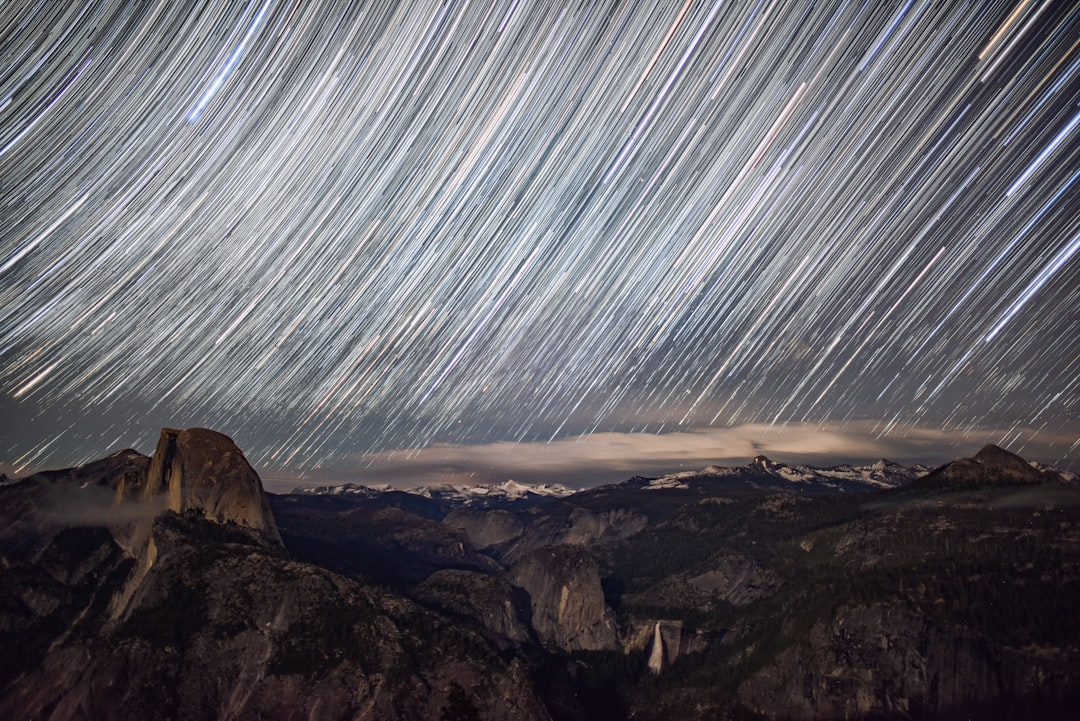
Our current technological capabilities for space travel are impressive, but they are light-years away from the speeds needed for practical interstellar journeys.
🚀 Chemical Rockets: The Workhorses
- ✅ Principle: Expel hot gas at high velocity in one direction to create thrust in the opposite direction (Newton’s Third Law).
- ➡️ Performance: Highly effective for escaping Earth’s gravity and maneuvering within the solar system. However, their exhaust velocities are relatively low, limiting the final speeds attainable. The fastest spacecraft ever launched, the Parker Solar Probe, reaches “only” about 0.0002 times the speed of light during its closest approach to the Sun.
🔌 Ion Propulsion: Slow but Steady
- ✅ Principle: Uses electrical energy to ionize a propellant (like xenon gas) and accelerate the ions through an electric field, creating very high exhaust velocities but very low thrust.
- ➡️ Performance: Ideal for long-duration missions where constant, gentle acceleration can build up impressive speeds over time. Missions like Dawn and Deep Space 1 utilized ion propulsion effectively.
🌬️ Solar Sails: Pushing the Envelope
- ✅ Principle: Harnesses the pressure of photons from the Sun (or powerful lasers) to propel a large, lightweight sail.
- ➡️ Performance: Offers continuous acceleration without expending propellant. Projects like LightSail 2 have successfully demonstrated solar sailing. While promising for solar system travel, the energy density from the Sun rapidly diminishes with distance, making it less effective for interstellar distances without an external laser array.
Theoretical Pathways to Near-Light and Faster-Than-Light Travel
To overcome the limitations of current technology, scientists and engineers are exploring highly theoretical and experimental propulsion concepts, some of which push the boundaries of known physics. Dr. Michio Kaku discusses many of these concepts in his work on The Physics of Interstellar Travel.
⚛️ Nuclear Propulsion: Fission and Fusion Rockets
- ✅ Fission: Nuclear thermal rockets heat a propellant (e.g., hydrogen) using a nuclear reactor. Nuclear pulse propulsion (e.g., Project Orion) would detonate nuclear bombs behind a pusher plate for thrust.
- ➡️ Fusion: Harnessing controlled nuclear fusion to generate vast amounts of energy to heat propellant or directly expel plasma. This promises significantly higher exhaust velocities than fission or chemical rockets.
- 💡 Potential: Could enable travel to the outer solar system in months and significantly reduce interstellar travel times compared to current tech, potentially reaching a few percent of light speed.
✨ Antimatter Propulsion: The Ultimate Rocket Fuel
- ✅ Principle: Annihilating matter and antimatter releases 100% of their mass as energy (E=mc²), the most efficient energy conversion known.
- ➡️ Challenge: Producing and storing antimatter in sufficient quantities is currently beyond our technological capabilities. A tiny fraction of a gram of antimatter requires enormous energy to create.
💫 Warp Drives and Spacetime Manipulation
This is where physics meets science fiction. Concepts like the Alcubierre Warp Drive propose bypassing the light-speed limit by manipulating spacetime itself. Instead of the spacecraft moving through space at FTL speeds, the space around the craft would be contracted in front and expanded behind, effectively moving the ship by distorting the fabric of the universe.
- ✅ Principle: Based on general relativity, theoretical solutions suggest that space-time could be warped to allow “faster-than-light” travel without violating local speed limits.
- ➡️ Challenge: Requires “exotic matter” with negative energy density, which has not been observed and may not exist. The energy requirements are also astronomical, even for microscopic “warp bubbles.”
🕳️ Wormholes and Hypothetical Shortcuts
Another theoretical concept, wormholes (or Einstein-Rosen bridges), are hypothetical shortcuts through spacetime that could connect two distant points in the universe. If traversable, they could offer instantaneous or near-instantaneous travel across vast cosmic distances.
- ✅ Principle: Based on general relativity, wormholes are mathematical solutions that could theoretically link different regions of spacetime.
- ➡️ Challenge: Highly speculative. If they exist, they would likely be unstable, incredibly small, and also require exotic matter to keep them open and traversable.
The Immense Distances of Interstellar Travel
To appreciate the challenge, one must grasp the sheer scale of the cosmos. Our solar system is just one tiny speck in the vastness of the Milky Way galaxy, which itself is one of billions of galaxies.
⭐ Our Nearest Neighbors: Proxima Centauri
The closest star system to our Sun is Alpha Centauri, with its companion Proxima Centauri being about 4.24 light-years away. A light-year is the distance light travels in one year – roughly 9.46 trillion kilometers (5.88 trillion miles).
- ✅ Distance: Even at 10% of the speed of light, a journey to Proxima Centauri would take over 42 years.
- ➡️ Perspective: Our fastest current spacecraft would take tens of thousands of years to reach Proxima Centauri.
⏱️ Timeframes at Sub-Light Speeds
Even if we could achieve 1% of the speed of light, travel times to other stars would still be measured in centuries. This is why concepts like generational ships (where multiple generations live and die on the voyage) or cryo-sleep/hibernation are often discussed for long-duration missions. For more on propulsion, see How fast will 1g get you there?
🚀 The Voyager Missions: A Scale Reference
The Voyager 1 and 2 probes, launched in 1977, are humanity’s most distant spacecraft. They are currently in interstellar space, but they are traveling at a mere fraction of a percent of the speed of light. It will take them tens of thousands of years to even approach another star, let alone enter its system.
The Engineering Hurdles and Risks of Interstellar Voyages
Beyond the fundamental speed limit, interstellar travel presents a myriad of engineering and survival challenges.
🛡️ Shielding from Interstellar Medium
- ✅ Micro-debris and Radiation: Even the seemingly empty space between stars contains atoms, dust grains, and high-energy cosmic rays. At near-light speeds, even tiny particles can become incredibly destructive, impacting the spacecraft with kinetic energies comparable to nuclear weapons.
- ➡️ Mitigation: Requires sophisticated multi-layered shielding, possibly magnetic fields, or even a plasma bubble acting as a “plow.”
📡 Navigation and Communication Delays
- ✅ Light-Speed Lag: Communication with a spacecraft deep in interstellar space would be subject to significant time delays due to the finite speed of light. A message to a star 4 light-years away would take 4 years to reach, and a reply another 4 years.
- ➡️ Autonomy: Interstellar probes would need extreme levels of autonomy to react to unexpected situations without real-time human intervention from Earth.
👨🚀 Human Factors: Long-Duration Missions
If humans are to undertake these journeys, psychological, physiological, and sociological challenges are immense.
- ✅ Life Support: Closed-loop ecological systems for air, water, and food recycling would need to be perfectly reliable for decades or centuries.
- ➡️ Psychological Impact: Isolation, confinement, and the knowledge of a one-way trip (due to time dilation for return) could take a toll.
- 💡 Generational Ships: For missions spanning centuries, societal structures, governance, and education would need to evolve within the confines of the spacecraft.
The Future of Interstellar Exploration: Projects and Prospects
Despite the colossal challenges, the dream of reaching other stars continues to inspire new initiatives and theoretical breakthroughs. This quest is a core part of our broader understanding of Cosmic Queries: Probing the Mysteries of the Universe.
🔬 Breakthrough Starshot: A Realistic Endeavor?
One of the most ambitious and “near-term” concepts is Breakthrough Starshot. This project aims to send a fleet of tiny, centimeter-sized spacecraft, called “StarChips,” to Alpha Centauri within a few decades.
- ✅ Principle: Each StarChip is equipped with a lightsail that would be propelled to 20% of the speed of light by a powerful, multi-gigawatt laser array on Earth.
- ➡️ Goal: To conduct a flyby of Proxima Centauri b and send data back to Earth.
- 💡 Challenge: Building and powering the laser array, developing StarChips that can survive the harsh interstellar environment and communicate over light-years, and ensuring precision targeting.
😴 Generational Ships and Hibernation
For slower, but still viable, interstellar travel, the concepts of generational ships (carrying entire populations for multi-century voyages) and suspended animation (placing crews in hibernation or cryo-sleep) remain topics of serious scientific discussion and speculative design.
🌌 The Enduring Dream of Humanity
The quest for light speed spacecraft is more than just a scientific pursuit; it’s a profound expression of humanity’s innate curiosity and desire to explore. While the challenges are formidable, the potential rewards – discovering exoplanets, finding extraterrestrial life, or even ensuring the long-term survival of our species – make it an endeavor worth pursuing, even if the full realization is centuries away.
Recommended Video
The dream of interstellar travel, propelled by advanced spacecraft technologies, continues to push the boundaries of science and engineering. While true light-speed spacecraft remain a distant fantasy due to the fundamental laws of physics, the pursuit of faster, more efficient propulsion methods is relentless. From theoretical warp drives to ambitious laser-driven probes, each concept brings us closer to understanding the incredible energy and technological mastery required to bridge the cosmic void.
The journey to the stars is perhaps humanity’s greatest challenge, a testament to our ingenuity and perseverance. Whether it takes centuries or millennia, the quest for efficient interstellar travel will undoubtedly continue to inspire generations, shaping our scientific progress and our vision of humanity’s place in the universe.
Frequently Asked Questions
Is light speed travel physically possible?
According to current understanding of physics, only massless particles like photons can travel at the speed of light. Objects with mass would require infinite energy to reach light speed, making it impossible for spacecraft. However, theoretical concepts like warp drives propose ways to circumvent this.
What is a warp drive and how might it work?
A warp drive, most famously the Alcubierre drive, is a theoretical concept that would allow a spacecraft to travel ‘faster than light’ by distorting spacetime around it. Instead of the ship moving through space, space itself would contract in front of the ship and expand behind it, effectively moving the ship without it exceeding the speed of light locally.
How long would it take to reach the nearest star at light speed?
Even if a spacecraft could travel at light speed (which it cannot), it would take approximately 4.24 years to reach Proxima Centauri, the nearest star to our Sun. For more distant stars, the travel times would be proportionally longer, highlighting the vastness of interstellar space.
What are the primary obstacles to interstellar travel?
The main obstacles include the immense distances involved, the colossal energy requirements for propulsion, the need for robust shielding against cosmic radiation and interstellar dust, and the extended timeframes that would necessitate self-sustaining life support systems for generations.